A davit arm can look fine on the surface and still fail inspection if the paperwork behind it is missing.
If your davit arm, socket or anchor system has failed inspection, the issue may not be obvious damage. In many cases, the problem is missing evidence.
Under BS 7883:2019, inspectors need more than a certificate or a quick visual check. They need to understand how the system was designed, what it is fixed to, which components were used, and whether the installation remains suitable for safe use.
That evidence should sit inside the system technical file.
If that file is missing, incomplete or was never handed over, your davit system may not be straightforward to recertify.
Quick Answer: Why has my davit arm failed inspection?
A davit arm may fail inspection due to damaged components, poor fixings, corrosion, incorrect installation, missing certification or incomplete technical documentation. Under BS 7883:2019, missing technical file information can create a serious issue because the inspector may not be able to verify how the system was designed, fixed or tested.
🔑 Key Takeaways: Davit Arm Inspection Failures
- Missing technical files matter: inspectors may need design, fixing and installation evidence before recertifying a system.
- Visual condition is only part of the story: sockets, fixings, hidden anchors and load paths also need checking.
- Failed or conditional outcomes can often be resolved: through system review, supplementary inspection, pull testing or remedial works.
Here’s what this guide covers:
Jump to:
What Is a Davit Arm Technical File?
A technical file is the evidence pack behind a davit arm, anchor system or fall protection installation.
It should help prove how the system was designed, installed, fixed and checked.
For davit systems, this can include:
- System design and layout
- Design calculations
- Structural fixing details
- Product traceability
- Serial numbers and batch numbers
- As-built drawings
- Installation photographs
- Details of hidden fixings or concealed elements
- Previous inspection and test records
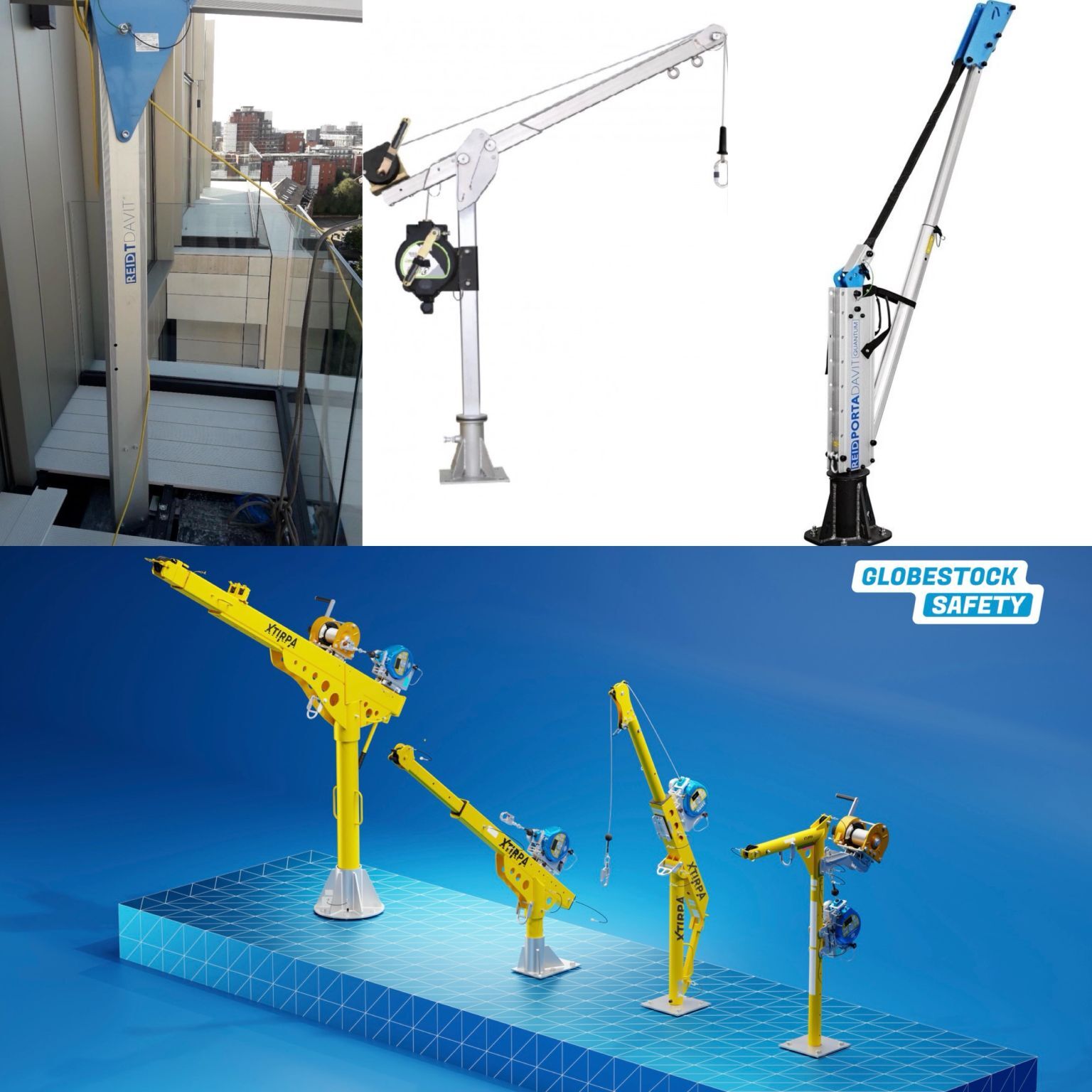
This matters because a davit arm does not work in isolation. The arm, socket, fixings, structure and intended use all need to make sense together.
A certificate may show that something was tested at one point in time. The technical file helps explain whether the system was designed and installed correctly in the first place.
This should include evidence that the fixing method was suitable for the substrate and specified as part of the original system design. A later pull test should not be used as a substitute for proper design information, installation records or fixing specifications.
Why Davit Arms Fail Inspection
A davit arm can fail inspection for several reasons. Some are visible straight away. Others only become clear once the inspector checks the documentation, fixing method or load path.
Common issues include:
- Missing or incomplete technical files
- No evidence of design calculations
- Unknown fixing details
- Hidden anchor elements with no installation photographs
- Corrosion around sockets or fixings
- Damaged, loose or worn components
- Incorrectly matched parts or incompatible components
- No clear record of previous inspections or pull testing
The frustrating part for duty holders is that the system may have been in place for years without anyone questioning it. Then a more detailed inspection highlights that the evidence simply is not there.
Why BS 7883:2019 Changed the Conversation
BS 7883:2019 gives guidance for inspecting fall protection anchor devices and systems.
The important shift is the focus on evidence. Inspectors need enough information to assess whether the system is safe, suitable and correctly installed.
For older systems, that can create problems. The original installer may no longer be available. Drawings may have been lost. Fixings may be hidden behind roof coverings, cladding or other finishes. Previous certificates may not explain how the system is actually anchored to the structure.
That does not automatically mean every system is unsafe, but it does mean further investigation may be needed before a clear pass can be given.
Why Pull Testing Alone Does Not Prove a Davit Is Safe
One of the biggest misconceptions around davit inspections is that a successful pull test proves the installation is safe.
It does not.
A pull test, load test or similar proof test demonstrates that the installation withstood the applied test load at that moment in time. It does not prove the original design was suitable, that the correct fixing was specified, or that the substrate was appropriate for the system.
For example, a pull test does not automatically confirm:
- The fixing was correctly specified for the substrate.
- The system designer or manufacturer approved the fixing method.
- The installation followed the original design.
- Hidden fixings are free from fatigue, damage or deterioration.
- The system will remain safe the next time it is loaded.
A safe davit installation starts long before any pull test takes place. It starts with suitable design, correct fixing selection, competent installation, commissioning records and complete technical documentation.
Pull testing can be a useful part of the evidence, but it should not be treated as a replacement for the technical file.
Does Missing Documentation Always Mean a Fail?
Not always. Missing information does not automatically mean the davit system is unsafe, but it can stop an inspector from giving a clear pass.
Depending on what is missing and whether there is an immediate safety concern, the outcome may be a pass, conditional pass, conditional fail or fail.
For example, a system may be visually sound but still need further evidence before it can be fully recertified. That might include design calculations, fixing details, installation photographs or supplementary testing.
The key point is that missing evidence should be treated seriously. If the inspector cannot verify how the davit arm or socket is fixed into the structure, the duty holder may need further investigation before the system can be returned to normal use.
What Should You Do If Your Davit Arm Fails Inspection?
First, do not keep using a failed davit system unless a competent person has confirmed it is safe to do so.
Next, gather any information you have:
- Previous inspection reports
- Installation certificates
- Drawings or plans
- Manufacturer details
- Photos of the installation
- Records of repairs, refurbishment or load testing
Then speak to a competent provider who can review the davit arm, socket, fixings, documentation and intended use.
Velocity Safety can support with davit arm installation, inspection, maintenance and pull testing, including system review, defect reporting, supplementary inspection and advice on what is needed to move the system towards recertification.
Need Help With a Failed Davit Arm Inspection?
If your davit arm, socket or anchor system has failed inspection, Velocity Safety can help identify what is missing and what needs to happen next.
📞 Call: 01254 933 486
📩 Email: info@velocitysafety.co.uk
🌐 Or get a quote online
We provide davit arm inspection, pull testing, documentation review and practical remedial advice for sites across the UK.
FAQs
Here are some common questions about davit arm inspection failures, technical files, BS 7883:2019 and what to do if your system cannot be recertified.
Can a davit arm fail inspection because the technical file is missing?
Yes. Missing documentation can create an inspection issue because the inspector may not be able to verify how the system was designed, fixed or installed. Depending on the risk and missing evidence, further investigation may be needed.
What should be included in a davit arm technical file?
A technical file may include design calculations, fixing details, system layout, as-built drawings, product traceability, installation photographs and previous inspection or test records.
Does a previous certificate prove my davit arm is compliant?
Not always. A certificate is useful, but it may not prove how the system was designed, what it is fixed to, or whether hidden elements were installed correctly. The supporting technical file gives much stronger evidence.
What happens if hidden fixings cannot be verified?
If hidden fixings or structural details cannot be verified, supplementary investigation may be required. This may involve further inspection, access to concealed areas, review of installation records or additional testing.
Does passing a pull test prove a davit installation is compliant?
No. A successful pull test only shows that the installation withstood the applied test load at that moment in time. It does not prove the fixing was correctly designed, that the substrate was suitable, or that hidden defects do not exist. These details should be supported by the technical file and installation documentation.
Can Velocity Safety help after a failed davit inspection?
Yes. Velocity Safety can inspect davit arms, sockets, fixings and supporting documentation, then advise on remedial action, pull testing, refurbishment or recertification requirements.
Do you provide davit arm pull testing nationwide?
Yes. Velocity Safety provides davit arm inspection, maintenance, pull testing and certification across the UK, including support for construction, facilities, industrial and confined space environments.
Resources
- BS 7883:2019: Personal fall protection equipment anchor systems — system design, installation and inspection code of practice
- LOLER 1998: Lifting Operations and Lifting Equipment Regulations
- PUWER 1998: Provision and Use of Work Equipment Regulations
- HSE: Working at height guidance