“Testing a floor before it’s installed is usually much cheaper than replacing it afterwards.”
Slip resistance is often only considered after someone has had an accident or once a newly installed floor starts causing concerns.
By that point, changing the flooring can be expensive, disruptive and potentially lead to insurance claims or legal disputes.
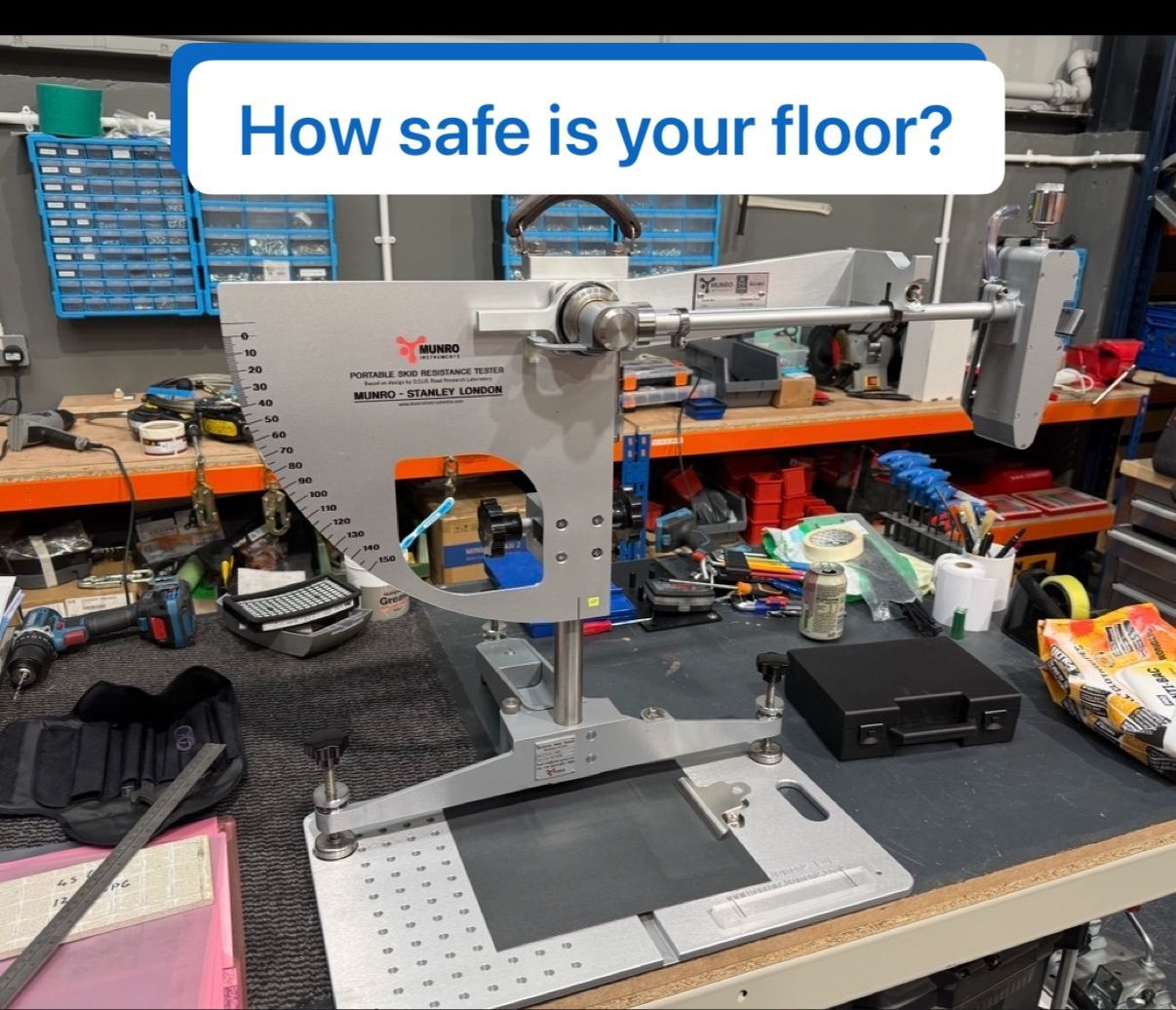
The better approach is to understand how slip resistant a floor is before it is installed. Pendulum slip testing allows flooring samples to be independently tested before they ever reach site, helping designers, contractors and building owners make informed decisions.
Quick Answer: Should flooring be slip tested before installation?
Yes. Testing flooring samples before installation allows you to understand how the surface performs under recognised pendulum testing before committing to installation. It is often far cheaper to identify a problem before the floor is laid than after the project has been completed.
Key Takeaways – Pre-Installation Pendulum Slip Testing
- Flooring samples can be pendulum tested before installation.
- Pre-installation testing can identify unsuitable flooring before expensive remedial work becomes necessary.
- Manufacturer R ratings do not always tell the full story about in-service slip resistance.
- Independent testing helps support specification decisions and provides evidence if slip performance is questioned later.
Jump to:
Why Test Flooring Before Installation?
Changing flooring after installation is rarely cheap. If a surface is later found to have poor slip resistance, businesses may face replacement costs, disruption to operations and potential liability if someone slips before corrective work is completed.
Testing flooring before installation allows potential problems to be identified before the material is fitted, helping clients choose the right product with greater confidence.
Learn more about our Pendulum Slip Testing service.
Can Flooring Samples Be Tested?
Yes.
At Velocity Safety we can carry out pendulum testing on flooring samples within our workshop before installation takes place.
Instead of waiting until an entire floor has been fitted, designers, contractors and building owners can submit sample materials for independent assessment.
Are Manufacturer R Ratings Enough?
Manufacturer data is useful, but it should not always be relied upon in isolation.
Many flooring products are marketed using an R rating, however the HSE recommends pendulum testing when assessing slip resistance because it measures the surface differently and provides a recognised Pendulum Test Value (PTV).
Where there is uncertainty, independent testing provides additional reassurance before installation proceeds.
Why Independent Testing Matters
Independent Testing
Velocity Safety does not sell anti-slip coatings or treatments.
That means we have no commercial incentive for a floor to pass or fail.
The result is the result.
Independent testing gives clients confidence that the findings are impartial and based solely on measured performance.
Final Takeaway
If you’re specifying flooring for a new project, testing it before installation can help avoid expensive mistakes later.
Understanding slip resistance before committing to a flooring product gives designers, contractors and building owners better information on which to base their decisions.
Arrange Pendulum Testing Before Installation
If you’re selecting flooring for a new project, Velocity Safety can independently test samples before installation to help you make informed decisions.
📞 Call: 01254 933486
📩 Email: info@velocitysafety.co.uk
🌐 Or contact us online
Frequently Asked Questions
Here are some of the questions we’re regularly asked about pre-installation pendulum slip testing.
Can you pendulum test flooring before it is installed?
Yes. Flooring samples can be tested before installation, helping identify potential slip resistance concerns before fitting takes place.
Is manufacturer slip resistance data enough?
Manufacturer information can be useful, but independent testing provides additional reassurance and objective performance data.
Can testing before installation save money?
Potentially yes. Identifying unsuitable flooring before installation is often significantly cheaper than replacing flooring after completion.