“Brand new doesn’t automatically mean compliant.”
Many businesses assume that if lifting equipment arrives brand new in the box, it must be safe to use.
Unfortunately, that isn’t always the case.
We’ve seen supposedly new lifting equipment fail inspection before it has ever been put into service because it was missing essential compliance information, manufactured to the wrong standard or simply couldn’t demonstrate it was suitable for lifting operations.
Quick Answer: Can new lifting equipment fail a thorough examination?
Yes. New lifting equipment can fail a thorough examination if it does not comply with the relevant standards, lacks the correct markings, has inadequate documentation or raises concerns over its Safe Working Load (SWL).
New equipment should never be assumed to be compliant simply because it is unused.
Key Takeaways – New Lifting Equipment
- Brand new equipment can still fail inspection.
- Compliance markings and documentation matter.
- A Thorough Examination is more than checking paperwork.
- Buying from reputable suppliers helps avoid expensive mistakes.
Jump to:
Real Example: Brand New Equipment That Failed Inspection
We recently examined a brand new item of lifting equipment that had been purchased online.
Although unused, several concerns were immediately identified before it could be considered suitable for service.
- No CE or UKCA marking.
- No evidence of compliance with EN 13157.
- Questionable Safe Working Load (SWL) information.
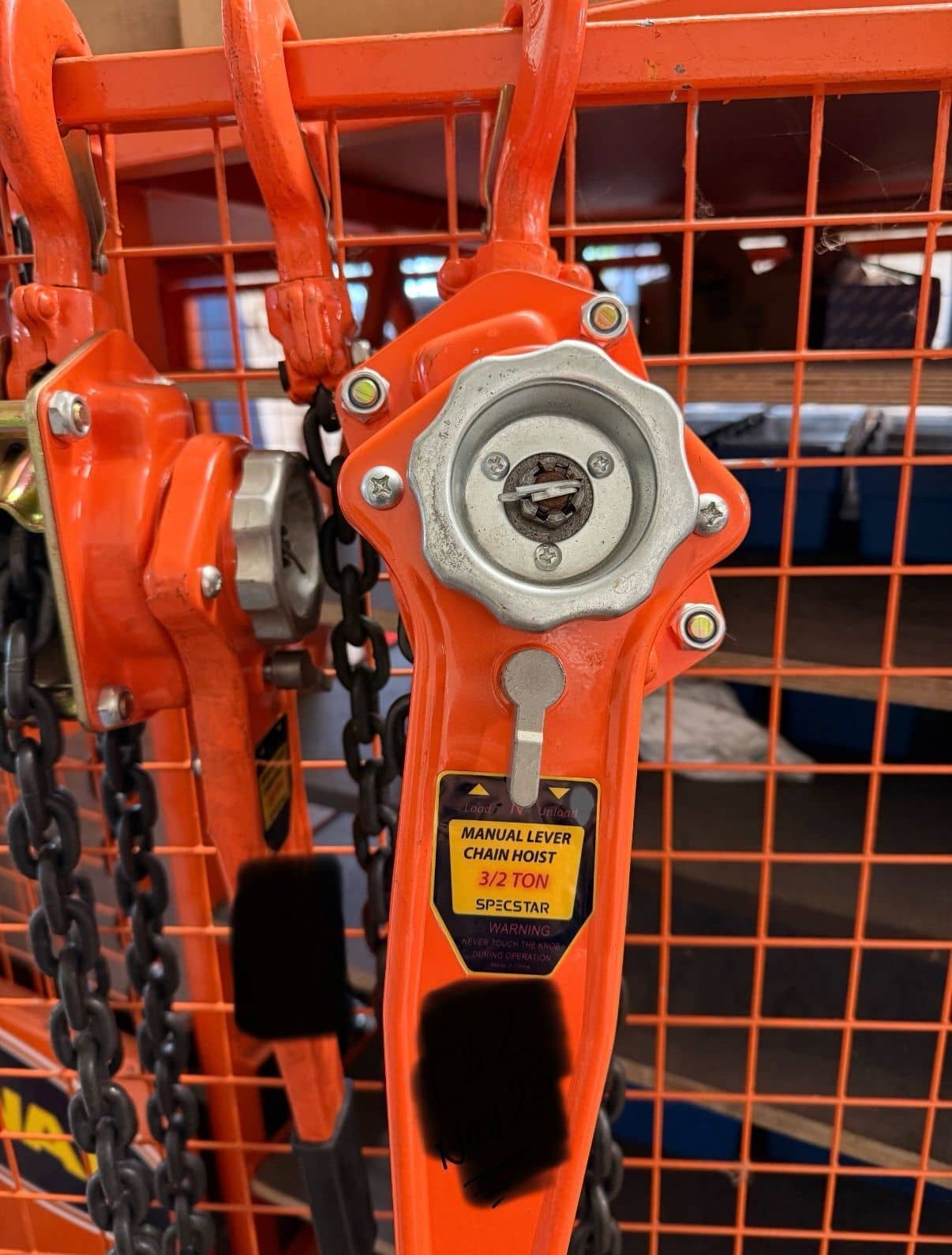
Although the equipment was brand new, that alone was not enough to demonstrate compliance.
Why Can New Lifting Equipment Fail?
New equipment is not automatically compliant.
Problems can include:
- Missing CE or UKCA marking.
- No evidence of compliance with the relevant product standard.
- Missing or unclear Safe Working Load markings.
- Poor traceability.
- Missing declarations or manufacturer information.
These issues should be identified before equipment enters service.
What Should Be Present?
Before lifting equipment is put into use, it should typically include:
- Manufacturer identification.
- Clear Safe Working Load marking.
- Relevant CE or UKCA marking.
- Compliance with the appropriate standard where applicable.
- Product traceability.
- Supporting documentation.
Learn more about our Thorough Examination of Lifting Accessories service.
A Thorough Examination Is More Than Paperwork
A competent examiner should do far more than simply check whether paperwork has been provided.
The examination should consider whether the equipment appears suitable, correctly marked, appropriately identified and safe to enter service.
Paperwork alone should never override obvious compliance concerns.
Remember
New equipment should always be verified before use. Brand new does not automatically mean compliant.
Final Takeaway
Buying lifting equipment online can be perfectly acceptable—but only if the equipment can demonstrate that it meets the necessary compliance requirements.
Before putting any lifting equipment into service, ensure it has been properly examined by a competent person and don’t assume that “brand new” automatically means “safe to use”.
Need Lifting Equipment Examining?
Velocity Safety provides Thorough Examination of lifting accessories, helping businesses identify compliance issues before equipment enters service.
📞 Call: 01254 933486
📩 Email: info@velocitysafety.co.uk
🌐 Or contact us online
Frequently Asked Questions
Here are some of the questions we’re commonly asked about new lifting equipment and Thorough Examinations.
Can brand new lifting equipment fail inspection?
Yes. New equipment can fail if it lacks the correct markings, documentation or evidence of compliance with the relevant standards.
Does new lifting equipment still need checking?
Yes. New equipment should always be checked before entering service to confirm it is suitable, correctly marked and compliant.
What does a competent examiner look for?
A competent examiner considers the equipment itself, its markings, traceability, documentation and overall suitability—not just whether paperwork has been supplied.