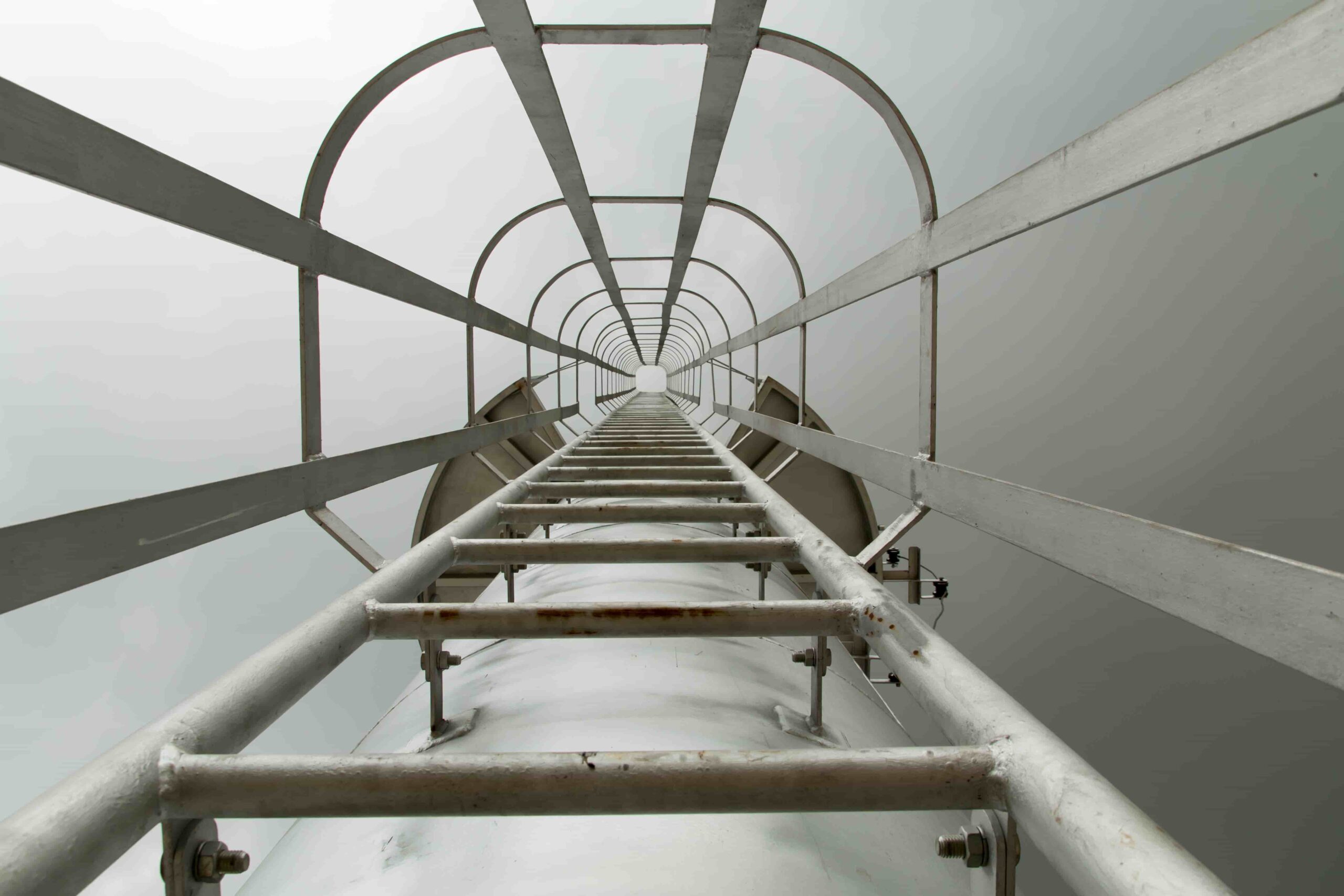
“An anchor point is only suitable if the whole system – including its fixings, supporting structure and intended use – has been considered.”
A worker may see a metal eye on a roof or wall and assume it is a safe place to clip on. Its appearance cannot tell them whether it was designed for fall arrest, how many people may use it, or whether the structure behind it can withstand the forces involved.
So what are the requirements for a fall arrest anchor point in the UK? There is no single answer based on the appearance of the fitting or a universal “weight rating”. The anchor must be suitable for the specific personal fall protection system, number of users, location and supporting structure. Its design, installation, permitted use and inspection arrangements should be identifiable.
Quick answer: What does a fall arrest anchor point need?
A suitable fall arrest anchor needs to be selected for its intended use, attached to a structure capable of supporting the system, positioned to manage the fall risk, compatible with the connected equipment, and supported by appropriate installation and inspection information. The required performance depends on the anchor device and the complete system. Do not choose an anchor solely by a quoted load figure or assume that an unidentified eyebolt is safe to use.
Key takeaways
- Fall restraint and fall arrest are different uses. An anchor suitable for one arrangement should not automatically be approved for the other.
- There is no universal UK “minimum anchor weight” that can safely be applied to every device, fixing, structure and number of users.
- The supporting structure matters. A sound anchor fitted to an unsuitable substrate does not create a safe anchorage.
- BS EN 795, PD CEN/TS 16415, BS 8610 and BS 7883 address different parts of anchor device and system provision. The relevant standards depend on what is being installed and how it will be used.
- Position, fall clearance, access and rescue need to be considered as part of the system design.
- Workers need to know which anchors they may use, for what purpose and under what limitations.
Jump to:
What Is a Fall Arrest Anchor Point?
A fall arrest anchor point is a place where a worker connects a personal fall protection system. Depending on the installation, that connection could be provided by an anchor device, an eyebolt, a roof anchor or another designed arrangement.
Its role is to support the connected system if a fall occurs. But the visible point is only part of the picture. The device, fixings, base material, wider structure, harness, connecting equipment and rescue arrangements must work together.
An ordinary lifting eye, handrail or convenient piece of steelwork should not be treated as a fall arrest anchor merely because a connector fits around it. Its suitability must be established for the intended task and loads.
What Are the Main Requirements for a Suitable Anchor?
1. The method of work must justify personal fall protection
HSE’s work-at-height hierarchy starts with avoiding work at height where reasonably practicable. Where that is not possible, measures that prevent a fall, particularly those protecting everyone at risk, should be considered before relying on personal fall arrest.
An anchor point is therefore part of a planned system of work. Installing one does not, by itself, make a roof edge or other work-at-height task safe.
2. The intended use must be clear
An anchor may be intended for work restraint, where the system prevents a worker reaching a fall position, or for fall arrest, where the system must stop a fall after it begins. Other applications include rope access, work positioning and rescue.
These uses can place different demands on the anchor system. The system documentation and markings should make its permitted applications and limitations clear. Do not assume an anchor approved for one task is suitable for every other task.
3. The device and supporting structure must be suitable
The strength of a manufactured anchor device is only one consideration. The fixings and material it is attached to must also be suitable. A competent design and installation process should consider the structure, substrate, edge distances, fixing arrangement, condition and forces that the intended system could impose.
For example, a correctly manufactured roof anchor cannot be relied upon if its fixings have been installed into a structure that has not been verified for the intended use.
4. Position and fall clearance must be considered
Where an anchor is placed affects how a connected system performs. The design needs to consider the worker’s route, potential swing or pendulum movement, sharp edges and the distance available below the worker if a fall occurs.
A strong anchor in the wrong position can still leave a worker at risk of striking the ground, the building or an obstruction. The compatible harness and connecting equipment must be considered as part of that assessment.
5. The number of users must be specified
Do not assume that two workers may connect to an anchor because there is room for two connectors. The permitted number of simultaneous users should be supported by the design and manufacturer information for that particular device and system.
6. There must be a rescue plan
Fall arrest stops a person falling further; it does not automatically get them to safety. Work-at-height planning must consider how a suspended worker would be rescued promptly, using arrangements suited to the site and task.
What Is the Minimum Anchor Rating for Fall Arrest in the UK?
There is no single “how much weight must it hold?” figure that answers this for every UK fall arrest anchor. A person’s body weight is not the same as the forces that may be generated during a fall. The required performance depends on factors including the type of anchor, number of users, system configuration and intended use.
Online answers sometimes quote a particular figure in kilonewtons or pounds-force without explaining whether it is a product test requirement, a design load, a proof-test load or a requirement from another country’s rules. Those figures cannot safely be substituted for one another.
For a real installation, establish:
- The anchor device and standard or specification applicable to it
- The permitted use and number of users
- The loads imposed by the complete fall protection system
- The capacity and condition of the supporting structure
- The manufacturer’s installation and use instructions
- The design and installation documentation for the site
If those details are missing, a number stamped on the visible fitting is not enough to confirm that the entire installed system is suitable. A competent person may need to review the original records, inspect the installation or investigate the structure.
Which UK Standards Apply to Fall Protection Anchors?
Several standards are relevant, but they have different scopes. Selecting the right one starts with understanding whether you are assessing a manufactured device, an installed system, a single-user arrangement or one intended for multiple users.
| Standard or specification | What it addresses |
|---|---|
| BS EN 795:2012 | Requirements and test methods for specified single-user anchor devices. Its scope does not cover every structural anchorage or multi-user device. |
| PD CEN/TS 16415:2013 | Recommendations for anchor devices intended for more than one person at the same time. |
| BS 8610:2017 | Requirements and test methods for certain installed personal fall protection anchor systems and their specified base materials. |
| BS 7883:2019 | Recommendations for anchor system design, installation, use, maintenance and inspection. |
These standards provide technical requirements and guidance. The legal duties to plan work at height, select suitable equipment and manage the risks arise from the Work at Height Regulations 2005. A competent designer or examiner should identify which standards and system requirements apply to the actual installation.
What Documentation Should Be Available for an Installed Anchor System?
A site should be able to establish what each anchor is for and the conditions under which workers may use it. Depending on the system, useful information can include:
- The anchor’s identification and location
- Its intended use and permitted number of users
- Manufacturer and device information
- The system design and installation specification
- Details of fixings and the supporting structure
- Installation and commissioning records
- Operating limitations and compatible equipment
- An examination scheme and inspection history
- Instructions for access and rescue arrangements
BS 7883:2019 places particular emphasis on system design information, a technical file, operating information and an examination scheme. These records help future users and inspectors understand what was installed, rather than trying to infer its suitability from a label alone.
Can You Use an Existing Eyebolt or Roof Anchor?
Potentially, but first establish what it was installed for. An existing anchor may have missing records, an unknown fixing arrangement, changes to the surrounding structure or an intended use that differs from the work now planned.
Before relying on it, check whether its identification, permitted use and current inspection status can be established. Where the installation cannot be verified, the appropriate next step is a competent assessment. A routine visual check or an arbitrary pull test cannot automatically resolve missing design or structural information.
For the examination regime once an anchor is in service, see our separate guide: How Often Should Fall Arrest Anchor Points and Eyebolts Be Tested?
What If an Anchor Is Found to Be Unsuitable?
Do not leave an uncertain or failed anchor available for workers to clip onto. Identify it clearly, prevent its use and arrange a suitable alternative means of carrying out the work.
Depending on the issue, the solution may be further investigation, structural verification, remedial work, replacement or a redesigned fall protection system. The outcome should be documented so that workers and contractors know which points they can use.
Need an Anchor Point Installed or Assessed?
Velocity Safety supports workplaces with fall arrest anchor installation, inspection and testing. We can help identify what has been installed, assess its condition and documentation, and advise on the work needed before an anchor is put into service or relied upon again.
Call: 01254 933 486
Email: info@velocitysafety.co.uk
Online: Request an anchor assessment
Fall Arrest Anchor Point FAQs
What are acceptable anchor points for fall arrest?
Acceptable points are those established as suitable for the intended personal fall protection system, number of users and supporting structure. Do not assume that a handrail, lifting eye or unmarked fitting is an acceptable fall arrest anchor.
How much weight should a fall arrest anchor hold?
There is no universal answer expressed as a person’s weight. The system must be designed for the forces and use conditions that apply to it. The anchor device, fixings and structure all need to be considered.
Can two people use the same anchor point?
Only where the anchor system has been designed, assessed and identified for simultaneous use by two people. A single-user device should not be treated as a two-user anchor simply because both connectors physically fit.
Is an anchor point the same as an eyebolt?
No. An eyebolt is one possible form of anchor device. Fall protection systems can also incorporate roof anchors, rails, lines, overhead anchors and other arrangements.
Does every anchor point need a pull test?
No single pull-test procedure applies to every system. Whether testing is needed, and how it should be carried out, depends on the device, installation, manufacturer instructions and examination scheme. Inspection also considers matters that a pull test alone cannot establish.
Can an old anchor without paperwork still be used?
Its suitability needs to be established before use. A competent person may be able to investigate the anchor, installation and supporting structure, but an unidentified point should not be assumed safe because it looks sound.