How Multi-Discipline On-Site Safety Inspections Work: Gas Monitors, Tripods, Winches & Fall Arrest Blocks
Some jobs aren’t one-discipline visits.
For many clients – especially those working in confined spaces, utilities, civils or construction – staying compliant means keeping dozens of different bits of safety kit inspected, calibrated, serviced and traceable.
That’s why multi-discipline on-site inspections exist.
Instead of booking separate contractors for gas monitors, fall arrest blocks, tripods, winches, harnesses and fire equipment, a competent provider can complete everything in a single visit – reducing downtime, disruption and cost.
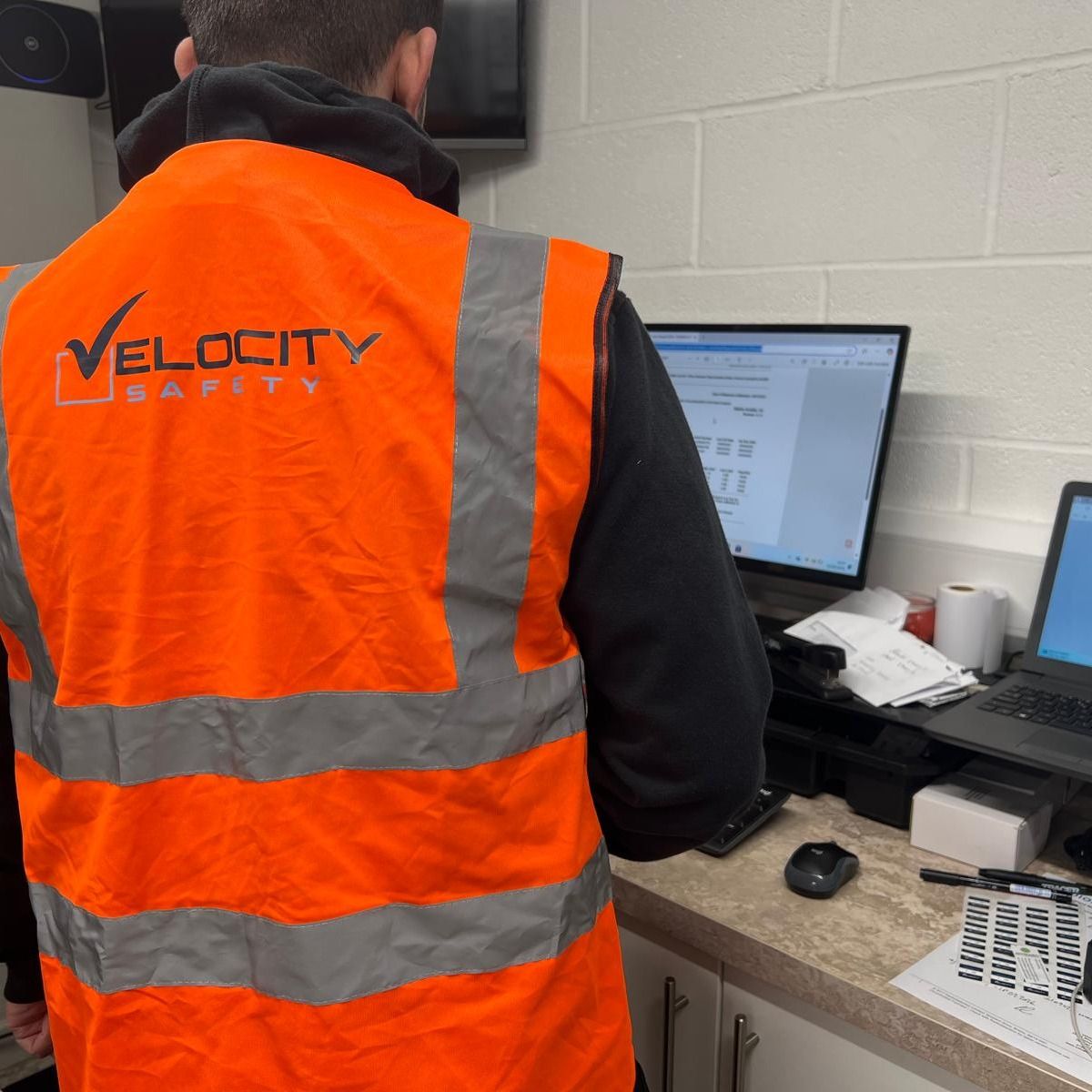
Velocity Safety carries out these multi-discipline inspections nationwide, often organising, labelling and certifying equipment across entire fleets of vans or site teams. It’s quicker, cleaner and far easier to manage.
Here’s how it actually works in the real world, and what gets tested on each piece of equipment.
- Multi-discipline inspections reduce downtime by servicing gas monitors, tripods, winches, harnesses and fall arrest blocks in a single visit.
- Each item has its own legal requirements – from calibration schedules to LOLER and PUWER obligations.
- Calibrated, traceable instruments are essential for accurate testing and valid certification.
- A single contractor handling multiple disciplines improves consistency, record-keeping and audit readiness.
Here’s how a proper multi-discipline visit actually works – what gets tested, how it’s organised, and why the one-visit approach makes life easier for busy site teams.
Jump to
Why Businesses Choose Multi-Discipline Safety Inspections
When you spread inspections across several contractors, three problems appear quickly:
- Downtime multiplies – teams wait around for different specialists.
- Record-keeping becomes messy – different certificates, formats and expiry dates.
- Consistency drops – different contractors interpret “competence” differently.
By contrast, a multi-discipline inspection from one competent provider gives you:
- One agreed schedule
- One set of reports
- One point of accountability
- Consistent labelling across all equipment
- Far less site disruption
Velocity Safety often carries out these visits on Fridays (the quiet day in many industries) to minimise business interruption – exactly as Ross described in his post.
1. Gas Monitor Calibration & Functional Testing
Gas monitors are life-critical. They aren’t simply switched on to see if they beep – they require proper calibration and bump testing.
A full on-site gas monitor calibration includes:
- Zeroing the sensors
- Exposing each sensor to test gas
- Verifying the reading matches the reference value
- Checking high/low alarms trigger correctly
- Verifying TWA/STEL where applicable
- Inspecting the sensor ports and filters
- Recording calibration drift and pass/fail outcome
Calibration intervals vary by manufacturer, but most require:
- 6-monthly calibration
- Monthly bump tests
Businesses often underestimate the failure rate of sensors left untested.
A gas monitor that doesn’t alarm when it should is one of the most dangerous failures in safety management – which is why Velocity Safety calibrates with fully traceable equipment.
2. Tripod Inspections (Confined Space Entry)
Tripods are used for confined-space access and rescue, meaning every component must work exactly as expected under load.
A correct inspection includes:
- Checking leg integrity, bends and distortion
- Verifying locking pins
- Checking spreader chains, brackets and attachment points
- Inspecting the top cap and anchor points
- Confirming compatibility with the winch or fall arrest block
- Checking for corrosion, hairline cracks or material fatigue
Tripods fall under PUWER, meaning they must be:
- Suitable for use
- Maintained correctly
- Inspected at appropriate intervals
Velocity Safety also labels each tripod with asset IDs and next inspection due dates, reducing confusion on multi-team or multi-van sites.
3. Winch Inspection & Servicing
Winches are often paired with tripods for confined-space entry or rescue. They must lift smoothly, lower safely, and lock reliably.
A proper on-site inspection includes:
- Strip-down of outer casing
- Inspection of pawls, gears and cogs
- Checking the ratchet mechanism
- Inspecting steel wire rope for kinks, heat damage or broken strands
- Verifying ascent/descent function
- Ensuring the brake holds under load
- Lubricating moving components with manufacturer-approved products
Some winches fall under LOLER depending on use (lifting persons), while others fall under PUWER.
Either way, frequency and scope must match the application.
4. Fall Arrest Block / SRL Inspection
Fall arrest blocks are complex systems containing energy absorbers, brakes, springs and friction components.
A competent on-site fall arrest block inspection includes:
- Verifying locking speed and engagement
- Inspecting webbing or cable for cuts, glazing, abrasion or crushed sections
- Checking retraction force and recoil
- Ensuring connectors and swivels move freely
- Listening for internal noise that signals wear
- Verifying activation distance
Blocks that require full internal servicing (e.g., annual strip-downs) will be removed, serviced at an approved centre, and returned with full certification.
Velocity Safety’s Ridgegear approval strengthens this even further.
5. Harness & Lanyard PFPE Checks
PFPE is often overlooked – yet it’s the item most workers rely on in a fall event.
A correct PFPE inspection includes:
- Checking webbing condition
- Stitch pattern integrity
- Shock pack condition
- D-ring strength and distortion
- Corrosion, cracks or excessive wear
- Batch numbers, serials and label legibility
- Compatibility with other kit in the system
If the label is unreadable – it’s legally unserviceable.
No exceptions.
Why Businesses Choose Velocity Safety
Clients choose our team because:
- We test multiple disciplines in one visit
- Our equipment is fully calibrated and traceable
- We’re manufacturer-approved for fall arrest block servicing
- We understand confined-space, work-at-height and gas detection requirements inside out
- Labels, asset registers and documentation are clean and audit-ready
- We explain findings clearly and honestly
It’s end-to-end competence – not quick “tick-box” testing.
Book a Multi-Discipline On-Site Inspection
If you want to consolidate your inspections and reduce downtime, we can test, service and label all your on-site kit in a single visit.
📞 Call: 01254 933 486
📩 Email: info@velocitysafety.co.uk
🌐 Request an On-Site Inspection