“A tag on the outside doesn’t tell you what’s happening on the inside.”
An inspection tag is useful, but it does not tell the whole story. For a fall arrest block or inertia reel, you also need to know what was checked, whether servicing is due and which manufacturer’s instructions apply.
Quick answer: do fall arrest blocks need servicing or just inspection?
Follow the requirements for the exact make and model. Pre-use checks, periodic inspection and servicing have different purposes. Where the manufacturer requires an internal service, an external check and a new tag cannot replace it. Equally, inspection is not always external, and not every model is designed to be opened and serviced.
What’s the Difference Between Inspection and Servicing?
The distinction is the scope of the work, rather than simply whether somebody looks inside the casing. An inspection assesses condition; servicing carries out the maintenance specified for that equipment. They may be completed during the same visit or workshop appointment.
| Activity | What it involves |
|---|---|
| Pre-use checks | The user checks the block before use, following its instructions. This can include the lifeline, connectors, casing, markings, retraction and locking function. It does not establish the condition of every internal component. |
| Periodic inspection or examination | A competent person examines the equipment at the required intervals and records the findings. The scope depends on the model, instructions and conditions of use; it may include internal examination where specified. |
| Manufacturer-specified servicing | Maintenance carried out using the applicable service procedure. For serviceable blocks, this can involve opening the unit, examining internal components, replacing specified parts, reassembling and testing it. |
HSE’s general guidance on inspecting work equipment makes clear that inspection can include testing or dismantling. Describing every inspection as an external visual check would therefore be misleading.
The useful question is: does the work completed meet the requirements for this particular block?
Three Hidden Faults from the Workshop
These photographs, shared by Velocity Safety’s Ross Ciraolo, show why the condition of internal components matters. They are separate workshop examples; they do not mean every block needs the same work or replacement parts.
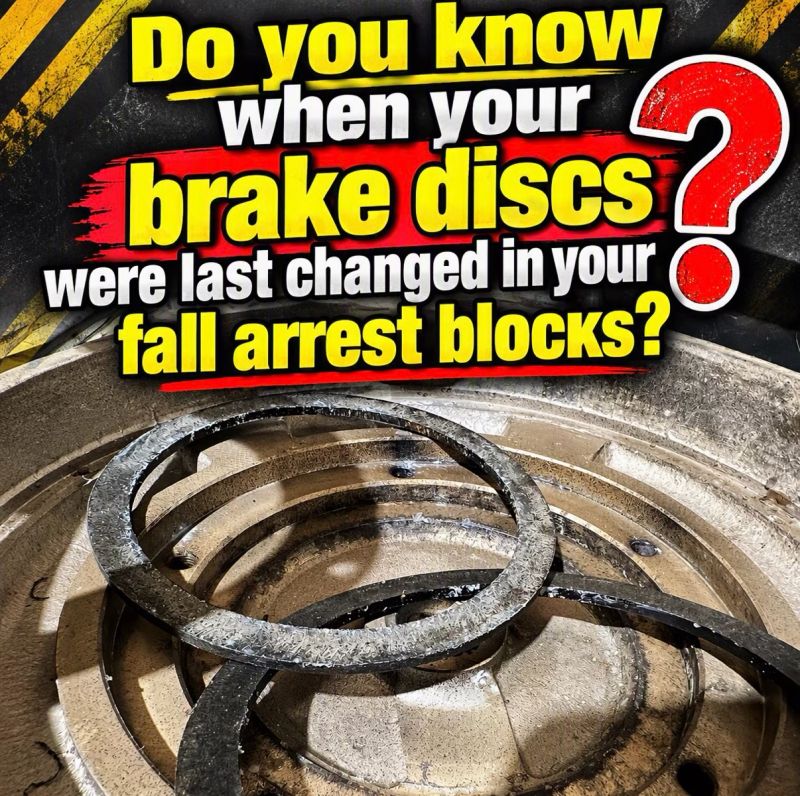
1. Brake discs in poor condition
Ross reported that this block still locked during its pre-use check, despite the poor condition of the brake discs shown here.
What this demonstrates: a successful locking check does not establish the condition of every component inside the block. It cannot replace servicing required by the manufacturer.
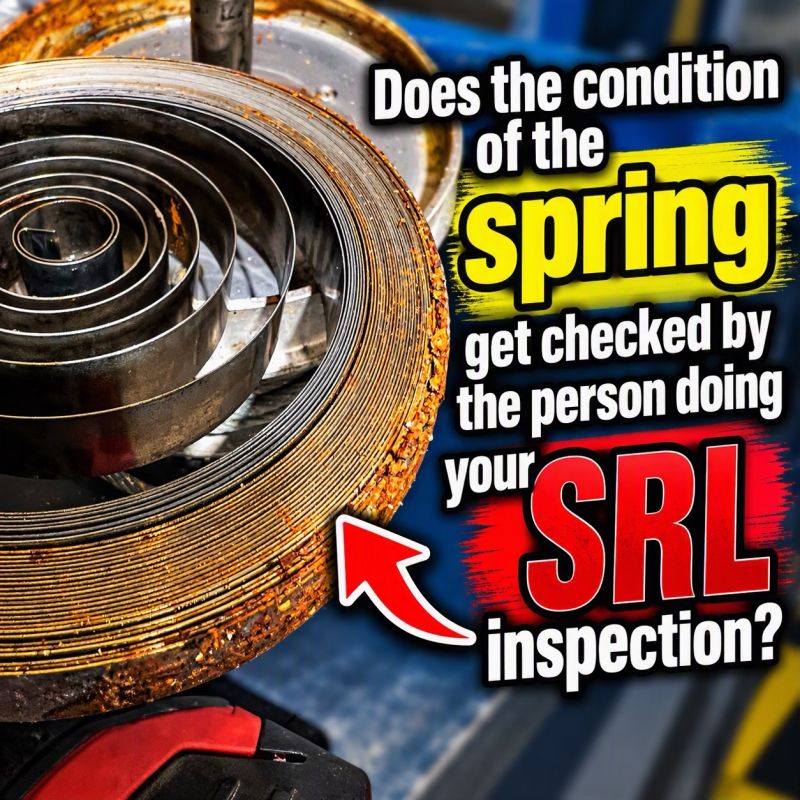
2. Corrosion on an internal spring
The close-up shows corrosion on a spring inside a fall arrest block. Its condition could not be assessed simply by looking at the outside of the housing.
What this demonstrates: an intact casing does not confirm that the components it encloses are in good condition.
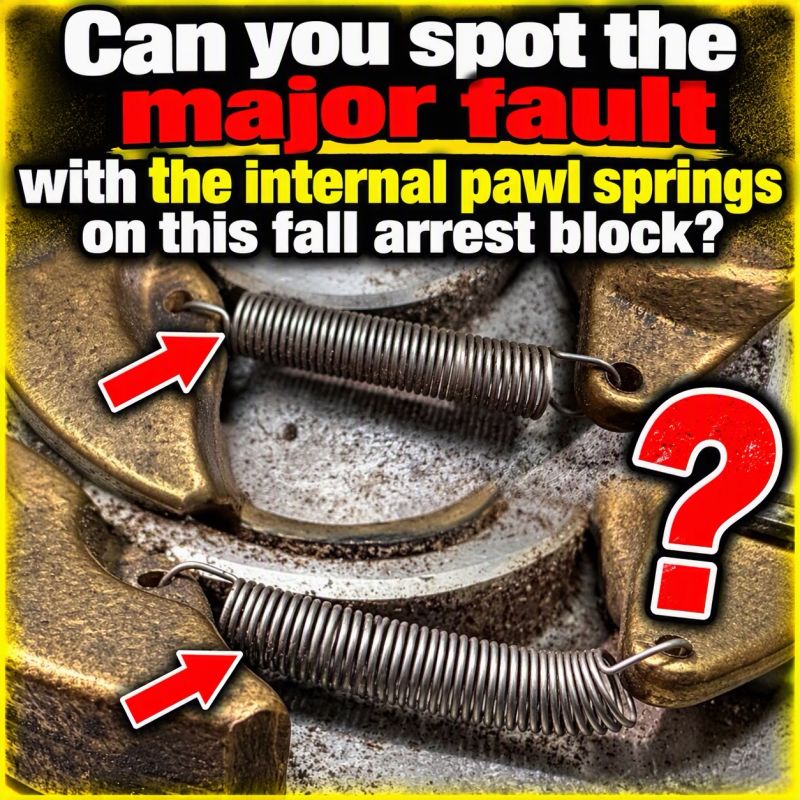
3. A fault with a pawl spring
In this example, Ross identified a fault with one of the pawl springs after the block was opened and examined internally.
What this demonstrates: identifying a problem can depend on access to the relevant components and knowledge of the equipment’s design.
Pre-use checks remain essential. These examples show their limits, not a reason to skip them. Internal examination and servicing must follow the manufacturer’s procedure and be carried out by a suitably competent person with any required manufacturer authorisation.
See how we support this work through our fall arrest block and inertia reel servicing service.
What Can a Fall Arrest Block Service Include?
The manufacturer’s procedure determines the work. Depending on the model, this may include:
- Opening the housing and examining internal braking components, springs, pawls and other mechanisms.
- Cleaning contamination and lubricating components where specified.
- Replacing worn parts and any components required at that service interval.
- Reassembling the unit and completing the specified tests.
- Recording the work and identifying the equipment and service date.
Manufacturer support, parts availability and the condition of the equipment affect whether a block can be serviced or repaired. Do not assume every model can be refurbished, or attempt to open a unit unless you are authorised and competent to carry out the required work.
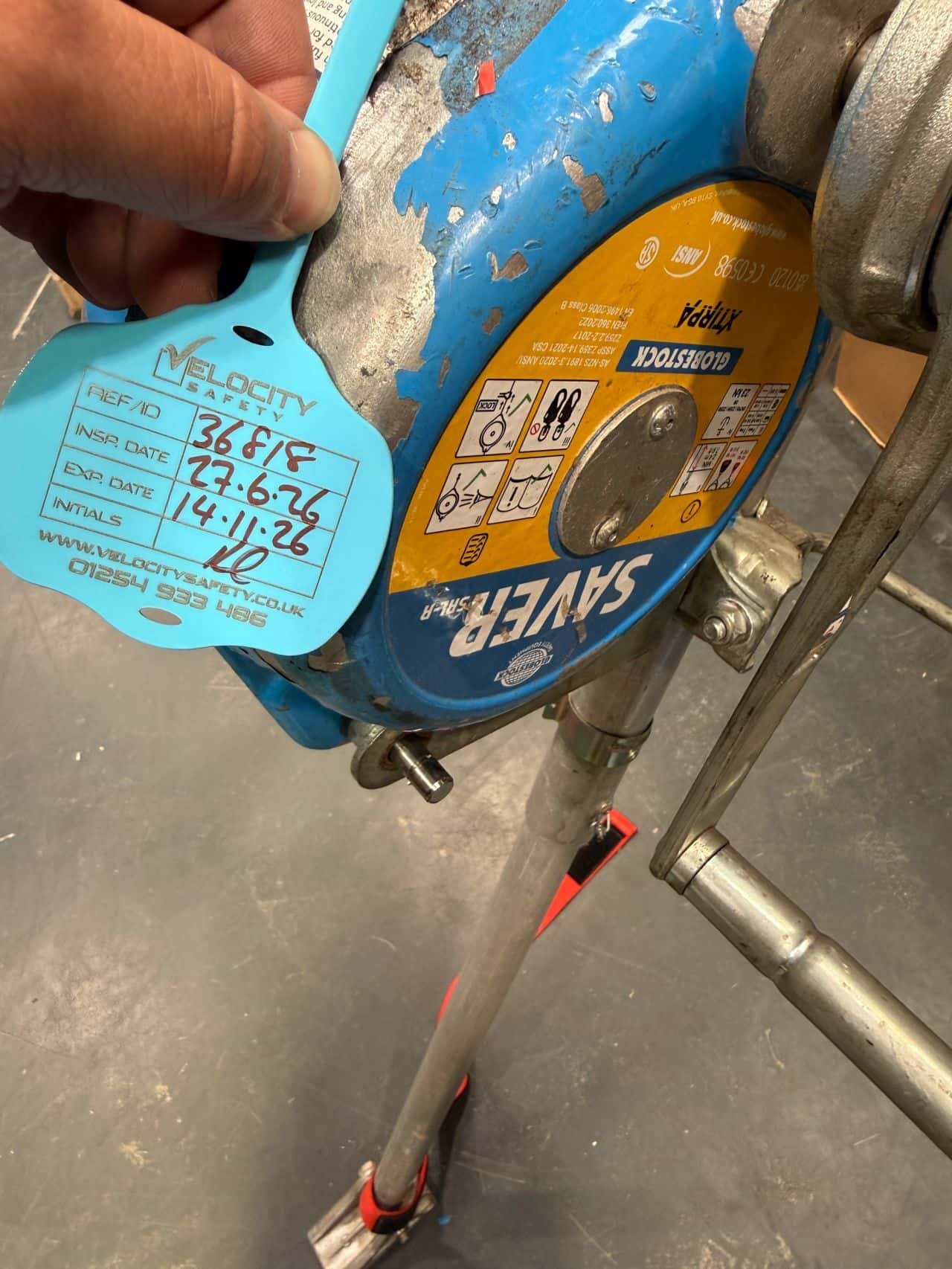
EN 360 Is Not a Safe Working Load
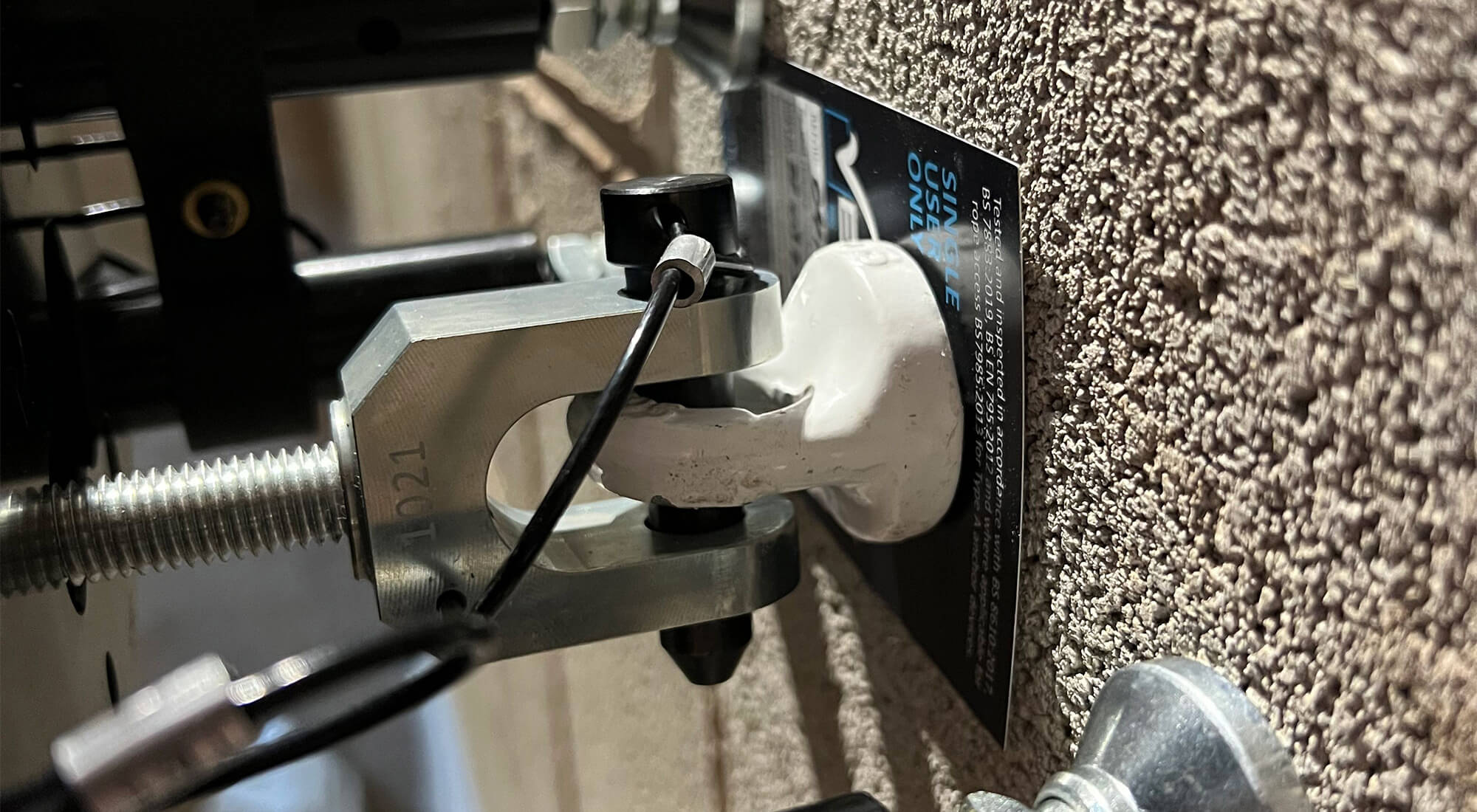
Velocity Safety previously encountered a fall arrest block carrying a lifting-equipment inspection tag with EN 360 entered in the Safe Working Load field.
EN 360 is the product standard for retractable-type fall arresters. It does not state a load capacity. User limits and permitted applications must come from the equipment’s markings and manufacturer’s instructions.
The incorrect entry was a reason to check the equipment identification and supporting records. A tag alone cannot establish what inspection or servicing took place.
Five Questions to Ask Your Inspection or Service Provider
- Which instructions apply to this make and model? Ask how the required inspection and servicing intervals have been established.
- What work does your quotation include? Confirm whether it covers inspection, servicing, repairs or a combination.
- Does the work require internal access? Ask whether the scope follows the manufacturer’s procedure for that model.
- Do you hold any required manufacturer authorisation? Check that it covers the equipment being sent in.
- What records will I receive? You should be able to identify the unit, the work completed, findings and any limitations.
Clear answers and traceable records are more useful than relying on a fresh tag or assumptions about what “inspected” means.
Check What Your Fall Arrest Block Needs
Send us the make, model and any available inspection or service history. We can confirm whether Velocity Safety can support the equipment and discuss the required work.
Enquire about fall arrest block servicing
Call 01254 933486 or email info@velocitysafety.co.uk.
For other equipment, see our personal fall protection equipment inspections.
Frequently Asked Questions
Is inspecting a fall arrest block the same as servicing it?
No. Inspection assesses the equipment’s condition; servicing carries out the maintenance specified by the manufacturer. Inspection can include internal examination where required, so the difference is not simply “external versus internal”.
Do all fall arrest blocks need the same servicing?
No. Requirements vary by manufacturer and model. Follow the applicable instructions for inspection, maintenance, servicing and retirement. Some models are not designed to be opened or repaired.
Does a block locking during its pre-use check mean it does not need servicing?
No. Locking is one check; it does not establish the condition of every internal component. The block must still meet the inspection and servicing requirements specified for that model.
Can a fall arrest block be serviced without opening it?
If the manufacturer specifies internal servicing, the unit must be opened using the applicable procedure by a competent person with any required authorisation. This does not mean every model should be opened.
Is EN 360 a safe working load?
No. EN 360 is a product standard for retractable-type fall arresters. It is not a load capacity. Refer to the equipment’s markings and manufacturer’s instructions for its user limits and permitted applications.