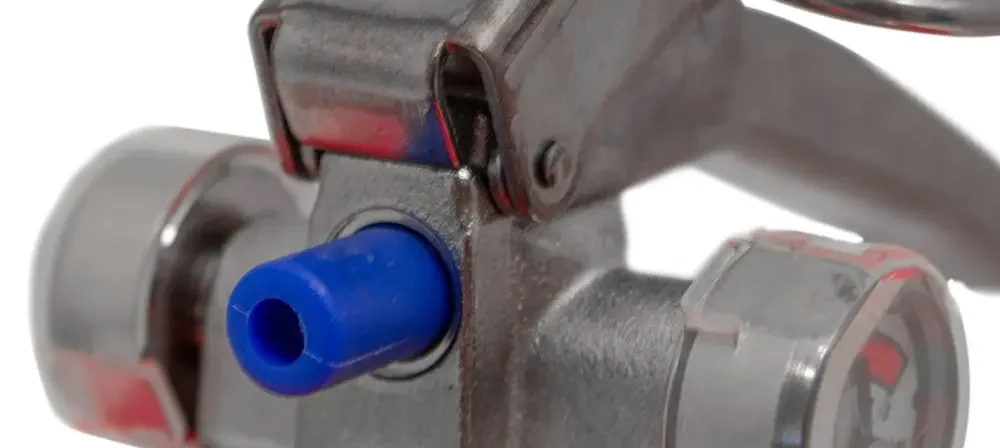
Close-up of the handle, safety pin and pressure gauges on a Britannia P50 powder extinguisher

What Is a P50 Fire Extinguisher and What Can It Be Used For?

“Service-free does not mean maintenance-free. P50 fire extinguishers still require a recorded annual inspection.”

A P50 fire extinguisher is a lightweight composite extinguisher designed to provide long-life fire protection with reduced external servicing requirements.

Unlike conventional steel extinguishers, Britannia P50 extinguishers do not require an external annual service during their first 10 years. However, the prescribed annual maintenance inspection must still be completed and recorded by a trained, competent person.

Different P50 models are designed for different fire risks, so the correct extinguisher must be selected according to your premises and fire risk assessment.

Quick Answer: What is a P50 fire extinguisher?

A P50 is a composite-bodied fire extinguisher manufactured by Britannia Fire. It has a 20-year lifecycle, subject to the required maintenance and a manufacturer’s overhaul after 10 years. P50 extinguishers are available for different fire classes, including water mist and ABC powder models.

Explore Velocity Safety’s UK-wide P50 fire extinguisher supply and installation service.

Key Takeaways – P50 Fire Extinguishers

  • P50 extinguishers use a lightweight, corrosion-resistant composite construction.
  • They have a potential 20-year lifecycle, subject to the required inspection and overhaul process.
  • No external annual service is required during the first 10 years when the prescribed annual checks are completed correctly.
  • “Service-free” does not mean that the extinguisher can be installed and forgotten.
  • Water mist and ABC powder P50 extinguishers cover different fire risks.
  • The correct model, quantity and position should be determined by a fire risk assessment and site survey.
  • P50 extinguishers must still be properly installed, commissioned, inspected and documented.

Jump to:

What Is a P50 Fire Extinguisher?

P50 is the name of a range of composite fire extinguishers manufactured in the UK by Britannia Fire.

Instead of a conventional steel cylinder, the internal P50 bottle is manufactured from high-density polyethylene and wound with a strong aramid fibre. The extinguisher also has a UV-protected outer jacket and corrosion-resistant components.

This construction is intended to provide:

  • A lighter extinguisher than many equivalent steel models
  • Resistance to corrosion in damp or exposed environments
  • A long operational lifecycle
  • Reduced external servicing requirements
  • Double pressure gauges for completing the prescribed annual inspection

P50 extinguishers are available in several sizes and extinguishing media. The term “P50” therefore describes the product range and construction rather than one universal extinguisher suitable for every fire.

A competent assessment is still required to decide which models your premises need.

What Can P50 Fire Extinguishers Be Used For?

What a P50 fire extinguisher can be used for depends on the model and extinguishing medium.

Velocity Safety currently supplies and installs 6-litre P50 water mist and 6kg P50 ABC powder extinguishers. These two models are designed for different workplace risks.

6-Litre P50 Water Mist Extinguishers

The 6-litre water mist model is primarily designed for Class A fires involving ordinary combustible materials such as:

  • Paper
  • Wood
  • Cardboard
  • Textiles
  • Many furnishings and general workplace combustibles

This makes water mist P50 extinguishers suitable for many offices, schools, accommodation premises, healthcare settings, retail units and other commercial buildings.

The Britannia 6-litre P50 water mist extinguisher has also passed the applicable EN3 test for use near live electrical equipment up to 1000V.

This does not mean that every electrical risk should automatically be covered by water mist. The equipment, working environment and fire risk assessment should be considered when selecting extinguishers.

6kg P50 ABC Powder Extinguishers

ABC powder P50 extinguishers can cover:

  • Class A fires – Solid combustible materials
  • Class B fires – Flammable liquids
  • Class C fires – Flammable gases

They may be suitable for industrial premises, workshops, construction sites, external fire points, vehicles, yards and other mixed-risk environments.

Powder can create a cloud that affects visibility and leaves significant residue. It can also damage sensitive equipment. This means powder extinguishers should be selected according to the specific environment rather than treated as the default option for every indoor workplace.

The P50 name does not identify the fire class

Always check the extinguisher’s label, fire rating and intended applications. A P50 water mist extinguisher and a P50 powder extinguisher are not interchangeable in every situation.

What Types of P50 Fire Extinguisher Are Available?

The wider Britannia P50 range includes water mist, powder, foam and specialist models. This is why search terms such as “P50 foam fire extinguisher” and “P50 Eco fire extinguisher” may return products with different capabilities.

Velocity Safety’s principal P50 installation options are the 6-litre water mist and 6kg ABC powder models.

Feature 6-Litre P50 Water Mist 6kg P50 ABC Powder
Principal fire classes Class A Classes A, B and C
Typical environments Offices, schools, healthcare, accommodation and commercial premises Industrial sites, workshops, construction sites, vehicles and outdoor risks
Use near electrical equipment EN3-tested for use near live electrical equipment up to 1000V ABC powder is non-conductive, subject to correct application and risk assessment
Discharge considerations Fine water mist with minimal residue Powder can reduce visibility and leave extensive residue
Selection Specified according to the Class A and electrical risks present Specified for suitable mixed, industrial and external risks

Not every premises should use only one type. A site may require water mist extinguishers in occupied buildings and ABC powder models at suitable external or industrial fire points.

A fire extinguisher survey can establish the correct models, quantities and locations.

Are P50 Fire Extinguishers Really Service-Free?

P50 extinguishers are frequently described as “service-free” because an external annual servicing contract is not required during their first 10 years.

This does not remove the need for maintenance.

The prescribed annual inspection must be completed by a trained and competent person. The result should also be recorded so the business can demonstrate that the extinguisher has been checked.

The inspection should be completed in accordance with the manufacturer’s instructions and the organisation’s fire safety procedures. It includes checks covering matters such as:

  • The condition of the extinguisher and its outer body
  • The pressure shown by its gauges
  • Whether the gauges respond correctly during the prescribed test
  • The condition of the operating mechanism, pin and tamper seal
  • Evidence of damage, interference, leakage or discharge
  • Whether the instructions and identification remain legible
  • Whether the extinguisher remains correctly located and accessible
  • Whether the inspection has been recorded

Anyone responsible for these checks needs suitable training and must understand when an extinguisher should be removed from service or referred for further examination.

Do not interpret “service-free” as “fit and forget”

A P50 extinguisher that is damaged, discharged, incorrectly positioned or outside its required maintenance programme cannot be assumed to remain serviceable simply because it is less than 10 years old.

How Long Does a P50 Fire Extinguisher Last?

Britannia P50 extinguishers are designed with a 20-year lifecycle.

The first stage covers the initial 10-year period, during which the required annual maintenance inspections must be completed and recorded.

At 10 years, the extinguisher requires a manufacturer’s overhaul. Once the overhaul has been completed successfully, the extinguisher can enter a second 10-year period.

Its full lifecycle is therefore dependent on:

  • Correct initial selection and installation
  • Completion of the prescribed annual inspections
  • Suitable storage and environmental conditions
  • No damage, discharge or interference that makes the extinguisher unserviceable
  • The required manufacturer’s overhaul after 10 years

A 20-year lifecycle should not be treated as an unconditional guarantee that every extinguisher will remain suitable regardless of its condition.

Yes. P50 fire extinguishers can form part of a compliant fire protection system when the products are appropriate for the risks present and are correctly installed, commissioned and maintained.

Britannia states that the P50 range carries approvals and certification including the BSI Kitemark, UKCA, EN3 and PED.

However, UK fire safety law does not simply approve premises because they contain a particular brand or model of extinguisher.

The person responsible for a non-domestic premises must assess its fire risks and put appropriate fire safety measures in place. Government guidance also states that firefighting equipment must be properly installed, tested and maintained.

The responsible person may be an employer, owner, landlord, occupier, facilities manager, managing agent or another person with control of the premises. The precise legislation differs across England and Wales, Scotland and Northern Ireland.

The practical question is therefore not only whether P50 extinguishers are legal. It is whether:

  • The selected models are suitable for the identified fire risks
  • Enough extinguishers have been provided
  • They have been positioned and identified correctly
  • They have been commissioned and documented
  • The prescribed maintenance process is being followed

Simply purchasing P50 extinguishers online does not answer these site-specific questions.

P50 Fire Extinguishers vs Traditional Steel Extinguishers

P50 and conventional steel extinguishers can both provide effective fire protection when they are correctly selected and maintained. The main differences concern their construction, servicing process and potential lifecycle.

Comparison P50 Extinguishers Conventional Steel Extinguishers
Construction Composite internal bottle and protective outer jacket Predominantly steel cylinder construction
External annual service Not required during the first 10 years when the prescribed annual inspection is completed correctly Normally requires basic servicing by a competent extinguisher technician at least annually
Annual checks Required and must be completed by a trained, competent person Routine user checks and scheduled competent-person servicing are required
Lifecycle Potential 20-year lifecycle with a manufacturer’s overhaul after 10 years Depends on extinguisher type, condition and the applicable overhaul or replacement regime
Corrosion resistance Composite construction is designed to resist corrosion Steel units can be vulnerable to corrosion in unsuitable environments
Initial purchase decision Often assessed according to longer-term maintenance and lifecycle costs May have a lower initial equipment cost, depending on type and supplier

The most appropriate option depends on the premises, fire risks, number of units, existing equipment and how the organisation manages ongoing maintenance.

Velocity Safety can assess an existing extinguisher estate and determine whether a complete or phased transition to P50 equipment is appropriate.

How Much Do P50 Fire Extinguishers Cost?

The cost of P50 fire extinguishers depends on:

  • The extinguisher model and capacity
  • The number of extinguishers required
  • Whether a site assessment is needed
  • Installation and commissioning requirements
  • The brackets, stands or cabinets required
  • Identification and fire point signage
  • The number and location of premises
  • Removal or disposal of existing equipment

Comparing the price of one P50 extinguisher with one conventional extinguisher does not necessarily provide a useful whole-life comparison.

The evaluation should also consider servicing costs, replacement intervals, the 10-year manufacturer’s overhaul, internal inspection responsibilities and the administrative requirements of managing the equipment.

Velocity Safety provides site-specific quotations covering the required P50 extinguishers, installation, commissioning and accessories.

Current P50 offer

Velocity Safety is currently offering buy three, get one free on 6-litre P50 water mist extinguishers. Availability and the suitability of these extinguishers for your premises should be confirmed when requesting a quotation.

Who Are P50 Fire Extinguishers Suitable For?

P50 extinguishers may be suitable for organisations looking to reduce external servicing requirements or standardise their fire protection across several premises.

Potential applications include:

  • Offices and commercial buildings
  • Schools, colleges and public-sector premises
  • Healthcare and accommodation settings
  • Warehouses and logistics facilities
  • Manufacturing premises and workshops
  • Construction sites and temporary compounds
  • Facilities teams managing several buildings
  • Outdoor or exposed fire points requiring corrosion-resistant equipment

The product’s maintenance model may be particularly attractive to multi-site organisations. However, the business must still have a reliable process for training competent personnel, completing annual inspections and retaining the necessary records.

Do P50 Fire Extinguishers Require Installation and Commissioning?

Yes. The reduced servicing requirements of P50 extinguishers do not remove the need for correct initial installation and commissioning.

Before installation, the provider should establish:

  • The fire classes and specific risks present
  • The correct extinguisher models and quantities
  • Where each extinguisher should be positioned
  • Whether wall brackets, stands or cabinets are required
  • What identification signage is needed
  • Whether any existing extinguishers should be retained, relocated or removed

The extinguishers should then be installed securely, commissioned and added to the site’s fire safety records.

A proper handover should also explain the annual inspection process and identify who will be responsible for completing and recording it.

Learn more about fire extinguisher commissioning and decommissioning.

Final Takeaway

A P50 fire extinguisher is a long-life composite extinguisher that can reduce the need for conventional external annual servicing.

Its main benefits include corrosion-resistant construction, a potential 20-year lifecycle and a maintenance system that can be managed in-house by an appropriately trained and competent person.

However, P50 extinguishers are not genuinely maintenance-free.

They must still be:

  • Selected according to the fire risks present
  • Installed and commissioned correctly
  • Inspected annually using the prescribed procedure
  • Recorded within the organisation’s fire safety documentation
  • Overhauled by the manufacturer after 10 years if they are to enter their second 10-year period

The safest starting point is a site assessment that identifies the correct water mist, powder or combined provision for your premises.

Considering P50 fire extinguishers for your premises?

Velocity Safety provides UK-wide P50 fire extinguisher assessment, supply, installation and commissioning.

Tell us about your premises, current extinguishers and fire risks, and we’ll recommend a suitable package including water mist or ABC powder units, brackets, stands, cabinets and signage where required.

Current offer: Buy three, get one free on 6-litre P50 water mist extinguishers.

📞 Call: 01254 933 486
📩 Email: info@velocitysafety.co.uk
🌐 Or contact Velocity Safety online.

Request a P50 Fire Extinguisher Quote

Frequently Asked Questions

What does P50 mean on a fire extinguisher?

P50 is the name of Britannia Fire’s range of composite fire extinguishers. It describes the product family rather than one particular extinguishing medium or fire classification.

What can a P50 fire extinguisher be used for?

That depends on the model. A 6-litre P50 water mist extinguisher is principally suitable for Class A combustible-material fires and has been tested for use near live electrical equipment up to 1000V. A 6kg P50 ABC powder extinguisher can cover Class A, B and C risks.

Are all P50 fire extinguishers foam extinguishers?

No. The P50 range includes water mist, powder, foam and specialist models. The extinguisher label and fire rating must be checked to establish what a particular P50 can be used for.

Do P50 fire extinguishers need annual servicing?

They do not require a conventional external annual service during their first 10 years when the manufacturer’s prescribed annual inspection is completed correctly. That inspection must still be undertaken and recorded by a trained, competent person.

Are P50 fire extinguishers completely maintenance-free?

No. P50 extinguishers require annual maintenance checks and must be removed from use or investigated if they are damaged, discharged, tampered with or found to be outside the acceptable condition.

How long does a P50 extinguisher last?

P50 extinguishers have a potential 20-year lifecycle. A manufacturer’s overhaul is required after 10 years before an extinguisher can enter its second 10-year period.

Are P50 fire extinguishers legal in the UK?

Yes, provided they are suitable for the identified risks and are correctly installed, commissioned and maintained. Compliance depends on the overall fire risk assessment and fire protection arrangements, not simply the brand of extinguisher purchased.

Can P50 water mist extinguishers be used on electrical equipment?

Britannia’s P50 water mist extinguisher has passed the applicable EN3 test for use near live electrical equipment up to 1000V. The correct extinguisher provision should nevertheless be selected according to the equipment, environment and site fire risk assessment.

Are P50 extinguishers suitable for outdoor use?

Their corrosion-resistant composite construction can make P50 extinguishers suitable for demanding or exposed environments. Appropriate cabinets, stands and mounting arrangements may still be required to protect the equipment and maintain accessibility.

Can a business inspect its own P50 extinguishers?

The prescribed annual inspection can be managed in-house where the person completing it has received appropriate training and is competent to follow the manufacturer’s procedure, identify problems and maintain the required records.

Do P50 extinguishers need to be commissioned?

Yes. New P50 extinguishers should be correctly positioned, securely installed, commissioned and documented before being placed into service.

Where can I buy P50 fire extinguishers near me?

Velocity Safety is based in Blackburn, Lancashire, and supports businesses across the North West, including Lancashire, Greater Manchester, Merseyside, Cheshire and Cumbria. UK-wide P50 supply, installation and commissioning is also available for individual and multi-site organisations.
Resources

Gas Detector Bump Test vs Calibration

Gas Detector Bump Test vs Calibration: What’s the Difference?

“A recent calibration does not prove that your portable gas detector will respond correctly today.”

A bump test and a calibration are not the same procedure.

Calibration checks the accuracy of a portable gas detector against a known concentration of test gas and allows the instrument to be adjusted where necessary.

A bump test is a quicker functional check used to confirm that gas can reach the sensors, the sensors respond and the detector’s alarms activate.

Portable gas detectors may therefore need both periodic calibration and bump testing before each day’s use.

Quick Answer: What is the difference between a bump test and calibration?

A bump test confirms that a gas detector responds when exposed to test gas and that its alarms activate. Calibration checks the detector’s response against a known gas concentration and makes any necessary adjustment in accordance with the manufacturer’s procedure. A successful calibration does not remove the need for subsequent bump testing.

Learn more about Velocity Safety’s gas detector calibration services.

Key Takeaways – Gas Detector Bump Testing

  • A bump test is not a calibration.
  • Most portable gas-detector instructions recommend a bump test before each day’s use.
  • A bump test checks sensor response and the operation of audible, visual and vibration alarms.
  • Calibration checks the instrument’s response against a known gas concentration and allows adjustment where required.
  • A detector can develop a fault or suffer sensor contamination after its most recent calibration.
  • A detector that fails its bump test should not be used until the fault has been investigated and resolved.

Jump to:

Gas Detector Bump Test vs Calibration

Bump testing and calibration both involve exposing a gas detector to test gas, but they serve different purposes.

Check Bump Test Calibration
Main purpose Confirms that the detector responds to gas and activates its alarms. Checks the detector’s response against a known gas concentration and permits adjustment where required.
Typical frequency Before each day’s use, subject to the manufacturer’s instructions and site procedure. At the interval specified by the manufacturer and the employer’s maintenance programme.
Does it adjust the detector? No. The calibration procedure can include adjustment where the response is outside the permitted tolerance.
Does one replace the other? No. No.

Sending a portable detector away for calibration every few months does not confirm that it remains functional on every day between calibrations.

Why Is Bump Testing Important?

Portable gas detectors are used to warn workers about potentially dangerous atmospheres, including toxic gases, flammable gases and oxygen deficiency or enrichment.

Their sensors can be affected by:

  • Exposure to high gas concentrations
  • Sprays, solvents, paints, vapours or greases
  • Sensor poisons or inhibitors
  • Dirt, dust or blocked sensor openings
  • Impact or physical damage
  • Incorrect storage or unsuitable environmental conditions

Some faults may not be identified by simply switching the detector on.

The display, lights and audible alarm might appear operational while a damaged, obstructed or inhibited sensor fails to respond correctly to the target gas.

A bump test challenges the detector using actual test gas. This provides a practical check that the gas reaches the sensor and the detector responds.

Calibration only confirms the detector’s condition at the time it was calibrated

A detector could be calibrated successfully and then suffer contamination, impact or sensor damage before its next scheduled calibration. Regular bump testing helps identify a loss of function before the monitor is relied upon in a hazardous atmosphere.

How Often Should a Portable Gas Detector Be Bump Tested?

HSE notes that the operating instructions for most gas detectors recommend a function check—commonly called a bump test—before each day’s use.

The correct procedure should be based on:

  • The detector manufacturer’s instructions
  • The gases and sensor types involved
  • The employer’s risk assessment
  • The safe system of work
  • Site conditions and potential contaminants
  • Any impact, unusual exposure or suspected equipment fault

Additional testing may be appropriate after the detector has been dropped, exposed to a high gas concentration or subjected to substances that could affect its sensors.

For guidance on periodic calibration intervals, see our article explaining how often gas detectors should be calibrated.

How Is a Gas Detector Bump Test Performed?

The exact method depends on the detector and its manufacturer’s instructions.

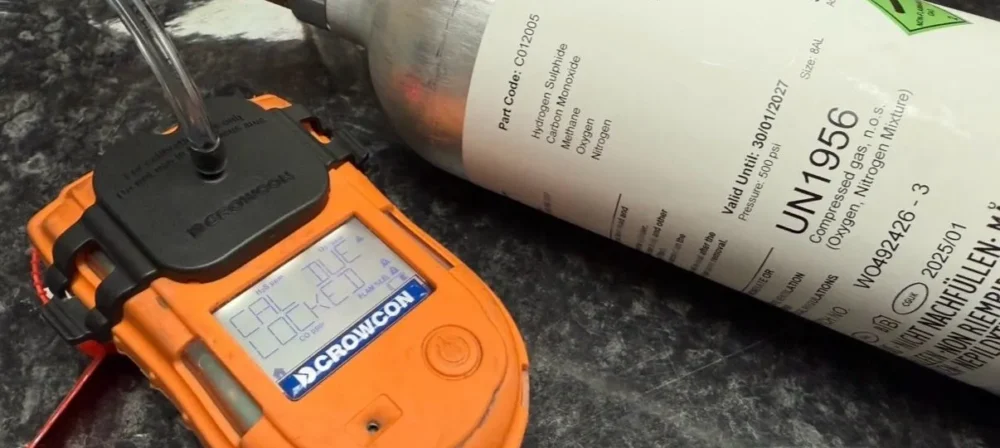
A typical manual bump test uses:

  • A suitable cylinder containing the required test gas
  • The correct fixed-flow regulator
  • Compatible tubing and a detector adaptor
  • A safe and suitably ventilated testing area

The detector is exposed to test gas so the operator can confirm that the relevant sensors respond and the audible, visual and vibration alarms operate correctly.

Automatic test stations can also apply gas, assess the detector’s response and create an electronic record of the outcome.

Only compatible gas, regulators, adaptors and test procedures should be used. The applicable manufacturer’s instructions must always be followed.

What Happens If a Gas Detector Fails a Bump Test?

A portable gas detector that fails its bump test should not be relied upon for confined-space entry or other hazardous-atmosphere work.

The instrument should be removed from use and investigated in accordance with the manufacturer’s instructions.

Depending on the result, this may involve:

  • Checking that the correct test gas and equipment were used
  • Checking the gas cylinder’s concentration and expiry date
  • Inspecting tubing, adaptors and sensor openings
  • Completing a full calibration
  • Replacing a failed or contaminated sensor
  • Sending the detector for servicing or repair

If the detector cannot successfully complete the required checks, it should remain out of service.

Final Takeaway

A calibration certificate does not replace a pre-use bump test.

Calibration checks whether a gas detector responds accurately against a known standard. Bump testing checks whether the detector can respond and alarm when it is needed.

Portable gas detectors can be affected at any point between scheduled calibrations, which is why bump testing forms an essential part of a properly managed gas-detection procedure.

Need help with portable gas detector calibration or testing equipment?

Velocity Safety provides gas detector calibration support and can help businesses understand the difference between periodic calibration and routine functional checks.

Send us the manufacturer, model, quantity and gases monitored, and we’ll confirm the support available.

📞 Call: 01254 933486
📩 Email: info@velocitysafety.co.uk
🌐 Or contact Velocity Safety online.

Arrange Gas Detector Calibration

Frequently Asked Questions

Is a gas detector bump test the same as calibration?

No. A bump test confirms that the detector responds to gas and activates its alarms. Calibration checks its response against a known gas concentration and allows adjustment where required.

Does a calibrated gas detector still need bump testing?

Yes, where required by the manufacturer’s instructions or the employer’s testing procedure. A detector can become damaged, obstructed or contaminated after calibration and before its next scheduled service.

Should portable gas detectors be bump tested every day?

HSE states that most gas-detector operating instructions recommend a function check before each day’s use. Employers should follow the applicable manufacturer’s instructions and establish an appropriate testing procedure for the equipment and risks involved.

What should happen after a failed bump test?

The detector should be removed from use and investigated. It may require another correctly performed test, full calibration, servicing, sensor replacement or repair before being returned to use.

Can a detector pass its self-test but fail a bump test?

Yes. A start-up self-test may check the detector’s electronics, display and alarms without proving that its sensors can respond correctly to the target gas. A bump test exposes the sensors to test gas.

Resources

Respiratory Protective & Equipment Inspections

PortaCount 8040 and RPE Competent Person Training for ISAR3

“A great couple of days in Plymouth providing PortaCount 8040 and RPE competent person training.”

Velocity Safety recently travelled to Plymouth to provide two days of respiratory protective equipment training for ISAR3 – Industrial Safety Access & Rescue.

The visit combined training on the TSI PortaCount 8040 with additional instruction for the RPE competent person role, including training on performing monthly RPE examinations.

Training Summary

Organisation: ISAR3 – Industrial Safety Access & Rescue
Location: Plymouth
Duration: Two days
Training: TSI PortaCount 8040 and RPE competent person training for monthly examinations

Two Days of RPE Training in Plymouth

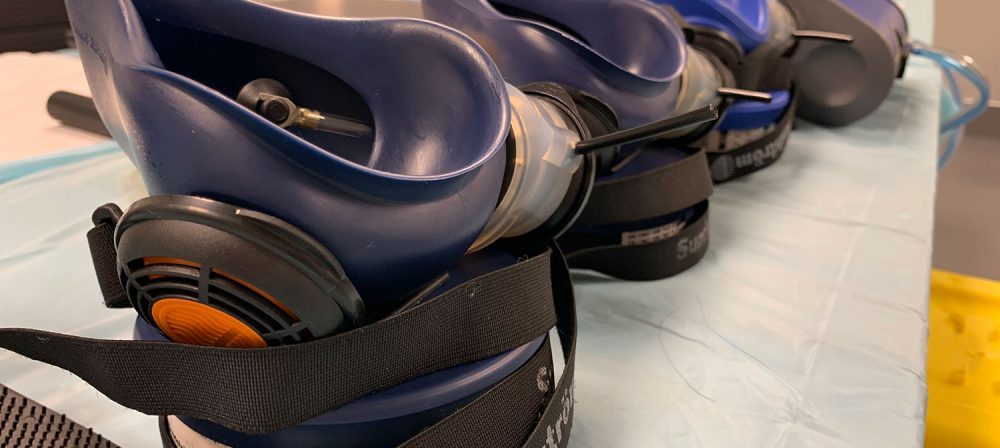
The two-day visit provided the ISAR3 team with training on the TSI PortaCount 8040.

The PortaCount 8040 is used for quantitative face fit testing, providing a numerical fit factor for the respirator being tested.

Training was delivered directly to the team in Plymouth, allowing the equipment and testing process to be covered together during the visit.

TSI PortaCount 8040 Training

The first part of the visit focused on the TSI PortaCount 8040.

This equipment is used to perform quantitative face fit tests on applicable tight-fitting respiratory protective equipment.

ISAR3 received training on using the PortaCount 8040 as part of the two-day programme.

For organisations requiring face fit testing, Velocity Safety provides Fit2Fit-accredited qualitative and quantitative face fit testing for workers using tight-fitting RPE.

RPE Competent Person Training

Additional training was provided for the RPE competent person role.

This included training on performing the monthly examinations required for applicable reusable respiratory protective equipment.

The competent-person training was delivered alongside the PortaCount programme, allowing both face fit testing and the examination of RPE to be addressed during the visit.

Velocity Safety also provides documented RPE inspections and RPE examination and servicing support.

Completing the Training

After two days in Plymouth, the PortaCount 8040 and additional RPE competent person training were completed.

It was a pleasure working with the ISAR3 team and finally meeting Phil Turner in person.

Thank you to everyone at ISAR3 for having us.

Need support with face fit testing or reusable RPE examinations?

Velocity Safety provides quantitative and qualitative face fit testing, documented RPE inspections and RPE examination and servicing support.

📞 Call: 01254 933 486
📩 Email: info@velocitysafety.co.uk
🌐 Or contact Velocity Safety online.

View Our Face Fit Testing Service

G Force - Authorised Inspections & Installations

Velocity Safety Is Now an Authorised G-Force Service Agent

“Proper fall arrest block servicing requires manufacturer training, specialist equipment and the correct service procedures.”

Velocity Safety is now an authorised G-Force service agent and distributor for G-Force fall arrest blocks and products.

The new authorisation follows significant investment in training, specialist tooling, servicing jigs and spare parts.

Customers can now contact Velocity Safety about the supply, inspection and manufacturer-authorised servicing of applicable G-Force equipment.

Quick Answer: Can Velocity Safety service G-Force fall arrest blocks?

Yes. Velocity Safety is an authorised G-Force service agent and distributor, with the manufacturer training, specialist tooling, jigs, service information and spare parts required to support applicable G-Force fall arrest blocks and products.

Enquire about G-Force fall arrest block servicing.

Key Takeaways

  • Velocity Safety is now an authorised G-Force service agent and distributor.
  • The capability is supported by manufacturer training, specialist tooling, jigs and spare parts.
  • Manufacturer service manuals provide the procedures and technical information needed to service applicable equipment correctly.
  • Customers can enquire about both G-Force equipment supply and servicing.

New G-Force Fall Arrest Block Servicing Capability

Becoming an authorised service agent involves considerably more than adding another manufacturer to an inspection list.

Velocity Safety has invested thousands of pounds in the training, tooling, servicing jigs and spare parts needed to support G-Force equipment properly.

This gives our technicians access to the procedures and technical information required when servicing applicable G-Force fall arrest blocks.

It also expands the range of fall-protection equipment we can supply directly to customers.

Why Manufacturer-Authorised Servicing Matters

An external inspection can identify visible damage, deterioration, missing labels and problems with the lifeline, connectors or casing.

However, servicing work may also require:

  • Manufacturer-specific training
  • Specialist jigs and tooling
  • Access to the correct service manuals
  • Specified procedures and torque settings
  • Suitable replacement components and spare parts
  • Internal examination where required

Without these resources, a provider may only be completing an external examination before attaching a new inspection tag.

The exact inspection, servicing and repair requirements depend on the G-Force model, its condition and the applicable manufacturer instructions.

An inspection tag does not prove that servicing has been completed

Businesses should confirm what work has actually been carried out, whether the provider is authorised for the equipment and whether the required servicing records have been supplied.

Arrange G-Force Servicing or Equipment Supply

Velocity Safety can now support customers requiring manufacturer-authorised servicing or the supply of applicable G-Force fall arrest equipment.

To help us confirm the available support, send:

  • The equipment model
  • Serial or asset number
  • Photographs of the unit and labels
  • Details of any known faults or damage
  • Previous inspection or servicing records where available

We will confirm the appropriate inspection, servicing or supply route for the equipment.

Need a G-Force fall arrest block serviced or want to enquire about new equipment?

Velocity Safety is an authorised G-Force service agent and distributor, supporting customers across the UK.

📞 Call: 01254 933486
📩 Email: info@velocitysafety.co.uk
🌐 Or contact Velocity Safety online.

Arrange G-Force Servicing

Frequently Asked Questions

Is Velocity Safety an authorised G-Force service agent?

Yes. Velocity Safety is an authorised service agent for applicable G-Force fall arrest blocks and products.


Can Velocity Safety supply G-Force equipment?

Yes. Velocity Safety is also a G-Force distributor. Contact us with your equipment requirements and we will confirm the available options.

Can every G-Force fall arrest block be serviced?

Servicing availability depends on the exact model, condition, manufacturer requirements and availability of suitable components. Send us the equipment details and photographs so we can confirm the correct route.

Is an inspection the same as servicing?

No. An inspection assesses the condition and function of the equipment. Servicing can involve manufacturer-specified procedures, specialist tooling, internal examination and component replacement where required.

Related Services

Lifting Equipment & Lifting Accessory Thorough Examinations

What Markings Are Required on Lifting Equipment Under LOLER?

“A coloured inspection tag does not prove that lifting equipment is correctly marked, traceable or safe to use.”

Lifting equipment can appear serviceable while its identification plate, load tag or other essential markings are missing, illegible or incomplete.

This is not a minor paperwork issue.

Under Regulation 7 of the Lifting Operations and Lifting Equipment Regulations 1998 (LOLER), lifting equipment and accessories must carry—or be supported by—clear information about their safe working load and the characteristics necessary for safe use.

If workers cannot establish what an item can safely lift, which configuration the stated capacity applies to or whether it is intended for lifting people, it should not simply receive a new coloured tag and return to service.

Quick Answer: What markings are required on lifting equipment?

LOLER Regulation 7 requires lifting machinery and accessories to be clearly marked with their safe working load. Where capacity changes according to the equipment’s configuration, the applicable SWL for each configuration must be marked or made readily available. Lifting accessories must also show the characteristics needed for safe use. Equipment designed to lift people must be identified accordingly, while equipment that could mistakenly be used for lifting people must be marked where it is not designed for that purpose.

Learn more about our LOLER thorough examinations of lifting equipment and accessories.

Key Takeaways – LOLER Marking Requirements

  • Lifting machinery and accessories must clearly indicate their safe working load (SWL).
  • Where capacity changes according to configuration, the applicable SWL information must be clearly marked or readily available.
  • Lifting accessories must display the characteristics necessary for their safe use.
  • Equipment designed for lifting people must be clearly identified and show its SWL and maximum number of people where applicable.
  • Equipment that could mistakenly be used to lift people must be marked where it is not designed for that purpose.
  • Identification and traceability help connect equipment to its manufacturer information, declaration and thorough examination records.
  • A coloured inspection tag or next-due date does not replace the original safety markings.
  • Missing or illegible information must not be replaced with an assumed capacity.

Jump to:

What Does LOLER Regulation 7 Require?

Regulation 7 addresses the marking of lifting equipment used at work.

Its purpose is to ensure operators can identify the equipment’s safe capacity, important limitations and whether it is suitable for the proposed lifting operation.

Regulation 7 Requirement What It Means in Practice
Safe working load Machinery and accessories used for lifting loads must clearly indicate their SWL.
Different configurations Where capacity changes according to configuration, the SWL for each configuration must be marked or clearly available to the operator.
Characteristics necessary for safe use Accessories must display or be linked to information needed to select and use them safely.
Equipment for lifting people Equipment designed for lifting people must be clearly marked to show that intended use.
Equipment not intended for people Where equipment could mistakenly be used to lift people, it must be marked to show that it is not designed for that purpose.

Regulation 7 builds upon PUWER Regulation 23, which requires work equipment to carry clearly visible health and safety markings where appropriate.

Correct marking is therefore part of the equipment’s safe-use system—not an optional administrative detail.

Safe Working Load Markings

The safe working load is the maximum load that equipment can safely lift in its stated configuration and operating conditions.

For equipment with one fixed capacity, the actual SWL should normally be clearly marked on the item.

Examples include:

  • Overhead cranes
  • Hoists and winches
  • Shackles
  • Single-leg slings
  • Lifting beams with one fixed arrangement
  • Some forklift trucks and lifting attachments

Terms such as rated capacity or working load limit (WLL) may also appear on equipment and manufacturer documentation. The terminology must be interpreted in the context of the equipment, its instructions and the proposed lifting arrangement.

Workers should never estimate capacity from the physical size of a chain, hook or shackle. Two visually similar components may have different grades, specifications and load ratings.

Where it is impractical to mark the numerical value directly, HSE guidance permits an appropriate coding or labelling system that allows the user to determine the SWL.

That system must remain understandable, visible and suitable for the working environment.

Colour coding needs context

A colour can form part of a system used to communicate an SWL, but only where workers understand the system and can reliably determine the equipment’s capacity. A coloured tag used merely to show that an examination has taken place does not, by itself, communicate the SWL or prove that the equipment is suitable for a particular lift.

What If the Safe Working Load Changes?

Some lifting equipment does not have one fixed capacity.

Its SWL may change according to:

  • Operating radius
  • Boom or jib position
  • Use of outriggers
  • Attachments fitted to the machine
  • Number of sling legs in use
  • Sling angle or method of attachment
  • Available lifting points on a beam
  • Other manufacturer-defined configurations

In these circumstances, marking the equipment with only its highest possible capacity can be dangerously misleading.

The applicable capacities may be communicated using:

  • A marked plate
  • A load chart
  • A rated-capacity indicator
  • A durable certificate kept with the machinery
  • Another system that makes the correct information readily available to the operator

The operator must be able to identify the correct SWL for the configuration actually being used—not merely the maximum capacity the equipment can achieve under different conditions.

If reliable information is unavailable for a particular configuration, the capacity must not be guessed.

HSE guidance states that any derating should be undertaken by a competent person using appropriate information from the manufacturer or supplier.

What Must Be Marked on Lifting Accessories?

LOLER defines an accessory for lifting as equipment used to attach a load to lifting machinery.

Examples include:

  • Chain slings
  • Wire-rope and textile slings
  • Shackles
  • Hooks
  • Removable eyebolts
  • Plate clamps
  • Lifting magnets
  • Vacuum lifters
  • Lifting beams and spreader beams

In addition to the SWL, an accessory may need to communicate other characteristics affecting its safe use.

Depending on the equipment and applicable manufacturer requirements or standards, these can include:

  • The configurations in which it can be used
  • Capacity at different sling angles
  • The accessory’s own weight where significant
  • Permitted plate thickness for a lifting clamp
  • Compatibility with a particular machine or assembly
  • Limitations involving heat, chemicals or corrosive environments
  • Manufacturer, grade, size or other product information
  • Information needed to identify the correct instructions and records

Where several accessories form a permanent lifting assembly, the complete assembly should be marked to communicate its relevant safety characteristics.

A collection of individually rated components does not automatically create an assembly with the same capacity as its strongest component.

Do Lifting Accessories Need an Identification or Serial Number?

Regulation 7 does not state that every lifting accessory must carry a serial number in those exact words.

However, it does require accessories to be marked so that the characteristics necessary for their safe use can be identified.

Separate product-supply, manufacturer and equipment-standard requirements can also require identifying information such as a type, batch, serial number or another traceability reference.

In practical equipment management, a unique ID allows the correct item to be connected to:

  • Manufacturer information
  • Its Declaration of Conformity where applicable
  • Instructions and technical information
  • The equipment register
  • Previous thorough examination reports
  • Repairs, defects and maintenance history
  • The next examination due date

This becomes particularly important where a business holds several visually identical slings, shackles or hoists.

Without reliable identification, it may be impossible to demonstrate which item was examined or whether the available paperwork relates to the equipment in front of the user.

An inspection tag cannot manufacture traceability

Adding a handwritten number or coloured examination tag does not establish the manufacturer, grade, capacity or history of unidentified equipment. Before a replacement identification or load tag is applied, the equipment’s identity and rating must be supported by reliable evidence and assessed through a competent process.

How Should Equipment for Lifting People Be Marked?

Equipment designed for lifting people must be clearly marked to show that it is intended for this purpose.

The carrier should also display:

  • Its safe working load
  • The maximum number of people it can carry
  • Any other limitations required for its safe use

Examples can include passenger lifts, personnel baskets, patient hoists and other equipment specifically designed to lift or lower people.

Where lifting equipment is not designed for lifting people but might mistakenly be used in that way, it must be clearly marked to show that it is not intended for lifting persons.

This requirement does not mean that every item of load-lifting equipment needs an identical warning. It applies where incorrect use for lifting people is reasonably foreseeable.

What Should You Do If a Load Tag or Marking Is Missing?

A missing, detached, damaged or illegible marking should be treated as a safety concern.

The appropriate response will depend on the equipment and whether its identity and capacity can be reliably established.

A sensible process includes:

  1. Stop using the item where its safe capacity or suitability cannot be confirmed.
  2. Segregate or quarantine it so that another worker does not return it to use.
  3. Do not estimate the SWL from appearance, dimensions or another similar item.
  4. Check the available records, including manufacturer information, declarations, certificates and previous examination reports.
  5. Confirm whether the item can be positively identified using reliable markings or documented information.
  6. Arrange assessment by a competent person where its status remains uncertain.
  7. Only replace a tag or marking when the information it contains has been properly verified.

Some marking problems can be rectified once the equipment and its rating have been confirmed.

Where identity, grade or capacity cannot be established, applying a new tag with an assumed SWL is not a safe remedy.

Are Markings Checked During a LOLER Thorough Examination?

Yes. Markings, identification and traceability form an important part of a thorough examination.

A competent person may consider:

  • Whether the SWL is present and legible
  • Whether the stated capacity is consistent with the equipment and available information
  • Whether different configurations are adequately addressed
  • Whether lifting accessories can be identified and linked to the correct records
  • Whether manufacturer or product information is missing
  • Whether required warnings or limitations are present
  • Whether tags, plates or labels are secure and sufficiently durable
  • Whether the equipment has been incorrectly or misleadingly marked

Marking is only one part of the examination.

The competent person must also assess the equipment’s condition and look for defects such as wear, deformation, cracking, corrosion, damaged components and other deterioration that could affect safe use.

A clear SWL plate does not prove that equipment remains safe, just as a current inspection colour does not correct missing safety information.

Velocity Safety carries out thorough examinations of lifting equipment and accessories, including asset identification, marking checks, defect reporting and traceable digital records.

For an example of why close physical examination matters, see our guide to surface rust on lifting chains.

A Quick Lifting Equipment Marking Check

Take a look at the chain slings, shackles, hoists and lifting attachments currently in use on your site.

For each item, ask:

  • Can the safe working load be clearly identified?
  • Is the marking legible without having to guess worn characters?
  • Can the item be matched to the correct examination report?
  • Are capacities provided for every permitted configuration?
  • Are important limitations or compatibility requirements available?
  • Is equipment intended for lifting people identified correctly?
  • Are tags and plates secure, durable and appropriate for the environment?
  • Does the physical equipment match the description in its records?

If the answer to any of these questions is no, the issue deserves more than a quick replacement sticker.

Unsure whether your lifting equipment is correctly marked and traceable?

Velocity Safety provides impartial LOLER thorough examinations for lifting equipment and accessories across the UK.

We examine equipment including chains, slings, shackles, hoists, lifting beams, clamps, material lifts, cranes and vehicle tail lifts.

Our service includes clear examination outcomes, defect reporting, asset records and practical advice where markings or traceability are inadequate.

📞 Call: 01254 933 486
📩 Email: info@velocitysafety.co.uk
🌐 Or contact Velocity Safety online.

Arrange a LOLER Thorough Examination

Frequently Asked Questions

Does all lifting equipment need a safe working load marking?

Machinery and accessories used for lifting loads at work must clearly indicate their safe working load under LOLER Regulation 7. Where a numerical marking cannot be placed directly on the equipment, an appropriate system must allow the user to determine its SWL reliably.

What if lifting equipment has more than one safe working load?

Where capacity changes according to configuration, the SWL for each permitted configuration must be marked or made readily available to the operator. This may be provided through a load chart, plate, indicator or durable accompanying information.

Is a LOLER inspection tag a legal certificate?

No. A tag can help communicate an item’s status or next examination date, but it is not the thorough examination report and does not replace required safety markings. The formal report must contain the applicable information required under LOLER.

Is colour coding enough to comply with LOLER?

Colour coding can form part of a system used to identify the SWL where direct numerical marking is impractical. The system must enable users to determine the correct capacity reliably. A colour used only to indicate an examination period is not a substitute for SWL information.

Can a missing lifting-equipment tag simply be replaced?

Only when the equipment’s identity, specification and capacity can be reliably verified. A replacement tag must not be based on appearance, assumption or the rating of a similar item. Equipment should be removed from use where its safe capacity cannot be established.

Do shackles and chain slings need individual identification?

The exact marking requirements depend on the equipment, manufacturer information and applicable product standard. Regulation 7 requires the necessary safe-use characteristics to be identifiable, while effective individual identification allows each item to be matched to its examination records and supporting information.

Does correct marking prove that lifting equipment is safe?

No. Correct marking is essential, but equipment can still be unsafe because of wear, corrosion, cracking, deformation, incorrect assembly or other defects. It must also receive the required pre-use checks, maintenance and thorough examinations.

How often should lifting accessories be thoroughly examined?

Lifting accessories are generally thoroughly examined at least every six months, unless a competent person’s written examination scheme specifies a different appropriate interval. Equipment used to lift people is also generally subject to a maximum six-month interval. Other lifting equipment is generally examined at least every 12 months unless an examination scheme applies.

Can lifting equipment fail a thorough examination because of missing markings?

Yes. Missing, illegible or unreliable markings can prevent the competent person from confirming the equipment’s capacity, identity or safe-use limitations. Read more about why even brand-new lifting equipment can fail a thorough examination.

Resources


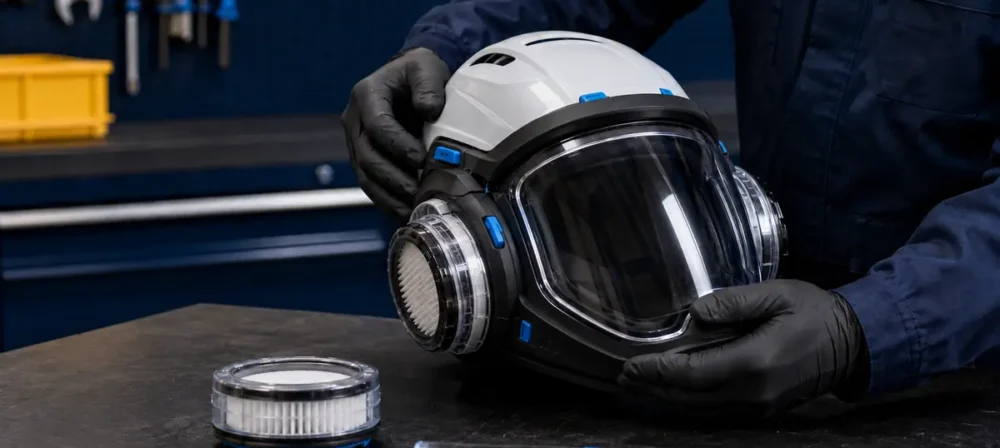
hnician inspecting a powered air respirator headtop and filters

JSP PowerCap Inspections & Servicing: What Employers Need to Know

“A powered respirator can appear operational while damaged seals, blocked filters, deteriorating batteries or insufficient airflow reduce the protection it provides.”

JSP PowerCap systems combine powered respiratory protection with an integrated headtop, but they still need to be checked, maintained and tested properly.

Employers using PowerCap Active, PowerCap Active IP or PowerCap Infinity equipment should have arrangements for pre-use checks, scheduled examinations, maintenance, fault reporting and replacement of worn components.

Velocity Safety provides documented JSP PowerCap inspections, helping employers assess equipment condition, identify defects and maintain traceable records under COSHH Regulation 9.

Quick Answer: Do JSP PowerCap units need inspecting and servicing?

Yes. JSP PowerCap Active and PowerCap Infinity units should be checked before use, formally examined at appropriate intervals and maintained according to the applicable JSP instructions. Checks can include filters, seals, visors, hoses, batteries, fan units, airflow and the general condition of the complete assembly. Damaged components, insufficient airflow or unresolved warning indicators should be addressed before the equipment is returned to use.

Learn more about our documented RPE Inspection service.

Key Takeaways – JSP PowerCap Inspections

  • PowerCap Active and PowerCap Infinity provide different levels and combinations of protection and should not be treated as interchangeable.
  • JSP specifies an airflow check before use using the airflow indicator supplied with the equipment.
  • Filters, seals, visors, batteries, fan units and other replaceable components can deteriorate or become damaged.
  • PowerCap Active is rated TH1P with a UK APF of 10, while PowerCap Infinity is rated TH3P with a UK APF of 40.
  • A passing airflow check does not remove the need to inspect the rest of the equipment.
  • Formal examinations and maintenance should be documented as part of the employer’s RPE programme.
  • Velocity Safety provides documented inspections and servicing for JSP PowerCap equipment, supporting individual units and larger workplace fleets.

Jump to:

What Is a JSP PowerCap?

JSP PowerCap products are powered air-purifying respirators, commonly abbreviated to PAPR.

A battery-powered fan draws contaminated workplace air through particulate filters before supplying filtered air to the wearer’s breathing zone.

Unlike a conventional disposable or reusable tight-fitting mask, the complete PowerCap system includes several components that work together:

  • Powered fan or turbo unit
  • Particulate filters and pre-filters
  • Battery and charging equipment
  • Visor and face seal
  • Headtop or helmet assembly
  • Internal airflow pathways
  • Warning indicators or alarms, depending on the model

The equipment can only provide its intended protection when the complete system is correctly assembled, suitable for the task and operating within the manufacturer’s requirements.

A new filter alone does not make a damaged or poorly maintained PowerCap safe.

JSP PowerCap Active vs PowerCap Infinity

PowerCap Active and PowerCap Infinity are both powered respirators, but their protection ratings, head protection and intended applications differ significantly.

Feature PowerCap Active PowerCap Infinity
Respiratory classification EN 12941 TH1P EN 12941 TH3P
UK Assigned Protection Factor APF 10 APF 40
Head protection HardCap A1+ bump-cap protection to EN 812 Industrial safety helmet protection to EN 397
Visor protection Model-dependent. The standard Active visor should not be assumed to provide impact protection; PowerCap Active IP is the impact-protection version. Optical class 1 impact visor conforming to EN 166.1.B
Typical positioning Light-industry and lower-risk particulate applications where its assigned protection factor is adequate. Higher-protection particulate applications requiring a TH3P powered respirator, subject to the task-specific risk assessment.

The higher rating of PowerCap Infinity does not automatically make it suitable for every hazardous substance or working environment.

RPE selection must still consider:

  • The hazardous substance present
  • Its concentration and workplace exposure limit
  • The required protection factor
  • Whether the contaminant is a particle, gas, vapour or combination
  • The duration and physical demands of the task
  • Other required head, eye, face or hearing protection
  • The equipment manufacturer’s limitations

Powered particulate-filtering equipment must not be treated as protection against gases, vapours, oxygen-deficient atmospheres or other hazards outside its approved capability.

Why JSP PowerCap Inspections Matter

A powered respirator contains more potential failure points than a simple disposable mask.

A unit might start and sound normal while still having:

  • Restricted airflow caused by loaded filters
  • A weakened battery that cannot support the full working period
  • Damage to the visor seal
  • Missing or incorrectly installed pre-filters
  • Cracked housings or filter covers
  • Contaminated airflow pathways
  • Damaged electrical connections
  • Worn head harness components
  • Incorrectly fitted replacement parts

Under COSHH Regulation 9, control measures must be maintained in an efficient state, in efficient working order, in good repair and in a clean condition.

Where RPE is used as part of the employer’s exposure-control arrangements, it should be supported by a properly managed programme covering selection, use, checks, maintenance, storage, training and record keeping.

An inspection helps establish the recorded condition of the equipment at that point in time. It does not remove the wearer’s responsibility to complete the required checks before every use.

What Is Checked During a JSP PowerCap Inspection?

The exact inspection depends on the model, its configuration, condition and manufacturer instructions.

A documented PowerCap inspection may include:

Equipment Identification

The manufacturer, model, serial number or unique asset ID is recorded so that inspection findings can be linked to the correct unit.

General Condition

The complete unit is checked for impact damage, cracks, distortion, excessive contamination, missing parts, unauthorised modifications and signs of unsuitable storage.

Filters and Pre-Filters

Checks can include filter type, compatibility, installation, contamination, visible damage and whether both sides of a twin-filter system have been changed correctly.

Filters should never be cleaned using compressed air or reused contrary to the manufacturer’s instructions.

Fan and Airflow Performance

The unit is switched on and checked using the applicable JSP airflow indicator or test method. A low-flow result must be investigated rather than ignored.

Battery and Charging Equipment

The battery, connection points, charger and charging dock where applicable are examined for damage, contamination, deterioration and obvious charging faults.

Visor and Face Seal

The visor is checked for damage, deep scratches, contamination and loss of visibility. The face seal is examined for tears, poor attachment, distortion and excessive wear.

Headtop, Harness and Adjustment

The cap, helmet shell, suspension harness, adjustment mechanism and retaining components are checked for damage and correct assembly.

Warnings and Indicators

Where fitted, visual and audible warnings are checked as part of the applicable functional inspection procedure.

Inspection Outcome

The unit receives a documented outcome, with defects and recommended actions recorded. Equipment that cannot provide its intended protection should not be returned to use until the problem has been resolved.

PowerCap Active Inspection and Maintenance

JSP describes PowerCap Active as a TH1P powered respirator with a UK APF of 10. It uses HardCap A1+ bump-cap technology and is intended for appropriate particulate applications where that protection level is adequate.

JSP identifies applications including light machining and milling, agriculture, landscaping and food processing. Its suitability must still be confirmed through the employer’s COSHH assessment.

Important PowerCap Active checks include:

  • Airflow check using the supplied indicator
  • Condition and cleanliness of both filters
  • Correct installation of pre-filter pads and covers
  • Fan and motor operation
  • Battery charge and connection condition
  • Visor clarity and attachment
  • Condition and attachment of the face seal
  • Condition of the cap and bump-cap insert
  • Signs of contamination inside the equipment

JSP warns that regular filter maintenance, replacement and cleaning are important to reduce the possibility of premature fan or motor failure.

It is also important to distinguish between PowerCap Active variants.

The standard PowerCap Active visor should not automatically be treated as impact-rated eye protection. Where impact protection is required, the exact PowerCap model and its certification must be checked rather than assumed from the product name.

PowerCap Infinity Inspection and Maintenance

PowerCap Infinity is a TH3P powered respirator with a UK APF of 40. It combines respiratory protection with an EN 397 industrial safety helmet and an EN 166.1.B impact visor.

The system incorporates twin filters, a powered turbo unit, a rechargeable battery and real-time monitoring of filter and battery condition.

Important PowerCap Infinity checks include:

  • Pre-use airflow indication
  • Condition and correct fitting of both filters and pre-filters
  • Turbo-drive operation
  • Battery condition and charge status
  • Operation of visual and audible warnings
  • Visor condition and visibility
  • Visor-seal integrity
  • Helmet shell and suspension condition
  • Adjustment and retention components
  • Condition of any compatible hearing protection
  • Contamination or obstruction of airflow routes

JSP has designed PowerCap Infinity as a modular system, with components including filters, filter covers, visor, helmet, harness strap, turbo-drive unit, battery pack, visor seal and charging dock available as replaceable elements.

Replaceable does not mean every damaged unit should automatically be dismantled by an untrained person. Repairs and component replacement must follow the applicable instructions and competence requirements.

How Often Should JSP PowerCap Equipment Be Inspected?

There is no single interval that should be applied without considering how the equipment is used.

A complete RPE programme can involve several layers of checking:

Activity Purpose Typical Timing
Pre-use check Confirms the equipment appears complete, undamaged and operational before it is worn. Before every use, including the manufacturer’s airflow check.
Recorded examination Provides a documented assessment of condition, assembly and function. At suitable intervals determined by usage, risk, equipment type and applicable guidance. JSP supplies monthly maintenance record sheets for PowerCap models.
Fault-led inspection Investigates damage, low airflow, warning indicators or reported performance problems. Immediately after a fault, impact, suspected contamination or loss of performance.
Servicing and repair Maintains or restores the equipment through appropriate component replacement, cleaning, testing or repair. According to manufacturer requirements, the maintenance programme and equipment condition.

Equipment used heavily or in particularly dusty, abrasive or contaminating conditions may need attention more frequently than equipment used occasionally and stored correctly.

The inspection arrangement should be documented within the employer’s RPE programme.

Common JSP PowerCap Faults and Warning Signs

PowerCap units should be removed from use and investigated where there are signs that protection may have been compromised.

Common concerns include:

  • Airflow indicator failing to reach the required position
  • Low-flow, filter or battery warnings
  • Fans sounding irregular or failing to start correctly
  • Battery not holding sufficient charge
  • Cracked filter covers or housings
  • Damaged, heavily loaded or incorrectly fitted filters
  • Only one filter being replaced on a twin-filter unit
  • Torn, detached or heavily contaminated face seals
  • Scratched or damaged visors affecting visibility
  • Damaged helmet shells, bump-cap inserts or harness components
  • Blocked or contaminated airflow paths
  • Missing parts or incompatible replacement components
  • Evidence that the unit has been incorrectly cleaned or immersed

Passing a quick switch-on test is not sufficient where other defects remain.

Never ignore a low-flow result

If the airflow indicator does not show adequate performance, the unit should not be used simply because the fan can still be heard. Filters, batteries, fan performance, airflow routes and system condition may all need investigating.

Is a PowerCap Inspection the Same as Servicing?

No. Inspection and servicing are related, but they are not the same activity.

PowerCap Inspection PowerCap Servicing
Assesses and records the equipment’s current condition and function. Includes maintenance or remedial work needed to keep or restore the unit to a serviceable condition.
Checks components such as seals, filters, visors, batteries and airflow. May include approved disassembly, cleaning, component replacement, repair and post-service testing.
Identifies defects and produces a documented outcome. Addresses identified faults where the work is authorised and suitable parts are available.
Does not automatically include every repair required. Does not replace the employer’s pre-use and scheduled examination arrangements.

An inspection may conclude that a PowerCap can remain in use, needs a consumable component changing, requires more extensive servicing or should be removed from service.

JSP PowerCap Support From Velocity Safety

Velocity Safety currently provides documented inspections for JSP PowerCap Active, PowerCap Active IP and PowerCap Infinity equipment.

Our inspection support can include:

  • Equipment identification and asset logging
  • Condition and component checks
  • Filter and pre-filter assessment
  • Battery and charging-equipment checks
  • Visor, face seal and headtop inspection
  • Airflow testing where applicable
  • Clear pass, fail or further-action outcomes
  • Defect reporting and next-due dates
  • Digital records for individual units or complete fleets

We can support individual PowerCap users, workshops, manufacturing sites and organisations managing powered RPE across multiple departments or locations.

JSP PowerCap Servicing From Velocity Safety

Velocity Safety now provides inspection and servicing support for applicable JSP PowerCap equipment.

Depending on the model, equipment condition and identified faults, servicing may include approved disassembly, cleaning, component replacement, remedial work and post-service testing. Every unit receives a documented outcome, with defects, completed work and any further action clearly recorded.

Contact us with the PowerCap model, number of units and details of any known faults, and we’ll confirm the appropriate inspection or servicing route.

For wider maintenance and performance-testing requirements, see our RPE Examination and Servicing service.

How to Prepare PowerCap Units for Inspection

Providing a few details before booking helps us confirm the appropriate inspection route and produce an accurate quotation.

Where possible, send:

  • The PowerCap model and variant
  • Number of units
  • Serial or asset numbers where available
  • Approximate age and usage pattern
  • Details of any warning lights, alarms or airflow problems
  • Photographs of visible damage
  • Previous inspection or maintenance records
  • Your preferred site or workshop arrangement

Equipment should be supplied in a suitably clean and decontaminated condition. Tell us in advance if it has been exposed to hazardous dust, chemicals or biological contaminants.

Arrange a JSP PowerCap Inspection or Service

Need your JSP PowerCap units inspected, maintained or serviced?

Velocity Safety supports PowerCap Active, PowerCap Active IP and PowerCap Infinity equipment for individual users, workplaces and organisations managing larger RPE fleets across the UK.

Send us the model, quantity and details of any known faults, and we’ll confirm the support available and provide a quotation.

📞 Call: 01254 933 486
📩 Email: info@velocitysafety.co.uk
🌐 Or contact Velocity Safety online.

Arrange an RPE Inspection

Frequently Asked Questions

Can Velocity Safety inspect JSP PowerCap equipment?

Yes. Velocity Safety provides documented inspections for JSP PowerCap Active, Active IP and PowerCap Infinity equipment. We can check equipment condition, components and airflow where applicable, then provide a recorded outcome and details of any defects requiring action.

Does Velocity Safety provide JSP PowerCap servicing?

Yes. Velocity Safety provides inspections and servicing for applicable JSP PowerCap Active, PowerCap Active IP and PowerCap Infinity equipment. The precise service scope depends on the model, equipment condition, identified faults and availability of suitable replacement components.

What is the difference between PowerCap Active and PowerCap Infinity?

PowerCap Active is a TH1P powered respirator with a UK APF of 10 and EN 812 bump-cap protection. PowerCap Infinity is a TH3P system with a UK APF of 40, an EN 397 industrial safety helmet and an EN 166.1.B impact visor. The correct model depends on the hazards, task and protection level identified by the risk assessment.

Does a JSP PowerCap require face fit testing?

JSP states that PowerCap Active and PowerCap Infinity do not require face fit testing. However, the equipment must still be suitable for the wearer, task, contaminant and required protection factor. Face fit testing remains necessary for separate tight-fitting RPE used by the employee.

Should airflow be checked before using a PowerCap?

Yes. JSP’s instructions require the airflow to be checked before use using the applicable airflow indicator. If the indicator does not show adequate airflow, the equipment should not be used until the cause has been identified and resolved.

How often should PowerCap filters be replaced?

Filter life depends on the model, contamination level, usage and manufacturer instructions. Filters should be replaced when required by the instructions, when damaged, when loading affects airflow or when the equipment indicates that replacement is necessary. Both filters on a twin-filter system should be changed together.

Can PowerCap filters be cleaned with compressed air?

No. JSP specifically warns against using compressed air on PowerCap Infinity filters. Blowing contamination from a filter does not safely restore its performance and can damage the filter media.

What happens if a PowerCap fails inspection?

The defect is documented and the unit should be removed from use where it cannot provide its intended protection. Depending on the issue, it may require cleaning, replacement consumables, approved component replacement, servicing or complete replacement.

Can several PowerCap units be inspected on site?

Yes. Velocity Safety can support bulk and multi-site inspection programmes, including equipment identification, documented outcomes, defect reporting and next-due dates.

Can multiple PowerCap units be inspected and serviced?

Yes. Velocity Safety can support individual units, bulk equipment inspections and multi-site servicing programmes. Send us the models, quantities and current service dates, and we’ll provide the appropriate quotation and servicing plan.

Resources

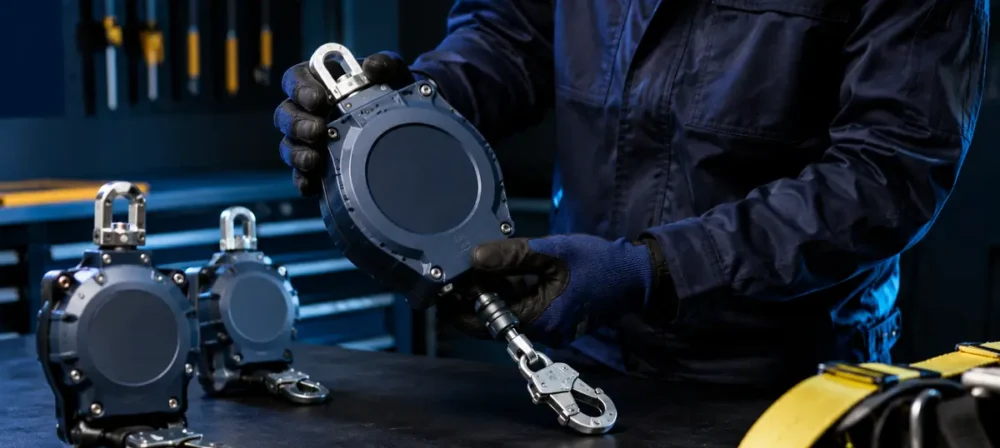
Technician inspecting fall arrest blocks at a safety equipment workshop

Velocity Safety Appointed Sole UK Service Agent for Aresta, JSP & Delta Plus Fall Arrest Blocks

“Velocity Safety is now the sole UK service agent for applicable Aresta, JSP and Delta Plus fall arrest blocks – providing a direct, manufacturer-authorised route for inspection, servicing, repair and recertification.”

Velocity Safety has been appointed as the sole UK service agent for applicable Aresta, JSP and Delta Plus fall arrest blocks.

The appointments expand our manufacturer-authorised fall protection capabilities and give equipment owners, contractors, hire companies and safety teams a direct UK route for annual servicing, model-specific repairs and recertification.

Our engineers can support applicable cable and webbing fall arrest blocks, inertia reels and self-retracting lifelines used across construction, facilities management, manufacturing, utilities, confined spaces and other work-at-height environments.

The Announcement

Velocity Safety is the sole UK service agent for applicable Aresta, JSP and Delta Plus fall arrest blocks. This means UK customers now have a manufacturer-authorised route through Velocity Safety for the applicable annual servicing, internal examination, repair, component replacement, functional testing and recertification procedures specified for these products.

Explore our Fall Arrest Block & Inertia Reel Inspection and Servicing service.

Key Takeaways

  • Velocity Safety is the sole UK service agent for applicable Aresta, JSP and Delta Plus fall arrest blocks.
  • The appointments provide a direct UK route for manufacturer-authorised servicing and applicable repairs.
  • Both cable and webbing self-retracting lifelines may require scheduled inspection and servicing.
  • Pre-use checks, detailed inspections, thorough examinations and manufacturer servicing are separate activities.
  • The required interval depends on the manufacturer instructions, equipment type, use, condition and working environment.
  • Equipment involved in a fall or showing signs of damage should be removed from use immediately and appropriately assessed.
  • On-site inspection and workshop servicing options are available, subject to the equipment and work required.
  • Velocity Safety is also an approved service and repair agent for Abtech Safety, Ridgegear and Globestock Safety.

Jump to:

What Has Velocity Safety Been Approved to Service?

Velocity Safety has been appointed as the sole UK service agent for applicable fall arrest blocks manufactured or supplied under three recognised fall-protection brands:

  • Aresta fall arrest blocks and retractable lifelines
  • JSP fall arrest blocks and self-retracting lifelines
  • Delta Plus fall arrest blocks and retractable fall arresters

This status applies to the relevant equipment and service procedures covered by each manufacturer’s approval.

Because the construction and servicing requirements differ between models, we confirm the exact make, model, serial number and service requirement before accepting equipment.

Applicable work may include:

  • External condition and functional inspection
  • Authorised strip-down and internal examination
  • Cleaning of accessible and serviceable components
  • Inspection of braking, locking and retraction mechanisms
  • Inspection of webbing, wire rope or cable
  • Replacement of approved serviceable parts
  • Reassembly and manufacturer-specified functional testing
  • Equipment identification and service tagging
  • Digital servicing and inspection documentation
  • Confirmation of the applicable next-due date

The exact scope depends on the model, its condition, its history and the manufacturer procedure.

What Does “Sole UK Service Agent” Mean?

Being appointed the sole UK service agent means Velocity Safety provides the manufacturer-authorised servicing route in the UK for the applicable Aresta, JSP and Delta Plus fall arrest block ranges.

This is particularly important where work involves opening the casing, inspecting internal braking or retraction mechanisms, replacing model-specific components or completing a manufacturer-defined service procedure.

A fall arrest block is not simply a cable or length of webbing inside a plastic or metal casing.

Depending on the model, it can contain:

  • Internal pawls and locking mechanisms
  • Brake assemblies and friction components
  • Retraction springs
  • Drums, bearings and guides
  • Wire-rope or webbing assemblies
  • Energy-absorbing components
  • Load or fall indicators
  • Swivels, hooks and connectors
  • Retrieval or rescue mechanisms

Servicing these components requires the correct instructions, competence, replacement parts, tools and test procedures for the particular equipment.

Important distinction:

Sole service-agent status does not mean that nobody else can ever perform a basic visual check or competent-person examination of the equipment. It means Velocity Safety provides the applicable manufacturer-authorised servicing, internal maintenance and model-specific repair route for these brands in the UK.

Aresta Fall Arrest Block Servicing in the UK

Aresta supplies a range of retractable fall protection equipment, including compact webbing fall arrest blocks and longer cable-based retractable lifelines.

Its range includes:

  • Compact single webbing fall arrest blocks
  • Twin retractable webbing fall arrest blocks
  • Retractable lifelines fitted with scaffold hooks
  • Longer cable-based retractable lifelines
  • Equipment designed for different attachment arrangements and working environments

Velocity Safety’s appointment as the sole UK service agent provides Aresta equipment owners with a direct route for applicable annual servicing, repairs and recertification.

Before work begins, we confirm:

  • The Aresta model and product reference
  • Serial number and equipment identification
  • Webbing or cable length
  • Previous inspection or service history
  • Any known fall, overload or damage event
  • Whether workshop servicing or an on-site visit is appropriate

Aresta produces retractable lifelines in several configurations, so customers should not assume that every model has an identical servicing procedure.

If you manage Aresta blocks, send us the product details or photographs and we will confirm the appropriate service route.

JSP Fall Arrest Block & SRL Servicing

JSP supplies self-retracting lifelines and fall arrest blocks across compact webbing, wire-rope and rescue configurations.

Examples include:

  • Compact webbing fall limiters
  • Wire self-retracting lifelines
  • Sharp-edge and horizontal-use models
  • Longer cable-based fall arrest blocks
  • Retrieval fall arrest blocks incorporating a rescue winch

Velocity Safety is now the sole UK service agent for applicable JSP fall arrest blocks and SRLs.

Depending on the model, inspection and servicing may consider:

  • Casing and structural condition
  • Webbing or wire-rope condition
  • Retraction throughout the working length
  • Locking response
  • Fall or load indicators
  • Swivel hooks and connectors
  • Internal serviceable components
  • Rescue or retrieval functions where fitted

The precise checks and repairs are determined by the applicable JSP procedure rather than a generic SRL checklist.

This fall-protection appointment is separate from JSP PowerCap respiratory equipment. Velocity Safety provides documented JSP PowerCap inspections, manufacturer-authorised servicing and repairs for applicable PowerCap Active, PowerCap Active IP and PowerCap Infinity systems.

Delta Plus Fall Arrest Block Servicing in the UK

Delta Plus manufactures a broad range of retractable fall arresters for work-at-height applications.

The range includes:

  • Compact webbing fall arresters
  • Cable-based retractable fall arresters
  • Models intended for different lifeline lengths
  • Equipment designed for vertical or applicable horizontal use
  • Retractable equipment incorporating additional rescue or winch functions

Velocity Safety’s appointment as the sole UK service agent gives Delta Plus fall arrest block users access to an authorised UK servicing route for applicable models.

Delta Plus product families include compact and longer-distance retractable devices, but model names and product references can change over time. That makes accurate equipment identification important.

When requesting a quote, provide:

  • The product name or reference
  • Serial number
  • Lifeline material and length
  • Photographs of the unit and label
  • Current inspection or service date
  • Details of any defect, fall or impact event

We will confirm whether the model falls within our authorised scope and what work is required before booking.

Inspection, Thorough Examination and Servicing Are Not the Same

The terms inspection, thorough examination and servicing are often used interchangeably, but they do not necessarily describe the same work.

Activity Purpose Typical Scope
Pre-Use Check Helps the wearer identify obvious problems before using the equipment. Condition, labels, connectors, visible lifeline damage, retraction and obvious signs of contamination or impact.
Detailed Inspection Provides a recorded competent-person assessment of the equipment’s current condition. Housing, lifeline, connectors, indicators, labels, retraction, locking function and accessible components.
LOLER Thorough Examination A formal thorough examination where LOLER applies to the equipment and how it is used. Competent-person examination, findings, safety defects and formal thorough-examination documentation.
Manufacturer Servicing Maintains the internal mechanism and serviceable components in accordance with manufacturer procedures. Authorised strip-down, internal examination, cleaning, approved component replacement, reassembly and specified functional testing.

Not every fall arrest block is subject to precisely the same combination of requirements.

The correct approach depends on:

  • The manufacturer instructions
  • The make and model
  • How the equipment is being used
  • The applicable legislation
  • Previous inspection and service findings
  • Whether the equipment has arrested a fall
  • The conditions in which it is used and stored

Velocity Safety documents the activity being provided so that inspection, thorough examination and servicing are not incorrectly presented as the same check.

For more detail, see our guide to the difference between fall arrest blocks, inertia reels and retrieval devices.

Do Fall Arrest Blocks Need Servicing Every 12 Months?

Fall arrest blocks commonly require manufacturer inspection, servicing and recertification at intervals specified by the manufacturer.

The Work at Height Safety Association’s guidance on retractable fall arresters states that fall arrest blocks should be serviced, inspected and recertified by the manufacturer or an approved service company at least every 12 months, or sooner where necessary.

However, “annual” should not be treated as permission to ignore the equipment for the remaining 364 days.

Fall arrest blocks should also receive:

  • A check by the user before use
  • Recorded detailed inspections at the appropriate interval
  • Additional examination following damage or suspected loss of performance
  • Immediate removal from use after arresting a fall
  • More frequent attention where the equipment is exposed to arduous conditions

Factors that may justify earlier inspection or servicing include:

  • Frequent or intensive use
  • Exposure to water, dirt, concrete dust or grit
  • Contact with paint, oils, chemicals or solvents
  • Outdoor storage or prolonged exposure to weather
  • Corrosion
  • Damage to the casing, webbing, cable or connectors
  • Poor or inconsistent retraction
  • Activation of a fall indicator
  • Unknown service history

The appropriate schedule should follow the manufacturer’s instructions and reflect how the equipment is actually used.

Has the block arrested a fall?

Remove it from use immediately. Do not return the equipment to service based only on an external visual check. Record the event and arrange assessment through the appropriate manufacturer-authorised route.

Why Manufacturer-Authorised Servicing Matters

Fall arrest blocks are safety-critical mechanical devices that may remain unused for long periods before being expected to operate immediately during a fall.

Some faults are visible externally. Others affect internal components hidden inside the casing.

Potential problems can include:

  • Worn or damaged pawls
  • Degraded brake components
  • Corrosion inside the housing
  • Damaged or weakened retraction springs
  • Contaminated internal mechanisms
  • Frayed webbing or broken cable strands
  • Damaged lifeline guides
  • Activated fall indicators
  • Worn swivels, hooks or connectors
  • Missing, incompatible or unauthorised replacement parts

Manufacturer-authorised servicing ensures applicable internal work is completed using the relevant procedure, approved components and required functional tests for that model.

It also provides a clearer service history for safety teams, auditors, equipment owners and hire companies managing larger fleets.

How Velocity Safety’s Fall Arrest Block Servicing Works

Our process begins with accurate equipment identification.

1. Send Us the Equipment Details

Provide the manufacturer, model, quantity, lifeline length and site location.

Photographs of the product label and complete unit are helpful where the model is uncertain.

2. We Confirm the Required Service

We determine whether the equipment falls within our authorised service scope and whether it requires inspection, servicing, repair, thorough examination or a combination of activities.

You receive a clear quotation before work begins.

3. On-Site or Workshop Arrangement

Depending on the equipment and work required, we can arrange:

  • On-site inspection or servicing
  • Delivery to our Blackburn workshop
  • Courier collection and return
  • Coordinated servicing for multiple units

Some internal repairs and manufacturer-specific procedures may need to be completed under controlled workshop conditions.

4. Inspection and Authorised Servicing

The unit is inspected and serviced according to the relevant scope and manufacturer procedure.

Any defects or additional parts required are identified before chargeable remedial work proceeds.

5. Testing and Documentation

Following applicable servicing and reassembly, the equipment receives the manufacturer-specified functional checks or tests.

The documentation identifies:

  • The equipment serviced
  • Manufacturer, model and serial number
  • Work completed
  • Defects found
  • Components replaced where applicable
  • Service or inspection outcome
  • Applicable next-due date

Where a separate LOLER thorough examination is required and included, it is documented separately rather than being treated as identical to manufacturer servicing.

Who Will Benefit From the New UK Servicing Route?

The appointments will support organisations using fall arrest blocks across a wide range of industries.

These include:

  • Construction and civil engineering contractors
  • Scaffolding and access companies
  • Utilities and infrastructure providers
  • Facilities and building-maintenance teams
  • Warehousing and distribution operations
  • Manufacturing and engineering sites
  • Confined-space and rescue teams
  • Telecommunications contractors
  • Work-at-height training providers
  • PPE hire companies and equipment distributors
  • Multi-site health and safety teams

For equipment owners, the new arrangements provide a clear route for servicing applicable Aresta, JSP and Delta Plus equipment without needing to identify an overseas provider or use a company without the applicable manufacturer approval.

Our Wider Manufacturer-Approved Servicing Capability

The Aresta, JSP and Delta Plus appointments build upon Velocity Safety’s existing fall-protection servicing capabilities.

Velocity Safety is also an approved service and repair agent for:

  • Abtech Safety
  • Ridgegear
  • Globestock Safety

Inspection and servicing support is also available for equipment from other manufacturers, subject to the model, required work, manufacturer instructions and availability of approved replacement components.

Velocity Safety is also an authorised G-Force service agent, providing manufacturer-authorised servicing and repairs for applicable G-Force fall arrest blocks. Read our G-Force service-agent announcement or send us your equipment details to confirm the available service.

If you are unsure whether a particular fall arrest block can be serviced, send us the make, model and a photograph. We will confirm the available route before asking you to send the equipment.

Arrange Aresta, JSP, Delta Plus or G-Force Fall Arrest Block Servicing

Need an annual inspection, manufacturer service or repair for your fall arrest blocks?

Velocity Safety provides UK-wide support for applicable Aresta, JSP, Delta Plus and G-Force fall arrest blocks, with on-site and workshop options available.

To receive a quotation, send us:

  • The manufacturer and model
  • Number of units
  • Webbing or cable length
  • Current inspection or service date
  • Your site or collection location
  • Photographs if the model is uncertain

We will confirm the correct inspection or servicing route, explain what is included and provide clear pricing before work begins.

📞 Call: 01254 933 486
📩 Email: info@velocitysafety.co.uk
🌐 Or contact Velocity Safety online.

Explore Fall Arrest Block Servicing

Frequently Asked Questions

Which fall arrest block manufacturers is Velocity Safety the sole UK service agent for?

Velocity Safety is the sole UK service agent for applicable Aresta, JSP and Delta Plus fall arrest blocks. The precise service availability depends on the model, condition and manufacturer procedure.

Can Velocity Safety complete annual servicing for Aresta fall arrest blocks?

Yes. Velocity Safety provides the manufacturer-authorised UK servicing route for applicable Aresta fall arrest blocks and retractable lifelines. Send us the model, serial number and lifeline length so we can confirm the required work.

Can Velocity Safety service JSP self-retracting lifelines?

Yes, for applicable models. Our JSP fall protection capability includes relevant fall arrest blocks and self-retracting lifelines. Serviceability and scope are confirmed from the exact product reference.

Can Velocity Safety service Delta Plus fall arrest blocks?

Yes. Velocity Safety is the sole UK service agent for applicable Delta Plus fall arrest blocks. Delta Plus supplies several webbing and cable retractable ranges, so the model should be confirmed before booking.

Does every fall arrest block require annual servicing?

Many manufacturers and industry guidance specify servicing, inspection and recertification at least every 12 months, or sooner where necessary. The applicable interval should always be confirmed from the instructions for the particular model and adjusted where use, damage, contamination or environmental conditions create additional risk.

Is an annual inspection the same as manufacturer servicing?

Not necessarily. An inspection records the current condition and operation of the equipment. Manufacturer servicing may involve authorised strip-down, internal examination, cleaning, component replacement, reassembly and model-specific testing. A LOLER thorough examination is another distinct activity where LOLER applies.

What happens if a fall arrest block has arrested a fall?

It should be removed from service immediately, clearly identified and assessed through the appropriate route. It should not be returned to use simply because it appears undamaged externally.

Can fall arrest blocks be serviced on site?

Some inspection and servicing activities can be completed on site. Other internal repairs or manufacturer-specific procedures may require workshop conditions. We will confirm the appropriate option after identifying the equipment and work required.

Can I send fall arrest blocks to your workshop?

Yes. Equipment can be delivered to our Blackburn workshop, and courier collection and return can also be arranged. Include the equipment details and contact information securely with the shipment.

Do you provide documentation after servicing?

Yes. The documentation identifies the equipment, work completed, findings, outcome and applicable next-due date. Where manufacturer servicing and a separate thorough examination are both required and booked, the activities are clearly distinguished.

Can you service fall arrest blocks from other manufacturers?

Velocity Safety is also an approved service and repair agent for Abtech Safety, Ridgegear and Globestock Safety. Support for other manufacturers depends on the model, required work, manufacturer requirements and availability of approved parts.

Can Velocity Safety service G-Force fall arrest blocks?

Yes. Velocity Safety is an authorised G-Force service agent, providing manufacturer-authorised servicing and repairs for applicable G-Force fall arrest blocks.

Send us the model, serial number, quantity and photographs of your equipment and we’ll confirm the available service, expected turnaround and collection or on-site options.

Resources

Compressor with Milwaukee camera

What Does a PSSR Examination Include? Pressure Vessel Inspection Explained

“A PSSR examination is not a generic pressure vessel checklist. The Written Scheme of Examination determines exactly what must be examined, how and when.”

A PSSR examination is the statutory examination used to confirm that safety-critical parts of a qualifying pressure system remain safe for continued operation.

It is carried out by a competent person in accordance with the system’s Written Scheme of Examination (WSE).

That distinction is important because there is no single inspection checklist that applies identically to every air receiver, pressure vessel, steam system or autoclave.

The Written Scheme identifies the parts of the pressure system that need examining, the nature of the examination, any testing required, how the system needs to be prepared and the maximum interval between examinations.

Under the Pressure Systems Safety Regulations 2000 (PSSR), qualifying pressure systems need a suitable Written Scheme in place and must then be examined in accordance with that scheme.

Quick Answer: What does a PSSR examination include?

A PSSR examination checks the safety-critical parts of a pressure system identified in its Written Scheme of Examination. Depending on the system, this can include the pressure vessel, protective devices such as safety valves, relevant pipework, fittings and other components whose failure could release stored pressure and cause danger. The competent person examines these parts using the methods and intervals specified by the WSE, records their condition and identifies any repairs, modifications or changes required for continued safe operation.

Learn more about our PSSR 2000 Examinations & Written Schemes service.

Key Takeaways – PSSR Examinations

  • The Written Scheme of Examination determines the scope – there is no universal PSSR inspection checklist for every pressure system.
  • The WSE should cover protective devices, pressure vessels and relevant pipework or pipelines where failure could give rise to danger.
  • The examination may include visual examination, testing of protective devices and specialist techniques such as NDT where the WSE requires them.
  • NDT and internal inspection are not automatically required during every examination – the appropriate examination method depends on the particular pressure system and its WSE.
  • A PSSR examination is not the same as routine servicing or maintenance.
  • The competent person must produce a written report and identify repairs, modifications or other action needed.
  • If the competent person identifies imminent danger, additional immediate reporting and shutdown requirements apply.

Jump to:

What Is a PSSR Examination?

A PSSR examination is the formal examination of specified parts of a pressure system under the Pressure Systems Safety Regulations 2000.

You will often see it described online as a PSSR inspection or pressure vessel inspection. However, the Regulations themselves use the term examination.

The purpose is to identify deterioration or defects in safety-critical parts of the pressure system before they can result in danger from the release of stored energy.

HSE defines a pressure system for PSSR purposes as potentially comprising:

  • One or more pressure vessels of rigid construction
  • Associated pipework
  • Protective devices
  • Certain pipelines and their protective devices
  • Certain pipework connected to transportable pressure receptacles

The relevant fluid can include steam, compressed or liquefied gases including air above the applicable pressure threshold, pressurised hot water above 110°C and certain gases dissolved under pressure.

There are also exceptions within PSSR, so not every piece of equipment operating under pressure automatically requires the same PSSR arrangements.

If you’re trying to establish whether your equipment requires a Written Scheme in the first place, see our PSSR Written Scheme of Examination Requirements guide.

The Written Scheme Determines What Gets Examined

This is the most important point to understand about a PSSR examination.

The competent person should not arrive on site and simply work through a generic pressure vessel checklist.

The examination must be carried out in accordance with the system’s Written Scheme of Examination (WSE).

According to HSE guidance, the WSE should identify information including:

  • The plant or equipment forming the pressure system
  • The parts of the system that need to be examined
  • The nature of the examination required
  • The inspection and testing required for protective devices
  • Preparation needed so the examination can be carried out safely
  • Any examination required before first use, where appropriate
  • The maximum interval between examinations
  • Critical parts that should be examined following certain repairs or modifications

That means two pressure vessels that look broadly similar may legitimately require different examination methods or intervals.

Age, design, operating conditions, likely deterioration mechanisms, previous findings and manufacturer information can all influence the examination scheme.

A WSE must also remain suitable throughout the life of the equipment. HSE notes that as plant ages, examinations may need to become more frequent or change in their content or type.

For more on what belongs in the document itself, see What Does a PSSR Written Scheme of Examination Need to Include?

What Happens Before a PSSR Examination Starts?

Before examining the equipment, the competent person needs to understand exactly what pressure system they are dealing with and what the WSE requires.

That can involve reviewing:

  • The current Written Scheme of Examination
  • The equipment included within the scheme
  • Previous examination reports
  • Manufacturer information where available
  • Safe operating limits
  • Previous defects or repairs
  • Changes or modifications to the system
  • The required examination method
  • Any special preparation needed to examine the equipment safely

The competent person should also review the WSE and confirm that it remains suitable.

If the system has changed significantly, deteriorated or been modified since the scheme was produced, the existing WSE may itself need reviewing.

What Is Checked on the Pressure Vessel?

Where a pressure vessel forms part of the Written Scheme, the examination focuses on identifying deterioration or defects capable of affecting its continued safe operation.

The precise checks depend on the vessel, the expected damage mechanisms and the requirements of the WSE.

Depending on the system, the examination may consider:

  • External vessel condition
  • Corrosion
  • Erosion
  • Cracking
  • Distortion or bulging
  • Evidence of leakage
  • Damage around welds or connections
  • Condition around nozzles and openings
  • Accessible internal surfaces where internal examination is specified
  • Evidence of material thinning or other deterioration

It is important not to assume that every PSSR examination automatically includes an identical internal inspection.

The nature and extent of the examination should come from the Written Scheme.

Where internal examination is necessary, the vessel will need to be safely prepared and made accessible before that part of the examination can take place.

Air receivers are one of the most common examples of pressure vessels encountered in UK workplaces. If you operate one, see our Air Receiver PSSR Compliance Guide.

Are Safety Valves and Protective Devices Checked?

Yes – protective devices are a fundamental part of the PSSR examination regime.

HSE states that a Written Scheme must cover protective devices forming part of the pressure system.

These can include equipment designed to prevent the system exceeding its safe operating limits, such as:

  • Safety valves
  • Pressure relief valves
  • Bursting discs
  • Pressure-limiting devices
  • Other protective controls where relevant to the system

The WSE should specify the nature of any inspection and testing required for these devices.

That is an important distinction.

A PSSR examination does not mean every safety valve on every system automatically receives exactly the same test procedure during every visit.

The competent person follows the examination and testing requirements established for that particular pressure system.

Protective devices are critical because the pressure vessel itself may be structurally sound while an incorrectly functioning safety device allows the system to exceed its safe operating limits.

Does a PSSR Examination Include Pipework, Gauges and Fittings?

It can – but again, the Written Scheme determines the scope.

PSSR does not mean that every metre of ordinary pipework connected to a pressure system automatically receives the same examination as the pressure vessel.

The WSE should identify those parts of the system where a defect could result in a dangerous release of stored energy.

Depending on the system, relevant items can include:

  • Associated pressure pipework
  • Connections and fittings
  • Valves
  • Flanges
  • Protective devices
  • Pressure indication or control equipment where relevant to safe operation

HSE guidance makes clear that the scheme should generally cover items within the self-contained pressure system that may give rise to danger.

The question should therefore be:

“Could failure of this component create danger through the release of pressure or stored energy?”

rather than simply:

“Is this component connected to the compressor?”

Does a PSSR Examination Include Non-Destructive Testing?

Sometimes – but NDT is not an automatic part of every PSSR examination.

Non-destructive testing (NDT) can be used where specialist examination is required to identify deterioration that cannot be adequately assessed through normal visual examination.

Methods can include techniques such as:

  • Ultrasonic thickness measurement
  • Ultrasonic flaw detection
  • Magnetic particle testing
  • Dye penetrant testing
  • Other suitable NDT techniques depending on the equipment and suspected deterioration mechanism

The appropriate method should be determined according to the equipment and the Written Scheme.

HSE’s technical guidance on NDT states that the WSE should specify the expected damage mechanism, examination interval and method of examination, including any NDT that is required.

This matters because simply performing an NDT technique does not automatically make an examination suitable.

The technique has to be capable of detecting the type of deterioration that the competent person is actually looking for.

Does a Pressure System Need to Be Shut Down for a PSSR Examination?

It depends on what the Written Scheme requires.

Some examination activities can be completed while equipment remains in an appropriate operating condition.

Others require the pressure system to be taken out of service and safely prepared.

Preparation may involve actions such as:

  • Shutting the system down
  • Depressurising it
  • Allowing hot equipment to cool
  • Isolating relevant energy sources
  • Draining the vessel
  • Providing safe access
  • Opening the vessel where internal examination is required

The WSE should specify any special measures needed to prepare the system for safe examination.

That is why businesses should establish examination requirements in advance rather than expecting an engineer to arrive and inspect an operating pressure vessel with no preparation.

What Happens After a PSSR Examination?

The examination does not finish when the competent person packs away their equipment.

A written report of examination must be produced.

The report provides the dutyholder with a record of what has actually been examined and what the competent person has found.

It should identify matters including:

  • The pressure system examined
  • The parts covered by the examination
  • The condition of those parts
  • Any repairs or modifications required to prevent danger
  • Any work required to maintain the effective operation of protective devices
  • Any necessary changes to safe operating limits
  • The timescale within which required action must be completed
  • The date beyond which the system should not continue to be operated without the next examination required by the scheme

The competent person’s findings therefore directly influence what happens next.

An examination report should not simply be filed away because somebody wants a “PSSR certificate”.

If corrective work is specified, the user or owner needs to act on it within the required timeframe.

What Happens If the Competent Person Finds Imminent Danger?

PSSR contains specific requirements where an examination identifies a defect serious enough to create imminent danger.

This is different from an ordinary recommendation for maintenance at some point in the future.

If the competent person believes the pressure system, or part of it, will give rise to imminent danger unless specified repairs, modifications or changes to operating conditions are made, they must issue the required written notification immediately.

The affected system or part must then not be operated until the required action has been completed.

The competent person must also send a report containing the relevant particulars to the enforcing authority within the period required by Regulation 10.

Important:

An imminent-danger report is separate from the ordinary report of examination. It exists because the defect requires immediate action rather than being something that can safely wait until a future maintenance visit.

Is a PSSR Examination the Same as a Service?

No.

This is one of the most important distinctions for pressure-system owners to understand.

A PSSR examination is a statutory safety examination carried out in accordance with the Written Scheme.

Routine servicing and maintenance exist to keep the equipment operating safely, efficiently and reliably between examinations.

PSSR Examination Routine Servicing / Maintenance
Carried out in accordance with the Written Scheme of Examination Carried out according to maintenance requirements and manufacturer instructions
Focuses on statutory safety-critical examination Focuses on keeping equipment in efficient and reliable condition
Must be carried out by a competent person for the PSSR examination May be carried out by appropriately competent maintenance personnel
Produces a formal report of examination Normally produces maintenance or service records
Cannot be replaced by an ordinary service Cannot be replaced by the statutory PSSR examination

HSE specifically states that an examination carried out under a Written Scheme is not a substitute for regular and routine maintenance.

You need both where each is applicable.

Who Can Carry Out a PSSR Examination?

A PSSR examination must be undertaken by a competent person.

This does not simply mean somebody who has worked with compressors before.

The person or organisation needs the appropriate level of:

  • Technical knowledge
  • Practical experience
  • Understanding of the pressure system
  • Ability to identify and assess defects
  • Knowledge of appropriate examination techniques
  • Independence to reach objective conclusions

HSE emphasises the importance of independence when selecting the competent person.

An in-house competent person can be used where genuinely appropriate, but they should be sufficiently independent from the operating functions of the organisation and have the authority to stop the equipment being used if necessary.

Velocity Safety’s PSSR examinations are carried out by engineer surveyors trained and certificated in PSSR examination requirements, with calibrated instrumentation used where required.

Does Every Pressure Vessel Need the Same Examination Interval?

No.

The examination interval should be specified in the Written Scheme of Examination.

There is no universal PSSR rule saying that every pressure vessel must receive exactly the same examination every 12 months.

The competent person considers what is appropriate for the particular system when determining or reviewing the examination requirements.

Factors can include:

  • Equipment type
  • Design
  • Age
  • Operating conditions
  • Relevant fluid
  • Expected deterioration mechanisms
  • Manufacturer recommendations
  • Previous examination findings
  • Repairs and modifications
  • Operating history

HSE specifically notes that examination frequency or content may need changing as plant ages.

This is why the date of your next PSSR examination should come from the WSE and examination report, rather than a generic internet checklist.

How Should You Prepare for a PSSR Examination?

Preparation starts before the competent person arrives.

Having the right information and equipment access available can make the examination considerably smoother.

Where applicable, have ready:

  • The current Written Scheme of Examination
  • Previous PSSR examination reports
  • Equipment identification and manufacturer information
  • Details of repairs or modifications completed since the previous examination
  • Maintenance and servicing records where relevant
  • Safe operating limits
  • Access to the equipment covered by the WSE

You should also establish whether the WSE requires the system to be shut down, isolated, depressurised, drained, cooled or opened for examination.

Trying to establish this after the engineer has arrived can result in unnecessary delays or an incomplete visit.

If your system is newly installed, don’t assume new equipment can simply be put into operation without considering PSSR. See Do New Air Compressors Need a Written Scheme of Examination?

What Types of Pressure Systems Can Require PSSR Examination?

PSSR can apply across a wide range of workplace pressure systems.

Examples examined by Velocity Safety include:

  • Air receivers
  • Compressed air systems
  • Pressure vessels
  • Air/oil receivers
  • Vacuum vessels
  • Expansion vessels
  • Autoclaves
  • Accumulators
  • Pressurised vessels and vats
  • Commercial coffee machines where the relevant PSSR requirements apply

The exact regulatory position depends on the equipment, pressure system and relevant fluid, including any applicable exceptions.

If you’re unsure whether your particular equipment falls within PSSR, it is better to establish its status than assume it is outside the Regulations because it looks small or was supplied brand new.

Book a PSSR Examination

Not sure what your next PSSR examination actually needs to include?

Velocity Safety carries out PSSR 2000 examinations for pressure systems across the UK, including air receivers, compressors, autoclaves, pressure vessels and associated equipment.

We work from the Written Scheme of Examination to assess the safety-critical components identified for your particular system and provide clear documentation of the findings, defects and required actions.

If your documentation is missing or you are unsure whether your existing WSE remains suitable, we can also help you understand what needs to be in place before the examination.

📞 Call: 01254 933 486
📩 Email: info@velocitysafety.co.uk
🌐 Or contact Velocity Safety online.

Explore PSSR 2000 Examinations

Frequently Asked Questions

What is checked during a PSSR examination?

The exact scope is set by the Written Scheme of Examination. It can include pressure vessels, protective devices and those parts of pipework or pipelines whose failure could give rise to danger. The WSE also specifies the nature of the examination and any testing that is required.

Is a PSSR inspection the same as a PSSR examination?

“PSSR inspection” is a commonly used phrase, but the Pressure Systems Safety Regulations use the term examination. The statutory examination is carried out by a competent person in accordance with a Written Scheme of Examination.

Does every PSSR examination include an internal vessel inspection?

No. The nature and extent of the examination depend on the particular pressure system and its Written Scheme. Internal examination may be required for some vessels, while different examination methods may be specified for others.

Does every PSSR examination include ultrasonic thickness testing?

No. Ultrasonic thickness measurement and other forms of non-destructive testing may be used where appropriate, but they are not automatically required during every PSSR examination. Any required NDT should be determined according to the system, expected damage mechanisms and WSE.

Are safety valves checked during a PSSR examination?

Protective devices must be addressed by the Written Scheme of Examination. The WSE should specify the nature of the examination and testing required for protective devices such as safety or pressure relief valves where they form part of the pressure system.

Does the pressure vessel need to be shut down for inspection?

It depends on the examination requirements. Some activities may be possible without a complete shutdown, while internal examination or other specified checks may require the system to be isolated, depressurised, cooled, drained or otherwise safely prepared.

Is a PSSR examination the same as servicing a compressor?

No. A PSSR examination is a statutory safety examination carried out according to the WSE. Routine servicing and maintenance keep the equipment in safe and efficient working condition. HSE states that the statutory examination is not a substitute for routine maintenance.

How often does a PSSR examination need to be carried out?

The maximum interval between examinations should be specified in the Written Scheme of Examination. There is no single examination interval applying identically to every pressure system.

What happens if a pressure vessel fails its PSSR examination?

The competent person’s report will identify any repairs, modifications or changes required and the timescale for action. Where a defect creates imminent danger, the additional requirements of Regulation 10 apply and the affected system must not be operated until the specified corrective action has been completed.

Do new pressure vessels require PSSR examination?

Qualifying pressure equipment needs a suitable Written Scheme in place before operation and must be examined in accordance with that scheme, including before first use where the scheme requires it. New equipment should not automatically be assumed compliant simply because it has recently been supplied.

Resources

Work At Height Fixed Ladder Safety Check

Fixed Ladder Inspection Requirements: How Often Should Fixed Ladders Be Inspected?

“Permanent doesn’t mean maintenance-free. A fixed ladder can remain in place for decades while corrosion, loose fixings or structural changes develop around it.”

A permanently fixed ladder can remain attached to a building, silo, tank or piece of plant for decades.

That permanence can make fixed ladders easy to overlook. Unlike a portable ladder being loaded into vans, moved between jobs and returned to storage, a fixed ladder may simply remain in place year after year while corrosion develops, fixings loosen or the surrounding structure changes.

But permanent does not mean maintenance-free.

Employers and those controlling work at height need to make sure ladders remain suitable and safe for use. HSE guidance requires ladders to be checked before use and subject to regular detailed visual inspections by a competent person, with the inspection regime taking account of the manufacturer’s instructions and the conditions in which the equipment is used.

Quick Answer: How often should fixed ladders be inspected?

There is no single UK legal rule requiring every fixed ladder to receive a formal inspection exactly every 3, 6 or 12 months. Fixed ladders should be checked before use and formally inspected by a competent person at suitable intervals determined by risk assessment, manufacturer guidance, condition, environment and frequency of use. Annual inspection is a common baseline for many fixed ladder installations, but ladders exposed to heavy use, weather, corrosion, chemicals, vibration or other damaging conditions may need more frequent inspection.

Learn more about our Fixed Ladder Inspection service.

Key Takeaways – Fixed Ladder Inspection Requirements

  • Pre-use checks should be carried out each working day before a ladder is used.
  • Formal detailed inspections should take place at risk-based fixed intervals and be recorded.
  • PUWER does not prescribe one universal 3-, 6- or 12-month interval for every fixed ladder.
  • Annual inspection is a common baseline for many installations, but it is not a blanket statutory requirement.
  • Heavy use, corrosive environments, weather exposure, chemicals and vibration may justify shorter intervals.
  • Additional inspection may be necessary after damage, modification, impact or another event capable of affecting safety.
  • Fixed ladder inspections should assess more than the rungs – including stiles, brackets, fixings, cages, platforms, access arrangements and the supporting structure.

Jump to:

How Often Should Fixed Ladders Be Inspected?

There are really three different inspection situations to consider when managing fixed ladders.

1. Pre-Use Checks

HSE guidance says ladders should receive a pre-use check each working day.

This is a quick check by the person using the ladder to make sure there are no obvious defects that would make it unsafe.

Pre-use checks normally do not need to be formally recorded. If a problem is found, however, it should be reported and the ladder should not continue to be used as though nothing is wrong.

2. Planned Detailed Inspections

HSE also expects an up-to-date record of detailed visual inspections carried out regularly by a competent person.

These inspections should take place at fixed intervals and be recorded.

What HSE does not say is:

“Every fixed ladder must be inspected every three months.”

or:

“Every fixed ladder legally requires an annual certificate.”

Instead, HSE’s PUWER inspection guidance says inspection frequency should be determined through risk assessment and should take account of manufacturer recommendations, industry advice, operating environment and experience of how quickly the equipment deteriorates.

For many fixed ladder installations, organisations adopt an annual competent-person inspection as a practical baseline.

That interval may need shortening where deterioration is more likely.

3. Inspections After Something Has Changed

You should not wait until the next scheduled inspection if something has happened that could have affected the ladder.

PUWER guidance requires inspection following exceptional circumstances capable of jeopardising work equipment safety, including significant modifications or known or suspected serious damage.

Examples can include:

  • A vehicle or item of plant striking the ladder
  • Damage during construction or maintenance work
  • Severe corrosion being identified
  • Alterations to fixings or surrounding structure
  • Modification of the ladder
  • A fall or other significant incident
  • Evidence that the ladder has become loose or unstable

The inspection programme therefore needs to respond to the actual condition of the equipment, rather than simply waiting for a date on a sticker.

Is an Annual Fixed Ladder Inspection a Legal Requirement?

Not as a universal calendar rule.

This is one of the biggest misconceptions around fixed ladder inspection frequency.

The Provision and Use of Work Equipment Regulations 1998 (PUWER) require inspection where work equipment safety depends on installation conditions and where deterioration could result in dangerous situations.

HSE explains that equipment should be inspected:

  • After installation and before first use where safety depends on installation
  • At suitable intervals where deterioration could create danger
  • After exceptional circumstances that could have jeopardised safety

The frequency should then be established through risk assessment.

An annual inspection may be entirely appropriate for a particular fixed ladder.

But saying “the law says every fixed ladder must be tested every 12 months” goes further than the regulations and HSE guidance actually do.

The defensible approach is to establish an inspection frequency appropriate to that particular ladder and be able to explain why it is suitable.

When Should Fixed Ladders Be Inspected More Frequently?

HSE recognises that equipment operating in harsher conditions may need inspecting more frequently than equipment exposed to little deterioration.

A shorter inspection interval may therefore be appropriate for fixed ladders exposed to:

Heavy or Frequent Use

A ladder used by maintenance engineers several times every day presents a very different deterioration profile from a roof access ladder used only a handful of times each year.

External Weather Exposure

Rain, freezing conditions, temperature changes and general weathering can affect ladder components, protective coatings, joints and fixings over time.

Coastal Environments

Salt exposure can accelerate corrosion, particularly where materials, finishes or fixings are poorly suited to the environment.

Chemicals or Industrial Contamination

Manufacturing facilities, treatment plants and other industrial environments can expose ladder components to substances capable of accelerating degradation.

Vibration

Fixed ladders attached to machinery, plant or structures subject to continual vibration may require closer inspection of brackets, fixings and welded connections.

Historic Defects

Previous inspection findings should influence the future inspection programme.

HSE specifically explains that inspection intervals can be shortened where experience shows deterioration occurring quickly, or potentially lengthened where inspection history demonstrates negligible deterioration.

That is a much stronger basis for setting inspection frequency than simply copying a generic three-month or twelve-month interval from somebody else’s ladder register.

What Should Be Checked Before Using a Fixed Ladder?

A pre-use check should identify anything obvious that makes the ladder unsafe before somebody begins climbing.

Depending on the installation, check for issues such as:

  • Missing, bent or damaged rungs
  • Cracked or damaged welds
  • Loose fixings or brackets
  • Excessive movement
  • Twisted or distorted stiles
  • Significant corrosion
  • Oil, grease, mud or other contamination making rungs slippery
  • Damaged hoops or cages
  • Damage to platforms or landing areas
  • Obstructions preventing safe climbing
  • Missing or damaged access gates
  • Visible damage to any associated fall protection system

HSE’s ladder inspection guidance specifically highlights defects such as bent or damaged stiles, cracked or loose rungs and damaged welded joints.

Where there is any doubt about whether the ladder remains safe, the correct response is not:

“Just be careful.”

The ladder should be taken out of use until the issue has been properly assessed.

What Does a Formal Fixed Ladder Inspection Include?

A competent-person inspection should go significantly further than simply looking up the ladder from ground level.

Depending on the ladder and installation, the inspection may include:

Rungs

Checking for:

  • Corrosion
  • Wear
  • Deformation
  • Cracks
  • Missing rungs
  • Loose connections
  • Slippery contamination

Stiles or Side Rails

Looking for:

  • Bending
  • Distortion
  • Cracking
  • Corrosion
  • Mechanical damage

Brackets and Fixings

The ladder itself may remain perfectly sound while the connection between the ladder and the supporting structure deteriorates.

A formal inspection should therefore consider accessible:

  • Wall brackets
  • Bolts
  • Welds
  • Structural fixings
  • Mounting points
  • Signs of movement or loosening

Supporting Structure

Damage to the wall, steelwork, concrete or other structure supporting the ladder can compromise an otherwise sound ladder.

Inspection should therefore consider obvious deterioration, cracking, corrosion or structural changes around the mounting points.

Safety Hoops or Cages

Where fitted, hoops and cage components should be checked for:

  • Damage
  • Corrosion
  • Deformation
  • Missing components
  • Secure attachment

Importantly, a cage should not automatically be treated as a complete fall-arrest system.

Platforms and Rest Areas

Where the fixed access arrangement includes platforms, rest points or landing areas, these also form part of the safe access route and need to remain secure and in suitable condition.

Top Access and Walk-Off

The transition between the ladder and the level being accessed deserves particular attention.

HSE guidance recommends that ladders used to access another level provide a secure handhold and recommends self-closing gates at ladder access points.

Associated Fall Protection Equipment

Some fixed ladders incorporate vertical fall-arrest rails, cables or other personal fall protection systems.

These systems have their own inspection and maintenance requirements and should not be assumed safe simply because the ladder structure itself passes inspection.

What Standards Apply to Fixed Ladders?

Two standards are particularly relevant to fixed access ladders, although they do not apply identically to every installation.

BS 4211:2005+A1:2008

BS 4211 is the British Standard specification for permanently fixed ladders.

It covers single-bar-rung ladders permanently fixed to structures such as chimneys, silos and bins, together with associated platforms, safety hoops and permanently fixed companionway ladders.

It provides an important technical benchmark for the design and construction of many permanently fixed ladder installations.

BS EN ISO 14122-4:2016

BS EN ISO 14122-4 deals specifically with permanent means of access to machinery – fixed ladders.

It applies to fixed ladders forming part of stationary machinery and can also be relevant to building or civil construction access where the main function of that access is reaching machinery.

This distinction matters.

Not every ladder fixed to the side of a building automatically falls into exactly the same standards framework.

A competent inspection should establish what the ladder is, what it provides access to and which requirements apply, rather than simply attaching every possible British Standard to the inspection report.

Is BS 4211 a Legal Requirement?

BS 4211 is a British Standard, not legislation.

The legal duties arise from regulations including PUWER and the Work at Height Regulations 2005.

Standards such as BS 4211 provide recognised technical benchmarks that can help demonstrate whether fixed access equipment has been appropriately designed and constructed.

That distinction matters because phrases such as:

“BS 4211 law”

or:

“BS 4211 legally requires annual testing”

blur two separate issues.

The law establishes the duty to manage work-at-height risks and keep work equipment safe.

The standard provides detailed technical requirements relevant to certain fixed ladder installations.

Do Fixed Ladder Safety Cages Count as Fall Protection?

Not by themselves.

Safety hoops or cages have historically been installed around many long vertical fixed ladders, but they should not be described as complete fall-arrest protection.

HSE has reviewed research into hooped ladders and concluded that there is no evidence hoops alone provide complete fall-arrest capability.

HSE has also warned that hoops can potentially interfere with some personal fall-arrest systems.

This does not mean every existing ladder cage should automatically be removed.

Instead, the dutyholder should assess the actual fall risk and decide whether the access arrangement requires additional protection or an alternative solution.

That assessment is particularly important for older fixed ladder installations that may have been in service for many years.

Does a Fixed Ladder Need Inspecting After Installation?

Yes, where equipment safety depends on how it has been installed.

PUWER guidance requires work equipment whose safety depends on installation conditions to be inspected after installation and before first use.

For a permanently fixed ladder, installation integrity is fundamental.

The safety of the ladder may depend on:

  • Correct bracket spacing
  • Suitable structural fixings
  • A sound supporting substrate
  • Correct ladder alignment
  • Appropriate clearances
  • Safe landing arrangements
  • Correctly installed gates or platforms

A brand-new ladder is therefore not automatically a safe ladder purely because none of its components have had time to wear out.

An incorrect installation can introduce risks from day one.

What Happens If a Fixed Ladder Fails Inspection?

A ladder found to have a defect capable of compromising safe use should be prevented from being used until the issue has been addressed.

Depending on the defect, corrective action could include:

  • Repairing or replacing damaged rungs
  • Replacing severely corroded components
  • Repairing defective welded connections
  • Re-securing or replacing structural fixings
  • Repairing damaged brackets
  • Investigating the supporting structure
  • Replacing damaged cage components
  • Improving the landing or access arrangement
  • Repairing associated fall protection equipment
  • Replacing the fixed ladder entirely

The important part is closing the loop.

An inspection report identifying a serious defect achieves very little if workers continue climbing the ladder afterwards.

Do Fixed Ladder Inspections Need to Be Recorded?

For formal inspections carried out under the PUWER inspection regime, the inspection result should be recorded.

HSE says inspection records should be kept at least until the next inspection of that equipment and should be available to an enforcing authority if requested.

A useful fixed ladder inspection record should normally identify:

  • The ladder or asset reference
  • Its location
  • The inspection date
  • The person carrying out the inspection
  • The ladder’s condition
  • Any defects identified
  • Actions required
  • Whether the ladder is suitable for continued use
  • Any recommended change to the inspection interval
  • The next inspection due date where applicable

Asset IDs and inspection tags can make it considerably easier to manage multiple fixed ladders across a large site or property estate.

The tag itself, however, should not become the inspection system.

The underlying inspection record and defect-management process are what demonstrate what was actually assessed and what action was taken.

Who Can Inspect Fixed Ladders?

HSE says work equipment inspections can be undertaken by somebody with sufficient knowledge and experience to understand:

  • What to look at
  • What to look for
  • What to do when a problem is found

The level of competence required depends on the inspection being carried out.

A ladder user can carry out an appropriate pre-use check.

A formal inspection of a permanently fixed access ladder requires greater knowledge of the structure, installation, applicable standards, likely failure modes and consequences of deterioration.

That does not necessarily mean every fixed ladder inspection legally has to be outsourced.

What matters is whether the person carrying out the inspection is genuinely competent for the examination required.

Are Fixed Ladders Covered by LOLER?

Normally, no.

The Lifting Operations and Lifting Equipment Regulations 1998 (LOLER) apply to lifting equipment and lifting operations.

A conventional fixed access ladder is not mechanically lifting or lowering a person – the user climbs it.

Fixed ladders are therefore normally managed within the work-equipment and work-at-height framework rather than being placed into a LOLER thorough-examination regime.

This matters because applying the wrong regulation can result in organisations adopting an inspection interval that has little relationship to the actual risks presented by the equipment.

Fixed Ladder Inspection Frequency: A Practical Example

There is no single timetable suitable for every workplace, but a practical inspection regime may look something like this:

Situation Inspection Approach
Before use User checks for obvious defects and unsafe conditions.
Planned detailed inspection Competent-person inspection at a risk-based fixed interval.
Typical low-deterioration installation Annual inspection may provide a sensible baseline where supported by the risk assessment and manufacturer guidance.
Heavy-use or aggressive environment Consider shorter inspection intervals according to risk, environmental exposure and inspection history.
After suspected damage Inspect before returning the ladder to normal use.
After modification Reassess and inspect the altered installation.
Ladder forming part of a scaffold The relevant scaffold inspection requirements apply, including the seven-day inspection regime.

The important principle is that inspection frequency follows risk – not the other way around.

Book a Fixed Ladder Inspection

Not sure when your fixed ladders were last properly inspected?

Velocity Safety carries out fixed ladder inspections across industrial, commercial and public-sector sites, helping businesses establish whether their permanent access systems remain safe and suitable for continued use.

Our inspections can assess ladder condition, structural components, fixings, brackets, cages and associated access arrangements, with documented findings and remedial recommendations provided where required.

We can also help you establish a practical inspection regime based on the condition, use and environment of your ladder assets rather than relying on an arbitrary calendar interval.

📞 Call: 01254 933 486
📩 Email: info@velocitysafety.co.uk
🌐 Or contact Velocity Safety online.

Explore Fixed Ladder Inspections

Frequently Asked Questions

How often should fixed ladders be inspected?

There is no universal inspection interval prescribed by PUWER for every fixed ladder. HSE says inspection frequency should be determined through risk assessment, taking account of manufacturer guidance, environmental conditions, deterioration and experience. Annual inspection is a common baseline for many installations, with more frequent inspection where risk justifies it.

Do fixed ladders need checking before every use?

HSE’s ladder guidance calls for a pre-use check each working day to identify visible defects. These basic checks do not normally need to be recorded, but problems should be reported and the ladder should not be used where its safety is in doubt.

Is a 12-month fixed ladder inspection a legal requirement?

No universal 12-month statutory interval applies to every fixed ladder. PUWER requires inspection at suitable intervals where deterioration could result in danger, with the frequency determined according to the equipment, risks, environment and relevant instructions.

What standard applies to permanently fixed ladders?

BS 4211:2005+A1:2008 is the British Standard specification for permanently fixed ladders. Where a fixed ladder provides permanent access to machinery, BS EN ISO 14122-4:2016 may also be relevant.

What should a fixed ladder inspection include?

Depending on the installation, a formal inspection can include rungs, stiles, welds, brackets, fixings, supporting structure, corrosion, safety hoops or cages, platforms, gates, landing arrangements and associated fall protection equipment.

Does a safety cage count as fall protection?

A ladder cage can form part of a safe access arrangement, but HSE says there is no evidence that hoops alone provide complete fall-arrest capability. The overall fall risk and need for additional protection should therefore be assessed.

Who is competent to inspect a fixed ladder?

A competent person needs sufficient knowledge and experience to understand what requires inspection, which defects could affect safety and what action should be taken if a problem is identified. The level of competence needed depends on the complexity of the inspection.

What should happen if a fixed ladder fails inspection?

If a defect means safe use cannot be confirmed, the ladder should be prevented from being used until appropriate repair, replacement or further investigation has been completed.

Do fixed ladder inspection records need to be kept?

Formal inspection results should be recorded. HSE advises keeping inspection records at least until the next inspection of that equipment and making them available to an enforcing authority if requested.

Resources

Personal Fall Protection Equipment (PFPE) Inspections

How Often Should Fall Arrest Anchor Points & Eyebolts Be Tested?

“An anchor point can sit unused for months – but if somebody falls, it may suddenly be the most important component in the entire fall protection system.”

Fall arrest anchor points, safety eyebolts and other fixed anchor systems should never be treated as “fit and forget” equipment.

They form a critical part of the personal fall protection system, providing the connection point that a worker may rely on to prevent or arrest a fall.

The Work at Height Regulations 2005 require work-at-height equipment to be appropriately inspected and maintained, while HSE guidance confirms that equipment exposed to conditions that can cause deterioration needs inspection at suitable intervals and following exceptional circumstances that could affect its safety.

For many conventional fall arrest anchors, an annual formal inspection is the familiar industry interval. Anchors used for rope access or for raising and lowering people have traditionally been subject to more frequent examination, often every six months.

However, those intervals should not simply be treated as a universal legal rule for every eyebolt or anchor point.

Quick Answer: How often should fall arrest anchor points and eyebolts be tested?

For many fall arrest anchor systems, a formal inspection at intervals of no more than 12 months is the commonly adopted industry approach. Anchors used for rope access or raising and lowering people have traditionally been examined at intervals of no more than 6 months. However, the correct frequency should always follow the requirements for the individual system, including the manufacturer’s instructions, installation documentation, examination scheme, environment, frequency of use and any event that may have affected its safety.

Learn more about our Fall Arrest Anchor Installation & Testing service.

Key Takeaways – Fall Arrest Anchor & Eyebolt Inspections

  • Annual formal inspection is common for fall arrest anchors, but 12 months is not a blanket statutory interval for every installation.
  • Anchors used for rope access or raising and lowering people may require more frequent inspection, commonly every 6 months.
  • Anchor points should also be checked before use for obvious defects or expired inspection status.
  • An anchor may need an earlier competent-person inspection after a fall, impact, structural alteration, damage or other exceptional event.
  • A formal inspection involves far more than simply attaching a pull tester to the anchor.
  • The anchor, fixings, substrate, installation, documentation and intended use all matter.
  • Fall arrest eyebolts should not automatically be used as lifting points for machinery or materials.

Jump to:

How Often Should a Fall Arrest Anchor Point Be Inspected?

For many conventional fall arrest anchor installations, formal inspection every 12 months is the commonly recognised industry interval.

Older industry guidance based on the previous edition of BS 7883 specified periodic examination at intervals no greater than:

  • 12 months for fall arrest anchor devices
  • 6 months for rope access anchor devices
  • 6 months where an anchor device is used for raising or lowering a person

However, the current standard is BS 7883:2019 – Personal fall protection equipment. Anchor systems. System design, installation and inspection. Code of practice.

The modern approach places greater emphasis on the documentation and inspection requirements for the individual anchor system, including its System Technical File and Examination Scheme for Inspection.

That means the best answer is not simply:

“Every eyebolt must be pull tested once a year.”

Instead, the inspection regime should reflect the actual anchor system, how it is used and the conditions in which it operates.

Anchor Use Typical Inspection Approach
Fall arrest Formal inspection commonly at intervals no greater than 12 months, subject to the system requirements and conditions of use.
Rope access / abseil anchors Historically subject to more frequent examination, commonly at intervals no greater than 6 months.
Raising or lowering people May require a 6-monthly examination regime depending on the equipment, application and applicable requirements.
Before use Check for obvious defects, damage, deterioration and current inspection status.
After a fall, damage or exceptional event Take out of normal use and arrange competent assessment before relying on the anchor again.

Is a 12-Month Anchor Inspection a Legal Requirement?

Not in the simple way this is sometimes presented online.

The Work at Height Regulations do not contain a blanket statement saying that every fall arrest eyebolt must be pull tested once every 12 months.

Instead, the Regulations require work-at-height equipment to be properly inspected and maintained.

HSE guidance also states that equipment exposed to conditions that could cause deterioration resulting in dangerous situations should be inspected:

  • At suitable intervals
  • Each time exceptional circumstances occur that could jeopardise its safety

The appropriate interval therefore needs to take account of factors such as:

  • The type of anchor system
  • Its intended use
  • The manufacturer’s instructions
  • The original installer documentation
  • The Examination Scheme for Inspection
  • Frequency and intensity of use
  • Environmental exposure
  • Previous inspection findings
  • Any incidents affecting the installation

For many fall arrest anchors, these requirements result in an annual formal inspection regime.

But the legal duty is ultimately to have a suitable inspection and maintenance system, rather than simply putting every anchor on the same 12-month calendar regardless of its circumstances.

How Often Should Rope Access and Abseil Anchors Be Inspected?

Anchors used for rope access deserve particular attention because their use differs from a conventional single-user fall arrest point.

Longstanding industry guidance has applied a six-month maximum periodic examination interval to anchor devices used for rope access or for raising and lowering people.

The intended use of the anchor therefore matters.

An anchor designed and documented for fall arrest should not simply be assumed suitable for rope access, abseiling, work positioning or another application.

Permanent anchor systems should be clearly identified and supported by appropriate installation and operating information explaining:

  • What the anchor is intended to be used for
  • How many users it is designed for
  • How it should be accessed
  • What equipment it can be used with
  • How and when it should be inspected

If the intended use or inspection requirement cannot be established, that uncertainty should be resolved before workers are allowed to rely on the anchor.

Do Anchor Points Need Checking Before Every Use?

Yes. Formal periodic inspection does not remove the need for basic pre-use checks.

Before connecting to an anchor, the user should make sure there is no obvious reason why the point should not be relied upon.

Depending on the installation, warning signs can include:

  • Visible corrosion
  • Cracking or damage around the supporting structure
  • A loose anchor or eyebolt
  • Deformation or impact damage
  • Missing or damaged components
  • Unreadable identification
  • An expired inspection label
  • A warning or “do not use” tag
  • Evidence that the point has been involved in a fall
  • Changes to the wall, roof, steelwork or other surrounding structure

A pre-use inspection is not a substitute for formal periodic examination by a competent person.

It is simply another layer of protection intended to prevent somebody attaching themselves to an obviously damaged or out-of-date installation.

When Should a Fall Arrest Anchor Be Inspected Earlier?

The next inspection date is not a licence to ignore an anchor until that date arrives.

If something happens that could have affected the anchor’s safety, it should be assessed earlier.

After the Anchor Has Arrested a Fall

An anchor that has been loaded during an actual fall should not automatically be returned to service because it still looks undamaged.

The anchor, fixings, surrounding structure and other affected elements may have experienced forces capable of causing damage that is not obvious from a basic visual check.

The system should therefore be taken out of normal use and assessed before anybody relies on it again.

After Impact or Suspected Damage

Building work, plant movement, accidental impact or other site activity can affect an anchor or the structure supporting it.

If damage is suspected, waiting for the next scheduled inspection is inappropriate.

Following Structural Alterations

Changes to a wall, roof, parapet, steel frame or other supporting structure can affect an anchor installation even when the anchor itself has not been directly altered.

In Corrosive or Harsh Environments

Coastal locations, chemical exposure, industrial contaminants, persistent moisture and other aggressive environments can increase the rate of deterioration.

The inspection interval may therefore need shortening where conditions justify more frequent checks.

After Long Periods Out of Use

An unused anchor is not automatically a safe anchor.

If an installation has been dormant for a significant period and its inspection status is unclear, its condition should be established before it is returned to use.

What Is the Difference Between an Eyebolt and an Anchor Point?

Anchor point is the broader term.

It describes a secure attachment point incorporated into a personal fall protection system.

A safety eyebolt is one particular form of anchor device and may consist of an eye connected to a structural fixing installed into a suitable wall, roof, steelwork or other substrate.

Modern fall protection systems can also include:

  • Roof anchors
  • Structural anchor devices
  • Horizontal safety line anchors
  • Overhead anchors
  • Rail or track systems
  • Davit and confined-space anchor systems

The inspection process therefore needs to reflect what has actually been installed rather than treating every fall protection anchor as an identical eyebolt.

Where davit systems are involved, see our Davit Arm Installation & Pull Testing service.

Are Fall Arrest Eyebolts the Same as Lifting Eyebolts?

No.

An anchor designed for personal fall protection should not automatically be used as a lifting point for machinery, materials or other loads.

BS 7883 relates to anchor systems used for personal fall protection and does not cover the lifting of equipment.

Lifting operations require equipment that has been specifically designed, selected and certified for that purpose.

The fact that a safety eyebolt is designed to withstand forces associated with personal fall protection does not automatically make it suitable for lifting a load.

Does Every Anchor Inspection Involve a Pull Test?

Not necessarily in exactly the same way.

“Eyebolt testing” and “anchor pull testing” are commonly used search terms, but a competent periodic examination is broader than simply attaching a hydraulic tester to every anchor and applying the same load.

The appropriate inspection and testing method depends on factors including:

  • The type of anchor
  • How it has been installed
  • The supporting substrate
  • The manufacturer’s requirements
  • The original installation documentation
  • The Examination Scheme for Inspection
  • The age of the installation
  • Previous inspection and testing information

Proof or load testing may be required as part of the inspection for some systems, but the correct procedure and test load should be determined from the applicable documentation rather than assumed.

This is why a competent inspection should begin by understanding the installation – not simply by reaching for a pull tester.

What Does a Fall Arrest Anchor Inspection Check?

A proper anchor inspection can include much more than confirming that the eyebolt itself looks intact.

Depending on the anchor system, the competent person may examine:

  • Identification and markings – confirming the anchor can be correctly identified and its intended use established.
  • Visible condition – checking for wear, corrosion, cracking, deformation or other deterioration.
  • Anchor fixings – assessing accessible fixings and confirming there are no obvious signs of movement or failure.
  • Thread engagement – where relevant to removable threaded anchor devices.
  • Supporting substrate – looking for cracks, damage, deterioration or other conditions that may affect the installation.
  • Positioning – checking whether the anchor remains appropriate for the way workers access and use it.
  • Fall clearance – considering whether sufficient space remains for the intended fall protection arrangement.
  • Environmental suitability – identifying corrosion or materials that may be inappropriate for the conditions.
  • System documentation – checking installation information, technical files and previous inspection records where available.
  • Required testing – carrying out appropriate proof or load testing where the system requires it.
  • Labelling – confirming inspection information and any next-examination date are clear.

The key point is that the anchor and the structure supporting it work together as a system.

An apparently perfect stainless-steel eyebolt installed into a damaged or unsuitable substrate does not provide a safe fall arrest anchor.

What Happens If a Fall Arrest Anchor Fails Inspection?

If an anchor cannot be demonstrated as safe for continued use, it should not remain available for workers to attach to.

Reasons an anchor may be withdrawn from service can include:

  • Significant corrosion
  • Deformation or physical damage
  • Movement during testing
  • Failure of a required proof test
  • Insufficient thread engagement
  • Cracking or failure within the substrate
  • An unsuitable supporting structure
  • Unsafe positioning
  • Inadequate fall clearance
  • Missing or inadequate system documentation
  • An installation that cannot be satisfactorily inspected

The defective point should be clearly identified or isolated to prevent further use.

Depending on the problem, corrective action may involve repair, replacement, further structural investigation, a new installation or redesign of the fall protection arrangement.

Where the wider personal fall protection equipment also requires examination, Velocity Safety provides Personal Fall Protection Equipment inspections.

What Records Should You Receive After Anchor Testing?

Formal anchor inspection should leave a clear audit trail.

The inspection report should allow the building owner, employer or responsible person to identify:

  • Which anchors were inspected
  • The location of each anchor
  • The system or anchor type
  • Its intended use where known
  • The inspection or testing carried out
  • The outcome
  • Any defects found
  • Whether the anchor remains suitable for continued use
  • Any remedial action required
  • Any limitations identified during the inspection
  • The next inspection requirement

Records matter because an inspection certificate is more than paperwork.

It creates traceability showing what was assessed, what condition the installation was in and why it was considered suitable – or unsuitable – for continued use.

Who Can Inspect and Test Fall Arrest Anchor Points?

Formal periodic examination should be completed by a competent person.

Competence involves more than owning a pull tester or knowing how to operate it.

The examiner needs sufficient knowledge, training, experience and resources to:

  • Identify the anchor system
  • Understand how it is intended to be used
  • Interpret installation and manufacturer information
  • Understand the applicable inspection requirements
  • Recognise significant defects
  • Assess the anchor and accessible surrounding structure
  • Use appropriate test equipment correctly
  • Interpret testing results
  • Determine whether the installation remains suitable for continued use
  • Identify appropriate corrective action where defects are found

This is particularly important with fall arrest anchors because a competent person’s decision may ultimately determine whether another worker subsequently trusts that installation with their life.

Do Fall Arrest Anchor Points Come Under LOLER?

Not automatically.

The Lifting Operations and Lifting Equipment Regulations 1998 (LOLER) apply to lifting equipment and lifting operations.

A conventional fixed anchor used solely as part of a personal fall arrest system is not automatically the same thing as lifting equipment.

However, equipment used for lifting or lowering people may fall within additional LOLER requirements, including more frequent thorough examination requirements.

This is another reason why the intended use of an anchor must be properly established rather than assuming that every eyebolt falls under exactly the same inspection regime.

Book Fall Arrest Anchor Inspection & Testing

Not sure whether your fall arrest anchors or eyebolts are due for inspection?

Velocity Safety provides fall arrest anchor installation, inspection and testing, helping businesses verify whether existing anchor points remain suitable for their intended personal fall protection use.

Our team can inspect accessible anchor components and supporting structures, review available system information, carry out appropriate testing where required and provide clear records of the outcome and any remedial work needed.

We can also support wider fall protection requirements including PFPE inspections, fall arrest block servicing and davit arm installation and pull testing.

📞 Call: 01254 933 486
📩 Email: info@velocitysafety.co.uk
🌐 Or contact Velocity Safety online.

Explore Fall Arrest Anchor Testing

Frequently Asked Questions

Do fall arrest anchor points have to be tested every year?

Annual formal inspection is common for fall arrest anchor systems, and longstanding industry guidance has used a maximum 12-month interval for conventional fall arrest anchors. However, the correct frequency should follow the requirements for the specific installation, including its Examination Scheme for Inspection, manufacturer and installer instructions, environment and condition.

Do rope access and abseil anchors need testing every six months?

Six-monthly periodic examination has traditionally been used for anchor devices intended for rope access or for raising and lowering people. The requirements for the specific system should always be checked rather than assuming the interval solely from the appearance of the anchor.

Does an anchor need inspecting after a fall?

Yes. If an anchor has been loaded during a fall or another event has occurred that could affect its safety, it should be taken out of normal use and assessed by a competent person before somebody relies on it again.

Is an anchor inspection the same as a pull test?

No. Pull or proof testing may form part of an anchor examination where required, but a complete inspection can also consider markings, visible condition, fixings, substrate, positioning, documentation, fall clearance and other factors affecting the safety of the installation.

Can a fall arrest eyebolt be used for lifting?

Not simply because it is an eyebolt. Personal fall protection anchors and lifting points are designed for different purposes. Equipment used for lifting machinery, materials or other loads should be specifically designed and certified for lifting operations.

Who can test fall arrest eyebolts?

Formal periodic examination should be undertaken by a competent person with sufficient knowledge, training, experience and resources to understand the anchor system, identify significant defects, use appropriate test equipment and determine whether the installation remains suitable for continued use.

Should an eyebolt be checked before every use?

Yes. Users should carry out an appropriate pre-use check for obvious damage, deterioration, expired inspection status or other signs that the anchor should not be relied upon. This does not replace the formal periodic examination.

Does every fall arrest anchor need a 12-month pull test?

No. Annual inspection is common for fall arrest anchors, but the exact inspection and testing procedure should follow the requirements of the particular anchor system. A proof or pull test may be required for some installations, while other systems have different examination requirements.

Resources