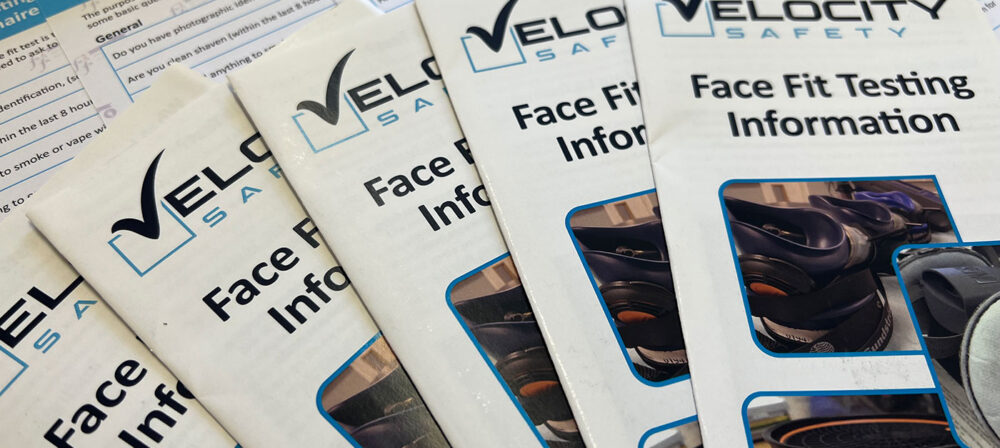
Face Fit Testing Near Me

Qualitative vs Quantitative Face Fit Testing: What’s the Difference?

“The right face fit test is the one that is suitable for the facepiece and wearer – not simply the cheapest or most technical option.”

When tight-fitting respiratory protective equipment (RPE) is used at work, it needs to seal adequately against the individual wearer’s face. A mask that fits one person correctly may not fit another, even when it is the same type and size.

Tight-fitting respiratory protective equipment (RPE) can only protect the wearer properly if it forms an adequate seal against their face. Face fit testing establishes whether a particular make, model and size of tight-fitting facepiece provides an adequate fit for the individual who will wear it.

There are two basic types of face fit test: qualitative face fit testing (QLFT) and quantitative face fit testing (QNFT). Both are recognised methods, but they work differently and cannot necessarily be used with the same types of RPE.

Current HSE INDG479 guidance sets out which methods are appropriate for different tight-fitting facepieces and how the tests should be carried out.

If you’re completely new to the subject, start with our guide to what face fit testing is and when it is required.

Quick Answer: What is the difference between qualitative and quantitative face fit testing?

Qualitative face fit testing is a subjective pass-or-fail test that uses a bitter- or sweet-tasting aerosol to check whether air is leaking around the face seal. Quantitative face fit testing uses specialist equipment to objectively measure the quality of the seal and produces a numerical result called a fit factor. Qualitative testing can be used for disposable filtering facepieces and reusable half masks, but full-face masks require an appropriate quantitative test method.

Learn more about Velocity Safety’s qualitative and quantitative Face Fit Testing service.

Key Takeaways – Qualitative vs Quantitative Face Fit Testing

  • Qualitative testing is pass/fail and depends on the wearer detecting a bitter or sweet test aerosol.
  • Quantitative testing provides an objective numerical fit factor using specialist measurement equipment.
  • Qualitative testing is suitable for disposable filtering facepieces and reusable half masks, but not full-face masks.
  • Quantitative methods include ambient particle counting (APC) and controlled negative pressure (CNP).
  • The exact quantitative method still matters – for example, CNP is not suitable for disposable filtering facepieces.
  • Neither method overcomes facial hair crossing the face seal. Tight-fitting RPE must seal directly against the skin.
  • Whichever method is used, face fit testing should be carried out by a competent fit tester.

Jump to:

Qualitative vs Quantitative Face Fit Testing at a Glance

The main difference is how the effectiveness of the face seal is assessed.

Qualitative testing relies on the wearer’s response to a challenge aerosol, while quantitative testing uses specialist equipment to measure the fit objectively.

Comparison Qualitative Fit Testing Quantitative Fit Testing
Result Pass or fail Numerical fit factor and pass/fail
Assessment Subjective Objective measurement
Typical principle Wearer detects a bitter or sweet aerosol Equipment measures leakage or compares conditions inside and outside the facepiece
Disposable FFP masks Yes Yes, with an appropriate quantitative method
Reusable half masks Yes Yes
Full-face masks No Yes
Depends on wearer’s taste response Yes No
Specialist electronic equipment Generally no Yes
Competent tester required Yes Yes

The important point is that quantitative testing is not simply a more advanced replacement for qualitative testing. The method selected needs to be suitable for the particular RPE being assessed.

What Is Qualitative Face Fit Testing?

Qualitative face fit testing (QLFT) is based on whether the wearer can detect a test agent that has entered the mask through leakage around the face seal.

HSE describes qualitative testing as a pass/fail method using a bitter- or sweet-tasting aerosol. Common test agents include Bitrex and Saccharin.

Before testing the respirator itself, the tester establishes whether the wearer can actually detect the chosen test agent. This preliminary check is often referred to as the sensitivity test or taste threshold test.

If the wearer cannot detect the aerosol during this screening stage, that qualitative method cannot be used for them. A different fit-testing method should be selected instead.

During the actual fit test, the wearer puts on the selected facepiece and test hood before completing a prescribed series of exercises designed to challenge the face seal.

To achieve a pass, the wearer must not taste the test agent at any point during the test exercises.

Which Masks Can Be Qualitatively Face Fit Tested?

Qualitative testing can be used for tight-fitting RPE including:

  • Disposable filtering facepieces such as FFP2 and FFP3 masks
  • Reusable half-mask respirators
  • Tight-fitting powered respirators using a half mask
  • Certain breathing apparatus configurations using a half mask

However, qualitative testing is not suitable for full-face masks.

This is one of the most important differences between the two approaches. If a worker uses a full-face tight-fitting respirator, a suitable quantitative method is required.

What Is Quantitative Face Fit Testing?

Quantitative face fit testing (QNFT) objectively measures the quality of the seal using specialist equipment rather than relying on whether the wearer can taste a test substance.

The test generates a numerical result known as a fit factor.

Current HSE guidance identifies two quantitative fit-testing methods: ambient particle counting (APC) and controlled negative pressure (CNP).

These methods calculate fit differently, which means “quantitative face fit testing” should not automatically be treated as one single procedure.

Ambient Particle Counting

Ambient particle counting measures the concentration of particles outside the facepiece and compares it with the concentration detected inside the facepiece.

The ratio between these measurements is used to calculate the fit factor.

Put simply, the equipment measures how effectively the facepiece prevents the outside challenge aerosol from entering through the face seal.

This is the principle used by ambient particle-counting equipment such as the TSI PortaCount. The equipment must be correctly selected, maintained and operated in accordance with the relevant fit-testing method and manufacturer’s instructions.

Velocity Safety uses PortaCount particle-counting equipment for quantitative face fit testing.

Controlled Negative Pressure Testing

Controlled negative pressure testing takes a different approach.

During the measurement, negative pressure is created inside the facepiece and specialist equipment measures the air leaking into it. The measured leakage is then used to calculate the quantitative fit factor.

CNP is suitable for reusable half masks and full-face masks, but HSE’s current method-selection guidance does not list it as suitable for disposable filtering facepieces.

This is another reason why simply requesting “a quantitative face fit test” is not always enough – the quantitative method itself also needs to suit the RPE being tested.

What Is a Face Fit Test Fit Factor?

A fit factor is the numerical measure produced during quantitative face fit testing.

For ambient particle counting, it is calculated from the concentration of challenge aerosol outside the facepiece compared with the concentration measured inside it.

A fit factor should not be confused with an Assigned Protection Factor (APF).

The fit factor is a measurement produced during an individual’s quantitative face fit test. An APF describes the level of workplace respiratory protection that a class of RPE is expected to provide when it is correctly selected and used.

Current HSE minimum quantitative fit factors include:

Facepiece Ambient Particle Counting Controlled Negative Pressure
FFP1 disposable half mask 100* Not applicable
FFP2 disposable half mask 100* Not applicable
FFP3 disposable half mask 100 Not applicable
Reusable half mask 100 100
Full-face mask 2,000 2,000

*HSE notes that where a PortaCount is used for APF 4 (FFP1) and APF 10 (FFP2) disposable half masks, the appropriate N95 technology must be employed.

The required minimum fit factor should be achieved during the applicable quantitative test exercises.

It is also important not to become overconfident because a very high fit factor has been recorded. HSE warns that the protection achieved in real workplace conditions can be lower than that achieved during a controlled fit test.

Correct RPE selection, donning, use, maintenance and a pre-use seal check therefore remain important even after a successful fit test.

Is Quantitative Face Fit Testing Better Than Qualitative?

Not automatically.

Quantitative testing has clear advantages because it gives an objective numerical measurement rather than depending on whether the wearer reports tasting a challenge agent.

That can be particularly useful where:

  • A full-face mask is being used
  • An objective numerical fit factor is required
  • The wearer cannot reliably detect the qualitative test agent
  • Real-time quantitative feedback can help identify a suitable facepiece
  • Company, customer or industry requirements specify quantitative testing

However, qualitative testing remains a recognised method for suitable disposable and reusable half masks when it is carried out correctly by a competent person.

Quantitative testing is not automatically the “better” test. Qualitative testing remains a recognised method for suitable disposable and reusable half masks when it is performed correctly by a competent tester.

The better question is: which method is appropriate for the facepiece, wearer and testing requirements?

If You Use Disposable FFP2 or FFP3 Masks

Qualitative taste testing can be suitable, as can an appropriate quantitative ambient particle-counting method.

The correct choice will depend on the RPE, wearer, testing programme and any relevant workplace or customer requirements.

If You Use Reusable Half Masks

Qualitative testing, ambient particle counting and controlled negative pressure methods can all be suitable.

If You Use Full-Face Masks

Use an appropriate quantitative face fit test.

Qualitative taste testing is not considered suitable for full-face masks under current HSE guidance.

If the Wearer Cannot Taste the Test Solution

A qualitative test should not simply continue on the assumption that no taste means a good seal.

The wearer’s sensitivity to the chosen test aerosol must first be established. If they cannot detect it during the screening test, the qualitative method cannot be used and another method should be selected.

For a fuller walkthrough of the testing process, see What Does a Face Fit Test Involve?

Do You Need to Be Clean-Shaven for Both Types of Face Fit Test?

Yes.

Switching from qualitative to quantitative testing does not overcome facial hair interfering with a tight-fitting face seal.

The testing equipment can measure leakage, but it cannot make a tight-fitting facepiece seal correctly over facial hair.

HSE advises that fit testing should not be carried out where hair growth such as stubble, a beard, moustache or sideburns lies between the wearer’s skin and the sealing surface of the facepiece.

The wearer should also remain clean-shaven in the face-seal area whenever that tight-fitting RPE is subsequently worn at work.

If facial hair cannot be removed, an alternative form of RPE that does not rely on a tight seal against the face may be required. Loose-fitting powered hoods and helmets are examples of respiratory protection that may be considered where an adequate tight-face fit cannot be achieved.

Is a Face Fit Test the Same as a Seal Check?

No.

A face fit test establishes whether a specific make, model and size of tight-fitting facepiece is capable of fitting an individual wearer adequately.

A pre-use wearer seal check is performed every time the wearer puts on their fit-tested facepiece before entering the hazardous area.

The seal check helps confirm that the mask has been donned correctly on that occasion, but it does not replace formal face fit testing.

What Happens If You Fail a Face Fit Test?

A failed fit test does not necessarily mean that the wearer cannot use tight-fitting RPE.

Face shapes vary considerably, so another:

  • Size
  • Model
  • Make
  • Style of facepiece

may provide a much better fit.

What should not happen is repeatedly testing the same unsuitable facepiece until it eventually produces a passing result.

HSE refers to this practice as force fitting and advises that if a facepiece still fails after two fit tests, an alternative facepiece should be tried.

If an adequate fit cannot be achieved using tight-fitting RPE, another form of respiratory protection that does not depend on a tight face seal may need to be selected.

Who Can Carry Out Qualitative or Quantitative Face Fit Testing?

Whichever testing method is selected, the fit test should be conducted by a competent person.

Competence involves more than knowing how to operate a hood, nebuliser or particle-counting machine. The tester needs sufficient knowledge and practical ability to correctly perform the selected method, identify problems and interpret the result.

The BSIF Fit2Fit accreditation scheme provides a recognised way for employers to assess face fit tester competence and was developed with input from HSE and industry stakeholders.

Participation in Fit2Fit itself is not compulsory, but HSE identifies the scheme as a means employers can use when assessing whether a fit tester is competent.

Velocity Safety’s testers are Fit2Fit accredited for both qualitative and quantitative face fit testing.

What Records Should You Receive After Face Fit Testing?

A face fit test should be properly recorded rather than simply resulting in somebody being told that they have passed.

Current HSE guidance states that the fit test report should identify information including:

  • The person who was fit tested
  • The make, model, material and size of facepiece
  • The fit-testing method used
  • The test exercises completed
  • The pass level used
  • The overall pass or fail result
  • For quantitative testing, the measured fit factors
  • The date of the test
  • Details of the person who carried out the fit test

This creates traceable evidence of exactly which facepiece the individual successfully tested with.

If they later move to a different make, model, size, type or material of tight-fitting facepiece, another fit test may be required.

Reusable RPE also requires appropriate ongoing examination and maintenance. Learn more about our RPE Examination & Servicing service.

Book Qualitative or Quantitative Face Fit Testing

Not sure which face fit testing method your workforce requires?

Velocity Safety provides Fit2Fit-accredited qualitative and quantitative face fit testing across the UK.

Our qualitative testing uses Bitrex or Saccharin taste-based methods, while our quantitative testing uses PortaCount particle-counting equipment to provide an objective fit factor.

We can help you select the appropriate method for the RPE your workers actually use and provide clear, traceable test records following the visit.

📞 Call: 01254 933 486
📩 Email: info@velocitysafety.co.uk
🌐 Or book your face fit testing here.

Explore Face Fit Testing

Frequently Asked Questions

Qualitative and quantitative testing are often discussed as though one simply replaces the other. In reality, the correct method depends on the RPE being worn and how the fit is being assessed. Here are the quick answers to some of the questions we hear most often.

What is the main difference between qualitative and quantitative face fit testing?

Qualitative testing gives a subjective pass or fail based on whether the wearer detects a bitter or sweet test aerosol. Quantitative testing objectively measures the fit and produces a numerical result called a fit factor.

Can an FFP3 mask be qualitatively face fit tested?

Yes. HSE lists qualitative taste testing as a suitable method for disposable half-mask respirators, including FFP3 filtering facepieces. An appropriate quantitative ambient particle-counting test can also be used.

Can a full-face respirator have a qualitative face fit test?

No. Qualitative taste testing is not suitable for full-face masks. An appropriate quantitative method such as ambient particle counting or controlled negative pressure should be used.

Does quantitative face fit testing always use a PortaCount?

No. PortaCount systems use an ambient particle-counting method and are widely used for quantitative testing, but controlled negative pressure is another recognised quantitative method. Velocity Safety uses PortaCount particle-counting equipment for its quantitative face fit testing.

What fit factor do you need to pass a quantitative face fit test?

Under current HSE guidance, the required minimum quantitative fit factor is 100 for disposable FFP1, FFP2 and FFP3 masks tested using an appropriate ambient particle-counting method, 100 for reusable half masks and 2,000 for full-face masks. The testing method and equipment requirements must also be appropriate for the RPE being assessed.

Do you need to be clean-shaven for quantitative testing?

Yes. The clean-shaven requirement applies because tight-fitting RPE must seal directly against the wearer’s skin. Changing from qualitative to quantitative testing does not make a beard or stubble crossing the face seal acceptable.

What happens if I change to a different mask after passing?

A successful fit test relates to the facepiece that was tested. HSE advises repeating fit testing where there is a change to the RPE type, size, model or material, or where changes to the wearer could affect the fit.

Which is better: qualitative or quantitative face fit testing?

Neither method is automatically better in every situation. Qualitative testing is an accepted method for suitable disposable and reusable half masks, while quantitative testing provides an objective numerical result and is required for full-face masks. The correct method is the one appropriate for the RPE and wearer being tested.

Resources

Pendulum Slip Testing

What Does a PTV of 36 Mean in Pendulum Slip Testing?

“A PTV of 36 or more is generally the benchmark people look for — but it still needs context.”

If you have had a pendulum slip test completed, one of the first things you may look for in the report is the Pendulum Test Value, often shortened to PTV.

In many cases, people want to know one thing: does the floor score 36 or more?

A PTV of 36 or above is commonly used as an indicator of low slip potential, particularly when assessing wet floor conditions. However, the result should still be understood in context, including the surface, contamination, footwear, cleaning regime and how the floor is actually used.

Quick Answer: What does a PTV of 36 mean?

A PTV of 36 or more is generally considered to indicate low slip potential when measured using a pendulum slip test. A result below 36 may indicate increased slip risk, especially in wet or contaminated conditions, and should be reviewed as part of a wider slip risk assessment.

Key Takeaways – PTV 36 in Slip Testing

  • PTV stands for Pendulum Test Value and is the result produced during pendulum slip testing.
  • A PTV of 36 or more is commonly used as a low slip potential benchmark, especially for wet floor testing.
  • A result below 36 does not automatically mean a floor is illegal, but it may indicate increased slip risk that needs reviewing.
  • PTV results should be considered alongside real site conditions, including cleaning, contamination, footwear and how the floor is used.

Jump to:

What Is PTV in Slip Testing?

PTV stands for Pendulum Test Value. It is the numerical result produced during a pendulum slip test.

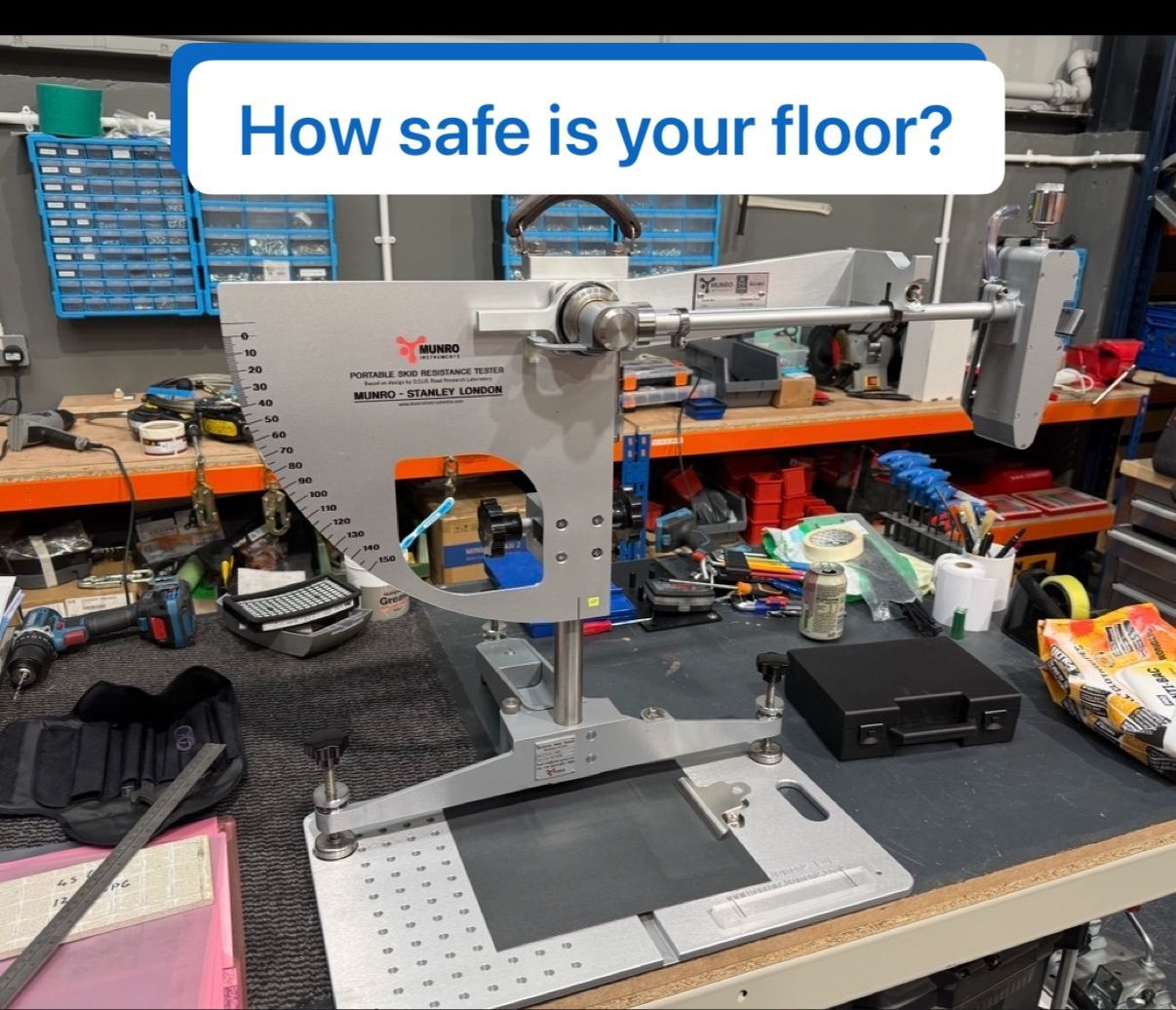
The test uses a pendulum slip tester to simulate the action of a heel striking a floor surface. The higher the PTV, the greater the measured slip resistance of the surface under the test conditions.

PTV results are commonly used to assess the slip potential of flooring in workplaces, public areas, commercial buildings, warehouses, leisure facilities and other environments where slips, trips and falls may be a risk.

Read our full guide: What Is Pendulum Slip Testing?

Why Is a PTV of 36 Important?

A PTV of 36 or more is widely used as a benchmark for low slip potential, particularly when assessing wet floor conditions.

This matters because many slip incidents happen when flooring becomes wet, contaminated or poorly maintained. A floor may feel acceptable when dry, but become much more slippery once water, oil, dust or other contamination is introduced.

If a floor can achieve a PTV of 36 or more in the relevant conditions, it can provide useful evidence that the surface has been assessed and has a lower measured slip potential.

That does not mean the number should be viewed in isolation. The test result should be considered alongside the workplace, the likely contaminants, the cleaning process, the footwear worn and the actual way people move across the floor.

What Happens If a Floor Scores Below PTV 36?

A PTV below 36 may indicate a higher slip potential, especially if the result relates to wet or contaminated testing.

It does not automatically mean the floor is unlawful or must be replaced immediately, but it should trigger a review of the wider slip risk.

Depending on the site, this may involve looking at:

  • Cleaning methods and cleaning frequency
  • Likely contamination, such as water, oil, dust or food residue
  • Drainage and entrance matting
  • Footwear requirements
  • Changes in floor gradient or surface finish
  • Whether a different floor surface is needed

In some cases, further testing may be needed after cleaning changes, remedial work or surface treatment.

Does a PTV of 36 Guarantee Nobody Will Slip?

No. A PTV of 36 or more is a useful benchmark, but it does not guarantee that nobody will ever slip.

Slip risk is affected by more than the floor surface alone. Even a floor with a good PTV result can become hazardous if it is poorly cleaned, contaminated, worn, damaged or used with unsuitable footwear.

For example, a surface may test well when clean and wet, but perform differently if exposed to oil, fine dust, grease, food residue or heavy wear.

Important:

PTV is not a magic number that removes all responsibility. It is evidence that helps you understand and manage slip risk more effectively.

Can a PTV of 36 Help Defend Slip Claims?

It can help, provided the testing is relevant, recorded and forms part of a wider slip risk management approach.

If you can show that your flooring achieved a PTV of 36 or more under appropriate test conditions, it may provide useful evidence that the surface was assessed and had low measured slip potential at the time of testing.

This can be valuable if you need to respond to slip complaints, insurance queries or claims. However, the test result is only one part of the evidence picture. Cleaning records, inspection logs, maintenance actions and incident records may also matter.

Velocity Safety provides independent pendulum slip testing to help businesses understand floor slip resistance and support risk assessment decisions.

How Often Should PTV Be Checked?

There is no single fixed interval that applies to every floor. The right frequency depends on the environment, the level of traffic, the type of contamination, previous incidents and how quickly the floor surface may wear.

Floors in high-traffic or wet areas may need more regular review than low-risk areas with little contamination.

Testing may also be sensible:

  • Before installing new flooring
  • After a slip incident or complaint
  • After surface treatment or remedial work
  • When changing cleaning chemicals or cleaning methods
  • When a floor surface begins to look worn or polished

See why flooring samples should be slip tested before installation.

Final Takeaway

A PTV of 36 or more is generally the benchmark used to indicate low slip potential, especially in wet floor conditions.

However, the result should always be understood in context. A good PTV result supports your slip risk assessment, but it does not replace good housekeeping, cleaning, maintenance and sensible control measures.

If you are unsure what your floor’s PTV result means, get it reviewed by someone competent in pendulum slip testing and slip risk assessment.

Arrange Pendulum Slip Testing

Need to understand whether your flooring has a low slip potential? Velocity Safety can carry out independent pendulum slip testing on-site or on flooring samples in our workshop.

📞 Call: 01254 933486
📩 Email: info@velocitysafety.co.uk
🌐 Or contact us online

Frequently Asked Questions

Here are some of the questions we are commonly asked about PTV results, slip testing and what a value of 36 means in practice.

What does PTV stand for?

PTV stands for Pendulum Test Value. It is the result produced during a pendulum slip test and is used to assess floor slip resistance.

Is PTV 36 good?

Yes, a PTV of 36 or more is generally considered to indicate low slip potential, especially when assessing wet floor conditions.

What does a PTV below 36 mean?

A PTV below 36 may indicate increased slip potential. It does not automatically mean a floor is unlawful, but the result should be reviewed as part of a wider slip risk assessment.

Does PTV 36 mean a floor is completely safe?

No. A PTV of 36 is a useful benchmark, but slip risk also depends on contamination, cleaning, footwear, maintenance and how the floor is used.

Can PTV results help defend slip claims?

PTV results can provide useful evidence that a floor has been tested and assessed. They are most useful when supported by cleaning records, maintenance logs and a suitable slip risk assessment.

Resources

Lifting- Examinations

Case Study: Brand New Lifting Equipment Rejected During Examination

“New doesn’t always mean compliant.”

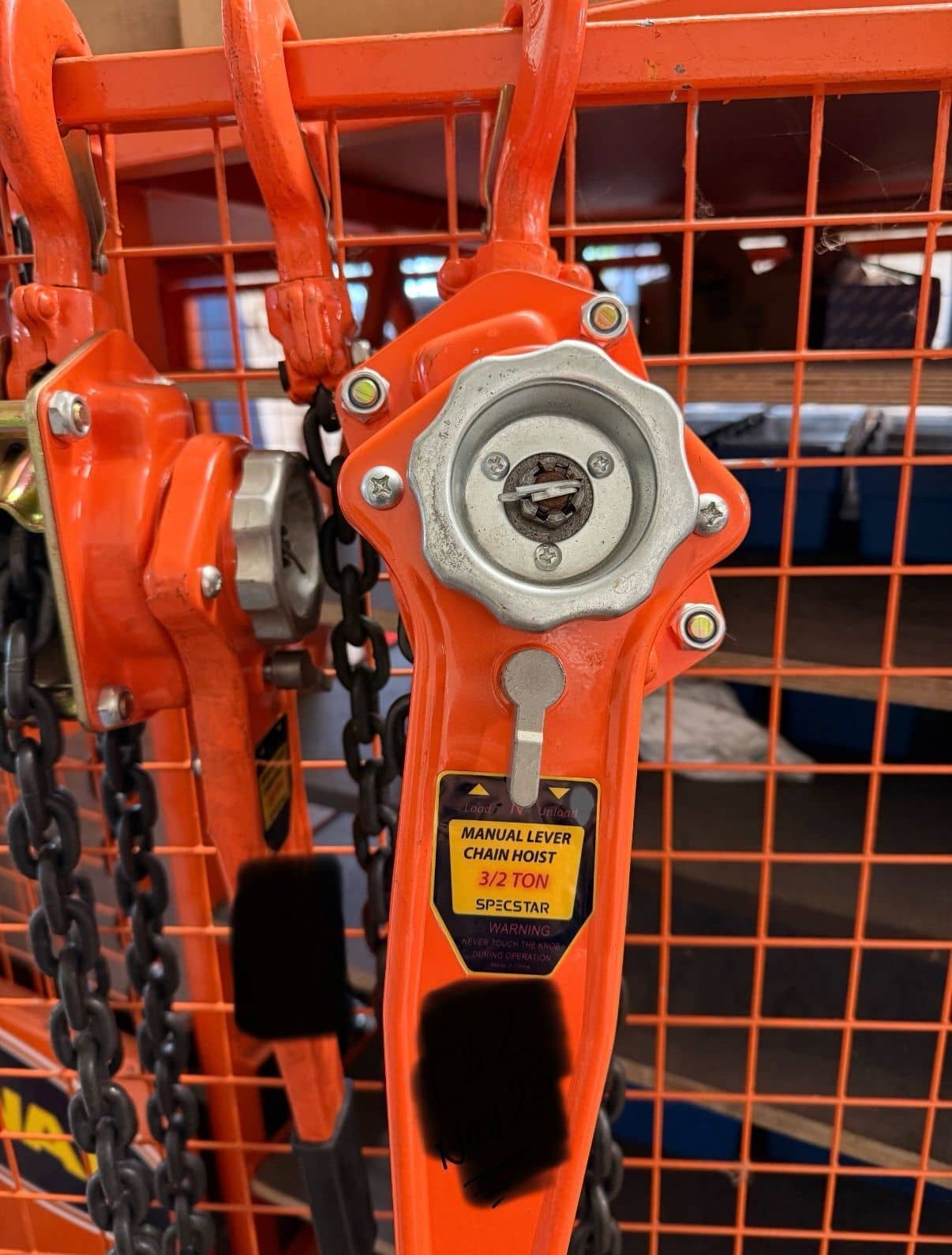
A client recently supplied us with a brand new item of lifting equipment purchased online for examination before use.

Although the equipment had never been used, our examination quickly identified several issues that raised immediate concerns over whether it was suitable for lifting operations.

This is a good reminder that buying brand new equipment does not automatically mean it is compliant or safe to put into service.

Quick Answer: Can brand new lifting equipment fail a Thorough Examination?

Yes. During this examination we identified a number of basic compliance concerns before the equipment had ever been used.

New equipment should always be checked before entering service. Never assume “new” automatically means compliant.

Case Study Summary

  • Industry: Lifting Equipment
  • Issue: Brand new equipment purchased online.
  • Problem: Multiple compliance concerns identified before first use.
  • Outcome: Equipment rejected before entering service.

The Problem

The client had recently purchased lifting equipment online believing that, because it was brand new, it would be ready to use following examination.

However, once presented for examination, several issues immediately became apparent.

  • No visible CE or UKCA marking.
  • No evidence of compliance with EN13157.
  • Questionable Safe Working Load information.
New lifting equipment rejected during examination because of compliance concerns
Brand new lifting equipment identified during examination with significant compliance concerns before entering service.

Why This Matters

Many buyers understandably assume that if equipment arrives boxed, unused and supplied with paperwork it must be compliant.

Unfortunately, this is not always the case.

A competent examiner should assess more than whether the equipment looks new. Markings, standards, traceability and overall suitability all form part of the examination process.

Learn more about our Thorough Examination of Lifting Accessories service.

Outcome

Because the issues were identified before the equipment entered service, the client avoided introducing potentially unsuitable lifting equipment into the workplace.

Although disappointing, identifying these issues early is exactly what a competent examination is designed to achieve.

Final Takeaway

This case highlights why new equipment should never be assumed to be compliant simply because it has never been used.

Independent examination helps ensure lifting equipment meets the necessary standards before anyone relies upon it during lifting operations.

Need Your Lifting Equipment Examined?

Velocity Safety carries out Thorough Examinations of lifting accessories and equipment, helping identify compliance issues before equipment enters service.

📞 Call: 01254 933486

📩 Email: info@velocitysafety.co.uk

🌐 Or contact us online

Lifting Inspection

Can Brand New Lifting Equipment Fail a Thorough Examination?

“Brand new doesn’t automatically mean compliant.”

Many businesses assume that if lifting equipment arrives brand new in the box, it must be safe to use.

Unfortunately, that isn’t always the case.

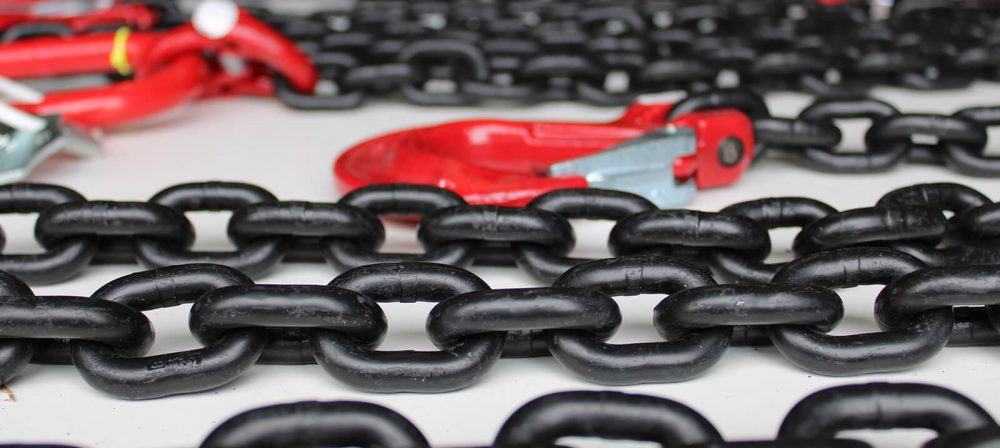
We’ve seen supposedly new lifting equipment fail inspection before it has ever been put into service because it was missing essential compliance information, manufactured to the wrong standard or simply couldn’t demonstrate it was suitable for lifting operations.

Quick Answer: Can new lifting equipment fail a thorough examination?

Yes. New lifting equipment can fail a thorough examination if it does not comply with the relevant standards, lacks the correct markings, has inadequate documentation or raises concerns over its Safe Working Load (SWL).

New equipment should never be assumed to be compliant simply because it is unused.

Key Takeaways – New Lifting Equipment

  • Brand new equipment can still fail inspection.
  • Compliance markings and documentation matter.
  • A Thorough Examination is more than checking paperwork.
  • Buying from reputable suppliers helps avoid expensive mistakes.

Jump to:

Real Example: Brand New Equipment That Failed Inspection

We recently examined a brand new item of lifting equipment that had been purchased online.

Although unused, several concerns were immediately identified before it could be considered suitable for service.

  • No CE or UKCA marking.
  • No evidence of compliance with EN 13157.
  • Questionable Safe Working Load (SWL) information.
Example of new lifting equipment failing examination due to missing compliance markings
Brand new lifting equipment identified during examination with significant compliance concerns before being put into service.

Although the equipment was brand new, that alone was not enough to demonstrate compliance.

Why Can New Lifting Equipment Fail?

New equipment is not automatically compliant.

Problems can include:

  • Missing CE or UKCA marking.
  • No evidence of compliance with the relevant product standard.
  • Missing or unclear Safe Working Load markings.
  • Poor traceability.
  • Missing declarations or manufacturer information.

These issues should be identified before equipment enters service.

What Should Be Present?

Before lifting equipment is put into use, it should typically include:

  • Manufacturer identification.
  • Clear Safe Working Load marking.
  • Relevant CE or UKCA marking.
  • Compliance with the appropriate standard where applicable.
  • Product traceability.
  • Supporting documentation.

Learn more about our Thorough Examination of Lifting Accessories service.

A Thorough Examination Is More Than Paperwork

A competent examiner should do far more than simply check whether paperwork has been provided.

The examination should consider whether the equipment appears suitable, correctly marked, appropriately identified and safe to enter service.

Paperwork alone should never override obvious compliance concerns.

Remember

New equipment should always be verified before use. Brand new does not automatically mean compliant.

Final Takeaway

Buying lifting equipment online can be perfectly acceptable—but only if the equipment can demonstrate that it meets the necessary compliance requirements.

Before putting any lifting equipment into service, ensure it has been properly examined by a competent person and don’t assume that “brand new” automatically means “safe to use”.

Need Lifting Equipment Examining?

Velocity Safety provides Thorough Examination of lifting accessories, helping businesses identify compliance issues before equipment enters service.

📞 Call: 01254 933486

📩 Email: info@velocitysafety.co.uk

🌐 Or contact us online

Frequently Asked Questions

Here are some of the questions we’re commonly asked about new lifting equipment and Thorough Examinations.

Can brand new lifting equipment fail inspection?

Yes. New equipment can fail if it lacks the correct markings, documentation or evidence of compliance with the relevant standards.

Does new lifting equipment still need checking?

Yes. New equipment should always be checked before entering service to confirm it is suitable, correctly marked and compliant.

What does a competent examiner look for?

A competent examiner considers the equipment itself, its markings, traceability, documentation and overall suitability—not just whether paperwork has been supplied.

Resources

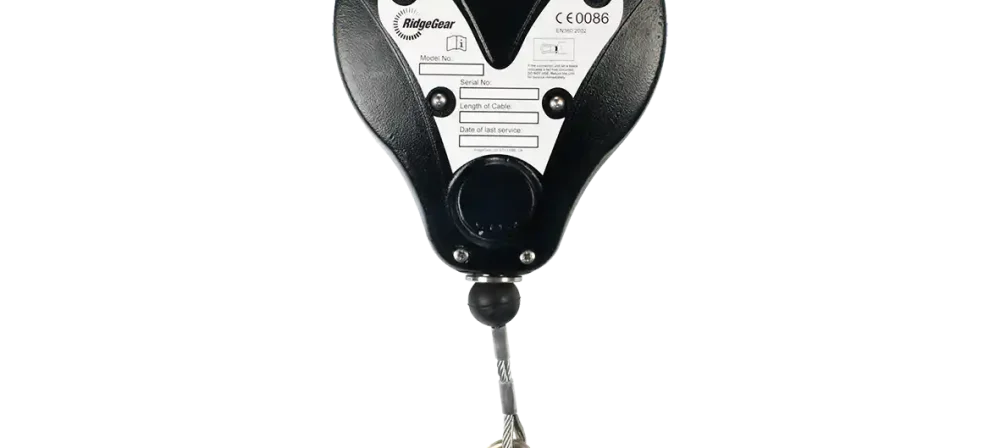
RGA2 Fall Arrest Block – 10m

Do Fall Arrest Blocks Need Servicing or Just Inspection?

“A tag on the outside doesn’t tell you what’s happening on the inside.”

Many businesses assume that if a fall arrest block has an inspection tag attached, it must be safe to use.

Unfortunately, that isn’t always the case.

For many fall arrest blocks and inertia reels, manufacturers specify periodic servicing in addition to routine inspections. Simply carrying out a visual examination and attaching a new inspection tag is not the same as completing a full manufacturer-approved service.

Quick Answer: Do fall arrest blocks need servicing or just inspection?

Many fall arrest blocks require both periodic inspection and manufacturer-specified servicing. These are separate activities. Where the manufacturer requires an internal service, the unit must be opened using the applicable procedure so that internal components can be examined, maintained and tested. An external inspection tag does not prove this work has taken place.

Key Takeaways – Fall Arrest Block Servicing

  • An inspection is not the same as a service.
  • Many manufacturers require periodic servicing as part of their maintenance instructions.
  • A proper service involves opening the unit, inspecting internal components and replacing parts where required.
  • Simply attaching a new inspection tag does not prove a service has taken place.
  • EN 360 is a product standard—not a safe working load and should not be entered as the equipment’s SWL.

Jump to:

What’s the Difference Between an Inspection and a Service?

An inspection checks whether equipment appears safe and suitable for continued use.

A service goes much further.

Where required by the manufacturer, servicing involves opening the fall arrest block to inspect internal components that cannot be assessed during an external examination alone.

Inspection Service
External examination Internal examination
Visual checks Unit opened
Labels and markings checked Critical components inspected
Functional checks Cleaning, lubrication and component replacement where required
Inspection record completed Service record completed

Learn more about our Fall Arrest Block Servicing service.

A Real Example: EN 360 Entered as the Safe Working Load

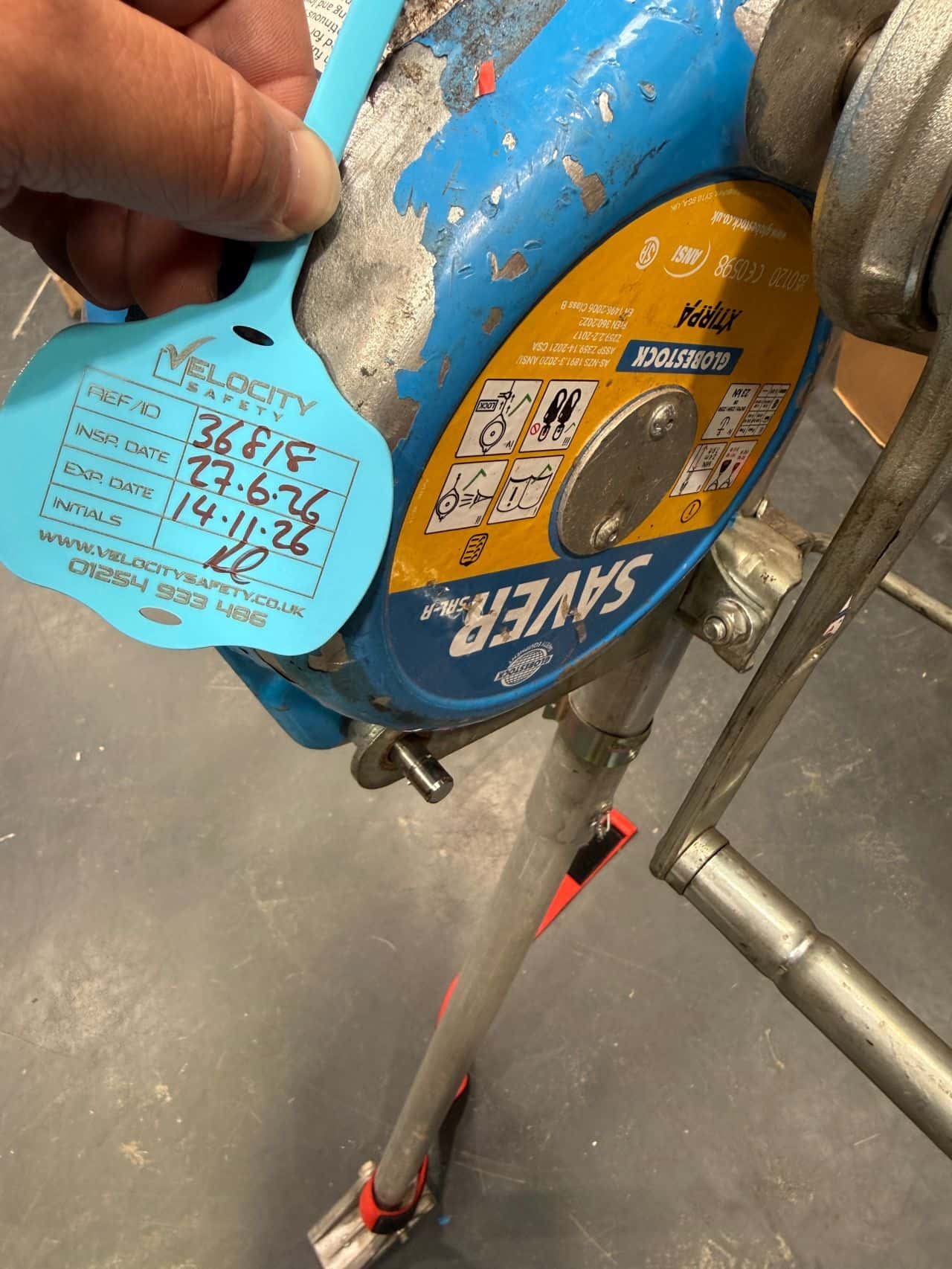
We recently encountered a fall arrest block carrying a lifting-equipment inspection tag with EN 360 written in the Safe Working Load field.

That information does not belong there.

EN 360 is the product standard for retractable-type fall arresters. It is not a safe working load.

EN 360 does not mean SWL

Writing EN 360 in an SWL field does not communicate a load capacity. It identifies a standard associated with the equipment—not the weight it can safely support or the conditions in which it can be used.

The incorrect entry also raised a more important question: what work had actually been completed before the tag was attached?

The tag alone did not confirm:

  • Whether the make and model had been correctly identified
  • Whether the manufacturer’s instructions had been checked
  • Whether the required servicing was current
  • Whether an internal mechanical examination had taken place
  • Whether the provider was authorised to service that model
  • Whether a separate service record was available

An inspection tag is only useful when it accurately describes the equipment and is supported by the correct inspection or servicing records.

It cannot turn an external examination into a manufacturer-specified internal service.

Where the manufacturer requires periodic servicing, the employer should verify the service date, provider and supporting documentation rather than relying on the presence of a tag.

What Happens During a Proper Fall Arrest Block Service?

Although servicing procedures vary between manufacturers, a proper service may include:

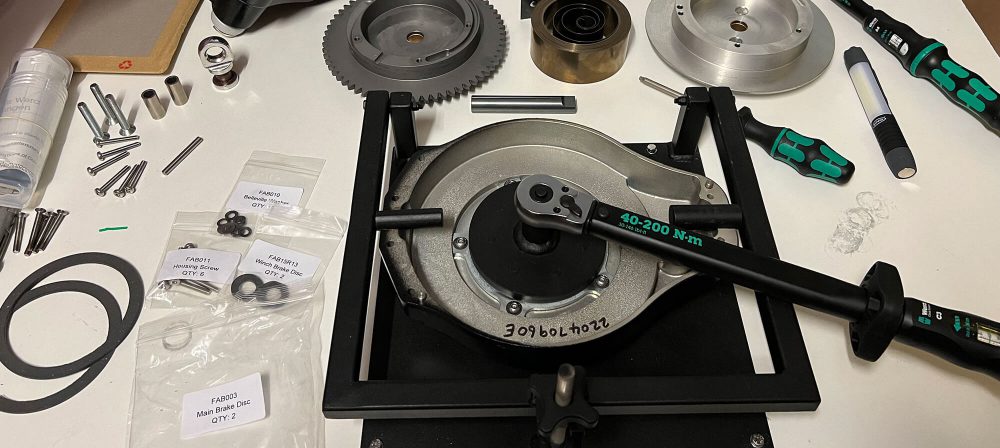
  • Opening the unit.
  • Inspecting internal braking mechanisms.
  • Checking springs, pawls and ratchets.
  • Cleaning internal contamination.
  • Replacing worn components where required.
  • Lubricating moving parts where specified.
  • Reassembling and function testing the unit.
Globestock G Saver II fall arrest block inspection tag fitted by Velocity Safety
Example of a fall arrest block inspection tag fitted by Velocity Safety after examination and servicing.

These are checks that simply cannot be completed without opening the equipment.

A Real Workshop Example

Recently we received several fall arrest blocks that had supposedly been serviced the previous year.

Once the units were opened, the internal markings still showed the original manufacturing date from 2022.

There was no evidence that the units had ever been opened for an internal examination.

That illustrates the difference between carrying out a proper manufacturer-specified service and simply attaching a new inspection tag.

Warning Signs a Fall Arrest Block Hasn’t Been Properly Serviced

Potential warning signs include:

  • Only an external inspection label with no service record.
  • Equipment that has never been opened despite manufacturer servicing requirements.
  • Service prices that seem unrealistically low for the work involved.
  • No approved servicing documentation.

Remember:

If the manufacturer specifies servicing, servicing isn’t optional.

Final Takeaway

Inspection and servicing are not interchangeable terms.

If your fall arrest block requires periodic servicing, simply carrying out an external inspection is unlikely to meet the manufacturer’s maintenance requirements.

Choosing an approved service provider helps ensure the equipment is properly examined both inside and out.

Book Fall Arrest Block Servicing

Velocity Safety provides professional fall arrest block servicing alongside PFPE inspections, helping businesses keep work at height equipment compliant throughout its working life.

📞 Call: 01254 933486

📩 Email: info@velocitysafety.co.uk

🌐 Or contact us online

Frequently Asked Questions

Here are some of the questions we’re most commonly asked about servicing fall arrest blocks.

Is EN 360 a safe working load?

No. EN 360 is the standard associated with retractable-type fall arresters. It is not a load capacity and should not be entered as the equipment’s safe working load. The correct markings and user information should be taken from the equipment manufacturer.

Is inspecting a fall arrest block the same as servicing it?

No. An inspection is primarily an external examination, whereas a service involves opening the unit and checking internal components where required by the manufacturer.

Do all fall arrest blocks need servicing?

No. Requirements vary between manufacturers. Always follow the manufacturer’s servicing instructions and maintenance schedule.

Can a fall arrest block be serviced without opening it?

Where the manufacturer specifies an internal service, no. Opening the unit is necessary to examine components that cannot be assessed externally.

Resources

Full, Installed, Commissioned Screw Compressor & Supplid Air Respirator Setup For Sale

What Is Included in a Supplied Air Respirator Installation?

“A supplied air respirator system is much more than just a compressor. Every part of the installation plays a role in keeping your workforce protected and your business compliant.”

Installing a supplied air respirator system isn’t as simple as buying a compressor and plugging it in.

To remain compliant and provide safe breathing air, the complete system needs to be correctly specified, professionally installed, commissioned, tested and maintained throughout its working life.

At Velocity Safety, we provide complete supplied air respirator installations across the UK, removing the headache of managing multiple suppliers and ensuring every part of the system works together.

Quick Answer: What is included in a supplied air respirator installation?

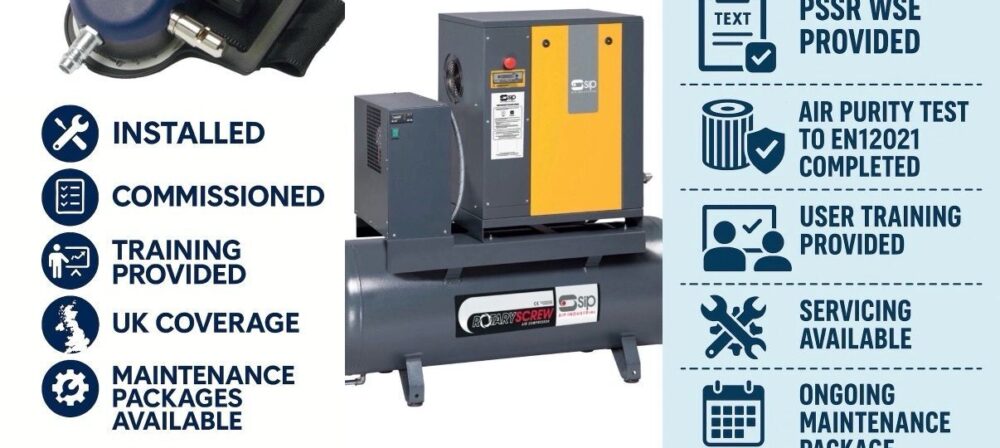
A complete supplied air respirator installation typically includes a compressor, breathing air filtration, supplied air respirator, airline hose, installation, commissioning, EN12021 air purity testing, a PSSR Written Scheme of Examination where required, user training and an ongoing maintenance programme. Velocity Safety’s UK mainland packages start from £10,995 + VAT at the time of writing.

Key Takeaways – Supplied Air Respirator Systems

  • A compliant supplied air system involves much more than buying a compressor.
  • Air purity testing, PSSR compliance and commissioning are all important parts of the installation.
  • User training helps ensure equipment is used safely and correctly.
  • Complete UK mainland packages start from £10,995 + VAT at the time of writing.

Jump to:

What Is Included in a Complete Supplied Air Respirator System?

A professionally installed supplied air respirator system includes much more than the compressor itself.

A typical installation may include:

How Much Does a Supplied Air Respirator Installation Cost?

At the time of writing, a complete supplied air respirator installation from Velocity Safety starts from £10,995 + VAT for mainland UK installations.

This package includes supply, installation, commissioning, EN12021 air purity testing, a PSSR Written Scheme of Examination where required, and user training.

Pricing Note

Prices are correct at the time of publication and may vary depending on compressor specification, respirator configuration, installation requirements and project location.

Bringing everything together through one provider helps simplify compliance and reduces the need to coordinate multiple contractors.

Why Is Air Purity Testing So Important?

Supplying compressed air is only part of the process.

The air itself must also be suitable for breathing.

Following installation, air purity testing should be completed to confirm compliance with EN12021, ensuring contaminants remain within acceptable limits before the system enters service.

Learn more about our Breathing Air Testing service.

Why Does the Compressor Need a Written Scheme of Examination?

Many supplied air systems include pressure equipment that falls under the Pressure Systems Safety Regulations 2000 (PSSR).

Where applicable, a Written Scheme of Examination (WSE) should be produced before the equipment enters service, helping businesses meet their legal duties.

Find out more about our PSSR examinations.

Why Ongoing Maintenance Matters

Installing the system is only the beginning.

To maintain performance, warranty and compliance, supplied air respirator systems require ongoing maintenance.

This may include:

  • Three-monthly air purity testing.
  • Annual compressor servicing.
  • Filter replacement.
  • Inspection of respiratory protective equipment.
  • User refresher training where required.

Velocity Safety also provides ongoing RPE examination and servicing.

One Supplier. One Compliance Package.

Instead of arranging separate installers, PSSR inspectors, breathing air testers and RPE specialists, Velocity Safety can coordinate the complete package from installation through to ongoing maintenance.

Final Takeaway

A supplied air respirator system is an investment in both worker safety and long-term compliance.

Choosing a provider that can install, commission, test and maintain the complete system helps ensure everything continues to perform as intended long after installation has been completed.

Need a Complete Supplied Air Respirator Installation?

Velocity Safety provides complete supplied air respirator installations across the UK from £10,995 + VAT, including installation, commissioning, EN12021 air purity testing, PSSR compliance, training and ongoing maintenance options.

📞 Call: 01254 933486

📩 Email: info@velocitysafety.co.uk

🌐 Or contact us online

Frequently Asked Questions

Here are some of the questions we’re regularly asked about supplied air respirator systems.

How much does a supplied air respirator installation cost?

Velocity Safety’s complete UK mainland supplied air respirator installations start from £10,995 + VAT at the time of writing. Final pricing may vary depending on site requirements and system specification.

Does a supplied air compressor need a Written Scheme of Examination?

Many do. Whether a compressor falls under PSSR depends on its design and operating characteristics. A competent person can advise whether a WSE is required.
How often should breathing air be tested?

Many businesses choose three-monthly air purity testing to help demonstrate continued compliance with EN12021.

Does Velocity Safety install complete supplied air systems?

Yes. We can supply, install, commission and maintain complete supplied air respirator systems across the UK.

Resources

Personal Fall Protection Equipment

Why Some Fall Arrest Blocks Can’t Be Repaired

“Saving money on day one means very little if the equipment can’t be repaired five years later.”

When businesses buy fall arrest equipment online, the purchase price often becomes the deciding factor.

What many don’t think about is what happens when that equipment eventually requires servicing, repair or replacement parts.

Recently we spoke to a client who had invested around £5,000 in fall arrest blocks. When the equipment eventually needed attention, there was one major problem.

Nobody could repair them.

Quick Answer: Can all fall arrest blocks be repaired?

No. Some fall arrest blocks cannot be economically repaired because spare parts, technical documentation or manufacturer support simply do not exist. Before buying, always check whether the equipment can be serviced and supported throughout its working life.

Key Takeaways – Fall Arrest Block Repairs

  • Not every fall arrest block can be repaired.
  • Buying unsupported equipment can lead to complete replacement rather than repair.

  • Manufacturer support and spare parts availability matter just as much as purchase price.
  • Choosing equipment with approved servicing support often saves money over its lifetime.

Jump to:

A £5,000 Lesson in Buying the Wrong Equipment

We were recently contacted by a client who had invested approximately £5,000 in fall arrest blocks purchased online.

When the equipment eventually required servicing, the expectation was simple.

“You’ll be able to repair them.”

Unfortunately, after establishing where the equipment had been purchased from, the answer was no.

There were no readily available spare parts, no documented repair procedures and no recognised support route for servicing the equipment.

Regular PFPE inspections can identify issues early, but only if the equipment can actually be repaired and supported by the manufacturer.

Regular PFPE inspections can identify issues early, but only if the equipment can actually be repaired and supported by the manufacturer.

Why Can’t Some Fall Arrest Blocks Be Repaired?

Not every manufacturer provides long-term support for the products they sell.

Some equipment is manufactured with readily available replacement parts and approved servicing procedures.

Others simply are not.

If replacement components cannot be sourced or there is no approved servicing procedure, even relatively small faults can result in the entire unit being scrapped.

This isn’t because engineers don’t want to repair the equipment.

It’s because doing so safely and compliantly simply isn’t possible.

Learn more about our Fall Arrest Block Servicing service.

Velocity Safety is also an Approved PFPE Inspection Centre, allowing us to inspect a wide range of personal fall protection equipment alongside fall arrest blocks.

Think Beyond The Purchase Price

The cheapest fall arrest block isn’t always the cheapest solution.

Consider servicing, spare parts, technical support and long-term maintenance before making your purchasing decision.

Questions To Ask Before Buying Fall Arrest Equipment

Before purchasing fall arrest equipment, ask your supplier:

  • Can this unit be serviced in the UK?
  • Are spare parts readily available?
  • Who carries out repairs?
  • Is there an approved service centre?
  • Can the equipment be inspected throughout its working life?
  • Can replacement parts still be obtained in five or ten years?
  • What happens if it fails its examination?

If those questions cannot be answered, the cheapest option today could become the most expensive option tomorrow.

Read our guide on buying safety equipment online.

Final Takeaway

Buying compliant fall arrest equipment isn’t just about today’s purchase price.

It’s about making sure the equipment can still be serviced, repaired and supported years into the future through a recognised provider.

Choosing equipment with proper manufacturer support can prevent costly replacement and keep your workforce protected for longer.

Need Advice Before Buying Fall Arrest Equipment?

Velocity Safety services fall arrest blocks, carries out PFPE inspections and helps businesses choose equipment that remains supportable throughout its working life.

📞 Call: 01254 933486

📩 Email: info@velocitysafety.co.uk

🌐 Or contact us online

Frequently Asked Questions

Here are some common questions businesses ask before purchasing fall arrest blocks.

Can every fall arrest block be repaired?

No. Some manufacturers do not provide spare parts or approved repair procedures, meaning replacement may be the only option.

Why can’t some fall arrest blocks be repaired?

Without replacement parts, servicing information or manufacturer support, repairs cannot always be carried out safely or compliantly.

How can I avoid buying unsupported equipment?

Choose equipment supplied through reputable providers who can also support servicing, repairs and periodic inspections throughout the equipment’s working life.

Resources


Fire Extinguisher Sign

Fire Extinguisher Installation Case Study: Signage, Refuge Areas and No-Drill Mounting

“Installing fire extinguishers properly is about far more than putting a red box on the wall.”

Most people think a fire extinguisher installation simply involves fixing extinguishers to the wall and walking away.

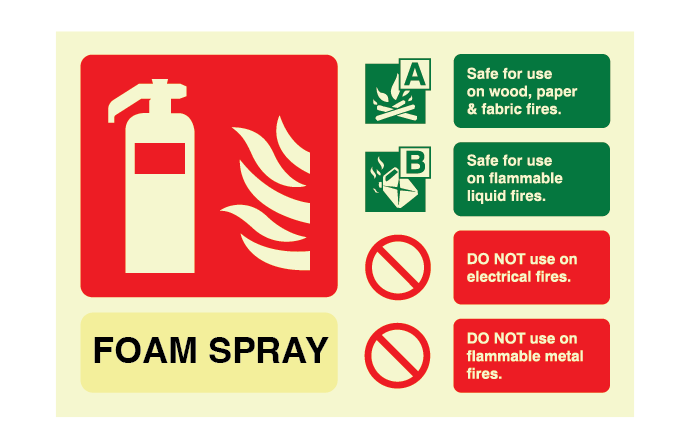
In reality, a compliant installation involves much more than that. Fire action notices, refuge area signage, fire blanket positioning, mounting methods and even the way equipment is fixed to the building can all affect the finished result.

Recently, we completed a fire extinguisher installation where a few practical challenges meant we needed to think differently to deliver a compliant solution without compromising the client’s building.

Quick Answer: What should be included during a fire extinguisher installation?

A compliant installation should include much more than simply mounting extinguishers. Fire action notices, refuge area signage, fire blanket signage, correct positioning, commissioning and suitable fixing methods should all be considered as part of the installation.

Key Takeaways – Fire Extinguisher Installation

  • Fire extinguisher installation is about more than fixing extinguishers to a wall.
  • Correct signage forms an important part of a compliant installation.
  • Alternative fixing methods may be required where drilling is not appropriate.
  • Attention to detail helps create safer, more professional installations.

Jump to:

Fire Extinguisher Installation Case Study

We recently completed another fire extinguisher installation where the extinguishers themselves were only one part of the project.

As with many commercial premises, the installation also required the correct fire action signage, refuge area information and fire blanket identification to ensure the completed installation aligned with current guidance.

Instead of simply hanging equipment wherever there was space, each location was considered individually to ensure occupants could easily identify the correct fire safety information during an emergency.

Why Fire Safety Signage Matters

Good fire safety signage helps occupants understand what they should do during an emergency.

Depending on the building, this may include:

  • Fire action notices on floors served by lifts stating “Do Not Use Lift”.
  • Identification of refuge areas.
  • Information signage within refuge areas.
  • Fire blanket identification signs.
  • Fire blanket operating instructions positioned correctly behind the blanket.

These aren’t optional extras or over-the-top additions.

They form part of good fire safety practice and help ensure occupants receive the correct information when it matters most.

Learn more about our fire extinguisher signage services.

What Happens If You Can’t Drill Into The Walls?

Every building presents different challenges.

On this particular project, the client did not want wall stands and previous contractors had advised that they could not drill into the walls because an asbestos survey had not been completed.

Rather than simply walking away, we installed glued 18mm primed pattresses to provide a suitable mounting solution without drilling into the building fabric.

To finish the installation professionally, decorators’ caulk was used around the pattresses so no post-decoration was required.

Small details like these help produce a cleaner finish while solving practical problems for the client.

Final Takeaway

A compliant fire extinguisher installation involves much more than fitting extinguishers to a wall.

Correct signage, suitable mounting methods, proper commissioning and attention to detail all contribute towards a safer workplace and a more professional finished installation.

Every building is different, which is why practical experience often matters just as much as the equipment itself.

Need Fire Extinguisher Installation?

From supplying and commissioning extinguishers to fire action signage, fire blanket installation and practical site solutions, Velocity Safety provides complete fire extinguisher installations across the UK.

📞 Call: 01254 933486

📩 Email: info@velocitysafety.co.uk

🌐 Or contact us online

Frequently Asked Questions

Here are some of the questions we’re commonly asked about fire extinguisher installations.

Do fire extinguishers need signs?

Yes. Fire extinguisher locations should be clearly identified using appropriate signage so occupants can quickly locate equipment during an emergency.

Can fire extinguishers be installed without drilling?

In some situations, yes. Alternative fixing methods may be appropriate depending on the building and the client’s requirements.

Are fire blankets required to have signs?

Yes. Fire blankets should be correctly identified, with operating instructions positioned appropriately behind the blanket where applicable.

Resources

Inspector with Clipboard

Buying Safety Equipment Online? Check Who Will Service It First

“Buying safety equipment is easy. Knowing who will maintain it in five years’ time is the difficult part.”

Buying health and safety equipment online has never been easier. Within a few clicks you can order everything from fire extinguishers and respirators to gas monitors, fall arrest equipment and lifting accessories.

But one question is often overlooked.

Who is going to inspect it, service it, calibrate it or repair it when something goes wrong?

For many businesses, the cheapest online purchase quickly becomes the most expensive option once equipment starts failing, replacement parts can’t be sourced or nobody is willing to maintain what has been bought.

Quick Answer: Is buying safety equipment online a bad idea?

Not necessarily. The important question isn’t where you buy it, but whether you have ongoing support when the equipment needs servicing, calibration, repair or replacement. Before buying, make sure there is a competent provider who can maintain the equipment throughout its working life.

Key Takeaways – Buying Safety Equipment Online

  • The purchase price is only one part of the overall cost.
  • Many safety products require ongoing servicing, calibration or inspection.
  • Buying unsupported equipment can create unnecessary replacement costs.
  • Choose equipment that can be maintained by a competent UK provider.

Jump to:

Why Aftercare Matters More Than the Purchase Price

Many pieces of health and safety equipment are not simply bought once and forgotten about. They require ongoing inspection, servicing, calibration, testing or repair throughout their working life.

Buying from a supplier that cannot support the equipment after the sale can leave businesses with equipment that nobody is willing or able to maintain.

Instead of repairing perfectly serviceable equipment, many organisations simply throw it away and buy another one.

That creates unnecessary cost, waste and compliance risk.

What Safety Equipment Requires Ongoing Support?

Many businesses are surprised by how much workplace safety equipment requires regular maintenance.

Examples include:

Before purchasing any of these products, it is worth asking who will maintain them over the next five or ten years.

The Hidden Cost of Cheap Online Safety Equipment

The initial purchase price is often only a small part of the total cost.

If spare parts cannot be obtained, repairs are unavailable or servicing is impossible, businesses often find themselves replacing equipment that could otherwise have remained in service.

In many cases we see equipment scrapped simply because nobody knows how to repair it or source replacement components.

Think Long Term

The cheapest supplier today may not be the cheapest option over the lifetime of the equipment.

Support, servicing, calibration and technical advice all have value when keeping safety equipment compliant.

Questions to Ask Before Buying Safety Equipment

Before placing an order, consider asking:

  • Who will service this equipment?
  • Can replacement parts be obtained?
  • Who carries out repairs?
  • Can it be calibrated in the UK?
  • Is technical support available?
  • What happens if it fails inspection?
  • Can the supplier support me after the sale?

If those questions cannot be answered confidently, it may be worth reconsidering where the equipment is being purchased from.

Final Takeaway

Buying safety equipment online is not automatically the wrong decision.

However, buying equipment without considering who will maintain, inspect or repair it throughout its working life can become an expensive mistake.

Choosing a supplier that offers ongoing support often delivers far better value than simply choosing the lowest purchase price.

Need Advice Before Buying?

Whether you’re purchasing fire extinguishers, gas monitors, RPE, fall protection or other compliance equipment, Velocity Safety can help you choose equipment that remains practical and supportable long after the day it arrives.

📞 Call: 01254 933486

📩 Email: info@velocitysafety.co.uk

🌐 Or contact us online

Frequently Asked Questions

Buying safety equipment is only the first step. Here are some common questions businesses ask about servicing, maintenance and long-term support.

Is buying safety equipment online always a bad idea?

No. The important consideration is whether the equipment can be properly maintained, inspected and repaired throughout its working life.

What safety equipment needs regular servicing?

Examples include fire extinguishers, gas detectors, respirators, fall arrest equipment, CAT & Genny units and many other items used for statutory compliance.

Why is aftercare important?

Without servicing, calibration or repairs, equipment may fail inspections, require premature replacement or no longer provide the protection it was purchased for.

Resources

Pendulum Slip Testing

Should Flooring Be Pendulum Slip Tested Before Installation?

“Testing a floor before it’s installed is usually much cheaper than replacing it afterwards.”

Slip resistance is often only considered after someone has had an accident or once a newly installed floor starts causing concerns.

By that point, changing the flooring can be expensive, disruptive and potentially lead to insurance claims or legal disputes.

The better approach is to understand how slip resistant a floor is before it is installed. Pendulum slip testing allows flooring samples to be independently tested before they ever reach site, helping designers, contractors and building owners make informed decisions.

Quick Answer: Should flooring be slip tested before installation?

Yes. Testing flooring samples before installation allows you to understand how the surface performs under recognised pendulum testing before committing to installation. It is often far cheaper to identify a problem before the floor is laid than after the project has been completed.

Key Takeaways – Pre-Installation Pendulum Slip Testing

  • Flooring samples can be pendulum tested before installation.
  • Pre-installation testing can identify unsuitable flooring before expensive remedial work becomes necessary.
  • Manufacturer R ratings do not always tell the full story about in-service slip resistance.
  • Independent testing helps support specification decisions and provides evidence if slip performance is questioned later.

Jump to:

Why Test Flooring Before Installation?

Changing flooring after installation is rarely cheap. If a surface is later found to have poor slip resistance, businesses may face replacement costs, disruption to operations and potential liability if someone slips before corrective work is completed.

Testing flooring before installation allows potential problems to be identified before the material is fitted, helping clients choose the right product with greater confidence.

Learn more about our Pendulum Slip Testing service.

Can Flooring Samples Be Tested?

Yes.

At Velocity Safety we can carry out pendulum testing on flooring samples within our workshop before installation takes place.

Instead of waiting until an entire floor has been fitted, designers, contractors and building owners can submit sample materials for independent assessment.

Pendulum slip tester used by Velocity Safety
Pendulum slip testing can be carried out on flooring samples before installation to help assess slip resistance.

Are Manufacturer R Ratings Enough?

Manufacturer data is useful, but it should not always be relied upon in isolation.

Many flooring products are marketed using an R rating, however the HSE recommends pendulum testing when assessing slip resistance because it measures the surface differently and provides a recognised Pendulum Test Value (PTV).

Where there is uncertainty, independent testing provides additional reassurance before installation proceeds.

Why Independent Testing Matters

Independent Testing

Velocity Safety does not sell anti-slip coatings or treatments.

That means we have no commercial incentive for a floor to pass or fail.

The result is the result.

Independent testing gives clients confidence that the findings are impartial and based solely on measured performance.

Final Takeaway

If you’re specifying flooring for a new project, testing it before installation can help avoid expensive mistakes later.

Understanding slip resistance before committing to a flooring product gives designers, contractors and building owners better information on which to base their decisions.

Arrange Pendulum Testing Before Installation

If you’re selecting flooring for a new project, Velocity Safety can independently test samples before installation to help you make informed decisions.

📞 Call: 01254 933486

📩 Email: info@velocitysafety.co.uk

🌐 Or contact us online

Frequently Asked Questions

Here are some of the questions we’re regularly asked about pre-installation pendulum slip testing.

Can you pendulum test flooring before it is installed?

Yes. Flooring samples can be tested before installation, helping identify potential slip resistance concerns before fitting takes place.

Is manufacturer slip resistance data enough?

Manufacturer information can be useful, but independent testing provides additional reassurance and objective performance data.

Can testing before installation save money?

Potentially yes. Identifying unsuitable flooring before installation is often significantly cheaper than replacing flooring after completion.

Resources