LEV Capture Hood Newly Installed

How Often Should LEV Be Tested?

A lot of businesses believe LEV systems need a Thorough Examination & Test (TExT) every 14 months.

It’s one of the most commonly repeated “facts” in health & safety.

And in some cases, it’s true.

But in many others, relying on the 14-month rule can leave you non-compliant, exposed, and with a false sense of security – especially when your LEV system falls under Schedule 4 of COSHH 2002, where more frequent testing is required.

If you provide extraction for welding fume, wood dust, isocyanates, metalworking fluids or other higher-risk processes, then “every 14 months” is almost certainly wrong.

Key Takeaways

  • The 14-month rule only applies to certain LEV systems – many require testing at 6-month or even monthly intervals.
  • Schedule 4 of COSHH 2002 sets legally binding frequencies based on the substance or process.
  • Misunderstanding LEV testing intervals is a common audit failure and can invalidate risk assessments.
  • Correct LEV test frequency depends entirely on the process risk, not the equipment type.

Below is a simple guide to when LEV needs testing, why the 14-month rule is often misused, and what the law actually requires.

Jump to

Why People Think LEV Needs Testing Every 14 Months

COSHH Regulation 9 states that LEV must be examined and tested:

“…at least once every 14 months unless more frequent intervals are specified in Schedule 4.”

This line gets repeated endlessly in workplaces, often becoming:

“LEV is every 14 months. End of story.”

But that’s not what COSHH says.

COSHH actually says:

  • 14 months is the maximum interval, not the default.
  • Some systems legally require shorter intervals.
  • Risk-based increases in frequency may be necessary where exposure potential is high.

So if your system doesn’t fall under the 14-month category, you’re already non-compliant even if you think you’re doing the right thing.

What Schedule 4 of COSHH Actually Says (In Plain English)

Schedule 4 lists specific LEV processes and substances that must be tested more often than 14 months.

Here are the most common examples:

Every 6 Months – Mandatory

These LEV systems must legally be tested at least once every 6 months:

Wood dust extraction

Wood dust is a known carcinogen and respiratory sensitiser, hence the stricter interval.

Welding fume extraction

Including MIG, TIG, MMA, fume arms, on-torch extraction and plasma cutting.

Metalworking fluids (MWF) LEV

High risk of respiratory illness, mist exposure and bacterial contamination.

Spray booths and isocyanate processes

Includes automotive refinishing, 2K paints and any process producing isocyanate mist.

Abrasive blasting

Both free-standing and cabinet blasting systems.

Certain dusts and fumes listed under Schedule 4 hazardous substances

If your LEV falls under any of these, a 14-month test isn’t legally acceptable.

Every Month – In Some High-Risk Scenarios

This is the part most businesses overlook.

Schedule 4 includes processes requiring monthly examination, usually where:

  • LEV performance can degrade very quickly
  • The consequences of failure are severe
  • Exposure potential is high or continuous

Examples include:

  • Electrolytic chromium processes
  • Certain high-toxicity dusts and vapours
  • Processes generating highly corrosive or rapidly clogging contaminants

These are less common but still present in UK manufacturing.

When 14 Months Is Acceptable

The 14-month interval generally applies to:

  • Basic benchtop LEV systems
  • Low-risk dust extraction
  • Simple point-of-use extraction in non-hazardous processes
  • Systems not specified in Schedule 4
  • Situations where risk assessments show low degradation and low exposure potential

However – and this is key:

14 months is the absolute longest allowable interval.

Not the default, not the recommendation.

If the system’s performance can degrade sooner, testing must be more frequent.

Common Myths That Lead to LEV Failures

Myth 1: “It’s the same LEV system, so the interval is always the same.”

Wrong.

The process determines the frequency – not the equipment type.

Myth 2: “Our last provider said it’s always 14 months.”

Also wrong.

Plenty of providers don’t follow Schedule 4 correctly.

Myth 3: “We’ve never had an issue, so 14 months is fine.”

HSE doesn’t accept “we’ve always done it this way” as a defence.

Myth 4: “We can switch between substances without changing the interval.”

The interval must follow the highest-risk material being extracted.

Myth 5: “Our in-house checks mean we can extend the interval.”

LEV thorough examinations are a legal requirement, not a risk-based optional control.

What Can Happen If You Test LEV Too Infrequently

Inaccurate or outdated LEV testing exposes a business to:

  • Workers inhaling hazardous dusts, fumes or mist
  • Uncontrolled exposure to carcinogens and sensitisers
  • Invalidated COSHH assessments
  • Enforcement notices
  • Compensation claims
  • Invalid insurance in the event of occupational disease
  • Failed audit outcomes

Most exposure-related enforcement cases start with one finding:

“LEV was not examined at the required intervals.”

How to Set the Correct LEV Test Frequency

A competent LEV engineer should:

  • Identify the process
  • Identify the contaminants
  • Reference Schedule 4
  • Review deterioration potential
  • Review hours of use
  • Assess risk of blockage, corrosion or filter wear
  • Recommend the correct interval (not just the convenient one)

Velocity Safety does this automatically as part of every LEV Thorough Examination & Test.

A Quick Reference Guide

These are the test intervals that actually appear in COSHH Schedule 4 (translated into plain English):

Process / Contaminant Legal Test Frequency
Wood dust Every 6 months
Welding fume Every 6 months
Isocyanates / Spray booths Every 6 months
Metalworking fluids Every 6 months
Abrasive blasting Every 6 months
Electrolytic chromium Every month
Other Schedule 4 processes 1–6 months depending on risk
Low-risk processes not in Schedule 4 Up to 14 months

If your LEV system handles any of the substances above, the interval is already set for you.

If it isn’t listed, then you fall into risk-based territory – and that’s where many businesses accidentally drift into non-compliance by defaulting to 14 months.

The safest approach?

Match the interval to the process risk, not the convenience of the calendar.

Why Velocity Safety Gets LEV Testing Right

Instead of simply recording airflow numbers and handing over a certificate, Velocity Safety looks at how the system actually performs in the real world. That means:

  • Confirming the correct test interval under COSHH and Schedule 4
  • Using calibrated, traceable instruments
  • Checking whether controls are still adequate for the task
  • Reporting defects clearly, with no sugar-coating
  • Advising if the interval needs tightening due to process risk

Compliance isn’t a box-tick – it’s making sure the LEV is genuinely protecting people.

Book Your LEV Thorough Examination & Test

If you’re unsure whether your system falls under the 14-month rule or needs more frequent testing, we can assess the process and set the correct legal interval.

📞 Call: 01254 933 486
📩 Email: info@velocitysafety.co.uk
🌐 Request a LEV Test Online
Velocity Team

Why Annual Calibration Matters for HSE Compliance

When a business books a LEV test, noise assessment, HAVS measurement, air purity test, or PSSR inspection, one assumption is quietly made:

“The readings will be accurate.”

Those readings are only dependable when the technician’s instruments are suitable, properly maintained and checked at appropriate intervals. Accurate measurements support reliable reports, informed control decisions and clear compliance records.

This is why Velocity Safety maintains a documented servicing and calibration schedule for its measurement equipment. Annual calibration is used where appropriate, alongside more frequent functional or field checks when required by the manufacturer, applicable guidance or the way the instrument is used.

Key Takeaways

  • Reliable measurements depend on suitable, properly maintained and calibrated equipment.
  • Inaccurate instruments can lead to incorrect conclusions and poorly supported reports.
  • Calibration intervals should reflect manufacturer instructions, relevant guidance, usage conditions and equipment history.
  • Some instruments also require functional, field or pre-use checks between formal calibrations.
  • Clear calibration records support workplace decisions, audits and incident investigations.

Below is a practical breakdown of what calibration actually involves, what kit needs it, and why it ultimately protects your business – not ours.

Jump to

What “Annual Calibration” Actually Means

Calibration is the process of checking an instrument against a known, verified standard.

It answers one simple question:

“Is this tool giving the correct reading, and if not, how far out is it?”

A documented calibration process will normally include:

  • Comparison – checking the instrument against an appropriate reference
  • Recorded results – documenting the readings, deviations and calibration date
  • Adjustment where required – correcting the instrument where necessary, permitted and technically possible
  • Traceability – maintaining a documented chain between the reference used and recognised measurement standards

Calibration does not always involve adjustment. It may instead confirm and record how closely an instrument agrees with the reference under specified conditions.

Without appropriate checks and records, it becomes harder to demonstrate that measurements used in reports, risk assessments or compliance decisions were reliable at the time they were taken.

Why HSE Expects Accurate, Calibrated Equipment

Many compliance tasks rely on measured values:

  • Airflow in LEV systems
  • Pressure in an air receiver
  • Noise exposure levels
  • Hand-arm vibration levels
  • Torque on lifting gear fixings
  • Electrical safety readings

If the equipment is out of calibration, your paperwork might say the workplace is safe when it isn’t – or unsafe when it is.

That’s why calibration ties directly into:

  • COSHH (Reg 9)
  • HSG258 (LEV testing)
  • HSG53 (RPE suitability & testing)
  • Noise Regulations 2005
  • PUWER 1998
  • PSSR 2000

In short: compliance decisions based on measurements need reliable instruments, competent interpretation and properly maintained records.

What Equipment May Need Scheduled Calibration – and Why

Below is the kind of kit used across inspections, testing and assessments – and the compliance impact of inaccurate readings.

Torque Wrenches & Torque Screwdrivers

Used for: LOLER, PFPE, lifting gear fixings, anchors

Why it matters: Incorrect torque can contribute to loose or overstressed fixings and affect the reliability of inspection, installation or maintenance work.

Pressure Gauges (for PSSR, compressors & air receivers)

Used for: air receiver safety checks, pressure relief valve testing

Why it matters: An inaccurate gauge can provide a misleading picture of system pressure and affect decisions about operation, maintenance or further examination.

Rotating Vane Anemometers & Hot Wire Anemometers

Used for: LEV thorough examinations and tests

Why it matters: Airflow measurements are an important part of many LEV examinations. An inaccurate instrument can undermine the reliability of the reported results.

Manometers & Differential Pressure Meters

Used for: filter checks, duct pressure verification

Why it matters: Inaccurate readings lead to the wrong conclusions about filter condition, fan performance or system health.

Portable Appliance Testers (PAT Testers)

Used for: electrical safety testing

Why it matters: Live/earth/insulation readings must be reliable. Faulty PAT testers can give incorrect “passes” to dangerous equipment.

Gas Monitors & Detection Equipment

Used for: confined space entry, air purity, oxygen detection

Why it matters: Gas detectors are safety-critical instruments. Calibration and function-check intervals vary by manufacturer, model, application and site risk. Many units require periodic calibration alongside more frequent bump or function checks.

Across all these instruments, appropriate calibration and functional checks help establish whether the measurements can be relied upon.

Equipment that is damaged, overdue for calibration or performing outside its expected tolerance may produce unreliable readings.

Those readings can lead to poorly informed safety and compliance decisions.

The Risks of Using Uncalibrated Equipment

Businesses rarely think about calibration until something goes wrong.

Here’s what uncalibrated instruments can lead to:

LEV systems passing when they should fail

Workers remain exposed to wood dust, silica, metal fumes or paint mists.

Air receivers operating at unsafe pressures

If a gauge or relief valve test is inaccurate, the tank becomes a pressure vessel with unknown stress levels.

Vibration readings that under-report actual exposure

HAVS risk assessments become invalid.

Noise assessments with incorrect dose calculations

Incorrect data → wrong hearing protection → long-term injury risk.

Torque readings that compromise lifting safety

Anchors fail because the torque tool said a fixing was “tight enough”.

Weaker evidence following an incident or insurance claim

Following an incident, investigation or claim, a business may be asked whether measurements were taken using appropriately maintained and calibrated equipment.

Missing or out-of-date calibration records can make the findings more difficult to support and may raise questions about the reliability of the original assessment.

What Good Calibration Paperwork Should Include

Depending on the instrument and type of calibration, a calibration certificate may include:

  • Instrument serial number
  • Date of calibration
  • Next due date
  • Measured values and deviations
  • Pass/fail results
  • Traceability statement
  • Technician or lab details
  • Environmental conditions (for sensitive instruments)

The information required varies between instruments and calibration procedures. If important details are missing, ask the calibration provider to explain the results and the traceability of the references used.

When Annual Calibration Isn’t Enough

There is no universal annual calibration interval for every type of measurement equipment. The correct schedule should reflect manufacturer instructions, relevant standards or guidance, frequency of use, operating conditions and previous calibration results.

Additional checks may include:

  • Gas monitors: frequent bump or function checks alongside periodic calibration, following manufacturer instructions and site procedures
  • Noise meters: field verification before and after measurements, supported by scheduled calibration of the meter and acoustic calibrator
  • LEV testing instruments: functional checks and calibration at intervals appropriate to the instrument, its use and the examiner’s quality procedures
  • Pressure gauges and torque tools: intervals based on manufacturer recommendations, usage, handling, operating conditions and previous results

Annual calibration may form part of the schedule, but it does not replace intermediate checks or equipment-specific requirements.

Why Velocity Safety Takes Calibration Seriously

Our measurement equipment is maintained and calibrated through a documented schedule because:

  • Reliable readings support better workplace decisions
  • Workers depend on accurate exposure and performance data
  • Calibration records help support audits and internal reviews
  • Our reports should clearly explain the measurements and evidence behind their findings

It’s not just about taking a measurement.

It’s about using suitable equipment, interpreting the result competently and keeping the records needed to support it.

Need Testing, Inspections or Compliance Assessments?

Our measurements are taken using properly maintained equipment supported by documented calibration records, helping provide clear and reliable results.

We support businesses across the UK with a wide range of statutory testing, inspections and compliance services, including:

If you’re unsure which services apply to your site, we’ll help you identify exactly what’s required – and what isn’t.

📞 Call: 01254 933 486
📩 Email: info@velocitysafety.co.uk
🌐 Get a quote online
Velocity Safety Van

Mobile Tower Emergency Rescue and Evacuation

Working safely at height on mobile access towers means being prepared for emergencies. A clear, step-by-step rescue plan is essential to protect your team if something goes wrong.

Here’s a practical guide to the decisions and preparations involved in a mobile tower emergency, informed by work-at-height requirements and PASMA good practice.

Quick Answer: What should a mobile tower rescue plan include?

A mobile tower rescue plan should explain how work will be stopped, how the area will be made safe, who will raise the alarm, how the casualty will be assessed and which trained people will carry out the rescue.

The procedure must be specific to the tower, site conditions and foreseeable emergency. Calling the emergency services alone is not a complete rescue plan.

Key Takeaways – Mobile Tower Emergency Rescue

  • A structured rescue plan is essential for working at height emergencies.
  • Responsiveness and communication checks determine the rescue route.
  • Hazard and injury assessment informs whether self-rescue, assisted rescue or professional rescue is needed.
  • Following PASMA procedures reduces risk and ensures regulatory compliance.

Step 1: Assess Responsiveness

When an emergency occurs, first check if the person involved is responsive.

  • If yes: proceed to assess their ability to communicate the problem or concern.
  • If no: immediately summon a first aider on site, request an AED/Defibrillator for standby, and call emergency services (999/112) without delay.

Step 2: Establish Whether Self-Rescue Is Safe

If the casualty is responsive, establish what has happened and whether they can safely remain where they are while assistance is arranged.

  • If they are uninjured and able to descend safely: provide calm verbal guidance and keep the access route clear.
  • If they are injured, distressed or unable to descend: activate the site-specific rescue plan and prevent untrained personnel from attempting an improvised rescue.
  • If their condition deteriorates: contact the emergency services and follow first-aid guidance while the planned rescue response is implemented.

Any person entering or climbing the tower to assist must be competent, authorised and working in accordance with the planned rescue method.

Step 3: Evaluate Hazards or Injuries

Look for any signs of injury or hazard.

  • If hazards/injuries are present: call for a first aider immediately and prepare for possible professional rescue.
  • If no hazards are apparent: an instructor or competent person can assist or remotely rescue the casualty.

Step 4–6: Check Casualty Coherence and Mobility

Determine if the casualty is coherent and calm.

Assess whether they can climb down unaided, with limited physical assistance, or need remote or professional rescue.

Each stage guides rescuers to provide the appropriate level of aid while minimising risk.

Step 7: Manage Rescue Internally if Possible

If the casualty can climb down with verbal assistance, check if the situation can be handled internally.

  • If yes: continue with assisted rescue procedures.
  • If not: escalate to professional rescue teams.

What Should a Mobile Tower Rescue Plan Include?

A rescue plan should be prepared before the tower is used, not improvised after an incident has occurred.

The level of detail required will depend on the tower configuration, platform height, access method, location, surrounding hazards and the work being completed. The plan should identify how foreseeable emergencies will be managed without exposing rescuers or other workers to additional danger.

A suitable mobile access tower rescue plan should cover:

  • Emergency responsibilities: Who stops the work, raises the alarm, contacts first aiders and coordinates the response.
  • Communication arrangements: How workers on the platform and ground will communicate during an incident.
  • Casualty assessment: How responsiveness, injuries, mobility and immediate danger will be assessed.
  • Rescue method: Whether the plan relies on safe self-rescue, assisted descent or a specialist rescue team.
  • Competent rescuers: The trained and authorised people permitted to carry out the planned procedure.
  • Rescue equipment: Any equipment required to reach, stabilise or lower a casualty safely.
  • Site hazards: Traffic, machinery, electricity, fragile surfaces, restricted access, weather and unstable ground.
  • Emergency access: How first aiders and emergency services will reach the casualty and tower location.
  • First-aid arrangements: Available first aiders, equipment and procedures for managing the casualty after recovery.
  • Practice and review: How the procedure will be communicated, rehearsed and updated when conditions change.

The rescue method must not rely on workers taking actions for which they have not been trained. PASMA also identifies emergency and rescue planning as an important part of work-at-height competence and training.

Mobile Tower Emergency Planning Checklist

Use this checklist during the risk assessment and before the mobile access tower is put into use.

Planning Check What Must Be Confirmed
Tower configuration The tower is suitable for the work, correctly assembled and used in accordance with its instruction manual.
Foreseeable emergencies Possible illness, injury, entrapment, loss of mobility, fire, structural instability and surrounding site hazards have been considered.
Alarm and communication Workers know how to raise the alarm and maintain communication between the platform, ground team and rescue coordinator.
Rescue personnel Named people are trained, competent and available to carry out the planned response.
Rescue equipment Required rescue, access, communication and first-aid equipment is available and ready for use.
Emergency access The tower can be reached by first aiders and emergency services without obstruction or avoidable delay.
Site controls The surrounding area can be isolated and hazards such as vehicles, machinery or electricity can be controlled.
Briefing and practice Everyone involved understands the plan, and the procedure has been practised where proportionate to the risk.

Why Follow This Plan?

A clear, structured rescue plan ensures every team member knows their role during an emergency, minimising confusion and delays that can worsen outcomes.

It also helps organisations meet PASMA training standards and comply with health and safety regulations regarding working at height (HSE).

Mobile Tower Rescue FAQs

Is a rescue plan required when using a mobile access tower?

Yes. Work at height must be properly planned, including arrangements for emergencies and rescue.

The rescue plan should reflect the tower configuration, work activity, site hazards and the people available to respond. It should not rely solely on calling the emergency services. :contentReference[oaicite:3]{index=3}

Who should carry out a mobile tower rescue?

Only people who are trained, competent and authorised to follow the planned rescue method should attempt the rescue.

Other workers should raise the alarm, isolate the area, contact first aiders or emergency services and follow the site procedure rather than improvising.

Can a casualty climb down the tower themselves?

A responsive and uninjured person may be able to descend using the normal internal access route if it remains safe to do so.

They should not be encouraged to move if they are injured, confused, trapped or at risk of falling. The decision should follow the site-specific rescue plan and casualty assessment.

Should a rescuer climb the tower to assist the casualty?

Not automatically.

A rescuer should only enter or climb the tower where this forms part of the planned method and they are competent, equipped and authorised to do so. An improvised climbing rescue can create a second casualty.

What equipment may be needed for a tower rescue?

The equipment required depends on the planned rescue method and may include communication equipment, first-aid supplies, barriers, access equipment or specialist rescue equipment.

Any specialist equipment must be suitable for the task, inspected and used by trained personnel.

Should mobile tower rescue procedures be practised?

Yes, where proportionate to the risks.

Practice helps workers understand their roles, confirms that equipment and access arrangements are suitable and exposes weaknesses before a genuine emergency occurs. HSE recommends that emergency responsibilities and procedures are clearly agreed, recorded and rehearsed. :contentReference[oaicite:4]{index=4}

Can workers use a harness and lanyard on a mobile access tower?

PASMA and HSE generally advise against using a harness and lanyard as routine fall protection on a correctly assembled mobile tower because the guardrails provide collective protection.

Any departure from normal tower use requires specialist assessment and should not be introduced as an improvised rescue measure. :contentReference[oaicite:5]{index=5}

What should happen after a mobile tower emergency?

The tower and surrounding area should remain out of use until the incident has been investigated and the equipment assessed by a competent person.

The risk assessment and rescue plan should then be reviewed, with any defects, training gaps or procedural weaknesses corrected before work resumes.

About Velocity Safety’s Rescue Planning Expertise

This rescue plan is based on guidance developed by our PASMA accredited instructor Ross Ciraolo, who has over 12 years of experience in mobile access tower safety.

We support clients with tailored rescue planning, emergency procedure training, and compliance audits to ensure your teams are prepared for any eventuality.

Book a Mobile Tower Rescue Planning Session

From PASMA-compliant rescue plans to on-site emergency procedure training – the team at Velocity Safety has got you covered.

📞 Call: 01254 933 486
📩 Email: info@velocitysafety.co.uk

🌐 Or request a consultation online

Inspector with Clipboard

Velocity Safety Invests in New 60kN Pull Tester to Boost Compliance Services

At Velocity Safety, we’re always investing in the latest technology to provide our clients with the most accurate and efficient safety testing services.

Recently, we took delivery of a new 60kN pull tester, greatly expanding our testing capabilities to include:

Key Takeaways – New 60kN Pull Tester

  • New 60kN system expands anchor, eyebolt, shear and davit socket testing capacity.
  • Digital, app-connected system improves accuracy, traceability, and reporting.
  • Transferable load cell allows one device to serve multiple real-world testing applications.
  • New REID davit adapter improves safety and reduces manual handling.

What Makes Our New Tester Special?

The new equipment is more than just powerful – it’s smart and versatile.

We attended a detailed training session with Staht, the manufacturer, to get hands-on experience with the tester’s advanced features including:

  • A digital LCD screen and an easy-to-use app for real-time data capture
  • A transferable load cell that can be used across multiple testing applications
  • Customisable reporting options via the app, allowing us to tailor reports for each client’s specific needs
  • A unique adapter for testing REID lifting davit sockets, reducing manual handling and improving safety

What This Means for You

With this new tester, Velocity Safety can deliver more reliable, efficient, and safer testing for your anchors, eyebolts, and other critical lifting equipment.

Our custom reports provide clear, actionable information – helping you meet compliance requirements with confidence.

Book a Professional Pull Test

Need anchor, davit, eyebolt or shear testing?

We provide accurate digital testing with custom reports to help you stay compliant.

📞 Call: 01254 933 486
📩 Email: info@velocitysafety.co.uk

🌐 Or request a pull testing assessment online

LEV Capture Hood Newly Installed

Portable Dust Extraction Tips for LEV Compliance

Portable dust extraction plays a vital role in protecting workers from hazardous dust exposure.

However, many sites struggle with a simple but significant issue: connecting dust extractors to tools correctly.

Different brands of dust extractors and power tools often come with a wide variety of plastic attachments and reducers, making secure connections challenging.

Key Takeaways – Portable Dust Extraction & LEV Compliance

  • Poor tool-to-hose connections drastically reduce extraction efficiency and increase dust exposure.
  • Silicone couplers are flexible, durable, and available in a wide range of sizes.
  • Portable dust extractors are classed as LEV under HSE guidance and require a TExT.
  • Insurance inspectors rarely test these units, leading to hidden compliance gaps.

Why Proper Attachments Matter

One common problem we see: hoses taped together, only to fall off repeatedly – causing loss of extraction efficiency and unnecessary dust exposure.

The best solution we’ve found? Silicone attachments.

They are:

  • Flexible and durable
  • Available in a wide range of sizes
  • Include straight couplers, reducing couplers, elbows, reducing elbows, and offsets
  • Quick, inexpensive, and easy to install

Don’t Forget Your Legal Obligations

Portable dust extractors are considered Local Exhaust Ventilation (LEV) under HSE guidance.

That means they require a Thorough Examination and Test (TExT) regularly to ensure they’re working correctly.

Unfortunately, many insurance inspectors don’t test these units – meaning compliance gaps often go unnoticed.

Need Help With Your Portable Dust Extraction?

If you’re struggling with on-tool extraction setup, hose attachments, or LEV compliance testing, get in touch. Velocity Safety can help you find the right parts, carry out TExTs, and keep your site safe and compliant.

Book a LEV Dust Extraction Examination

Unsure whether your portable dust extractors meet LEV requirements?

We can carry out TExTs, advise on attachments, and help you stay compliant.

📞 Call: 01254 933486
📩 Email: info@velocitysafety.co.uk

🌐 Or request a dust extraction assessment online

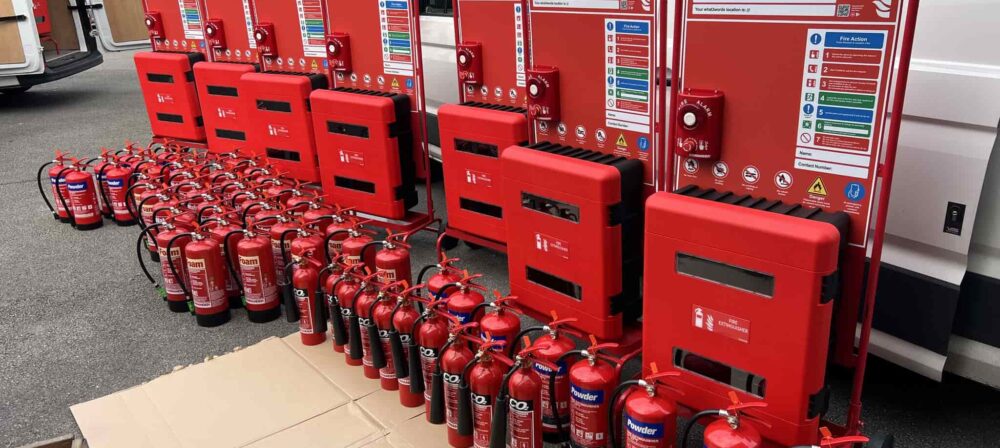
Custom Fire Points Supplier Near Me

How to Avoid Getting Ripped Off When Buying Fire Safety Equipment

Fire safety is critical – but so is getting good value for your money.

Unfortunately, overselling of fire extinguishers, stands, signage, and ancillary equipment is common in the industry. Many suppliers push unnecessary products or inflated prices onto clients.

A Real Client Story

Recently, we saved a client over £1,000 + VAT on a small installation of fire extinguishers, stands, and ancillary equipment.

They’d initially been quoted:

  • £106.87 + VAT for a 2kg CO₂ extinguisher
  • £92.05 + VAT for a 6-litre foam extinguisher (not needed; a 6-litre water extinguisher with a 13A rating would have sufficed)
  • Plus additional costs for return visits, signage, and stands – many of which were unnecessary for their site

If you’re unsure what should be installed, a proper fire extinguisher survey and compliance audit quickly identifies what is required – and what’s being oversold.

Why Doing Your Homework Matters

Before buying, always:

  • Ask why each item is needed
  • Check if the extinguisher types and sizes are appropriate for your risks
  • Challenge any recommended extra costs for signage or stands
  • Seek advice from trusted, non-commissioned suppliers who prioritise genuine compliance over sales targets

If you’re ever unsure whether you actually need the equipment you’re being quoted for, getting advice from a supplier who doesn’t upsell is key. A service like Fire Extinguisher Supply & Installation from a non-commissioned provider ensures you only buy what’s required for compliance – nothing more.

When suppliers recommend additional signage, it’s worth checking whether that signage is legally required. You can review your options through our Fire Extinguisher Signage service for accurate, BS-compliant guidance.

Why Choose Velocity Safety?

We don’t work on commission and have no interest in ripping anyone off.

Our approach is simple:

  • Honest, value-for-money advice
  • Genuine compliance with British Standards (BS5306)
  • Clear, upfront pricing
  • A broad northern accent and a dry sense of humour thrown in for free

Whether you need new extinguishers, servicing and maintenance, commissioning, or even safe disposal of old units, we keep things simple, fair and compliant.

If your site requires cabinets, stands or mobile units, our fire extinguisher cabinets, trolleys & accessories service gives you options without unnecessary upselling.

Need Help With Fire Safety Equipment?

If you’re fed up with your current supplier or want a second opinion, get in touch. We provide full servicing, commissioning, and installation – tailored to your needs.

Contact Ross at info@velocitysafety.co.uk or call 01254 933 486.

Get Honest, BS5306-Compliant Fire Safety Advice

No commissions. No upselling. Just the equipment your site actually needs.

📞 Call: 01254 933 486
📩 Email: info@velocitysafety.co.uk

🌐 Or request a fire safety assessment online

Personal Fall Protection Equipment

Fall Arrest Block vs Inertia Reel

Fall arrest blocks and inertia reels look similar – but they behave very differently when someone falls, moves, or works at height.

Choosing the wrong device increases free-fall distance, raises the risk of swing falls, can overload anchor points, and may lead to non-compliance under the Work at Height Regulations. This guide breaks down the differences clearly – without manufacturer jargon – so you can choose the right system for your job, your environment, and your rescue plan.

Quick Answer: What is an inertia reel?An inertia reel is a self-retracting fall arrest device used to stop a worker quickly if they fall from height. It works like a seatbelt: the line pays out during normal movement, then locks when sudden acceleration is detected. Some inertia reels also include a rescue retrieval winch for raising or lowering a fallen worker.

Here’s the quick difference:

  • Fall Arrest Blocks (SRLs) lock instantly like a seatbelt, minimising free fall and giving you freedom of movement.
  • Inertia Reels act similarly but are typically used for vertical movement and can include rescue or retrieval capability.

Jump to

Quick Answer: Fall Arrest Block vs Inertia Reel

  • Fall arrest blocks (SRLs) minimise free-fall distance using an automatic locking system – suitable for almost all work-at-height tasks.
  • Inertia reels are often SRLs too, but may include retrieval mechanisms for raising or lowering a fallen worker.
  • Both must be connected to a tested, certified anchor point and included in your PFPE inspection schedule.
  • If your work includes confined space entry or requires a mechanical rescue, you will almost always need an inertia reel rather than a standard SRL.

What Each Device Actually Is

Although fall arrest blocks and inertia reels often get grouped together as “SRLs”, they serve slightly different purposes on site. Understanding those differences helps you choose the right system and build an effective rescue plan.

Fall Arrest Block (SRL)

A fall arrest block contains a self-retracting line that pays out and retracts automatically. If a fall occurs, the internal braking system locks instantly – similar to a car seatbelt.

  • Low free-fall distance
  • Excellent freedom of movement
  • Ideal for roofs, platforms, scaffolds, mast work and MEWPs

Inertia Reel

An inertia reel is a fall arrest device with a retractable webbing or cable line. During normal work, the line extends and retracts as the user moves. If the user falls, the internal brake locks the line quickly to reduce fall distance.

The term “inertia reel” can refer to a standard self-retracting lifeline, but in many industries it also means a rescue-rated device with a retrieval winch.

These are used where raising or lowering a fallen worker is part of the rescue plan, including:

  • Confined space entry
  • Vertical shafts
  • Manholes and utilities access

Treat the difference like this: a fall arrest block stops the fall – an inertia reel may also help you recover the worker safely.

Key Differences at a Glance

Here’s the simplest way to understand the distinction: both devices arrest a fall, but only certain inertia reels provide mechanical rescue capability. The table below breaks down the operational differences.

Feature Fall Arrest Block (SRL) Inertia Reel
Primary function Arrests a fall quickly Arrests a fall; may offer rescue retrieval
Movement supported Horizontal & vertical Primarily vertical
Retrieval winch Not included Included on rescue models
Typical applications Roofs, MEWPs, platforms, towers Confined space, shafts, utilities work
Fall clearance needed Low Low–medium

In summary: SRLs are the everyday solution for most work-at-height tasks, while rescue inertia reels support environments where mechanical extraction is required.

When to Use Each One

Both systems keep workers safe, but the right choice depends on the task, the environment and the rescue plan. Below is a clear breakdown to help you decide.

Use a Fall Arrest Block When:

  • Workers need unrestricted, natural movement
  • Fall clearance must be kept to a minimum
  • There is risk of tripping, leading-edge work or uneven surfaces
  • You’re working on roofs, towers, scaffolds or MEWPs

Use an Inertia Reel When:

  • Your rescue plan requires winching or retrieval
  • The work involves vertical entry or exit
  • You’re operating in confined space environments
  • You need controlled raising or lowering after a fall

If you’re unsure which you require, the deciding factor is usually whether retrieval is part of the job. If yes, choose a rescue inertia reel. If not, an SRL is usually the correct option.

Anchor Points & Compliance

Neither device is safe unless attached to a suitable, certified and load-tested anchor point.

Both devices must be used with anchor points rated and positioned correctly for the direction of loading – using the wrong anchor or fixing point can cause the device to fail to lock or increase fall distance.

Velocity Safety provides nationwide installation, pull testing and recertification of anchor systems: Fall Arrest Anchor Installation & Testing

Both devices must also be included in your formal PFPE inspections under PUWER and Work at Height duties: PFPE Inspections

Can an Inertia Reel Be Used Horizontally?

An inertia reel or fall arrest block can only be used horizontally if the specific model is rated for horizontal or leading-edge use. Many devices are designed for vertical use only and must be positioned above the user.

Using the wrong device horizontally can increase swing-fall risk, damage the webbing or cable over an edge, increase arrest forces, or prevent the locking mechanism from working as intended. Always check the manufacturer’s instructions and make sure the anchor point is suitable for the direction of loading.

Servicing & Inspection Intervals

Fall arrest blocks and inertia reels must be thoroughly examined by a competent person:

  • Every 6–12 months depending on usage and environment
  • Immediately if locking, retraction or braking performance is inconsistent
  • Before first use if new, repaired or modified

For full servicing, repairs and recertification: Fall Arrest Block & Inertia Reel Servicing

FAQs

These quick answers cover the common questions we’re asked by construction firms, manufacturing sites, solar installers, rail contractors and maintenance teams across the UK.

Are fall arrest blocks and inertia reels the same?

Often, yes – but rescue inertia reels include a winch for retrieval. Standard SRLs do not.

What is an inertia reel used for?

An inertia reel is used to arrest a fall when someone is working at height. Rescue models can also help recover a fallen worker from a confined space, shaft, manhole or vertical access point.

How does an inertia reel work?

An inertia reel pays out line as the user moves. If the user falls suddenly, the internal braking mechanism locks the line, reducing fall distance in a similar way to a car seatbelt locking during sudden movement.

Does an inertia reel need inspection?

Yes. Inertia reels and fall arrest blocks should receive pre-use checks and formal inspection or servicing by a competent person. The interval depends on manufacturer guidance, usage and environment, but many sites use a 6 to 12 month schedule.

Can either device be used horizontally?

Only if the model is edge-rated. Many SRLs are designed solely for vertical use.

Do these devices replace a rescue plan?

No. Rescue planning is a legal requirement under Work at Height. Retrieval reels assist – they do not replace the plan.

How often should they be inspected?

Every 6–12 months plus pre-use checks before every shift.

What if the line sticks or stops retracting?

Quarantine it immediately. Do not use it. It must be examined by a competent technician.

Need Your Fall Arrest Blocks or Inertia Reels Serviced?

Velocity Safety provides:

We keep your equipment compliant, documented and ready for audit.

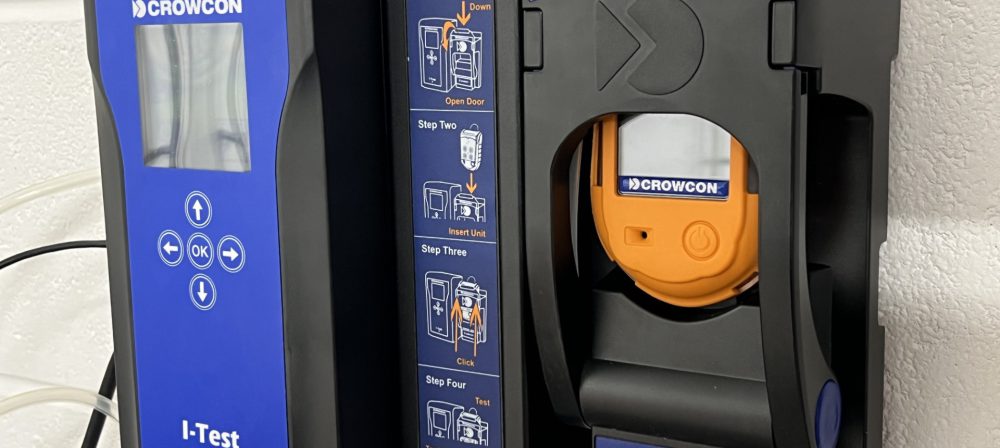
Crowcon Gas Detection Unit

How Often Should Gas Detectors Be Calibrated?

Gas detectors protect lives – but only if they’re calibrated often enough to stay accurate. Sensor drift, environmental contamination and ageing components can all cause a detector to under-read or fail to alarm when it should. That’s why HSE expects employers to maintain gas detection equipment on a defined, defensible schedule.

So how often should gas detectors and fixed gas detection systems actually be calibrated?

Below is the clear, UK-focused answer – including HSE expectations, common failure triggers and recommended calibration intervals for fixed GDUs and portable gas monitors.

💡 Quick Answer

  • Most fixed gas detectors (GDUs) should be calibrated every 6 months. This is the accepted industry standard and aligns with HSE’s expectation to “maintain equipment in an efficient state” under DSEAR, COSHH and the Health and Safety at Work Act.
  • You may need 3-monthly calibration if your system is in a harsh or high-risk environment – for example ammonia refrigeration, CO₂ stores, wastewater sites, solvent use or confined space entry.
  • Portable gas monitors typically require a daily bump test and full calibration every 3–6 months, depending on sensor type and manufacturer guidance.
  • Calibration is also required immediately after any impact, drift warning, fault or failed bump test.
  • If you need certified calibration, function testing and compliance documentation, our engineers provide GDU Calibration across the UK.

Want a deeper explanation of how calibration works and what HSE expects?

Our companion guide – GDU Calibration Explained – breaks down the full process, legal responsibilities and sensor behaviour in more detail. This blog focuses purely on calibration frequency, but if you need the “how” and “why” behind the procedure, that guide will give you the full picture.

Jump to:

Calibration needs differ depending on whether the detector is fixed to the system or a portable unit. Here’s the UK-aligned breakdown.

Fixed Gas Detection Systems (GDUs)

  • Every 6 months – industry standard for most installations
  • Every 3 months – harsh, corrosive or high-risk environments
  • Immediately after any fault, sensor error, impact, drift warning or failed function test

HSE does not publish a single fixed calibration interval for every gas detection system. Instead, employers must be able to show that the equipment is maintained, tested and suitable for the risk. For many fixed gas detection systems, 6-monthly gas testing and calibration where required is a common, defensible baseline, but the interval should always reflect manufacturer guidance, site conditions and risk assessment.

Portable Gas Detectors

Although Velocity Safety focuses on fixed systems, many searchers want the portable intervals too:

  • Daily bump test (before each use)
  • 3–6 month calibration depending on sensor type and environment

Portable units drift faster than fixed GDUs, especially oxygen and electrochemical sensors. If you’re unsure how calibration is actually carried out, our GDU Calibration Explained guide breaks the process down step-by-step.

What Affects How Often You Should Calibrate a Gas Detector?

How often you calibrate comes down to how the sensor is used and the conditions it’s exposed to.

1. Sensor Type

  • Electrochemical sensors (CO, H₂S, O₂) drift faster → more frequent calibration
  • Catalytic bead sensors are vulnerable to poisoning → 3–6 month intervals
  • PIDs (VOCs) are affected by lamp fouling → 3–6 months
  • Infrared sensors are stable → annual calibration may be acceptable

2. Environmental Conditions

Sensors degrade faster in environments with:

  • Temperature extremes
  • High humidity
  • Dust, solvents or corrosive vapours
  • Frequent washdowns or vibration

3. Gas Hazard Level

High-risk gases (NH₃, H₂S, CO₂, VOCs) require tighter control → shorter calibration intervals.

4. Frequency of Use

GDUs constantly exposed to fluctuating gas levels degrade faster than systems in stable conditions.

5. Manufacturer Requirements

Many specify 6-monthly calibration as a minimum – and HSE expects employers to follow manufacturer guidelines unless a risk assessment justifies otherwise.

How Often Should Gas Detection Systems Be Inspected & Tested?

In the UK, fixed gas detection systems are governed by general safety regulations including:

None specify exact calibration intervals – but enforcing authorities expect evidence that the system is maintained, tested and accurate.

Industry norms, supported by HSE guidance, are:

  • 6-monthly calibration + functional testing for most fixed systems
  • 3-monthly calibration for harsher, corrosive or high-risk areas
  • Annual service including alarm checks, sensor health checks and documentation

In the event of an incident, you will be required to show traceable calibration records to demonstrate compliance.

Common Calibration Failures (And What They Mean)

Over time, sensors lose sensitivity. Calibrating on a tight schedule lets you spot that drift early and keep the system performing properly.

Typical issues found during calibration:

  • Zero drift: detector can’t stabilise at clean air baseline
  • Span drift: readings don’t match certified gas concentration
  • Slow response time: alarm triggers too late to protect workers
  • Sensor poisoning: exposure to silicone, solvents or sulphur compounds
  • Blocked filters or sample lines: gas doesn’t reach the sensor properly
  • Fault codes or intermittent operation
  • Failed bump/functional tests

If any of these issues appear, the detector should not be relied upon for safety-critical monitoring until it has been checked, repaired or recalibrated by a competent person.

How Often Should Gas Sensors Be Replaced?

Calibration keeps sensors accurate – but it can’t compensate for end-of-life degradation. Typical replacement intervals:

Sensor Type Typical Lifespan Notes
Oxygen (O₂) 2–3 years Fastest drift; requires closer monitoring
Electrochemical (CO, H₂S) 2–3 years Impacted by humidity, chemical exposure
Catalytic Bead (LEL) 2–5 years Vulnerable to poisoning
PID (VOCs) 1–2 years Lamp fouling is common
Infrared (CO₂, hydrocarbons) 5+ years Most stable sensor technology

Can You Calibrate a Gas Detector Yourself?

Portable gas monitors: often yes – if you have the correct calibration gas, regulators, docking stations and training.

Fixed GDUs: typically no. They require:

  • Traceable calibration gas
  • Specialist equipment
  • Output adjustment procedures
  • Sensor condition checks
  • Formal calibration certificates

Incorrect calibration increases risk and can invalidate compliance under DSEAR and COSHH.

Some infrared sensors can justify annual calibration where the manufacturer specifies a 12-month interval, but most mixed-gas systems still operate on a 6-month cycle.

How Long Should Gas Detector Calibration Records Be Kept?

Calibration and maintenance records should be kept for as long as they remain relevant to the equipment, risk assessment and inspection history of the site.

For fixed gas detection systems, it is good practice to retain:

  • Calibration certificates
  • Functional test results
  • Sensor replacement records
  • Fault logs and corrective actions
  • Service reports
  • Risk assessments linked to calibration intervals

These records help demonstrate that the system has been maintained properly and can be important if there is an incident, audit or enforcement inspection.

How Accurate Are Crowcon Fixed Gas Detectors?

Crowcon fixed gas detectors are designed to provide reliable gas detection when they are correctly selected, installed, maintained and calibrated at suitable intervals.

Accuracy depends on the detector model, sensor type, target gas, environmental conditions and whether the unit has been exposed to contamination, sensor poisons, dust, vibration or extreme temperatures.

Crowcon guidance states that site practices will dictate testing frequency, but gas testing at least every 6 months is commonly recommended, with recalibration carried out as necessary. Calibration frequency should be increased where detectors are used in more demanding environments.

In practical terms, a Crowcon detector should only be treated as accurate if it has been tested against the correct calibration gas, is responding within acceptable tolerance, and has valid calibration records to prove it.

Summary: Recommended Calibration Intervals

Different detectors need checking at different intervals, but the pattern is always the same: higher risk, harsher environments and older sensors all demand more frequent calibration. Here’s a quick reference table showing what most UK sites work to.

Detector Type Calibration Frequency Notes
Fixed GDUs 6 months 3 months for high-risk areas
Portable Monitors 3–6 months Daily bump test required
After Fault/Impact Immediate Do not use until recalibrated

These intervals give you a defensible baseline, but calibration should always be tightened if your environment is harsh, high-risk, or showing signs of sensor drift. If a detector fails a bump test, has been dropped, or shows inconsistent zeroing, treat it as “out of service” until a full recalibration is completed.

For a deeper breakdown of how GDU calibration works – including the legal expectations and what a calibration certificate must include – see our GDU Calibration Explained guide.

Gas Detector Calibration FAQs

Here are answers to common questions about gas monitor calibration frequency, bump testing, fixed gas detector accuracy and GDU servicing.

How often should a gas detector be calibrated?

Many fixed gas detection systems are calibrated every 6 months, although harsh or high-risk environments may need shorter intervals. Portable gas monitors may need calibration every 3–6 months, depending on manufacturer guidance, sensor type and use.

How often should you bump test a gas detector?

Many manufacturers recommend bump testing portable gas detectors before each day’s use. HSE also notes that most gas detector operating instructions recommend a function check, often called a bump test, before daily use.

What is the difference between a bump test and calibration?

A bump test checks that the detector responds to gas and alarms correctly. Calibration checks and adjusts the detector reading against a known concentration of calibration gas.

Do fixed gas detectors need calibration every 6 months?

For many fixed gas detection systems, 6-monthly gas testing and calibration where required is a common baseline. However, the correct interval should be based on manufacturer guidance, risk assessment, environmental conditions and the consequences of detector failure.

Are there legal requirements for gas detector calibration?

UK regulations such as DSEAR, COSHH, PUWER and the Health and Safety at Work Act require employers to maintain safety-critical equipment in an effective condition. While legislation does not specify a universal calibration interval, employers must be able to demonstrate that gas detection systems are maintained, tested and suitable for the risks present.

When should a gas detector be calibrated immediately?

A detector should be checked or recalibrated after a failed bump test, fault warning, impact, suspected sensor poisoning, exposure to high gas levels, or inconsistent readings.

Can Velocity Safety calibrate fixed gas detection systems on site?

Yes. Velocity Safety provides on-site fixed gas detection system calibration, function testing and compliance documentation for workplaces across the UK.

Professional Gas Detector Calibration Across the UK

Velocity Safety provides fixed gas detection system calibration, functional testing and compliance documentation for facilities across the UK.

Our engineers calibrate:

  • CO₂, CO, O₂ and flammable gas detectors
  • Ammonia and refrigerant sensors
  • VOC and solvent detection systems
  • Confined space alarm systems
  • Multi-point fixed gas systems

📞 Call: 01254 933 486
📩 Email: info@velocitysafety.co.uk
🌐 Or book a calibration visit online

👉 View our GDU Calibration Service

Inspector with Clipboard

PQS SSIP Accreditation and Deem to Satisfy Explained

If you’ve been struggling with renewing CHAS SSIP accreditation, you’re not alone.

A recent client was caught in the nightmare of an expired Veriforce CHAS certificate – unable to complete the renewal and risking delayed payments.

Key Takeaways – SSIP Accreditation, PQS & Deem to Satisfy

  • PQS can be a faster and cheaper route to SSIP accreditation.
  • Deem to Satisfy (DTS) lets you use one SSIP certificate to obtain others without repeating the full audit.
  • Many companies don’t know about DTS and spend more time and money than they need to.
  • Slow renewals can delay payments and interrupt supply chain access.

The Fast, Cost-Effective Alternative: PQS Pre-Qualification Scheme

We recommended they apply through PQS, a trusted SSIP scheme provider with a reputation for speed and value.

In one recent case, the full PQS application was submitted at 5:01pm, and the certificate was issued by 11:30am the next day – all for just £249 + VAT.

Bonus Money-Saving Tip: The “Deem to Satisfy” Route

Once you have a valid PQS certificate (or other recognised SSIP certification), you don’t need to repeat the full application for other schemes like CHAS, SMAS, SafeContractor, or Acclaim.

Instead, pay for a Deem to Satisfy (DTS) – simply submit your PQS certificate, insurance details, and company information to get additional SSIP certificates quickly and cheaply.

Why This Matters

Many companies don’t know about this time – and cost-saving option, resulting in unnecessary delays and expenses.

Sharing this knowledge could save your business thousands and reduce administrative headaches.

Need Help With Your Compliance Accreditation?

If you’re unsure which SSIP scheme fits your business best or want help navigating applications, get in touch.

We also offer a wide range of equipment testing and examination services to help you meet compliance requirements, including fire extinguisher servicing, lifting equipment thorough examinations, and more.

Get Support With Your SSIP Accreditation

Need a fast route to PQS, CHAS, SMAS or SafeContractor?

We can help guide your application and keep your business compliant.

📞 Call: 01254 933 486
📩 Email: info@velocitysafety.co.uk

🌐 Or request compliance support online

Personal Fall Protection Equipment

How Proper Fall Arrest Block Servicing Saves You Money and Keeps You Safe

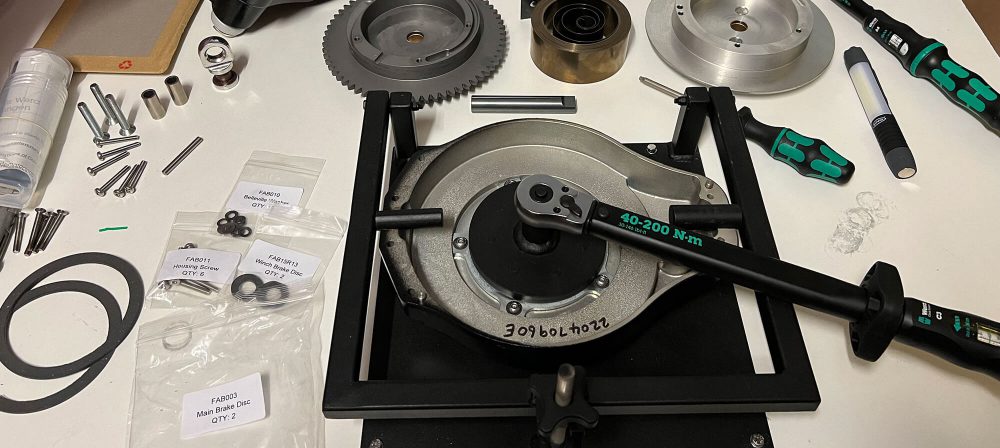
Most fall arrest blocks passed to us look ‘fine’ on the outside – but once opened, we often find worn components, weak springs, contamination and brake issues that would never show up during a visual check.

Recently, a batch of Globestock G-Saver II SRL-R fall arrest blocks came into our workshop – and two of them were in a genuinely dangerous condition.

After a full strip-down, clean and internal examination, we replaced multiple safety-critical components including the rope, pawl springs, brake discs, ratchet centres and the main spring.

They left our workshop fully restored, tested and compliant – and at a fraction of the cost of buying new.

Key Takeaways – Fall Arrest Block Servicing

  • Servicing extends the life of PFPE equipment and is significantly cheaper than replacing blocks outright.
  • Internal components wear long before visual signs appear – meaning hidden failures are common.
  • Servicing should only be carried out by a manufacturer-trained service agent using approved parts.
  • Regular inspection is essential for LOLER, PUWER and Work at Height compliance.
  • A serviced block reduces risk, downtime, and long-term equipment costs.

Why Refurbish Instead of Replace?

Fall arrest blocks are expensive pieces of PFPE. Too many companies throw them away at the first sign of wear – but in most cases, a professional service will return them to a safe, fully certified condition for far less money.

A typical refurbishment includes:

  • Full internal strip-down and mechanical clean
  • Replacement of worn components (springs, discs, rope assemblies, bushings, pawl springs, ratchet centres)
  • Lubrication, reassembly and function checks
  • Label replacement, decals, and touch-up paint for clear safety markings
  • Final test and certification to ensure smooth locking, retraction and braking performance

Refurbishment isn’t just a cost saving – it restores the equipment to the standard required for safe working at height.

Don’t Trust Just Anyone With Your PFPE

A fall arrest block is a life-saving device. It must be serviced and examined by a competent, manufacturer-trained technician.

This is not a job for:

A site operative doing ad-hoc PPE checks

Someone “good with tools”

A general maintenance contractor

Incorrect servicing can lead to:

  • Sluggish locking behaviour
  • Rope slip due to worn internal braking components
  • Weak retraction from a fatigued main spring
  • Unseen contamination affecting the brake disc or pawls

And all of these can cause total failure during a fall.

Regular servicing protects you against equipment failure and helps you stay compliant with:

Get Your Fall Arrest Blocks Serviced on Time

We service and examine all makes and models of fall arrest blocks and winches – including Globestock, Abtech, Ridgegear and others.

Our service includes:

For more information on our inspection process, see our Fall Arrest Block Servicing service page.

Book Your Fall Arrest Block Service

Unsure when your blocks were last serviced – or whether they’re still safe to use?

We can inspect, refurbish and certify your equipment to manufacturer standards.

📞 Call: 01254 933 486
📩 Email: info@velocitysafety.co.uk

🌐 Or request a PFPE service online