Custom Fire Points Supplier Near Me

Can You Buy Refurbished Fire Extinguishers?

“Cheap doesn’t have to mean non-compliant.”

Yes, you can buy refurbished or older fire extinguishers, but only if they are still safe, suitable, serviceable and properly commissioned before use.

A used extinguisher is not automatically unsafe. Equally, a cheap extinguisher is not automatically a bargain. What matters is its condition, service history, remaining life, suitability for the fire risk, and whether it has been checked by a competent person before being placed into service.

At Velocity Safety, we will always try to work with clients to find a practical solution. Sometimes that means supplying brand new equipment. Sometimes, where suitable, it can mean using older stock or slight seconds that still have years of service life left.

Quick Answer: Can you buy refurbished fire extinguishers?Yes, refurbished or older fire extinguishers can be used if they are still within their usable life, have been inspected, serviced where required, correctly selected for the risk, and commissioned by a competent person before being placed on site. Avoid buying unknown used extinguishers online without service records or professional checks.

Key Takeaways – Refurbished Fire Extinguishers

  • Refurbished extinguishers can be compliant if they are inspected, suitable and correctly commissioned before use.
  • Older extinguishers may still have years of life left, but they may not have the full 5 or 10 years remaining before extended servicing or replacement is needed.
  • Unknown second-hand extinguishers are risky if they have no service history, missing labels, visible damage or uncertain pressure status.
  • A competent provider should help you balance cost and compliance, rather than simply pushing the most expensive option.

Jump to:

Refurbished or older fire extinguishers can be used legally if they are still fit for purpose and have been properly checked before being placed into service.

The key point is that the extinguisher must be suitable for the fire risk and maintained in efficient working order. For businesses, this links back to your duties under the Regulatory Reform (Fire Safety) Order 2005, as well as the relevant fire extinguisher servicing and commissioning standards.

In simple terms, the extinguisher needs to be:

  • The correct type for the fire risks in that location.
  • In good physical condition with no obvious damage, corrosion or missing parts.
  • Within its usable service life and not overdue for required maintenance.
  • Properly labelled, tagged and recorded for traceability.
  • Commissioned before use if it is being supplied or placed on a new site.

Learn more about our fire extinguisher commissioning service.

When Can an Older Fire Extinguisher Still Be a Good Option?

An older extinguisher can be a good option when it has a known history, has been stored correctly, is still in good condition and has enough remaining life to make sense commercially.

For example, a fire extinguisher may be classed as older stock because it is not brand new, has minor cosmetic marks, or does not have the full 5 or 10 years of life remaining. That does not always mean it should be scrapped.

In the right situation, older stock can help businesses get a compliant fire extinguisher setup without overspending, especially during:

  • Warehouse fit-outs
  • Temporary projects
  • Construction refurbishments
  • Short-term site mobilisation
  • Budget-sensitive compliance upgrades

The important part is honesty. The client should know what they are getting, how much service life remains, and whether the extinguisher is suitable for the site.

A Real Example: Budget Fire Extinguisher Setup for a Warehouse

We recently had a client ask if we could provide a cost-effective extinguisher setup for a new warehouse they had taken on.

They also had some fit-out and refurbishment work taking place, so they needed to cover both the warehouse and the temporary work activities. The brief was simple: compliant, practical and as cost-effective as possible.

Rather than automatically quoting for a full brand new setup, we looked at what we had available and supplied a mix of slight seconds and older extinguishers that still had years of life left in them.

The total invoice for the client was £1,200 + VAT, supplied, commissioned and ready to go.
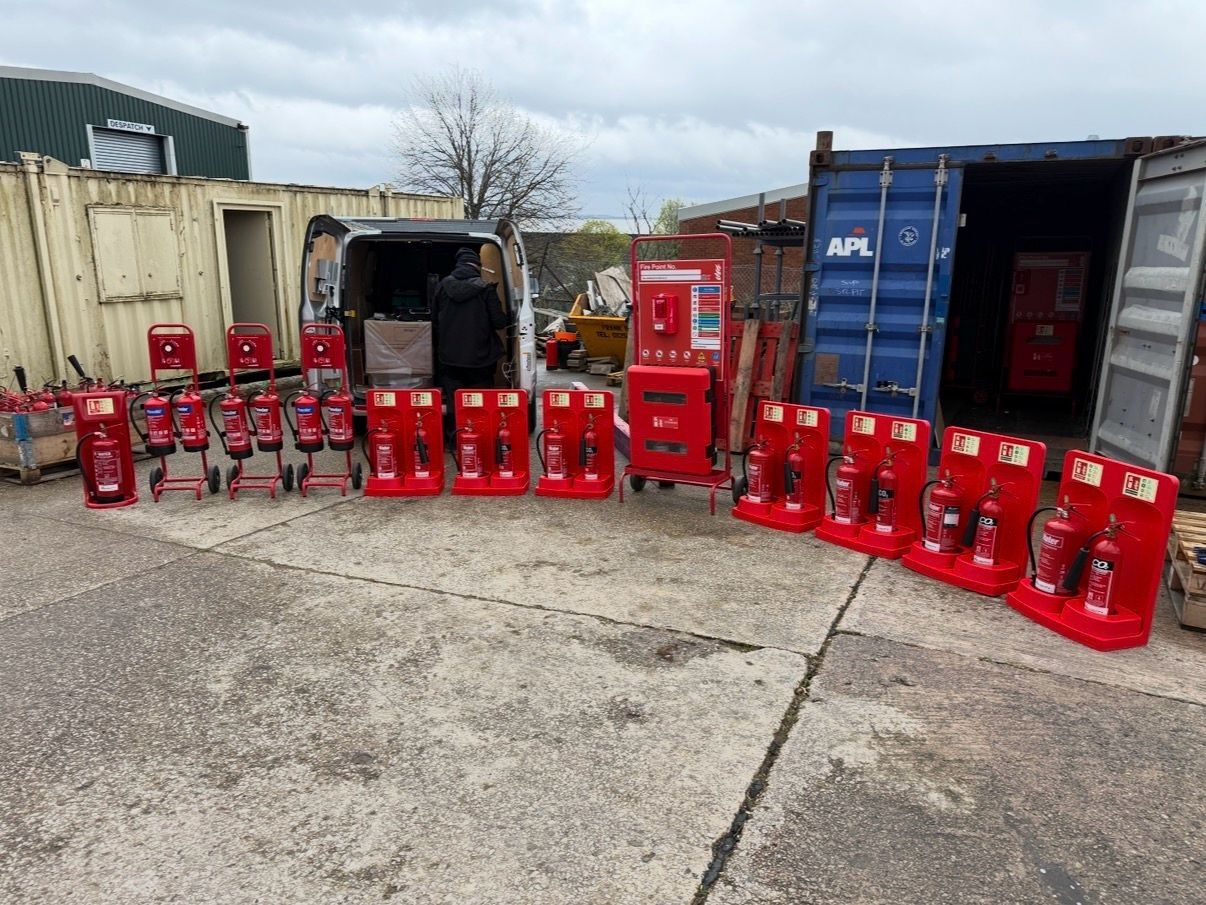
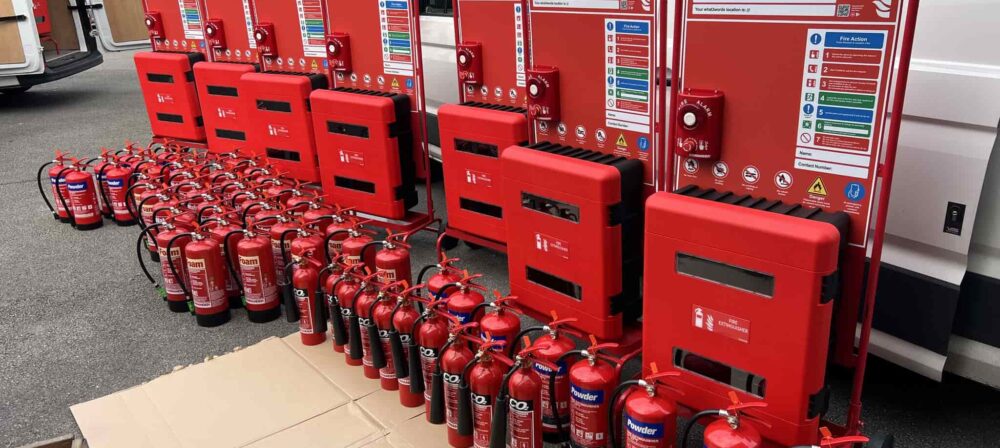
Fire extinguishers, stands and trolleys supplied and commissioned by Velocity Safety
A compliant fire extinguisher package supplied, commissioned and ready for use for a warehouse client working to a tight budget.

This is the kind of practical solution we try to provide where it makes sense. We are small enough to care and be flexible, but big enough to get it done properly.

When Should You Avoid Second-Hand Fire Extinguishers?

Not every used extinguisher is worth buying. In some cases, a cheap extinguisher can quickly become a false economy.

You should be very cautious if an extinguisher has:

  • No service history
  • No clear manufacturing or maintenance labels
  • Visible corrosion, dents or damage
  • Missing pins, seals, horns, hoses or tags
  • Unknown storage conditions
  • No evidence of pressure or weight checks
  • Been bought from an unknown online seller

Buying a random second-hand extinguisher online and hoping for the best is not the same as buying a professionally checked and commissioned extinguisher from a competent provider.

If in doubt, get it checked before relying on it.

Do Refurbished Fire Extinguishers Need Commissioning?

Yes. If a refurbished or older extinguisher is being supplied to a new site, it still needs to be commissioned before being placed into service.

Commissioning confirms the extinguisher is ready for use, suitable for the location, correctly labelled and recorded. It also gives the site a starting point for future maintenance records.

This is especially important if extinguishers are being used as part of a warehouse setup, construction project, refurbishment site or temporary fire point.

Read our fire extinguisher commissioning guide.

New vs Refurbished Fire Extinguishers

There is no single right answer for every site. Sometimes new extinguishers are the better option. Sometimes refurbished or older stock is perfectly suitable.

Option Best For Things to Consider
New extinguishers Long-term premises, full service life, standard compliance upgrades Higher upfront cost, but maximum remaining life
Refurbished or older stock Budget-sensitive sites, temporary projects, short-term fit-outs Must be inspected, suitable, commissioned and clearly explained
Unknown used extinguishers Generally not recommended Risky without service history, inspection records or professional checks

How Velocity Safety Helps Keep Costs Sensible

We know not every client has an unlimited budget. If you are taking on a new warehouse, setting up a temporary site or dealing with an unexpected compliance issue, you might need a solution that works without paying inflated prices.

Where suitable, we can help with:

We will always try to work with you to find a sensible solution. That does not mean cutting corners. It means finding the right level of compliance for the site, the risk and the budget.

Small enough to care. Flexible enough to help. Big enough to get it done.

Final Takeaway

Refurbished or older fire extinguishers can be a safe, compliant and cost-effective option when they are supplied by a competent provider and properly checked before use.

The risk comes from buying unknown extinguishers with no service history and assuming they are ready to protect your site.

If you need a compliant setup but you are working to a budget, speak to a provider who will be honest about your options.

Need a Cost-Effective Fire Extinguisher Setup?

If you are setting up a warehouse, refurbishment project, temporary site or new premises, Velocity Safety can help you find a compliant solution that works for your budget.

📞 Call: 01254 933 486
📩 Email: info@velocitysafety.co.uk
🌐 Or get a quote online

Frequently Asked Questions

Businesses often ask whether buying refurbished or older fire extinguishers is a sensible way to reduce costs. Below are some of the questions we’re most commonly asked about refurbished extinguishers, compliance and when they may still be suitable for use.

Can you use refurbished fire extinguishers?

Yes, refurbished fire extinguishers can be used if they are still safe, suitable, serviceable and properly commissioned before being placed into service.

Are second-hand fire extinguishers safe?

They can be, but only if their condition, service history and remaining life are known. Avoid relying on unknown second-hand extinguishers bought online without professional checks.

Do refurbished extinguishers need servicing?

Yes. Refurbished extinguishers still need to be inspected, maintained and serviced in line with the relevant requirements. They should also be commissioned before use if supplied to a new site.

Is it cheaper to buy refurbished fire extinguishers?

It can be cheaper, but only if the extinguisher is suitable and has enough remaining life to make it worthwhile. A low purchase price is not good value if the extinguisher fails inspection shortly afterwards.

Can Velocity Safety supply budget fire extinguisher setups?

Yes. Where suitable, Velocity Safety can help with cost-effective fire extinguisher setups using new, older or slight-second stock that is checked, commissioned and ready for use.

Resources

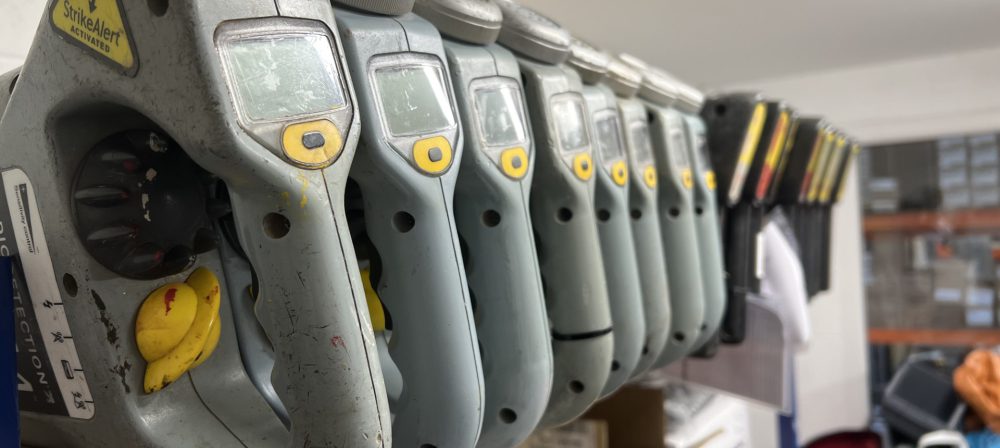
Locators on Shelf

CAT4 vs CAT4+ vs C.Scope vs Radiodetection: What’s the Difference?

CAT4, CAT4+, C.Scope and Radiodetection tools all help reduce cable strike risk, but they are not all designed for the same level of locating work.

Cable avoidance tools are used every day on construction, utilities, groundwork, highways and maintenance sites. Their job is simple in principle: help operators detect buried services before excavation, drilling or ground disturbance begins.

But choosing between CAT4, CAT4+, C.Scope and higher-end Radiodetection locators can quickly become confusing.

Some tools are designed for quick avoidance sweeps. Others add depth estimation, data logging, GPS records, swing warnings, daily self-tests or advanced precision locating features.

This guide explains the main differences, when each type of tool may be suitable, and why calibration, checks and competent use still matter regardless of the model.

Quick Answer: What is the difference between CAT4, CAT4+, C.Scope and Radiodetection?

CAT4 is a widely used cable avoidance tool for detecting buried services. CAT4+ adds depth estimation when used with a compatible Genny signal generator. C.Scope CXL4 tools offer an alternative locator range with features such as dual-frequency operation, Automatic Daily Self-Test and optional data logging or GPS. Radiodetection RD7200 and RD8200 tools are more advanced precision locators used for complex utility tracing, mapping and specialist locating work.

In practice, the right choice depends on the task, site risk, operator competence, need for records and whether you are carrying out basic avoidance or detailed utility tracing.

🔑 Key Takeaways: CAT4, C.Scope and Radiodetection Tools

  • CAT4 and CAT4+ are cable avoidance tools: CAT4+ adds depth estimation when used correctly with a compatible transmitter.
  • C.Scope CXL4 tools offer a strong alternative: with dual-frequency operation, Automatic Daily Self-Test and optional data logging or GPS depending on model.
  • RD7200 and RD8200 tools are precision locators: better suited to complex tracing, mapping and specialist utility detection work.
  • Calibration and validation still matter: choosing a better tool does not remove the need for checks, records and competent use.

Here’s what this guide covers:

What Is a Cable Avoidance Tool?

A cable avoidance tool, often called a CAT, is used to help detect buried services before excavation or ground disturbance work begins.

Cable avoidance tools are commonly used to detect signals from:

  • Live power cables
  • Metallic pipes
  • Telecommunications cables
  • Utility services carrying detectable radio signals
  • Services energised using a signal generator

A CAT is normally used alongside site plans, visual checks, safe digging procedures and a signal generator, often called a Genny.

A cable avoidance tool should not be treated as a guarantee that the ground is clear. It is one part of a wider safe excavation process.

What Is a CAT and Genny?

A CAT and Genny setup combines a cable avoidance tool with a signal generator.

The CAT detects signals from buried services. The Genny applies a detectable signal to services that may not naturally give off a strong enough signal to be found reliably in passive modes.

Using a Genny can help locate services such as:

  • Dead or unloaded cables
  • Metallic pipes
  • Services that are not producing a strong power or radio signal
  • Utilities that need to be traced more deliberately across a work area

This is why many safe digging procedures expect operators to use both a CAT and a Genny where appropriate, rather than relying on passive detection alone.

What Can Cable Avoidance Tools Miss?

Cable avoidance tools are important safety instruments, but they cannot detect every buried service in every situation.

A CAT may struggle to detect:

  • Non-metallic pipes without a tracer wire or detectable signal
  • Dead cables that are not carrying current
  • Poorly earthed services
  • Deep services beyond the tool’s effective detection range
  • Congested services where signals overlap or distort
  • Services affected by poor ground conditions or electrical interference

This is why cable avoidance tools should be used alongside site plans, visual inspection, safe digging methods, trial holes and competent judgement.

The tool reduces risk. It does not prove the ground is clear.

CAT4 vs CAT4+: What Is the Difference?

The Radiodetection CAT4 is one of the most widely recognised cable avoidance tools used on UK sites.

Both CAT4 and CAT4+ are designed to detect buried services using common locating modes such as Power, Radio, Genny and Avoidance Mode.

The key difference is that CAT4+ includes depth estimation when used with a compatible Genny signal generator.

In simple terms:

  • CAT4: used for detecting and locating buried services.
  • CAT4+: includes CAT4 functionality plus depth estimation in suitable conditions.

Depth estimation can be useful, but it still needs to be understood properly. Depth readings can be affected by signal distortion, nearby services, poor technique, ground conditions and whether the locator is correctly positioned.

A depth reading should support safe decision-making, not replace safe digging procedures.

What About gCAT4+?

The gCAT4+ is a more advanced version within the CAT4 range.

It is generally used where organisations need stronger evidence of tool use, operator behaviour and site activity.

Features may include:

  • Usage logging
  • GPS or GNSS location logging
  • Bluetooth support
  • Service due indicators
  • Swing warning features
  • Support for fleet management and compliance records

This type of tool can be valuable for larger contractors, utilities, hire fleets and organisations that need clearer records of how equipment is being used on site.

How Is C.Scope CXL4 Different?

C.Scope CXL4 cable avoidance tools are another popular option for detecting underground pipes and cables.

The CXL4 range includes models with optional data logging, GPS and Bluetooth capabilities.

One of the main differences is the use of simultaneous dual-frequency operation, commonly 33kHz and 131kHz. This can help detect some smaller diameter or poorly earthed services when used with compatible equipment.

C.Scope CXL4 tools may also include:

  • Power, Radio, Generator and AllScan modes
  • Automatic Daily Self-Test
  • AlarmZone for shallow services
  • Dynamic Swing Sensor
  • Optional data logging
  • Optional GPS and Bluetooth on higher models
  • Robust IP-rated design

C.Scope tools are often chosen by teams looking for a rugged site locator with built-in daily validation features and optional usage records.

Where Do Radiodetection RD7200 and RD8200 Fit In?

Radiodetection RD7200 and RD8200 locators are not direct equivalents to basic CAT tools.

They are more advanced cable and pipe locators designed for precision utility tracing, complex networks and specialist locating work.

They may be used where teams need to:

  • Trace specific utilities through congested networks
  • Work around high electrical interference
  • Use multiple active frequencies
  • Carry out more detailed utility mapping
  • Record usage data or GPS information
  • Support professional utility surveying work

For many day-to-day excavation avoidance tasks, a CAT and Genny may be appropriate. For more complex tracing, utility mapping or professional survey work, an RD7200 or RD8200 style locator may be more suitable.

CAT4 vs CAT4+ vs C.Scope vs Radiodetection: Quick Comparison

Tool Type Best Suited For Typical Strength Main Limitation
CAT4 General cable avoidance Familiar, widely used site locator No depth estimation on standard model
CAT4+ Cable avoidance with depth estimation Adds depth information when used correctly with a Genny Depth readings still depend on conditions and technique
gCAT4+ Fleet compliance and usage records Data logging, GPS and usage evidence More than some small sites need
C.Scope CXL4 Robust site locating and validation Dual-frequency operation and Automatic Daily Self-Test Feature set depends on the exact model selected
RD7200 / RD8200 Precision tracing and specialist utility locating Advanced frequencies, mapping and complex tracing features Over-specified for simple avoidance-only tasks

Which Cable Avoidance Tool Should You Choose?

There is no single best cable avoidance tool for every site.

The right choice depends on the task, risk level, operator competence and documentation requirements.

As a broad guide:

  • Choose CAT4 for straightforward cable avoidance tasks where depth estimation and data logging are not required.
  • Choose CAT4+ where depth estimation is useful and operators understand how to interpret it correctly.
  • Choose gCAT4+ where usage records, GPS, operator behaviour and fleet compliance matter.
  • Choose C.Scope CXL4 where you want a robust alternative with daily self-test features and optional data logging or GPS.
  • Choose RD7200 or RD8200 for precision locating, utility mapping and more complex tracing work.

The important point is that the tool must match the task. A more expensive locator is not automatically better if the operator is untrained or the work only requires basic avoidance. Equally, a basic CAT may not be enough for complex utility mapping or specialist tracing.

Why Calibration Still Matters

Cable avoidance tools are safety-critical instruments.

If the tool is damaged, overdue for checks, poorly maintained or used incorrectly, the risk of a missed service increases.

Calibration and validation help confirm that the tool is working as expected and suitable for continued use.

Depending on the manufacturer and model, this may involve:

  • Annual calibration
  • Remote certification or eCert-style checks
  • Automatic Daily Self-Test records
  • Product validation certificates
  • Service due indicators
  • Inspection of accessories such as Gennys, leads and clamps

The exact requirement will depend on the tool, manufacturer guidance, internal policy and site requirements.

For many contractors, the key requirement is not just that the tool works, but that there is clear evidence it has been checked, validated and kept within the expected service or calibration regime.

Velocity Safety provides cable avoidance tool, CAT and signal generator calibration services to help businesses keep equipment checked, documented and ready for use.

Equipment Choice Does Not Replace Competence

Even the best cable avoidance tool can give poor results if it is used incorrectly.

Common issues include:

  • Sweeping too quickly
  • Swinging the locator incorrectly
  • Relying only on Power mode
  • Failing to use a Genny where required
  • Ignoring weak or inconsistent signals
  • Misunderstanding depth readings
  • Failing to compare readings with drawings, trial holes or site evidence

A cable avoidance tool should support a safe system of work. It should not be treated as a shortcut around training, planning or safe digging procedures.

Need CAT, Genny or Cable Avoidance Tool Calibration?

Velocity Safety provides cable avoidance tool and signal generator calibration services for construction, utilities, groundwork and maintenance teams across the UK.

📞 Call: 01254 933 486
📩 Email: info@velocitysafety.co.uk
🌐 Request a Quote | Book CAT & Genny Calibration

FAQs

Here are answers to some of the most common questions about CAT4, CAT4+, C.Scope, Radiodetection and cable avoidance tool calibration.

What is the difference between CAT4 and CAT4+?

The main difference is that CAT4+ includes depth estimation when used with a compatible Genny signal generator. The standard CAT4 is used for detecting and locating buried services but does not provide the same depth estimation feature.

Is CAT4+ better than CAT4?

CAT4+ offers additional functionality because it can provide depth estimation in suitable conditions. However, whether it is “better” depends on the task, operator competence and whether depth information is needed.

What is the difference between C.Scope and Radiodetection?

C.Scope and Radiodetection both produce cable avoidance tools and utility locators. C.Scope CXL4 tools are known for features such as dual-frequency operation and Automatic Daily Self-Test, while Radiodetection produces both CAT tools and advanced precision locators such as the RD7200 and RD8200.

Is RD8200 the same as a CAT?

No. The RD8200 is a more advanced precision cable and pipe locator. It is designed for complex utility tracing, mapping and specialist locating work rather than basic cable avoidance alone.

Can you use a CAT without a Genny?

Yes, but relying on a CAT alone can leave gaps. Passive modes may only detect services that are carrying a suitable power or radio signal. A Genny helps apply a detectable signal to services that may otherwise be missed.

What can a cable avoidance tool not detect?

A cable avoidance tool may struggle to detect non-metallic pipes, dead cables, poorly earthed services, deep utilities, distorted signals or services in congested ground. This is why CATs should be used as part of a wider safe digging process.

What is the best cable avoidance tool?

The best cable avoidance tool depends on the task. CAT4 and CAT4+ are commonly used for general avoidance work, C.Scope CXL4 tools are a strong alternative for site locating and validation, while RD7200 and RD8200 locators are better suited to precision tracing and specialist utility detection.

Do cable avoidance tools need calibration?

Yes, cable avoidance tools should be checked and validated in line with manufacturer guidance, site requirements and internal safety procedures. Calibration or validation helps confirm the tool is functioning correctly.

How often should CAT and Genny equipment be calibrated?

Calibration frequency depends on the manufacturer, model, usage and site requirements. Many organisations arrange annual calibration, but equipment should also be checked if it has been damaged, dropped or is giving unreliable readings.

Can Velocity Safety calibrate CAT and Genny equipment?

Yes. Velocity Safety provides cable avoidance tool, CAT and signal generator calibration services for businesses across the UK.

Resources

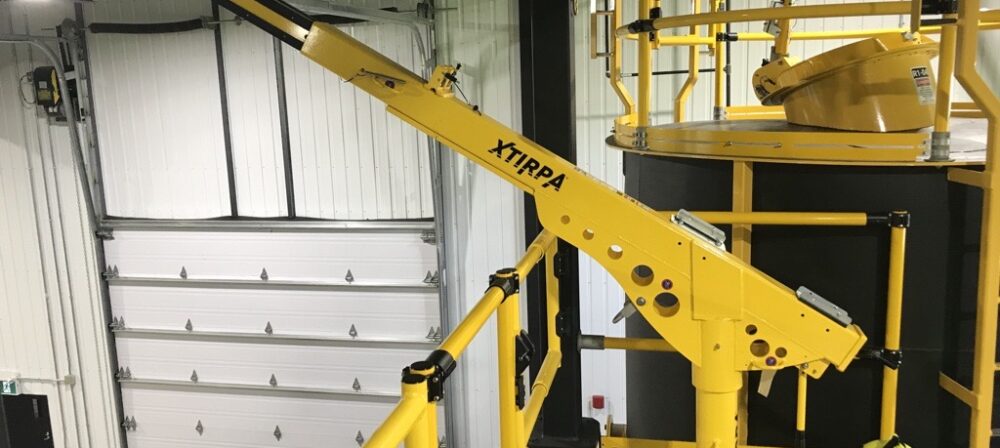
Xtirpa Davit System

What Is a Davit Arm? Uses, Inspection Requirements & Safety Explained

If you’ve ever seen someone being lowered into a manhole, rescued from a confined space, or working safely over the edge of a rooftop, there is a good chance a davit arm was involved.

Davit arms are widely used across construction, utilities, water treatment, facilities management and industrial sites. They provide a secure overhead anchorage point for lifting, lowering, rescue and fall protection activities where conventional access equipment may not be practical.

Despite being common on many sites, davit arms are often misunderstood. Many people know they are used for confined space entry or rescue, but are less familiar with how they work, what standards apply, and why regular inspection and pull testing are so important.

This guide explains what a davit arm is, where it is used, the different types available, and what employers need to know about inspection, maintenance and compliance.

Quick Answer: What is a davit arm?

A davit arm is a portable or fixed lifting and anchorage system used for confined space access, rescue, fall protection and lifting operations. It provides a secure overhead connection point for winches, fall arrest devices, retrieval systems and lifting equipment.

In practice, davit arms are commonly found on water treatment sites, rooftops, industrial facilities, utility infrastructure and other locations where workers need safe overhead access.

🔑 Key Takeaways: Davit Arms Explained

  • Davit arms provide a safe overhead anchor point for rescue, retrieval, lifting and fall protection activities.
  • They are widely used for confined space entry, rooftop access and industrial maintenance.
  • Regular inspection, maintenance and pull testing help ensure the system remains safe and compliant.

Here’s what this guide covers:

What Is a Davit Arm?

A davit arm is a mechanical arm mounted onto a fixed or portable base that provides a safe overhead anchorage point.

The arm extends outwards over an opening, edge or working area, allowing personnel, rescue systems or equipment to be raised, lowered or secured safely.

Most davit systems consist of:

  • A davit arm
  • A mast or upright support
  • A base or socket
  • Connection points for winches, retrieval devices or fall arrest equipment
  • Associated rescue and lifting accessories

Some davit systems are permanently installed, while others are portable and can be moved between different locations around a site.

Davit Arm vs Davit System: What’s the Difference?

Strictly speaking, the davit arm is only one part of the full system.

The complete davit system may include the arm, mast, socket, base, winch, fall arrest block, retrieval device, fixings and supporting structure.

This distinction matters because inspection and compliance do not stop at the visible arm. The socket, fixings, base and structure behind the system also need to be suitable for the intended use.

A davit arm may look fine, but the overall system can still be unsuitable if the socket is damaged, the fixings are unknown, the structure has not been verified, or the wrong equipment has been connected to it.

What Is a Davit Arm Used For?

Davit arms are used wherever a safe overhead anchor point is needed.

Common applications include:

  • Confined space entry and rescue
  • Manhole access
  • Water treatment facilities
  • Pumping stations
  • Industrial tanks and vessels
  • Rooftop access systems
  • Facade maintenance and rope access
  • Equipment lifting and retrieval operations

Many organisations use davit systems because they provide a safer and more practical solution than larger lifting equipment in restricted areas.

Types of Davit Arms

There are several different types of davit arm systems.

Fixed Davit Arms

Fixed systems are permanently installed into a structure using a dedicated base or socket. They are often used at locations where access is required regularly.

Portable Davit Arms

Portable systems can be moved between different locations. This makes them popular on sites with multiple access points.

Counterweight Davit Systems

These systems use counterweights instead of permanent fixings and are commonly used where drilling into the structure is not practical.

Roof Davit Systems

Roof-mounted davits are frequently used for facade access, maintenance and rope access activities on commercial buildings.

The best option depends on the access point, rescue plan, supporting structure, required reach, intended load and whether the system needs to move between locations.

How Do You Choose the Right Davit Arm?

The right davit arm depends on the task, site layout and type of load being supported.

Before choosing a system, consider:

  • Whether the davit will be used for personnel, materials, rescue or a combination of uses
  • Whether the system needs to be fixed, portable or counterweighted
  • The available space around the access point
  • The required reach over the opening or edge
  • The supporting structure and fixing method
  • Whether multiple sockets or bases are needed across the site
  • Which winches, fall arrest blocks or retrieval devices need to be compatible

This is why davit systems should be selected around the actual task, not just the headline load rating.

What Is a Davit Socket?

A davit socket is the fixed mounting point that accepts the davit arm.

While the davit arm itself may be removable, the socket remains permanently installed.

This offers several advantages:

  • One davit arm can serve multiple locations
  • Equipment is easier to transport and store
  • The arm can be removed when not in use
  • The fixed socket can be inspected as part of the wider system

Davit sockets are commonly found on water treatment sites, pumping stations, rooftops and industrial facilities.

Why Do Davit Arms Need Inspection?

Like any safety-critical access system, davit arms require inspection and maintenance.

Inspection helps identify:

  • Corrosion
  • Mechanical wear
  • Damaged components
  • Loose fixings
  • Socket deterioration
  • Missing documentation
  • Previous unauthorised modifications

A davit arm can appear to be in good condition while still having issues that affect compliance or safety.

This is why many organisations arrange regular davit arm inspection, maintenance and pull testing by a competent provider.

Why Are Davit Arms Pull Tested?

Pull testing helps verify that the system and its supporting structure can withstand the required loads.

The test is used to confirm that:

  • The installation remains secure
  • The fixing arrangement is suitable
  • The supporting structure remains adequate
  • The system can continue to be used safely

Depending on the installation, pull testing may be required during initial installation, after remedial works or as part of ongoing compliance management.

Many organisations wrongly assume a visual inspection alone is sufficient.

In reality, the structural integrity of the installation is often one of the most important elements of the entire system.

What Standards Apply to Davit Arms?

The exact standards that apply will depend on the type of davit system and how it is being used.

Commonly referenced standards include:

  • BS 7883
  • BS 8610
  • EN 795
  • Manufacturer-specific guidance
  • Work at Height Regulations 2005

Compliance is not just about the davit arm itself. The socket, fixings, structure, inspection regime and intended use all need to work together safely.

What Records Should Be Kept for a Davit Arm?

Davit systems should have clear records that show how the system was installed, inspected and maintained.

Useful records may include:

  • System design information
  • Manufacturer instructions
  • Installation records
  • Fixing and socket details
  • Load ratings and intended use
  • Previous inspection reports
  • Pull test records
  • Details of repairs or modifications

These records matter because an inspector may need to verify more than the visible condition of the arm. If the technical information behind the system is missing, the davit may be difficult to recertify even if it appears to be in good condition.

What Happens If a Davit Arm Fails Inspection?

A failed inspection does not automatically mean the system must be removed permanently.

Common issues include:

  • Missing technical files
  • Corrosion
  • Damaged components
  • Unknown fixing arrangements
  • Missing inspection records
  • Lack of evidence supporting the original installation

In many cases, additional investigation, remedial work or pull testing may allow the system to be brought back into compliance.

For a more detailed guide, see: Has Your Davit Arm Failed Inspection?

Need Davit Arm Inspection or Pull Testing?

Velocity Safety provides davit arm inspection, maintenance, installation support and pull testing services across the UK.

📞 Call: 01254 933 486
📩 Email: info@velocitysafety.co.uk
🌐 Request a Quote

FAQs

Here are answers to some of the most common questions about davit arms, davit sockets, inspection requirements and pull testing.

What is the purpose of a davit arm?

A davit arm provides a secure overhead anchor point for lifting, lowering, rescue, retrieval and fall protection activities.

What is a davit arm used for?

Davit arms are commonly used for confined space entry, rescue operations, rooftop access, industrial maintenance and lifting applications.

What is a davit socket?

A davit socket is the fixed mounting point that accepts a removable davit arm. It allows one davit arm to be used at multiple locations.

How often should a davit arm be inspected?

Inspection frequency depends on the equipment, usage, environment and manufacturer guidance. Safety-critical systems should be inspected by competent persons at suitable intervals.

Why are davit arms pull tested?

Pull testing helps verify that the installation, fixings and supporting structure remain capable of safely supporting the required loads.

Can davit arms be used for confined space rescue?

Yes. Davit arms are widely used with rescue winches, retrieval systems and fall arrest devices for confined space entry and rescue operations.

Is a davit arm the same as a davit system?

Not exactly. The davit arm is one component of the full system. A davit system may also include the mast, socket, base, winch, fall arrest block, retrieval device, fixings and supporting structure.

Can one davit arm be used with multiple sockets?

Yes, in many systems one removable davit arm can be used with multiple compatible sockets or bases across a site. Each socket still needs to be suitable, installed correctly and inspected as part of the system.

What is a davit in construction?

In construction, a davit is a lifting or anchorage system used to support safe access, rescue, retrieval or lifting at openings, edges, excavations, shafts and confined spaces. Davit arms are often used where larger lifting equipment is impractical or where a secure overhead anchor point is needed.

Can Velocity Safety inspect and pull test davit arms?

Yes. Velocity Safety provides davit arm inspection, maintenance, installation support and pull testing services throughout the UK.

Resources

Personal Fall Protection Equipment

Why Some Fall Arrest Equipment Cannot Be Repaired or Serviced

A failed inspection does not always mean your fall arrest equipment has to be replaced. Sometimes the bigger problem is whether anyone can legally repair, service or recertify it.

When fall arrest equipment fails inspection, most people assume the next step is straightforward.

Replace a damaged part, carry out a service, get it recertified and put it back into use.

Unfortunately, that is not always possible.

We regularly come across equipment that cannot be repaired, serviced or recertified because spare parts are unavailable, manufacturer support no longer exists, or there is no approved servicing route available.

In some cases, businesses save money when buying equipment, only to discover years later that a relatively minor defect has turned the entire unit into an expensive replacement rather than a straightforward repair.

Quick Answer: Why can’t some fall arrest equipment be repaired?

Not all fall arrest equipment is supported by approved service centres, spare parts programmes or manufacturer repair schemes. If critical components become damaged, worn or obsolete, there may be no approved way to restore the equipment to a certifiable condition.

In practice, this means: replacement may be the only option, even when the original defect looks relatively minor.

🔑 Key Takeaways: Fall Arrest Equipment Repairs

  • Not all equipment can be repaired: some products have no approved servicing route or spare parts support.
  • A failed inspection does not automatically mean repair is possible: the availability of manufacturer support is often the deciding factor.
  • Purchase price is only part of the cost: long-term servicing, inspections, repairs and recertification should be considered before buying.

Here’s what this guide covers:

What Happens When Fall Arrest Equipment Fails Inspection?

When fall arrest equipment fails inspection, it should normally be removed from service immediately until its condition can be properly assessed.

Depending on the type of equipment and the defect identified, there may be several possible outcomes:

  • The defect can be repaired and the equipment recertified.
  • A component can be replaced through an approved service centre.
  • The manufacturer may require factory servicing.
  • The equipment may need to be permanently withdrawn from use.

The outcome often depends less on the defect itself and more on whether the manufacturer supports repair and recertification.

A worn component is not always the end of the equipment’s life. Lack of support, documentation or spare parts often is.

Why Can Some Fall Arrest Products Not Be Repaired?

There are several reasons why fall arrest equipment may not be repairable.

Common examples include:

  • Spare parts are no longer available.
  • The manufacturer has discontinued the product.
  • No approved repair centre exists.
  • Technical documentation is unavailable.
  • The manufacturer does not permit third-party repairs.
  • The equipment has exceeded its service life.
  • The damage affects critical safety components.

In these situations, even a relatively minor defect can result in the equipment being condemned because there is no approved method of restoring it to a certifiable condition.

Repairable vs Non-Repairable Fall Arrest Equipment

Not every item of fall arrest equipment should be treated the same way.

Textile-based equipment such as harnesses and lanyards is often replaced rather than repaired when serious defects are found. Cuts, damaged stitching, deployed energy absorbers, chemical contamination, missing labels or expired service life can all mean the item has to be withdrawn from use.

Mechanical equipment such as fall arrest blocks and inertia reels may be serviceable, but only when the manufacturer allows it and approved parts, procedures and competent servicing support are available.

As a broad guide:

  • Harnesses and webbing lanyards: usually replaced if serious defects, missing labels or deployed shock absorbers are found.
  • Fall arrest blocks and inertia reels: may be serviceable if supported by the manufacturer and inspected by an approved provider.
  • Anchor devices and fixed systems: may require inspection, testing, documentation review or remedial works depending on the issue.

This distinction matters because “failed inspection” does not always lead to the same outcome. Some equipment is designed to be replaced. Some can be serviced. Some could be repaired in theory but cannot be recertified because the support route is missing.

Why Manufacturer Support Matters

One of the most overlooked questions when buying fall arrest equipment is:

“Who will service this in five years?”

Many buyers focus entirely on the purchase price.

The long-term support network is often ignored.

Before buying any fall arrest equipment, it is worth understanding:

  • Whether approved service centres exist in the UK.
  • Whether spare parts are available.
  • How servicing and recertification are carried out.
  • How long the manufacturer supports the product.
  • What happens if a critical component fails inspection.

The answers to these questions often determine the true lifetime cost of ownership.

Questions to Ask Before Buying Fall Arrest Equipment

If you are comparing products, ask these questions before making a decision:

  • Can the equipment be serviced in the UK?
  • Are spare parts readily available?
  • Is there an approved repair network?
  • Will the manufacturer still support the product in the future?
  • Can the equipment be recertified after inspection?
  • Who carries out warranty repairs?
  • What happens if the equipment fails inspection?

These questions are often more important than a small difference in purchase price.

The Hidden Cost of Cheap Fall Arrest Equipment

The cheapest option at purchase is not always the cheapest option over the life of the equipment.

We have seen situations where businesses purchased equipment because the initial cost looked attractive, only to discover later that servicing support was limited, spare parts could not be sourced, or recertification was not possible.

A relatively small saving at the point of purchase can become a much larger replacement cost if equipment cannot be repaired when defects are identified.

This is why many organisations now consider:

  • Inspection requirements
  • Servicing support
  • Repair availability
  • Recertification routes
  • Manufacturer backing

alongside the initial purchase price.

Can Fall Arrest Blocks Be Serviced?

Many fall arrest blocks, inertia reels and other PFPE products can be serviced and recertified when supported by approved manufacturers and service centres.

However, not every product on the market offers this option.

Before assuming a fall arrest block can be repaired, it is important to confirm:

  • Whether servicing is permitted.
  • Whether approved spare parts exist.
  • Whether inspection failures can be rectified.
  • Whether recertification is available after repair.

Velocity Safety provides fall arrest block and inertia reel servicing, PFPE inspections and fall arrest anchor inspection and testing for supported equipment and systems.

What Should You Do If Your Equipment Has Failed Inspection?

If fall arrest equipment has failed inspection, avoid assuming replacement is the only option.

Start by gathering:

  • The inspection report.
  • Manufacturer details.
  • Model and serial numbers.
  • Previous servicing records.
  • Any available technical documentation.

A competent provider can then determine whether the equipment can be repaired, serviced, recertified or whether replacement is the safest option.

Need Help With Failed Fall Arrest Equipment?

Velocity Safety provides PFPE inspections, fall arrest block and inertia reel servicing, and support for approved working-at-height equipment across the UK.

📞 Call: 01254 933 486
📩 Email: info@velocitysafety.co.uk
🌐 Request a Quote

FAQs

Here are answers to some of the most common questions we hear from businesses whose fall arrest equipment has failed inspection, cannot be repaired, or is no longer supported by the original manufacturer.

Does a failed inspection automatically mean fall arrest equipment must be replaced?

Not always. Some defects can be repaired or rectified through approved servicing routes. The outcome depends on the type of equipment, the defect and the availability of manufacturer support.

Can fall arrest blocks be repaired?

Many can, provided approved spare parts and servicing support are available. However, some products cannot be repaired or recertified once defects are identified.

Why can’t some fall arrest equipment be serviced?

Common reasons include discontinued products, lack of spare parts, no approved repair centres, missing technical documentation or manufacturer restrictions on repairs.

How often should fall arrest equipment be inspected?

Inspection frequency depends on the equipment type, manufacturer guidance and working environment. Employers should ensure inspections are carried out by competent persons in accordance with relevant requirements.

What should I check before buying fall arrest equipment?

Check servicing availability, spare parts support, repair options, recertification routes, manufacturer backing and long-term support arrangements, not just the purchase price.

What fall arrest equipment should be removed from service?

Fall arrest equipment should be removed from service if it has arrested a fall, failed inspection, has damaged webbing or stitching, deployed shock absorbers, corrosion, missing labels, expired service life or any defect that could affect safe performance. A competent person should assess whether it can be repaired, serviced, recertified or permanently withdrawn.

Can Velocity Safety inspect and service fall arrest equipment?

Yes. Velocity Safety provides PFPE inspections, fall arrest block servicing and support for approved working-at-height equipment across the UK.

Resources

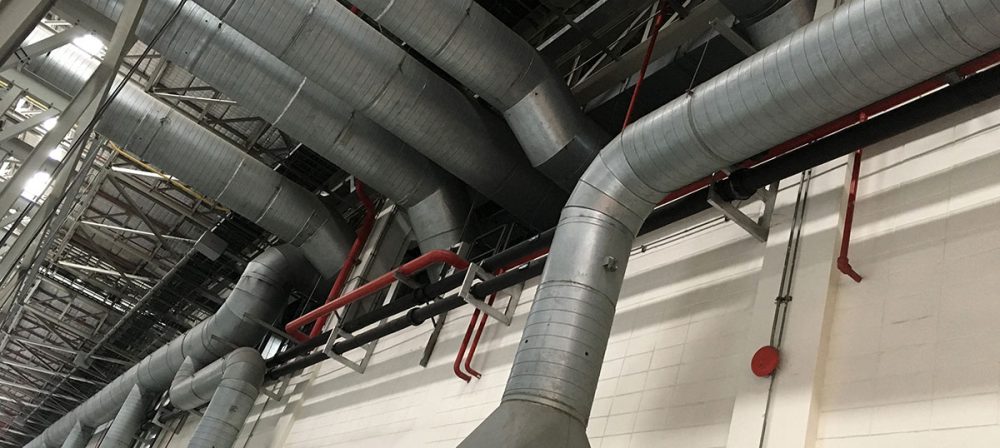
LEV Installed - Clean

Why Your LEV Inspection Can Pass But Your System Still Needs Maintenance

Your LEV system can have a recent inspection report and still not be working properly on site.

If your Local Exhaust Ventilation system has a recent inspection report, it is easy to assume the system is still controlling dust or fumes properly.

But an LEV inspection and LEV maintenance are not the same thing.

A Thorough Examination and Test, often called a TExT, checks whether your system is performing as required. Maintenance is the practical work that keeps the system working day to day, such as replacing filters, clearing blockages, cleaning filter housings, checking airflow indicators and repairing damaged parts.

This difference matters because an inspection report may identify a problem without fixing it.

In some cases, an LEV system can be inspected, technically passed or conditionally accepted, and still have practical performance issues that need attention before workers are properly protected.

Quick Answer: What is the difference between LEV inspection and LEV maintenance?

An LEV inspection, or Thorough Examination and Test, checks whether your extraction system is adequately controlling exposure and meeting its intended performance. LEV maintenance is the routine upkeep needed to keep the system working properly, such as cleaning, filter replacement, blockage removal, duct checks, airflow indicator checks and repairs.

In practice, most employers need both: formal examination to check performance, and maintenance to keep the system working between examinations.

🔑 Key Takeaways: LEV Inspection vs Maintenance

  • Inspection and maintenance are different: an LEV TExT checks performance, while maintenance keeps the system working between examinations.
  • Inspection does not always include remedial work: some providers may highlight airflow, filter or blockage issues but not fix them.
  • Employers still need to act: under COSHH, LEV must be maintained in efficient working order and thoroughly examined at suitable intervals.

Here’s what this guide covers:

What Is an LEV Inspection?

An LEV inspection is usually referred to as a Thorough Examination and Test, or TExT.

Under COSHH, employers must make sure Local Exhaust Ventilation systems are properly maintained and thoroughly examined at suitable intervals. For most LEV systems, this means at least once every 14 months.

An LEV Thorough Examination and Test is designed to check whether the system is still performing as intended and helping to control worker exposure to hazardous dust, fumes, vapours or other airborne contaminants.

An LEV inspection may include:

  • Visual checks of hoods, ducting, filters, fans and discharge points
  • Airflow measurements
  • Comparison against intended operating performance
  • Assessment of capture effectiveness
  • Checks of alarms, gauges or airflow indicators where fitted
  • Identification of defects or performance issues
  • A written report with findings and recommendations

The inspection tells you whether the system is performing properly. It does not automatically mean the examiner will carry out maintenance or repairs during the same visit.

What Is LEV Maintenance?

LEV maintenance is the practical work needed to keep the extraction system in efficient working order.

This can include planned servicing, routine checks, cleaning and remedial work.

LEV maintenance may include:

  • Replacing filter bags or cartridges
  • Clearing blockages from ducting
  • Cleaning filter housings
  • Checking fan belts, seals and connections
  • Repairing damaged ductwork or hoods
  • Checking airflow indicators
  • Fitting airflow chevrons or other visual indicators
  • Recording routine checks between formal examinations

Maintenance is what helps prevent the system from drifting away from its intended performance between formal examinations.

LEV Inspection vs LEV Maintenance: Quick Comparison

Area LEV Inspection / TExT LEV Maintenance
Main purpose Checks whether the system is adequately controlling exposure Keeps the system working properly day to day
Typical frequency Usually at least every 14 months Ongoing, based on system use, dust loading and risk
Output Report, findings, pass/fail status and recommendations Repairs, cleaning, filter changes, adjustments or servicing
Main risk if missed Non-compliance and unknown exposure control performance Reduced airflow, blockages, failed filters and poor extraction

The two activities support each other. A well-maintained system is more likely to pass its examination. A good examination should help identify where maintenance or remedial work is needed.

Can an LEV System Pass Inspection But Still Need Work?

Yes. An LEV system can have a recent inspection and still need practical attention.

This can happen where the inspection identifies a performance issue but does not include remedial work, or where the system deteriorates after the inspection due to dust loading, damaged filters, blocked ducts or changes in how the system is used.

We have attended sites where workers reported that the LEV system was not extracting as well as it used to. On further investigation, the issue was not complicated. The system needed practical maintenance: blockage clearance, filter bag replacement, cleaning and simple visual airflow indicators so the site team could spot future issues earlier.

That is where compliance can fall down: the report exists, but the fault remains.

A report can tell you what is wrong. Maintenance fixes the problem.

Will an Insurance Inspector Maintain My LEV System?

Not usually.

Some insurance or engineering inspection providers will carry out statutory examinations and identify defects, but they may not carry out practical maintenance such as replacing filters, clearing blockages, cleaning housings or fitting airflow indicators.

That can leave employers with a report in hand but a system that still needs work.

You are also not automatically required to use your insurer for statutory examinations. The key requirement is that the person carrying out the work is competent.

If your LEV report mentions poor airflow, blocked ducting, damaged filters, missing indicators or required remedial action, you still need to make sure those issues are dealt with.

Why Airflow Indicators Matter

One of the main reasons LEV systems stop controlling exposure properly is reduced airflow.

That can be caused by:

  • Blocked filters
  • Dust build-up in ducting
  • Damaged hoses or ductwork
  • Poorly seated filter bags
  • Fan or motor issues
  • Changes to the process or hood position

A simple airflow indicator can help supervisors and operators spot when airflow has dropped before the next formal examination.

Airflow indicators do not replace maintenance or a Thorough Examination and Test, but they can make performance issues easier to identify during normal use.

What Should You Do If Your LEV Is Not Extracting Properly?

If workers are reporting poor extraction, visible dust, fumes escaping, unusual noises or weak airflow, do not ignore it just because the system has been inspected recently.

Start by checking:

  • Whether the latest LEV report lists defects or recommendations
  • Whether filters are blocked, damaged or overdue replacement
  • Whether ducts, hoses or hoods are damaged or blocked
  • Whether airflow indicators are fitted and showing adequate flow
  • Whether the process has changed since the last examination
  • Whether users have been trained to carry out basic checks

If there is any doubt, arrange for a competent LEV provider to inspect the system and advise whether maintenance, remedial work or re-testing is required.

Velocity Safety provides LEV Thorough Examination and Testing, practical defect reporting and support with remedial actions for dust and fume extraction systems across the UK.

For wider testing interval guidance, see our guide: How Often Should LEV Be Tested?

What Information Should You Gather Before Calling an LEV Provider?

Before asking for help, it is useful to gather:

  • Your latest LEV Thorough Examination and Test report
  • Any notes on defects, reduced airflow or remedial actions
  • Photos of the extraction unit, filters, hoods and ducting
  • Details of the process being controlled
  • Details of the dust, fume or contaminant being extracted
  • Any recent maintenance records or filter changes

This helps a competent provider understand whether the issue is likely to need maintenance, remedial work, re-testing or a wider review of the system.

Need Help With LEV Inspection or Maintenance Issues?

If your LEV system has poor airflow, blocked filters, ducting issues or unresolved inspection findings, Velocity Safety can help identify what needs to happen next.

📞 Call: 01254 933 486
📩 Email: info@velocitysafety.co.uk
🌐 Or get a quote online | book LEV testing

We provide LEV Thorough Examination and Testing, airflow checks, defect reporting and practical support for extraction systems across the UK.

FAQs

Here are answers to common questions about LEV inspections, maintenance, insurance inspections, airflow indicators and COSHH compliance.

Is LEV inspection the same as LEV maintenance?

No. LEV inspection checks whether the system is performing as intended and controlling exposure. LEV maintenance is the practical upkeep needed to keep the system working properly, such as filter replacement, cleaning, blockage clearance and repairs.

How often should LEV be inspected?

Most LEV systems should be thoroughly examined and tested at least every 14 months. Some processes may need more frequent examination depending on the risk, use and substances involved.

Does an LEV inspection include filter replacement?

Not always. Some inspection providers will identify filter issues but will not replace filters or carry out maintenance during the inspection. You should check what is included before booking the work.

Can an LEV system pass inspection but still need maintenance?

Yes. A system may still need cleaning, filter changes, blockage clearance or airflow improvements even after an inspection. The inspection report should be reviewed carefully and any recommendations should be acted on.

Do insurance inspectors repair LEV systems?

Usually not. Insurance or engineering inspectors may carry out examinations and report on defects, but they may not complete practical maintenance, repairs or remedial work. Employers still need to ensure any issues are resolved.

Are airflow indicators legally required on LEV systems?

Airflow indicators are not always a specific legal requirement, but employers must have a way to check that LEV performance is being maintained. Airflow indicators are a practical way to help operators and supervisors spot reduced airflow.

What should I do if workers say the LEV is not extracting properly?

Check the latest inspection report, filters, ducting, hoods, airflow indicators and any recent process changes. If the problem is not obvious, ask a competent LEV provider to inspect the system and advise what remedial work is needed.

What should be included in an LEV inspection checklist?

An LEV inspection checklist should usually cover hoods, ducts, filters, fans, discharge points, airflow measurements, intended operating performance, defects, recommendations and whether the system is adequately controlling exposure. The exact checklist depends on the type of LEV system and the process being controlled.

Can Velocity Safety help with LEV inspection and maintenance issues?

Yes. Velocity Safety provides LEV Thorough Examination and Testing, airflow checks, defect reporting and practical advice for dust and fume extraction systems across the UK.

Resources

PSSR

Do New Air Compressors Need a Written Scheme of Examination Before First Use?

Buying a new air compressor does not automatically mean it is ready to use under PSSR.

A new air compressor can arrive with manuals, CE/UKCA marking and manufacturer paperwork, but that does not automatically mean it is ready to use under PSSR.

One of the most common mistakes businesses make is buying a compressor online, plugging it in, and only later discovering that the air receiver should have had a Written Scheme of Examination in place before first use.

Under the Pressure Systems Safety Regulations 2000, certain compressed air systems must have a Written Scheme of Examination in place before they are used for the first time.

A new compressor, replacement receiver or newly modified compressed air setup can still fall under PSSR if the system creates a relevant pressure risk.

If your air receiver or compressor system reaches the relevant threshold, you may need a competent person to certify a Written Scheme of Examination and carry out the required examination before the system is put into operation.

Quick Answer: Does a new air compressor need a Written Scheme of Examination?

Yes, it can. If your compressed air system falls under PSSR and exceeds the relevant threshold, a Written Scheme of Examination must be in place before the system is used for the first time. For many air receivers, the key calculation is pressure in bar multiplied by vessel volume in litres. If this equals or exceeds 250 bar litres, a WSE is usually required for a compressed air receiver used at work.

🔑 Key Takeaways: New Compressors and Written Schemes of Examination

  • New compressors are not automatically exempt: if the system falls under PSSR, a Written Scheme of Examination may be needed before first use.
  • The 250 bar litre rule catches more systems than people realise: even a relatively common workshop compressor can exceed the threshold.
  • Servicing is not the same as statutory examination: maintenance helps keep equipment working, but it does not replace a Written Scheme of Examination or PSSR inspection.

Here’s what this guide covers:

What Is a Written Scheme of Examination?

A Written Scheme of Examination, often shortened to WSE, is a formal document required for certain pressure systems under PSSR.

It sets out what needs to be examined, how it should be examined, how often it should be examined, and which parts of the system are included.

For an air compressor or compressed air system, a Written Scheme of Examination may cover:

  • Air receivers
  • Pressure vessels
  • Safety valves
  • Pressure gauges
  • Protective devices
  • Associated pipework where relevant
  • Examination intervals
  • Any preparation needed before examination

The Written Scheme of Examination should be drawn up or certified by a competent person. It is not just a generic template. It needs to reflect the actual pressure system on site.

Does My Air Compressor Need a Written Scheme of Examination?

Your compressor may need a Written Scheme of Examination if it forms part of a pressure system covered by PSSR.

For compressed air systems, one of the most common triggers is the 250 bar litre threshold.

Many businesses assume this only applies to large industrial systems. In reality, a lot of workshop, manufacturing, engineering, vehicle repair and fabrication compressors can exceed the threshold quite easily.

For example, a 100 litre receiver operating at 8 bar equals 800 bar litres.

That is well over the 250 bar litre threshold.

How Does the 250 Bar Litre Rule Work?

The calculation is simple:

Working pressure in bar × vessel volume in litres = bar litres

Here are a few examples:

Receiver Size Working Pressure Bar Litres WSE Likely Required?
24 litres 8 bar 192 bar litres Usually no
50 litres 8 bar 400 bar litres Yes
100 litres 8 bar 800 bar litres Yes
200 litres 10 bar 2,000 bar litres Yes

This is why even a relatively standard compressor can fall under PSSR.

If you are unsure, check the receiver volume, working pressure and system layout, then speak to a competent person before putting the system into use.

Why New Does Not Automatically Mean Compliant

A brand-new compressor can still require a Written Scheme of Examination.

PSSR is not only concerned with whether the compressor is new, old, clean or recently serviced. It is concerned with the risk created by stored pressure.

A new air receiver can still exceed 250 bar litres. It can still need safety valves, gauges and protective devices identified. It can still need an examination interval set by a competent person.

This is why “brand new” should not be treated as a shortcut around PSSR compliance.

What Needs to Happen Before a New Compressor Is Used?

If your compressor system requires a Written Scheme of Examination, it should be in place before the system is used for the first time.

Before first use, the process may include:

  • Reviewing the compressor and air receiver details
  • Checking the pressure, vessel size and bar litre calculation
  • Identifying safety-critical parts of the system
  • Drawing up or certifying the Written Scheme of Examination
  • Carrying out the required initial examination
  • Setting future examination intervals
  • Providing documentation for your records

This matters because new equipment can still be installed incorrectly, missing key documentation, connected to existing pipework, or used in a way that changes the overall pressure system risk.

A new compressor is not automatically compliant just because it has arrived from a supplier.

Is Compressor Servicing the Same as a Written Scheme of Examination?

No. This is one of the most common misunderstandings.

A compressor service is usually focused on keeping the equipment working. It may include oil changes, belt checks, filter replacement, leak checks and general maintenance.

A Written Scheme of Examination and PSSR examination are different. They are focused on statutory safety requirements for pressure systems.

In simple terms:

  • Servicing helps keep the compressor maintained and operational.
  • A Written Scheme of Examination defines what needs statutory examination under PSSR.
  • A PSSR examination checks the relevant parts of the pressure system in accordance with the written scheme.

You may need both. Having a compressor serviced does not automatically mean you have met your PSSR duties.

Common Compressor WSE Mistakes We See

Most issues we see are not caused by businesses deliberately ignoring PSSR. They happen because compressors are often bought, installed and treated like ordinary workshop equipment rather than pressure systems with statutory inspection duties.

Common issues include:

  • Buying a new compressor online and using it straight away
  • Assuming new equipment is exempt
  • Forgetting to calculate bar litres
  • Assuming annual servicing covers statutory examination
  • Adding another receiver without updating the written scheme
  • Changing pipework or system layout without review
  • Waiting for an insurer to highlight the issue after the system is already in use

The safest approach is to check the requirement before the compressor is put into service.

Who Can Write or Certify a Written Scheme of Examination?

A Written Scheme of Examination must be drawn up or certified by a competent person.

This means someone with the knowledge, experience and independence needed to assess the pressure system properly.

The competent person should understand the type of pressure system, the risks involved, the examination requirements, and the relevant legal duties under PSSR.

For many businesses, using an external competent provider is the simplest route because it gives clear documentation and helps avoid conflicts of interest.

What Should You Do If You Have Just Bought a New Compressor?

If you have recently bought or installed a new air compressor, do not assume it is ready to use.

Start by checking:

  • The air receiver volume in litres
  • The maximum working pressure in bar
  • Whether the system exceeds 250 bar litres
  • Whether it connects to existing pipework or receivers
  • Whether a Written Scheme of Examination has already been provided
  • Whether an initial PSSR examination is required before use

If you are not sure, Velocity Safety can review your compressor setup and advise what is needed.

Velocity Safety provides PSSR examinations and Written Schemes of Examination for compressors, air receivers and pressure systems across the UK.
Useful information to gather before asking for advice:

  • A clear photo of the compressor data plate
  • A photo of the air receiver data plate
  • The receiver size in litres
  • The maximum working pressure in bar
  • Details of any additional receivers or fixed pipework
  • Any installation, service or inspection paperwork already supplied

Need a Written Scheme of Examination for a New Compressor?

If you have bought a new compressor or air receiver, Velocity Safety can help you check whether a Written Scheme of Examination is required before first use.

📞 Call: 01254 933 486
📩 Email: info@velocitysafety.co.uk
🌐 Or get a quote online | book a PSSR examination

We provide Written Schemes of Examination, PSSR examinations and practical pressure system compliance support for businesses across the UK.

FAQs

Here are answers to common questions about new air compressors, Written Schemes of Examination, 250 bar litres and PSSR compliance.

Do new air compressors need a Written Scheme of Examination?

Yes, they can. If the compressor system falls under PSSR and exceeds the relevant threshold, a Written Scheme of Examination should be in place before the system is used for the first time.

What is the 250 bar litre rule?

The 250 bar litre rule is commonly used for compressed air receivers. It is calculated by multiplying the working pressure in bar by the vessel volume in litres. If the result equals or exceeds 250 bar litres, a Written Scheme of Examination is likely to be required.

Does a 50 litre compressor need a Written Scheme of Examination?

It depends on the working pressure. For example, a 50 litre receiver operating at 8 bar equals 400 bar litres, which is above the 250 bar litre threshold.

Is compressor servicing the same as a PSSR examination?

No. Servicing is maintenance. A PSSR examination is a statutory examination carried out in accordance with a Written Scheme of Examination. You may need both.

Who can write a Written Scheme of Examination?

A Written Scheme of Examination must be drawn up or certified by a competent person with suitable knowledge, experience and independence.

Can I use a Written Scheme of Examination template?

A generic template is unlikely to be enough on its own. A Written Scheme of Examination must be specific to the pressure system and should be drawn up or certified by a competent person. Using a template without proper system review can leave important safety devices, limits or examination requirements missing.

How often does an air compressor need examining?

The examination frequency should be set by the competent person within the Written Scheme of Examination. Many systems are examined annually, but the correct interval depends on the equipment, risk and scheme requirements.

Do I need to update my WSE if I replace my compressor?

Yes, the written scheme should be reviewed if the compressor, receiver, pressure rating, pipework or system layout changes. Replacing equipment can alter what needs to be examined and how the pressure system should be managed.

Do second-hand compressors need a Written Scheme of Examination?

Yes, they can. Second-hand equipment is not automatically exempt. If the system falls under PSSR, a Written Scheme of Examination and suitable examination may be required before use.

Can Velocity Safety provide Written Schemes of Examination nationwide?

Yes. Velocity Safety provides Written Schemes of Examination, PSSR examinations and pressure system compliance support for businesses across the UK.

Resources

Xtirpa Davit System

Has Your Davit Arm Failed Inspection? Missing Technical Files Could Be the Reason

A davit arm can look fine on the surface and still fail inspection if the paperwork behind it is missing.

If your davit arm, socket or anchor system has failed inspection, the issue may not be obvious damage. In many cases, the problem is missing evidence.

Under BS 7883:2019, inspectors need more than a certificate or a quick visual check. They need to understand how the system was designed, what it is fixed to, which components were used, and whether the installation remains suitable for safe use.

That evidence should sit inside the system technical file.

If that file is missing, incomplete or was never handed over, your davit system may not be straightforward to recertify.

Quick Answer: Why has my davit arm failed inspection?

A davit arm may fail inspection due to damaged components, poor fixings, corrosion, incorrect installation, missing certification or incomplete technical documentation. Under BS 7883:2019, missing technical file information can create a serious issue because the inspector may not be able to verify how the system was designed, fixed or tested.

🔑 Key Takeaways: Davit Arm Inspection Failures

  • Missing technical files matter: inspectors may need design, fixing and installation evidence before recertifying a system.
  • Visual condition is only part of the story: sockets, fixings, hidden anchors and load paths also need checking.
  • Failed or conditional outcomes can often be resolved: through system review, supplementary inspection, pull testing or remedial works.

Here’s what this guide covers:

What Is a Davit Arm Technical File?

A technical file is the evidence pack behind a davit arm, anchor system or fall protection installation.

It should help prove how the system was designed, installed, fixed and checked.

For davit systems, this can include:

  • System design and layout
  • Design calculations
  • Structural fixing details
  • Product traceability
  • Serial numbers and batch numbers
  • As-built drawings
  • Installation photographs
  • Details of hidden fixings or concealed elements
  • Previous inspection and test records
Different davit arm systems used for work at height and confined space access
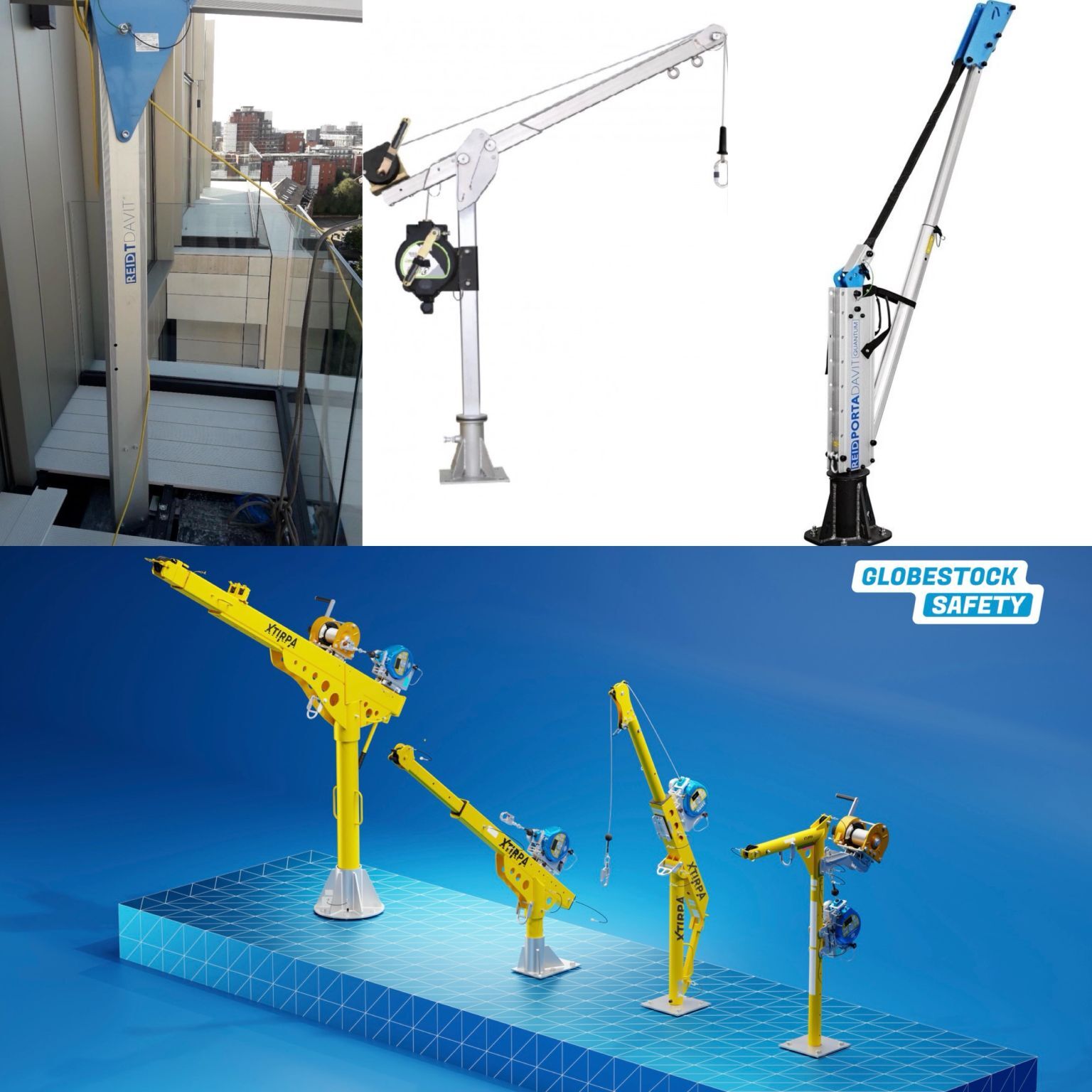
Davit arm systems can vary significantly, which is why design information, fixing details, socket specification and technical documentation all matter during inspection.

This matters because a davit arm does not work in isolation. The arm, socket, fixings, structure and intended use all need to make sense together.

A certificate may show that something was tested at one point in time. The technical file helps explain whether the system was designed and installed correctly in the first place.

This should include evidence that the fixing method was suitable for the substrate and specified as part of the original system design. A later pull test should not be used as a substitute for proper design information, installation records or fixing specifications.

Why Davit Arms Fail Inspection

A davit arm can fail inspection for several reasons. Some are visible straight away. Others only become clear once the inspector checks the documentation, fixing method or load path.

Common issues include:

  • Missing or incomplete technical files
  • No evidence of design calculations
  • Unknown fixing details
  • Hidden anchor elements with no installation photographs
  • Corrosion around sockets or fixings
  • Damaged, loose or worn components
  • Incorrectly matched parts or incompatible components
  • No clear record of previous inspections or pull testing

The frustrating part for duty holders is that the system may have been in place for years without anyone questioning it. Then a more detailed inspection highlights that the evidence simply is not there.

Why BS 7883:2019 Changed the Conversation

BS 7883:2019 gives guidance for inspecting fall protection anchor devices and systems.

The important shift is the focus on evidence. Inspectors need enough information to assess whether the system is safe, suitable and correctly installed.

For older systems, that can create problems. The original installer may no longer be available. Drawings may have been lost. Fixings may be hidden behind roof coverings, cladding or other finishes. Previous certificates may not explain how the system is actually anchored to the structure.

That does not automatically mean every system is unsafe, but it does mean further investigation may be needed before a clear pass can be given.

Why Pull Testing Alone Does Not Prove a Davit Is Safe

One of the biggest misconceptions around davit inspections is that a successful pull test proves the installation is safe.

It does not.

A pull test, load test or similar proof test demonstrates that the installation withstood the applied test load at that moment in time. It does not prove the original design was suitable, that the correct fixing was specified, or that the substrate was appropriate for the system.

For example, a pull test does not automatically confirm:

  • The fixing was correctly specified for the substrate.
  • The system designer or manufacturer approved the fixing method.
  • The installation followed the original design.
  • Hidden fixings are free from fatigue, damage or deterioration.
  • The system will remain safe the next time it is loaded.

A safe davit installation starts long before any pull test takes place. It starts with suitable design, correct fixing selection, competent installation, commissioning records and complete technical documentation.

Pull testing can be a useful part of the evidence, but it should not be treated as a replacement for the technical file.

Does Missing Documentation Always Mean a Fail?

Not always. Missing information does not automatically mean the davit system is unsafe, but it can stop an inspector from giving a clear pass.

Depending on what is missing and whether there is an immediate safety concern, the outcome may be a pass, conditional pass, conditional fail or fail.

For example, a system may be visually sound but still need further evidence before it can be fully recertified. That might include design calculations, fixing details, installation photographs or supplementary testing.

The key point is that missing evidence should be treated seriously. If the inspector cannot verify how the davit arm or socket is fixed into the structure, the duty holder may need further investigation before the system can be returned to normal use.

What Should You Do If Your Davit Arm Fails Inspection?

First, do not keep using a failed davit system unless a competent person has confirmed it is safe to do so.

Next, gather any information you have:

  • Previous inspection reports
  • Installation certificates
  • Drawings or plans
  • Manufacturer details
  • Photos of the installation
  • Records of repairs, refurbishment or load testing

Then speak to a competent provider who can review the davit arm, socket, fixings, documentation and intended use.

Velocity Safety can support with davit arm installation, inspection, maintenance and pull testing, including system review, defect reporting, supplementary inspection and advice on what is needed to move the system towards recertification.

Need Help With a Failed Davit Arm Inspection?

If your davit arm, socket or anchor system has failed inspection, Velocity Safety can help identify what is missing and what needs to happen next.

📞 Call: 01254 933 486
📩 Email: info@velocitysafety.co.uk
🌐 Or get a quote online

We provide davit arm inspection, pull testing, documentation review and practical remedial advice for sites across the UK.

FAQs

Here are some common questions about davit arm inspection failures, technical files, BS 7883:2019 and what to do if your system cannot be recertified.

Can a davit arm fail inspection because the technical file is missing?

Yes. Missing documentation can create an inspection issue because the inspector may not be able to verify how the system was designed, fixed or installed. Depending on the risk and missing evidence, further investigation may be needed.

What should be included in a davit arm technical file?

A technical file may include design calculations, fixing details, system layout, as-built drawings, product traceability, installation photographs and previous inspection or test records.

Does a previous certificate prove my davit arm is compliant?

Not always. A certificate is useful, but it may not prove how the system was designed, what it is fixed to, or whether hidden elements were installed correctly. The supporting technical file gives much stronger evidence.

What happens if hidden fixings cannot be verified?

If hidden fixings or structural details cannot be verified, supplementary investigation may be required. This may involve further inspection, access to concealed areas, review of installation records or additional testing.

Does passing a pull test prove a davit installation is compliant?

No. A successful pull test only shows that the installation withstood the applied test load at that moment in time. It does not prove the fixing was correctly designed, that the substrate was suitable, or that hidden defects do not exist. These details should be supported by the technical file and installation documentation.

Can Velocity Safety help after a failed davit inspection?

Yes. Velocity Safety can inspect davit arms, sockets, fixings and supporting documentation, then advise on remedial action, pull testing, refurbishment or recertification requirements.

Do you provide davit arm pull testing nationwide?

Yes. Velocity Safety provides davit arm inspection, maintenance, pull testing and certification across the UK, including support for construction, facilities, industrial and confined space environments.

Resources

  • BS 7883:2019: Personal fall protection equipment anchor systems — system design, installation and inspection code of practice
  • LOLER 1998: Lifting Operations and Lifting Equipment Regulations
  • PUWER 1998: Provision and Use of Work Equipment Regulations
  • HSE: Working at height guidance
Inspector with Clipboard

How Multi-Discipline On-Site Safety Inspections Work: Gas Monitors, Tripods, Winches & Fall Arrest Blocks

How Multi-Discipline On-Site Safety Inspections Work: Gas Monitors, Tripods, Winches & Fall Arrest Blocks

Some jobs aren’t one-discipline visits.

For many clients – especially those working in confined spaces, utilities, civils or construction – staying compliant means keeping dozens of different bits of safety kit inspected, calibrated, serviced and traceable.

That’s why multi-discipline on-site inspections exist.

Instead of booking separate contractors for gas monitors, fall arrest blocks, tripods, winches, harnesses and fire equipment, a competent provider can complete everything in a single visit – reducing downtime, disruption and cost.

Velocity Safety carries out these multi-discipline inspections nationwide, often organising, labelling and certifying equipment across entire fleets of vans or site teams. It’s quicker, cleaner and far easier to manage.

Here’s how it actually works in the real world, and what gets tested on each piece of equipment.

Key Takeaways

  • Multi-discipline inspections reduce downtime by servicing gas monitors, tripods, winches, harnesses and fall arrest blocks in a single visit.
  • Each item has its own legal requirements – from calibration schedules to LOLER and PUWER obligations.
  • Calibrated, traceable instruments are essential for accurate testing and valid certification.
  • A single contractor handling multiple disciplines improves consistency, record-keeping and audit readiness.

Here’s how a proper multi-discipline visit actually works – what gets tested, how it’s organised, and why the one-visit approach makes life easier for busy site teams.

Jump to

Why Businesses Choose Multi-Discipline Safety Inspections

When you spread inspections across several contractors, three problems appear quickly:

  • Downtime multiplies – teams wait around for different specialists.
  • Record-keeping becomes messy – different certificates, formats and expiry dates.
  • Consistency drops – different contractors interpret “competence” differently.

By contrast, a multi-discipline inspection from one competent provider gives you:

  • One agreed schedule
  • One set of reports
  • One point of accountability
  • Consistent labelling across all equipment
  • Far less site disruption

Velocity Safety often carries out these visits on Fridays (the quiet day in many industries) to minimise business interruption – exactly as Ross described in his post.

1. Gas Monitor Calibration & Functional Testing

Gas monitors are life-critical. They aren’t simply switched on to see if they beep – they require proper calibration and bump testing.

A full on-site gas monitor calibration includes:

  • Zeroing the sensors
  • Exposing each sensor to test gas
  • Verifying the reading matches the reference value
  • Checking high/low alarms trigger correctly
  • Verifying TWA/STEL where applicable
  • Inspecting the sensor ports and filters
  • Recording calibration drift and pass/fail outcome

Calibration intervals vary by manufacturer, but most require:

  • 6-monthly calibration
  • Monthly bump tests

Businesses often underestimate the failure rate of sensors left untested.

A gas monitor that doesn’t alarm when it should is one of the most dangerous failures in safety management – which is why Velocity Safety calibrates with fully traceable equipment.

2. Tripod Inspections (Confined Space Entry)

Tripods are used for confined-space access and rescue, meaning every component must work exactly as expected under load.

A correct inspection includes:

  • Checking leg integrity, bends and distortion
  • Verifying locking pins
  • Checking spreader chains, brackets and attachment points
  • Inspecting the top cap and anchor points
  • Confirming compatibility with the winch or fall arrest block
  • Checking for corrosion, hairline cracks or material fatigue

Tripods fall under PUWER, meaning they must be:

  • Suitable for use
  • Maintained correctly
  • Inspected at appropriate intervals

Velocity Safety also labels each tripod with asset IDs and next inspection due dates, reducing confusion on multi-team or multi-van sites.

3. Winch Inspection & Servicing

Winches are often paired with tripods for confined-space entry or rescue. They must lift smoothly, lower safely, and lock reliably.

A proper on-site inspection includes:

  • Strip-down of outer casing
  • Inspection of pawls, gears and cogs
  • Checking the ratchet mechanism
  • Inspecting steel wire rope for kinks, heat damage or broken strands
  • Verifying ascent/descent function
  • Ensuring the brake holds under load
  • Lubricating moving components with manufacturer-approved products

Some winches fall under LOLER depending on use (lifting persons), while others fall under PUWER.

Either way, frequency and scope must match the application.

4. Fall Arrest Block / SRL Inspection

Fall arrest blocks are complex systems containing energy absorbers, brakes, springs and friction components.

A competent on-site fall arrest block inspection includes:

  • Verifying locking speed and engagement
  • Inspecting webbing or cable for cuts, glazing, abrasion or crushed sections
  • Checking retraction force and recoil
  • Ensuring connectors and swivels move freely
  • Listening for internal noise that signals wear
  • Verifying activation distance

Blocks that require full internal servicing (e.g., annual strip-downs) will be removed, serviced at an approved centre, and returned with full certification.

Velocity Safety’s Ridgegear approval strengthens this even further.

5. Harness & Lanyard PFPE Checks

PFPE is often overlooked – yet it’s the item most workers rely on in a fall event.

A correct PFPE inspection includes:

  • Checking webbing condition
  • Stitch pattern integrity
  • Shock pack condition
  • D-ring strength and distortion
  • Corrosion, cracks or excessive wear
  • Batch numbers, serials and label legibility
  • Compatibility with other kit in the system

If the label is unreadable – it’s legally unserviceable.

No exceptions.

Why Businesses Choose Velocity Safety

Clients choose our team because:

  • We test multiple disciplines in one visit
  • Our equipment is fully calibrated and traceable
  • We’re manufacturer-approved for fall arrest block servicing
  • We understand confined-space, work-at-height and gas detection requirements inside out
  • Labels, asset registers and documentation are clean and audit-ready
  • We explain findings clearly and honestly

It’s end-to-end competence – not quick “tick-box” testing.

Book a Multi-Discipline On-Site Inspection

If you want to consolidate your inspections and reduce downtime, we can test, service and label all your on-site kit in a single visit.

📞 Call: 01254 933 486
📩 Email: info@velocitysafety.co.uk
🌐 Request an On-Site Inspection

Fire Extinguisher Servicing & Maintenance

Case Study: How Velocity Safety Commissioned 200 MED-Approved Extinguishers Overnight to Keep a Vessel Sailing

When a large vessel docks for a tight turnaround, every hour matters.

When that vessel is staring down £300,000 per day in delay costs, every hour really matters.

Velocity Safety was contacted by a client whose ship had just arrived into Hull – only for the team to discover that 200 onboard extinguishers had been supplied incorrectly and failed compliance checks. The vessel couldn’t sail until the issue was fixed.

  • Time window: less than 48 hours
  • Risk: ship stuck in port
  • Requirement: replace and commission 200 MED-approved extinguishers
  • Outcome: ship sailed on schedule

This is how it happened.

Jump to

The Problem: A Full Set of Non-Compliant Extinguishers

When the ship arrived, routine checks flagged immediate issues:

  • Extinguishers supplied by a previous provider did not meet MED (Marine Equipment Directive) requirements
  • Several units failed basic conformity checks
  • Certification was incomplete or missing
  • Delays would trigger six-figure costs for the client

The client’s request was simple and brutal:

“We need 200 compliant extinguishers on board, commissioned and ready, before the vessel sails.”

Most companies would have walked away.

Velocity Safety didn’t.

The Response: A Same-Day National Procurement Operation

By 8:30am the next morning, Velocity Safety had:

  • Identified the correct MED-approved extinguishers
  • Ordered stock from three separate suppliers across the UK
  • Secured same-day couriers to get all units to Hull before evening
  • Mobilised a team to travel to the port and prepare for onboard commissioning

This wasn’t a “collect 200 extinguishers from a warehouse” job.

This was a nationwide emergency supply chain compressed into a few hours.

The Complications (Because There Are Always Complications)

No serious operation runs perfectly – and this one tried its best not to.

  • One technician called in sick
  • Another arrived without photo ID (no ID = no access to port)
  • The ship delayed equipment lift-on
  • Onboard mobilisation windows kept shifting

What should have been a four-person commissioning team dropped to two, just hours before the lift-on window.

Most providers would have cancelled the job.

Velocity Safety stayed until it was finished.

The Work: Commissioning 200 Extinguishers Onboard

Once the units were lifted onto the vessel’s deck, the team worked until midnight to:

  • Unbox and prepare all extinguishers

  • Apply correct labels and MED identification
  • Allocate serial numbers for traceability
  • Commission each extinguisher to BS 5306
  • Integrate them into the vessel’s fire plan
  • Ensure replacement units matched the vessel’s risk profile
  • Remove non-compliant extinguishers for disposal
By the time the pilot boarded, the final extinguisher had been commissioned.

The ship sailed on time.

Why This Case Matters

This wasn’t “just” an extinguisher job.

It was a compliance-critical, time-sensitive project where:

  • The wrong equipment risked delaying a vessel
  • Contractor failures created immediate operational cost
  • MED compliance was non-negotiable
  • The client needed a provider who could act, not talk

Velocity Safety succeeded because:

  • We understand marine compliance and MED requirements
  • Our supply chain partners know we can mobilise at speed
  • We always use certified, approved extinguishers
  • We don’t sign off work unless it’s genuinely compliant
  • When problems hit, we don’t walk away

Most importantly:

Our team keeps its word – if we say a ship will sail, it sails.

Key Takeaways

  • The vessel avoided £300k+ per day delay costs
  • 200 extinguishers were sourced, delivered and commissioned within 24 hours

  • All units were MED-approved and fully traceable
  • The work was completed despite multiple setbacks
  • The ship sailed with a fully compliant fire safety system

Velocity Safety isn’t a “box-shifting” fire equipment supplier.

We solve real operational problems – fast.

Need Fire Extinguisher Commissioning or Emergency Support?

Whether you need extinguishers supplying, commissioning, replacing or auditing – on land or at sea – we can help.
📞 Call: 01254 933 486
📩 Email: info@velocitysafety.co.uk
🌐 Request an extinguisher service or supply quote online

Personal Fall Protection Equipment

Why Approved PFPE & Fall Arrest Servicing Matters
When it comes to fall arrest blocks, inertia reels, harnesses and lanyards, it’s easy to assume that “any competent tester” can service or inspect them.

But personal fall protection equipment (PFPE) isn’t like most workplace kit – it’s life-critical.

That’s why manufacturers such as RIDGEGEAR operate approved service networks, and why choosing a centre that’s properly trained, assessed and authorised makes a measurable difference to safety and compliance.

Velocity Safety is an approved service and repair centre, trained directly by the manufacturer on the latest SRLs – including the new 30m unit (RGA30). That approval isn’t just a badge. It changes what gets inspected, how it’s repaired, and what your certificate is actually worth if things ever go wrong.

Key Takeaways

  • PFPE servicing is not all equal – approved centres follow the manufacturer’s exact testing procedures and tolerances.
  • Fall arrest blocks and SRLs require strip-downs, internal inspections and calibrated load tests that most providers cannot legally perform.
  • Using a non-approved provider can void warranties, invalidate reports and lead to unsafe equipment staying in use.
  • Approved servicing provides traceable certification, genuine replacement parts and evidence you followed the manufacturer’s instructions.

Below is a breakdown of what “approved” really means, what gets tested inside fall arrest equipment, and why it matters for your workers, your insurers and your legal defence.

Jump to

What “Approved Service Centre” Actually Means

Manufacturers don’t hand out approvals lightly. Becoming an approved PFPE or fall arrest service centre involves:

  • Formal training on specific product ranges
  • Assessment of competence on strip-downs, rebuilds and reassembly
  • Use of genuine replacement parts
  • Use of calibrated load-testing equipment
  • Authorised access to service manuals and repair procedures
  • Regular audits to ensure standards are maintained

An approved centre isn’t guessing, improvising, or relying on general height safety knowledge.

They’re following the manufacturer’s own engineering requirements, which dictate exactly what must be checked, replaced or tested.

It’s the difference between kit that looks fine and kit that’s actually safe to use.

What Gets Tested on Fall Arrest Blocks & Inertia Reels (SRLs)

A proper SRL / fall arrest block service goes far beyond pulling the cable out and checking the brake engages.

Here’s what an approved service includes:

1. Full Internal Strip-Down

Inside a fall arrest block is:

  • Braking pawls
  • Springs
  • Drums
  • Gears
  • Shock pack components
  • Energy absorbers
  • Friction surfaces

These wear over time – and cannot be inspected visually from the outside.

Approved centres dismantle the unit completely to inspect and measure internal wear.

2. Inspection of Critical Components

Servicing includes checking:

  • Brake activation speeds
  • Drum alignment
  • Pawl engagement
  • Corrosion inside the casing
  • Shock absorption capacity
  • Condition of internal bearings and cogs
  • Cable or webbing integrity

Most failures occur internally.

An unapproved provider simply cannot test these elements.

3. Replacement of Wear Parts With Genuine Components

Manufacturers specify:

  • The exact shock packs
  • Specific springs
  • Correct fasteners
  • Correct lubricants
  • Torque settings

Using non-genuine components (or lubricants) can invalidate the certification – and compromise performance.

4. Calibrated Dynamic & Static Load Tests

Approved centres load-test SRLs to confirm:

  • Braking force
  • Arrest distance
  • Locking performance
  • Cable payout
  • Recoil strength

These tests require calibrated equipment and manufacturer training.

You cannot legally do this “on a bench”.

5. Verification Against Manufacturer Tolerances

Each unit has tolerances that dictate whether the equipment is:

  • Serviceable,
  • Repairable, or
  • Must be removed from use.

Approved centres have these tolerances.

General PFPE inspectors do not.

What Gets Tested on Harnesses & Lanyards

Harness and lanyard testing isn’t just about checking for frayed webbing.

An approved inspection includes:

  • Stitch pattern checks
  • Stitch integrity and tension
  • Webbing wear patterns
  • Label legibility (essential for compliance)
  • D-ring distortion
  • Corrosion and pitting
  • Shock pack swelling, tears or activation
  • Correct marking, serial numbers and batch codes
  • Hardware compatibility

If the label is unreadable, or a component fails inspection, the harness legally has to be removed from service.

Approved inspectors enforce this correctly.

Why Using a Non-Approved Provider Is a Risk

Here’s what often goes wrong when companies use non-approved PFPE testers:

1. They can’t open or service the unit internally

Fall arrest blocks aren’t designed to be opened by untrained technicians.

If they do, it’s a breach of manufacturer instructions.

2. They can only perform surface-level checks

No matter how “competent” they are, they cannot:

  • Inspect internal braking
  • Measure internal wear
  • Replace internal components
  • Verify tolerances

3. Warranty and product certification may be void

Manufacturers typically state:

“Only authorised service centres may undertake repairs or internal inspections.”

If an SRL later fails and the certificate wasn’t issued by an approved centre, you’re exposed.

4. Reports may not stand up in an investigation

If someone falls and the kit was serviced by an unapproved provider:

  • The insurer may challenge the validity
  • The HSE may question competence
  • The LE procedure may be scrutinised

You want the certificate to be defensible – not debatable.

5. Critical failures get missed

The majority of SRL failures occur inside the unit.

Most non-approved testers never open it.

It’s that simple.

Why Manufacturer Training Matters

Being manufacturer-trained means:

  • You know how each unit behaves when worn
  • You know the failure patterns
  • You know which parts degrade faster
  • You know the engineering logic behind each safety system

That’s very different from general PFPE knowledge.

It’s like the difference between:

  • An MOT tester, and
  • The mechanic who built the engine.

Both have a role – but only one can safely take it apart.

How Often Should PFPE Be Inspected or Serviced?

As a general rule:

  • Harnesses & lanyards: every 6–12 months
  • SRLs / fall arrest blocks: every 12 months (or sooner depending on use)
  • High-use or harsh environments: more frequent inspections
  • After a fall event: equipment must be removed from service immediately

But the key is simple:

Follow the manufacturer’s instructions.

Not every brand or model is the same.

Approved centres know the exact requirements for each product line.

Why Businesses Choose Velocity Safety

Velocity Safety is an approved PFPE and fall arrest service centre because we:

  • Follow the manufacturer’s servicing procedures to the letter
  • Use calibrated equipment for dynamic testing
  • Replace components with genuine approved parts
  • Provide traceable service records
  • Identify defects that surface-level checks simply won’t catch
  • Understand PFPE engineering, not just inspection checklists

It’s a level of assurance that general testers cannot match.

When a worker is relying on a fall arrest system, the difference matters.

Book PFPE or Fall Arrest Block Servicing

If you need your harnesses, lanyards, PFPE or SRLs servicing – or want to confirm whether your current provider is approved – we can help.

📞 Call: 01254 933 486
📩 Email: info@velocitysafety.co.uk
🌐 Request a PFPE Service Online