Recently, Velocity Safety onboarded three new clients – all frustrated by other suppliers’ inflexibility or inability to complete vital safety work on time.
Client Spotlights
When providers fall short, the problems land on site managers’ desks. These three cases show how we’ve stepped in to fix issues that others left hanging.
BS 5306 is the recognised standard for proving your fire extinguishers are correctly selected, positioned, commissioned and maintained.
Fire extinguisher compliance in the UK is governed by BS 5306, the national standard that sets out how extinguishers must be commissioned, installed, serviced, positioned, and maintained.
It’s one of the most misunderstood standards in fire safety – but also one of the most important.
If you’re responsible for fire safety in a business, school, healthcare site, or commercial premises, BS 5306 is how you demonstrate to auditors, insurers, and enforcement officers that your firefighting equipment is fit for purpose and properly maintained.
This guide breaks down the British Standard in plain English – showing exactly what it covers, how it links to the Regulatory Reform (Fire Safety) Order 2005, and what your site needs to stay compliant.
🔑 Key Takeaways: Fire Extinguisher Compliance
BS 5306 is the key British Standard: it explains how portable fire extinguishers should be selected, positioned, commissioned, serviced and maintained.
The Fire Safety Order creates the legal duty: firefighting equipment must be suitable and maintained in efficient working order.
Different parts cover different duties: BS 5306-3 covers commissioning and maintenance, BS 5306-8 covers selection and positioning, and BS 5306-9 covers recharging.
Records matter: service labels, certificates, asset registers and logbooks help demonstrate compliance during audits or insurer reviews.
BS 5306 is the British Standard for the selection, installation, inspection, and maintenance of portable fire extinguishers. It ensures that every extinguisher in a UK workplace is fit for its intended purpose and safe for users.
In practical terms, BS 5306 defines:
How extinguishers are commissioned when they first arrive on site
How often they must be serviced
Where and how they should be mounted
Who is qualified to maintain them
What documentation must be kept for audit and insurance
Think of BS 5306 as your extinguisher compliance blueprint. It tells you:
What equipment to have (Part 8 – selection & positioning)
How to install and service it (Part 3 – maintenance & competence)
How to keep it legally valid throughout its life cycle (Part 9 – recharging & reconditioning)
Every service label, maintenance log, and engineer visit ultimately traces back to these standards. Velocity Safety aligns all site inspections, maintenance schedules, and certificates with the latest BS 5306-3:2024 revision, ensuring full traceability for audits and insurers.
The Link Between BS 5306 and the Fire Safety Order
While BS 5306 is a technical standard, it’s the Regulatory Reform (Fire Safety) Order 2005 (often called the RRO) that gives it legal weight.
Under Articles 17 and 38 of the Fire Safety Order, every “Responsible Person” (typically the employer, landlord, or managing agent) must ensure that:
All firefighting equipment is maintained in efficient working order
All maintenance is carried out by competent persons
The building remains equipped with suitable firefighting measures based on the risks present
BS 5306 provides the framework for proving those duties have been met. So while the RRO tells you what you must do, BS 5306 shows you how to do it correctly.
Failure to follow BS 5306 may not automatically be a standalone offence, but it can make it much harder to prove that firefighting equipment has been selected, positioned and maintained properly. If a fire investigation, audit or insurer review finds that extinguishers were not commissioned, serviced or positioned in line with recognised standards, the Responsible Person may struggle to demonstrate compliance with the Fire Safety Order.
What Each Part of BS 5306 Covers
BS 5306 is made up of several parts – each covering a different stage of the extinguisher’s life cycle, from commissioning to reconditioning. Here’s how they break down:
Part
Title
What It Covers
Example Requirement
BS 5306-3:2024
Commissioning, Servicing & Maintenance
Specifies how extinguishers must be installed, commissioned, inspected and serviced, including who is deemed competent to carry out the work.
Extinguishers must be commissioned on-site by a competent engineer and serviced at least every 12 months.
BS 5306-8:2012
Selection & Positioning
Details where extinguishers should be located, how many are required, and what fire classes they must cover.
For Class A fires, no one should travel more than 30m to reach an extinguisher; for Class B or F fires, the maximum is 10m.
BS 5306-9:2015
Recharging, Overhaul & Refilling
Outlines the correct procedures for refilling and refurbishing extinguishers after use or during extended servicing.
Only manufacturer-approved agents and refills can be used during recharge or overhaul.
Defines design, performance, and colour coding for extinguishers sold in the UK.
At least 95% of the cylinder body must be signal red, with the remaining 5% indicating the content type (foam, powder, CO₂, etc).
Together, these standards ensure that extinguishers are not only the right type and quantity, but are also maintained safely, labelled correctly, and traceable throughout their lifespan.
Fire extinguisher compliance is ultimately a legal responsibility, not just a best practice. Under the Fire Safety Order 2005, employers, landlords, or building managers are classed as “Responsible Persons.” That means you must ensure:
All extinguishers are correctly commissioned, serviced, and maintained in accordance with BS 5306-3.
Monthly visual checks are carried out and recorded in a fire logbook.
Annual servicing is completed by a competent or BAFE SP101-registered engineer.
Extinguishers are replaced or overhauled at the correct intervals – every 5 years for most water, foam, and powder units, and 10 years for CO₂.
Servicing and installation records are retained for at least five years and made available to auditors or insurers.
Failing to meet these requirements can lead to enforcement action, fines, or invalidated insurance. Many insurers now require explicit proof of BS 5306 servicing and inspection before renewal.
If you’re unsure whether your site meets current standards, a Fire Extinguisher Compliance Audit can identify gaps before they become liabilities.
Even sites with regular maintenance contracts can fail compliance audits. The most common issues include:
Issue
Why It Happens
How to Fix It
Pre-labelled new extinguishers
Suppliers add service labels before delivery – not compliant with BS 5306-3 (commissioning must happen on-site).
Have all units re-commissioned by a qualified engineer before installation.
Missing or outdated service labels
Inspections are done but not logged, or labels fade and fall off.
Use durable vinyl service tags and maintain digital records.
Incorrect mounting height or location
Extinguishers are installed too low/high or blocked by furniture.
Mount according to BS 5306-8: 1.5m to handle (under 4kg) or 1m (over 4kg).
Expired CO₂ cylinders
CO₂ units are not hydrostatically tested after 10 years.
Replace or re-test expired units – a key audit check item.
No traceable asset register
Sites lack a central record linking each extinguisher’s serial number to its location and service date.
Maintain a digital asset list or register (Velocity Safety can create this for multi-site portfolios).
💡 Tip: Many audit failures stem from incomplete record-keeping rather than unsafe equipment. A solid paper trail is just as important as the extinguisher itself.
How to Stay Compliant – The 3-Step Framework
Compliance isn’t about ticking boxes; it’s about creating a clear, traceable process that protects both people and paperwork. BS 5306 breaks this into three practical steps – and every site, from offices to hospitals, should follow the same rhythm:
Commission Correctly – When new extinguishers arrive, they must be commissioned on-site by a competent engineer. This verifies weight, pressure, and assembly before the unit is officially put into service.
Service Annually – Arrange a yearly inspection under BS 5306-3. The engineer checks pressure, seals, brackets, and signage, and issues an updated service label and certificate for your fire logbook.
Audit & Record – Keep an up-to-date asset register showing the serial number, type, and location of every extinguisher on site. Pair this with a professional compliance audit to verify spacing, signage, and condition.
Together, these three steps create a full chain of evidence – from purchase to disposal – proving compliance with both BS 5306 and the Fire Safety Order.
Fire Extinguisher Compliance Checklist
Before your next fire safety audit, check you can confidently answer all five questions below. If you can’t, it’s time to review your BS 5306 processes.
Commissioning: Were all extinguishers commissioned on-site by a competent or BAFE-registered engineer?
Servicing: Has every unit been inspected within the last 12 months and labelled to BS 5306-3?
Positioning: Are extinguishers mounted correctly and spaced in line with BS 5306-8 travel-distance rules?
Documentation: Do you keep an up-to-date logbook, service certificates, and serial-number asset register?
Training: Have staff been briefed on extinguisher types and safe use within the last 12 months?
If you hesitated on any point, an independent BS 5306 compliance audit can close the gaps before your next inspection.
If you manage multiple premises or need portfolio-wide records, our digital audit reports make BS 5306 compliance simple to track and prove.
Frequently Asked Questions – Fire Extinguisher Compliance
We’re often asked how BS 5306 applies day-to-day. Here are straightforward answers to the questions that come up most during audits and training.
What are the legal requirements for fire extinguishers in the UK?
Businesses must provide appropriate firefighting equipment under the Fire Safety Order 2005 and maintain it to BS 5306-3. Each extinguisher must be commissioned, serviced annually, and kept in efficient working order.
How often do fire extinguishers need to be serviced?
At least once every 12 months by a competent or BAFE-registered engineer. Water, foam, and powder units require extended servicing every five years; CO₂ units are pressure-tested at ten.
What makes a fire extinguisher compliant?
A compliant extinguisher is BS EN 3-approved, correctly positioned to BS 5306-8, and maintained to BS 5306-3 with up-to-date service labels and documentation.
Do fire extinguishers need replacing every five years?
Not always. Most are refilled or overhauled at five years, but if the cylinder is damaged, corroded, or fails testing, it must be condemned and replaced.
What happens during a BS 5306 audit?
An engineer inspects every extinguisher for suitability, condition, and positioning, verifies record-keeping, and issues a compliance summary highlighting any corrective actions.
Who can service fire extinguishers in the UK?
Fire extinguishers should be serviced by a competent person with suitable training, knowledge and equipment. Many businesses choose a provider working to BS 5306 and BAFE SP101 because it gives clearer evidence of competence and audit readiness.
What evidence should I keep for audits or insurers?
Maintain your fire logbook, service certificates, engineer IDs, and asset register for at least five years. Digital records are acceptable if traceable.
Resources
All guidance in this article aligns with BS 5306, BS EN 3, and the Regulatory Reform (Fire Safety) Order 2005, current as of 2025. These references are essential for proving compliance during audits, training, or policy reviews.
BS 5306-3:2024 – Commissioning and Maintenance of Portable Fire Extinguishers
BS 5306-8:2012 – Selection and Positioning of Portable Fire Extinguishers
BS 5306-9:2015 – Recharging, Overhaul and Reconditioning of Extinguishers
BS EN 3 – Manufacturing and Colour Coding Standard for Portable Fire Extinguishers
“A fire extinguisher isn’t rubbish – it’s pressurised hazardous waste.”
Fire extinguishers can’t just be thrown in a skip or recycling bin. They’re pressurised containers filled with chemicals that, if released incorrectly, can harm people, property, and the environment.
This guide explains how to dispose of fire extinguishers safely, the rules for businesses, and how professional disposal ensures full compliance with waste and fire safety law.
Key Takeaways – Fire Extinguisher Disposal
Each extinguisher type requires specific disposal methods – water, foam, powder, and CO₂ all have different environmental risks.
Pressurised cylinders can’t go in general waste or skips – they must be safely depressurised by a qualified engineer.
Businesses must use licensed waste carriers and comply with the Environment Agency’s RPS 132.
Foam extinguishers may contain PFAS, a harmful chemical now banned for refilling in the UK.
Velocity Safety provides certified collection, traceable disposal records, and BS 5306-compliant decommissioning for all extinguisher types.
Fire extinguishers are classed as hazardous waste because of the pressurised contents, metal casing, and chemical extinguishing agents. If an old extinguisher is punctured, over-heated, or corroded, it can rupture or leak harmful substances.
Proper disposal ensures:
Safe depressurisation before recycling or scrapping.
Correct separation of foam, powder, and CO₂.
Environmental protection from substances such as PFAS (per- and polyfluoroalkyl substances) found in older foams.
Under the Fire Safety Order (Articles 17 and 38), duty-holders must ensure firefighting equipment remains in efficient working order – and is safely decommissioned when no longer serviceable.
When Should Fire Extinguishers Be Disposed Of?
Most extinguishers have a service life of 5 to 10 years, depending on type and condition.
Water, foam, and powder units typically require extended servicing or replacement after 5 years.
CO₂ extinguishers are pressure-tested at 10 years, then replaced or recertified.
Any extinguisher showing corrosion, damage, or failed pressure readings must be decommissioned immediately.
Units that have been partially discharged, exposed to extreme temperatures, or contain PFAS-based foam should always be replaced – not refilled – to maintain BS 5306 compliance.
Can You Dispose of Fire Extinguishers Yourself?
Most people assume they can just drop old extinguishers at the tip – but the law draws a clear line between what’s allowed for homeowners and what’s strictly off-limits for businesses.
If you’re a homeowner with one or two extinguishers:
You can usually take them to a local household waste recycling centre, provided they’re fully empty and depressurised.
Always check with your local council first – many require them to be discharged by a professional.
This applies to all workplaces, rental properties, and public buildings.
❌ Never place extinguishers in general waste or construction skips – it’s an environmental offence that can lead to prosecution.
How to Safely Empty and Prepare Extinguishers
Each type of extinguisher needs a specific approach:
Water: Can usually be discharged safely into a foul drain if confirmed by local authority.
Foam: Must be emptied and collected by an approved waste handler – foam often contains PFAS, which requires high-temperature incineration.
Powder: Residue must be collected in sealed containers and processed by a licensed hazardous waste facility.
CO₂: Can be vented under controlled conditions by a trained engineer – not into confined spaces.
Always allow a qualified fire extinguisher engineer to depressurise or discharge the unit. Self-discharge without training can cause serious injury or environmental harm.
Where to Dispose of Fire Extinguishers in the UK
Disposal Option
Suitable For
Key Notes
Local Recycling Centre
Home use
Must be empty and depressurised; check local policy
Scrap Metal Yard
Occasional small volumes
Must hold a valid waste licence; not all accept pressurised cylinders
Licensed Fire Safety Company (like Velocity Safety)
Commercial, industrial, and multi-site premises
Full certification, traceable records, and safe transport of hazardous waste
For business sites, the most reliable route is certified collection and disposal through a registered provider.
Fire extinguisher disposal costs depend on the type, size and whether you drop the units off or require collection.
At Velocity Safety, drop-off disposal at our Blackburn premises starts from £6.50 + VAT for selected extinguisher types. AFFF and wet chemical extinguishers cost more to dispose of because they are sent for specialist high-temperature incineration.
Collection is available at an additional cost, subject to location and quantity. Bulk disposal discounts are also available.
From March 2024, the Environment Agency’s RPS 132 sets clear conditions for storing and treating waste fire extinguishers before metal recovery.
Only licensed businesses can store and treat extinguishers under this regulation.
Units must be emptied of all water, powder, and foam into sealed containers.
Any waste containing PFAS (PFOS, PFOA, PFHxS) must be sent for high-temperature incineration.
Sites must store extinguishers under cover, on an impermeable surface with sealed drainage.
Maximum limits: 4,000 extinguishers stored or 1,000 treated per month.
This regulation ensures fire safety companies – not general waste firms – handle extinguishers safely and traceably.
Velocity Safety operates within RPS 132, offering nationwide collection and compliant recycling.
How Fire Extinguishers Are Recycled
Once extinguishers are safely depressurised:
Cylinders are dismantled, valves and hoses removed.
Contents (foam, water, powder, CO₂) are separated for disposal or recovery.
Steel and aluminium bodies are cut and recycled for new metal products.
Plastic and rubber components are processed separately.
Nearly 100% of the materials can be reused – but only when handled under the right conditions and permits.
PFAS and Environmental Compliance
Older foam extinguishers often contain PFAS compounds, which are persistent organic pollutants linked to long-term environmental harm. Every year, thousands of PFAS-based extinguishers are sent for high-temperature incineration, preventing harmful “forever chemicals” from entering UK soil and waterways.
From 2025, the UK will phase out PFAS foams entirely, and they must be disposed of through specialist high-temperature incineration.
Velocity Safety ensures:
Segregated collection of PFAS-based extinguishers.
Certified disposal records confirming compliance with environmental law.
Transition support for sites switching to PFAS-free alternatives.
Final Takeaway
A fire extinguisher may look harmless once it’s empty, but it remains hazardous waste until properly depressurised, dismantled, and documented.
Whether you manage one site or fifty, safe disposal protects your team, your premises, and the environment – while keeping you compliant with BS 5306 and Environment Agency regulations.
Book Fire Extinguisher Disposal or Collection
Keep your site safe and compliant with certified extinguisher drop-off, collection, disposal and documentation under BS 5306-3 and RPS 132.
We’re often asked the same practical questions – from whether extinguishers can go in a skip to what happens to the foam inside them. Here are clear, compliant answers to keep your disposal process safe and legal.
How much does fire extinguisher disposal cost?
Fire extinguisher disposal starts from £6.50 + VAT for selected extinguishers dropped off at Velocity Safety’s Blackburn premises. Collection is available at an additional cost, and bulk disposal discounts are available.
Can you put fire extinguishers in a skip?
No. Pressurised extinguishers are hazardous waste and can explode if crushed or punctured.
Where can I take old fire extinguishers near me?
Domestic users may be able to use local recycling centres, but policies vary. Businesses should use a licensed collection or disposal service. Velocity Safety accepts drop-off disposal at its Blackburn premises and can arrange collection at an additional cost.
Are fire extinguishers hazardous waste?
Yes – due to pressure and chemical content, they are regulated under hazardous waste law.
How are foam extinguishers disposed of after the PFAS ban?
They must be sent to a specialist facility for high-temperature incineration.
How should fire extinguishers be prepared for transport?
Extinguishers should be secured so they cannot move during transport. Safety pins must be cable tied into position, as the anti-tamper tag alone is not sufficient. If you are unsure whether your extinguishers are safe to transport, contact Velocity Safety before travelling.
Is there any scrap value in old extinguishers?
Steel and aluminium shells can be recycled, but disposal costs often outweigh scrap value.
Can fire extinguishers be refilled or reused?
Yes – if the cylinder passes inspection and testing under BS 5306-3. Extinguishers in good physical condition can often be refilled after discharge. However, units that are corroded, damaged, past service life, or contain banned PFAS foam must be condemned and disposed of professionally.
What certification do I receive after disposal?
You’ll receive a disposal certificate and waste transfer note for your compliance records.
Resources
All guidance in this article is aligned with BS 5306, Environment Agency RPS 132, and UK fire safety legislation current as of 2025.
BS 5306-3:2024 – Commissioning and Maintenance of Portable Fire Extinguishers
Every new fire extinguisher must be commissioned on-site before it’s legally compliant. It’s one of the most misunderstood parts of fire safety – and one of the easiest to get wrong.
Even if an extinguisher arrives brand new and sealed, it can’t legally be used until it’s been commissioned by a competent person. This guide breaks down what commissioning involves, who can do it, and why it matters for compliance under BS 5306-3:2024.
BS 5306-3 was updated in 2024 to include clearer definitions of competence, record-keeping, and the link between commissioning and ongoing maintenance.
Commissioning also supports your legal duties under the Regulatory Reform (Fire Safety) Order 2005 – specifically Articles 17 and 38, which require all firefighting equipment to be kept in efficient working order and maintained by competent persons.
Quick Answer: Do new fire extinguishers need to be commissioned?
Yes. New fire extinguishers need to be commissioned on-site by a competent person before they are put into service. A brand new extinguisher may still have been damaged, discharged, incorrectly assembled or supplied with the wrong signage during transport, so commissioning confirms it is safe, suitable, correctly labelled and ready for use.
Key Takeaways – Fire Extinguisher Commissioning
Commissioning is mandatory under BS 5306-3 – it confirms your extinguishers are safe, pressurised, and suitable for the risks on-site.
It must be completed on the premises by a competent or BAFE-registered engineer.
The process checks for transit damage, correct pressure, assembly, and clear labelling.
Buying pre-commissioned extinguishers is non-compliant and can invalidate insurance or audit results.
Commissioning is the initial inspection and preparation of new fire extinguishers, carried out by a qualified engineer before they’re installed for use.
Under BS 5306-3:2024 (Clause 5.1), every extinguisher must be commissioned on-site – not at the supplier’s warehouse – because transport can cause damage, leaks, or loss of pressure that aren’t visible until checked.
The process ensures:
The extinguisher is undamaged and correctly assembled.
It’s the right type and rating for the fire risks in that area.
The weight and pressure match manufacturer specifications.
All safety pins, seals, and O-rings are fitted correctly.
It’s labelled and ready for installation.
Commissioning turns a boxed unit into a compliant life-safety device.
Only a competent person can commission extinguishers. In practice, that means a trained engineer holding BAFE SP101 registration or equivalent qualification.
A commissioning visit typically includes the following steps:
Unpack and inspect each extinguisher for dents, rust, scratches, or loose components.
Check labels and markings against manufacturer and BS 5306 requirements.
Weigh or gauge the extinguisher to confirm it’s fully charged.
Assemble discharge horns, hoses, and brackets; verify all seals and O-rings are intact.
Check the pressure indicator or gauge where fitted, including whether the gauge is reading correctly and can be properly inspected before the extinguisher is installed. This should not be confused with discharging or operating the extinguisher to test it before use.
Confirm suitability for the environment and specific fire risks (e.g. electrical, flammable liquids).
Check that wall signage and identification labels match the extinguisher type and are visible at the point of installation (as required by BS 5306-8).
Label and tag with commissioning date, engineer ID, and next inspection due date.
Issue commissioning certificate for the site fire logbook.
Real Example: Why Brand New Still Needs Checking
We are often asked why a brand new fire extinguisher needs to be commissioned before use. This is a prime example.
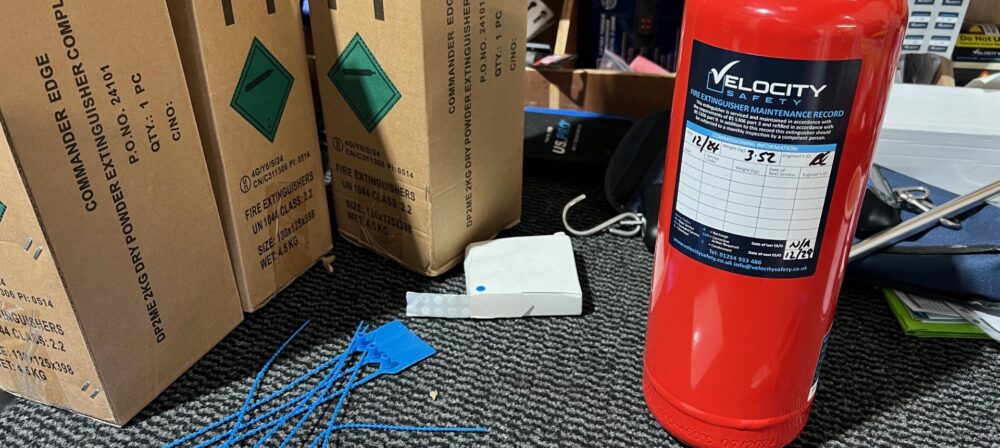
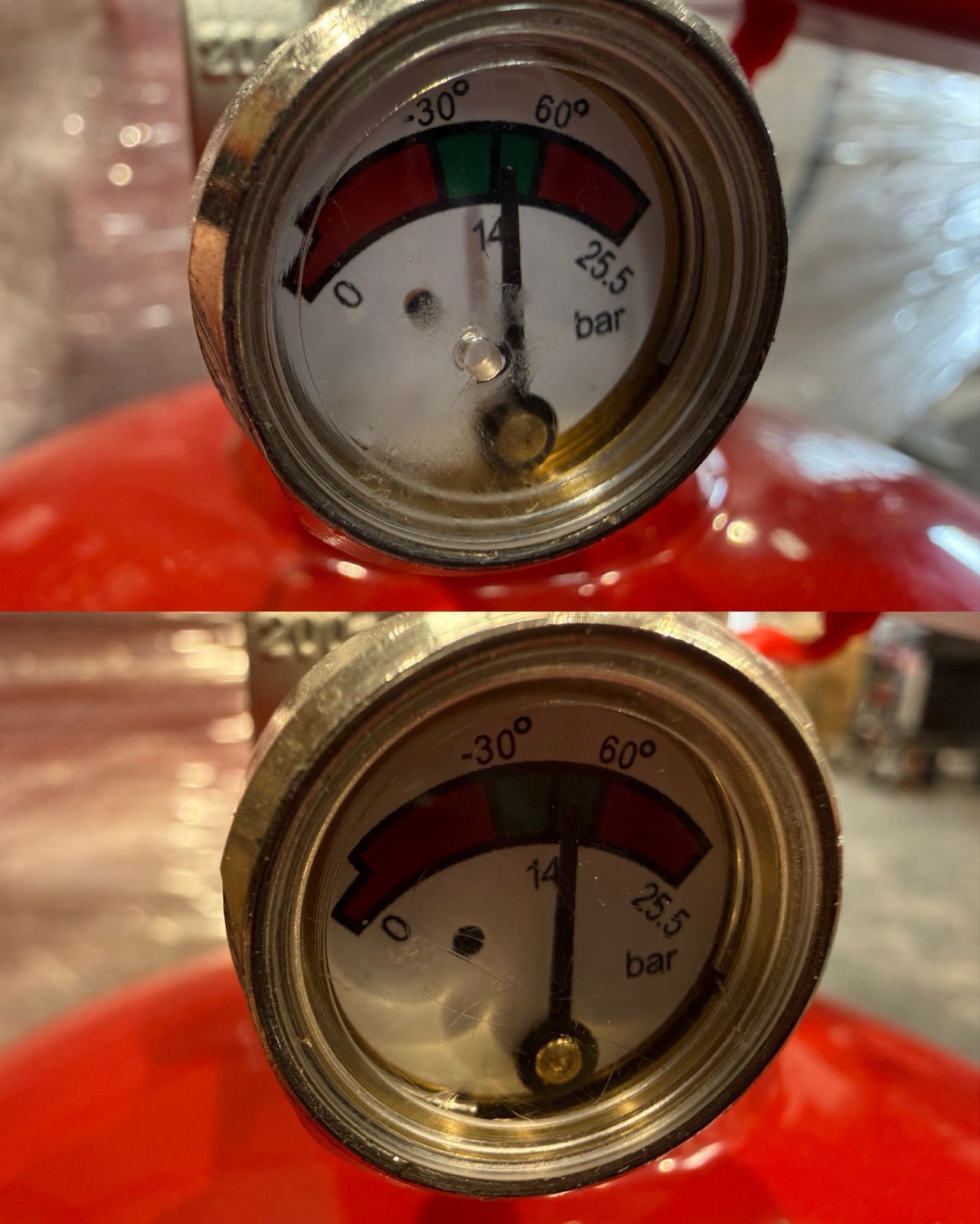
During commissioning, we found a brand new extinguisher straight out of the box with no hole in the viewing window. This hole is used to test the gauge, and is generally covered with a gauge dot afterwards to stop dirt entering the gauge.
During commissioning we discovered this brand new extinguisher had no inspection hole in the gauge viewing window – one of several checks that would have been missed if it had simply been hung on the wall.
Without commissioning, this could easily have been missed. The extinguisher may have looked new, sealed and ready to hang on the wall, but it still needed proper checks before being put into service.
Commissioning is not just a quick visual look. It can include weighing the extinguisher to make sure it is within manufacturing tolerance, removing transport tags, pulling the pins, replacing anti-tamper tags and confirming the extinguisher is ready for use.
It is not a case of buying online, taking it out of the box and hanging it on a wall or stand.
💡 Tip: CO₂ extinguishers must always be weighed precisely – even a small loss of pressure means they fail commissioning and must be refilled or replaced.
The data captured during commissioning – such as serial numbers, pressure readings, and engineer ID – forms the baseline for every future service. Each annual inspection compares back to those original figures, providing complete traceability throughout the extinguisher’s lifespan.
Pre-Commissioned Units: The Hidden Risk
Pre-commissioned or “ready-to-use” extinguishers might look convenient, but they’re not compliant with BS 5306-3.
During transport, storage or even manufacture, faults can occur that are not obvious until a competent person carries out the commissioning process. For example, even small knocks or temperature changes can:
Bend safety pins or handles
Loosen valves and discharge hoses
Cause pressure loss in CO₂ units
Damage internal components not visible externally
A pre-commissioned label from a supplier doesn’t prove the extinguisher is safe or correctly positioned for your premises. It also leaves you open to audit failures, insurance invalidation, or worse – a failed extinguisher during an emergency.
Some in the industry jokingly call these the “red-tin bandits” of fire safety – selling shortcuts that put clients at risk.
Commissioning is especially critical on construction sites, industrial estates, and temporary fire points, where extinguishers are regularly relocated. Each move increases the risk of damage or pressure loss – so re-commissioning after relocation is often required to stay compliant.
Most people use these terms interchangeably – but in compliance, the timing and purpose of each are completely different. Commissioning happens before an extinguisher is ever used, installation is about positioning it correctly, and servicing keeps it compliant year after year.
Here’s how they compare at a glance.
Stage
When It Happens
What It Covers
Commissioning
On delivery & before use
Initial on-site inspection, pressure and weight checks, assembly, and labelling
Installation
Immediately after commissioning
Correct mounting height, signage, and positioning under BS 5306-8
Servicing
Every 12 months
Annual inspection, partial discharge tests, and refills as needed
Commissioning and servicing are governed by BS 5306-3, while installation and positioning fall under BS 5306-8:2012.
In short: commissioning ensures safety from day one – servicing keeps it that way.
Does Fire Extinguisher Installation Include Commissioning?
Fire extinguisher installation and commissioning are closely connected, but they are not the same process.
Commissioning confirms that the extinguisher itself is safe, correctly assembled, suitable for the risks present and ready to be placed into service. Installation covers where and how the extinguisher is positioned within the premises.
In practice, a competent engineer will normally commission the extinguisher immediately before installing it.
A compliant fire extinguisher installation should consider:
Whether the extinguisher type and fire rating are suitable for the risks in that area.
Whether the extinguisher is positioned where it can be reached quickly and safely.
Whether an appropriate wall bracket, cabinet or freestanding fire point is required.
Whether the correct identification signage is clearly visible.
Whether access to the extinguisher is unobstructed.
Whether the overall positioning follows the recommendations of BS 5306-8.
An extinguisher can pass its commissioning checks but still be installed incorrectly. Equally, an extinguisher may be mounted in a suitable position but remain non-compliant if it has not first been commissioned on-site.
For that reason, commissioning and installation are normally completed during the same visit, with the commissioning record confirming the extinguisher is ready for use and the installation assessment confirming it is correctly positioned.
A fire extinguisher commissioning certificate confirms that each extinguisher has been checked on-site by a competent person before being placed into service. This gives you evidence for fire risk assessments, insurance checks, internal audits and enforcing authority inspections.
Every extinguisher must have:
A commissioning record with date, engineer name, and certificate reference.
A maintenance label showing the next inspection date.
Entry in the site’s fire safety logbook or digital asset register.
The commissioning certificate is produced after a competent person has inspected the extinguisher at the premises where it will be used. It records that the extinguisher has been checked, correctly prepared, found suitable for the location and placed into service in accordance with BS 5306-3.
This distinction is important because documentation supplied with a new extinguisher does not confirm that it has arrived without damage, retained the correct pressure or been installed in a suitable position.
What Should a Fire Extinguisher Commissioning Certificate Include?
The exact format may vary between providers, but the commissioning record should normally identify:
The premises or site where commissioning was completed.
The date of the commissioning visit.
The extinguishers inspected and placed into service.
The competent person or organisation completing the work.
Any defects, replacements or corrective actions identified.
The next inspection or maintenance date.
For estates or multi-site portfolios, Velocity Safety can create traceable audit records across all locations, supporting insurance and CQC or fire authority inspections.
Every extinguisher starts life the same – it’s commissioning that makes it compliant.
One short visit from a qualified engineer gives you certification, peace of mind, and proof that your firefighting equipment meets BS 5306 and Fire Safety Order requirements.
Book Fire Extinguisher Commissioning & Compliance Support
Make sure every extinguisher on your site is safe, traceable, and audit-ready with on-site commissioning and installation in line with BS 5306-3:2024.
We get asked the same questions on almost every site visit – from whether new extinguishers need commissioning, to who can legally sign them off. Here are the quick answers to keep your compliance on track and your extinguishers audit-ready.
Do new fire extinguishers need to be commissioned?
Yes. New fire extinguishers should be commissioned on-site by a competent person before they are placed into service. This confirms that each unit is undamaged, correctly assembled, properly labelled, suitable for the risks present and ready for use.
Does a brand new fire extinguisher need to be inspected?
Yes. A brand new fire extinguisher still needs an on-site inspection before use. Commissioning checks for transport damage, pressure loss, missing parts, incorrect labelling and whether the extinguisher is suitable for the location.
Why does a brand new fire extinguisher still need commissioning?
Because brand new does not always mean ready for use. We have seen new extinguishers arrive with issues that would not be spotted unless they were properly commissioned, including problems affecting gauge testing. Commissioning confirms the extinguisher is safe, correctly prepared, tagged and ready to be placed into service.
Are new fire extinguishers already certified?
A new extinguisher may come with manufacturer documentation or a declaration of conformity, but this is not the same as an on-site commissioning certificate. The extinguisher still needs to be checked, tagged and recorded by a competent person before it becomes compliant for use.
Can fire extinguishers be installed before commissioning?
No. Fire extinguishers should be commissioned before they are placed into service. In practice, commissioning and installation are normally completed during the same visit, with the engineer first confirming the extinguisher is safe before checking that it has been correctly positioned and signed in accordance with BS 5306-8.
Do new fire extinguishers come with tags?
New extinguishers may arrive with manufacturer labels or transport tags, but these are not the same as a commissioning and maintenance label. The relevant service label or tag is completed by the competent person after the extinguisher has been inspected and commissioned on-site.
Can I do it myself?
Commissioning should be completed by a competent person with the appropriate training, knowledge and understanding of BS 5306-3. Using a properly trained fire extinguisher engineer or a BAFE SP101-registered organisation provides stronger evidence that the work has been completed competently and correctly recorded.
How long does commissioning take?
The time required depends on the number and type of extinguishers, site access, installation requirements and the level of record-keeping involved. Small installations can often be completed during a short site visit, while larger or multi-site projects will naturally take longer.
Should you test a fire extinguisher before use?
No. You should not discharge a fire extinguisher simply to test it before placing it into service. During commissioning, a competent person checks its condition, weight, pressure indicator, seals, operating components and suitability without unnecessarily discharging the extinguisher.
Do CO₂ extinguishers need weighing?
Yes. Weight loss is the only reliable way to confirm the contents of a CO₂ extinguisher. Unlike stored-pressure extinguishers, a visual inspection alone cannot confirm whether a CO₂ extinguisher is fully charged.
What paperwork do I receive?
You should receive a commissioning certificate or commissioning record, an updated maintenance label attached to the extinguisher, and entries in the site’s fire safety logbook or asset register confirming that the extinguisher has been commissioned and placed into service.
Resources
BS 5306-3:2024 – Commissioning and Maintenance of Portable Fire Extinguishers
BS 5306-8:2012 – Selection and Positioning of Fire Extinguishers
Most people think P3 filters are created equal. They’re not.
If you’re buying powered respirators for a bearded workforce, or looking for a face-fit-free RPE option, don’t just compare models on price or filter type. A P3 filter rating alone does not tell you the full protection level.
The complete unit matters. The hood, mask, fan unit, airflow, seal, classification and Assigned Protection Factor all affect how much protection the wearer actually receives.
🔑 Key Takeaways: PAPR Protection Levels
P3 filters are high-efficiency particulate filters: under EN 143, P3 filters are commonly associated with a minimum filtration efficiency of 99.95%.
A filter rating is not the same as system protection: the Assigned Protection Factor depends on the full RPE system, not just the filter.
TH and TM ratings matter: TH1, TH2 and TH3 powered respirators can use P3 filters but provide different levels of wearer protection.
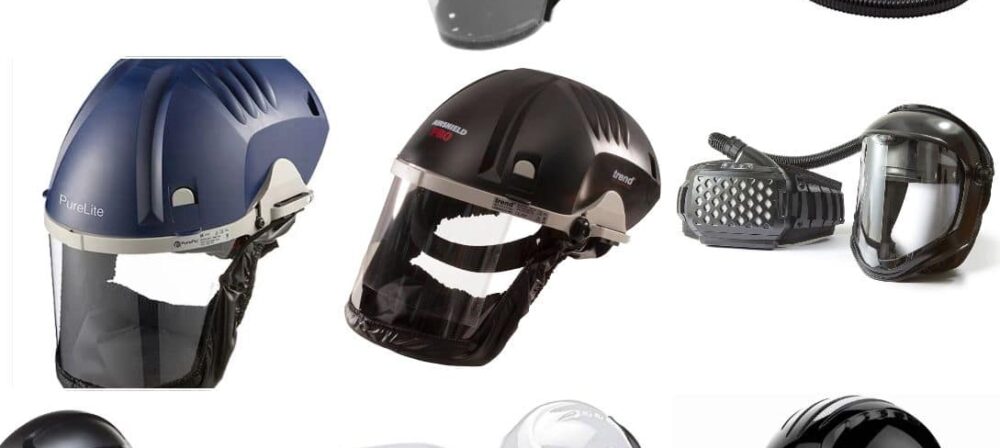
PAPR stands for Powered Air Purifying Respirator. It is a type of respiratory protective equipment that uses a battery-powered fan to pull air through filters and deliver filtered air to the wearer.
PAPR systems are often used where workers need respiratory protection for longer periods, where breathing resistance needs to be reduced, or where loose-fitting hoods are preferred because tight-fitting masks are unsuitable.
Loose-fitting PAPR hoods do not normally require face fit testing, but the unit still needs to provide the correct protection level for the hazard.
Wait – Aren’t All P3 Filters the Same?
In theory, yes. P3 filters are rated to capture 99.95% of airborne particulates. But in real-world use, that protection rating is only valid when the filter is paired with a unit that delivers adequate airflow and leak control.
And that’s where most people get it wrong.
What Does a P3 Filter Protect Against?
A P3 filter is designed for high-efficiency protection against airborne particulates. Depending on the full RPE system and the specific filter approval, P3 filters may be used for hazards such as fine dusts, welding fume, silica dust, wood dust, metal particulates and other harmful airborne particles.
However, a P3 particulate filter does not automatically protect against gases and vapours unless it is part of a suitable combined filter, such as an A1P3 or A2P3 filter. Filter selection must always match the substance, task and exposure level.
This is why choosing RPE based on “P3” alone can be misleading. The filter rating, facepiece or hood, airflow performance and Assigned Protection Factor all need to match the risk assessment.
Assigned Protection Factor (APF): The Missing Piece
What actually protects the wearer isn’t just the filter – it’s the Assigned Protection Factor (APF) of the whole system.
PAPR (Powered Air Purifying Respirator) systems are rated using TH (Turbo Hood) or TM (Turbo Mask) classifications. These indicate both their build and their level of protection:
Rating
Type
Face Fit Needed?
APF
Equivalent
TH1
Loose-fitting hood
❌
10
≈ FFP2
TH2
Loose-fitting hood
❌
20
≈ FFP3 / Half-mask
TH3
Loose-fitting hood
❌
40
≈ Full-face P3
TM3
Tight-fitting mask
✅
40
Full-face (requires fit test)
So yes — different powered respirators may use P3 filters, but they do not all provide the same workplace protection. A TH1 system has a UK APF of 10, while a TH3 system has a UK APF of 40. That difference matters when you are selecting RPE for higher-risk dusts, fumes or airborne contaminants.
Important:
Do not specify RPE control measures as “P3 filter” alone. A P3 filter fitted to a TH1 unit does not provide the same Assigned Protection Factor as a P3 filter fitted to a TH3 unit.
Always check the full unit rating, airflow performance and Assigned Protection Factor before selecting powered RPE.
Don’t Get Caught Out by Low-Cost Kits
The cheap £260 units you find online might seem like a smart workaround for facial hair or COSHH compliance – but many of them are only rated to TH1.
If you’re not checking the APF, you’re buying blind. And if you’re using these units for high-risk environments (e.g. fine dusts, sprays, volatile particles), that’s not just a poor decision – it’s a regulatory risk.
Not sure what protection level your team needs? We can help you review your RPE strategy, inspect current kit, and advise on compliant options for bearded operatives and specialist environments.
Book RPE Support with Velocity Safety
Choosing the right PAPR system isn’t just about the filter – it’s about proven protection, compliance, and the right servicing behind it.
Here are answers to common questions about PAPR meaning, P3 filter ratings, Assigned Protection Factors and powered respirator protection levels.
What does PAPR stand for?
PAPR stands for Powered Air Purifying Respirator. It uses a powered fan unit to draw air through filters and deliver filtered air to the wearer.
What is a P3 filter?
A P3 filter is a high-efficiency particulate filter used in respiratory protective equipment. Under EN 143, P3 filters are commonly associated with a minimum filtration efficiency of 99.95% against particulates.
What does a P3 filter protect against?
A P3 filter protects against airborne particulates such as fine dusts, fumes and other harmful particles. It does not protect against gases or vapours unless combined with a suitable gas filter, such as A1P3 or A2P3.
Does a P3 filter mean the respirator has the highest protection?
Not necessarily. P3 is the highest particulate filter class, but the wearer’s protection depends on the whole RPE system, including the mask or hood, airflow, leakage and Assigned Protection Factor.
What is the difference between TH1, TH2 and TH3?
TH1, TH2 and TH3 are classifications for loose-fitting powered respirator hoods. They can all use P3 filters, but they provide different Assigned Protection Factors. TH1 has a UK APF of 10, TH2 has a UK APF of 20, and TH3 has a UK APF of 40.
Do PAPR hoods need face fit testing?
Loose-fitting PAPR hoods do not normally require face fit testing. Tight-fitting powered masks still need a face fit test because they rely on a seal to the wearer’s face.
Temperature isn’t the first thing most people think about with fire extinguishers – but it should be.
If a unit is stored somewhere too hot or too cold, it may not work when it’s needed most. Cold can freeze up water and foam units, while too much heat makes the pressure rise and can force the safety valve to release.
We often get asked whether extinguishers can be kept outdoors, in garages, or on garage forecourts where they’re exposed to the elements.
This guide explains the safe operating range, the risks of incorrect storage, and the protective options available if your extinguishers face temperature extremes.
Quick Answer: Can fire extinguishers be stored outside?
Fire extinguishers can be stored outside, but they should not be left exposed to frost, rain, direct sunlight or large temperature changes. Most extinguishers should be kept between +5°C and +60°C. Outdoor units should be protected in suitable cabinets, covers or weatherproof stands to reduce the risk of freezing, corrosion, pressure loss or accidental damage.
🔑 Key Takeaways: Fire Extinguisher Storage & Use
Below +5°C: Water, foam, and wet chemical extinguishers can freeze and fail – use insulated cabinets or keep indoors.
Above +60°C: Pressure build-up and damage to seals possible – store in shade or weatherproof cabinets.
Outdoor storage: Always use protective cabinets or weatherproof stands to prevent frost, condensation, and sun damage.
What Is the Safe Temperature Range for a Fire Extinguisher?
Most extinguishers are designed to be stored and operated between +5°C and +60°C.
Below +5°C → water, foam, and wet chemical units can freeze, making them unusable.
Above +60°C → internal pressure rises, which can cause leaks, discharge, or in rare cases, venting.
Not all extinguishers react the same way to heat or cold:
CO₂ copes better in the cold, but it still needs storing properly.
Powder is fine in the cold but can clump up if it’s damp or left too long in an unheated store.
Lith-Ex units vary depending on the manufacturer, so always check their guidance.
Can Fire Extinguishers Be Kept Outside or in a Garage?
Yes – but not unprotected. Storing extinguishers outdoors, in unheated garages, or on exposed garage forecourts comes with two major risks:
Winter freezing → water-based units freeze solid below +5°C, damaging linings and hoses. Once frozen, they won’t discharge properly.
Summer overheating → direct sun or enclosed garages can push temperatures above +60°C, causing pressure build-up and potential venting.
👉 That’s why the extinguishers you often see sitting out on garage forecourts are actually non-compliant. They might look fine, but frost, heat or condensation could already have ruined them.
A fire extinguisher should not be left in direct sunlight for long periods, especially outdoors, inside vehicles, or behind glass where temperatures can rise quickly. Heat can increase internal pressure and may damage seals, labels, hoses or plastic components over time.
Short-term exposure during normal use is not usually a problem, but long-term storage in direct sun should be avoided. If an extinguisher has to be kept outside, use a shaded cabinet, weatherproof cover or suitable outdoor fire extinguisher box.
Do Fire Extinguishers Need to Be Temperature Controlled?
Not in every environment – but anywhere with extremes, protection is essential.
Indoors (offices, classrooms, shops): usually safe, as the environment stays within range.
Unheated garages, warehouses, forecourts: water-based extinguishers are at risk; cabinets or insulated stands are the solution.
Outdoor sites and construction projects: extinguishers should always be stored in protective cabinets or weatherproof units.
Think of it this way: extinguishers are safety-critical equipment. If there’s even a chance storage conditions fall outside +5°C to +60°C, they should be protected.
Do Fire Extinguishers Freeze?
Yes – water, foam, and wet chemical extinguishers will freeze if left below +5°C. Once frozen, they’re unsafe and must be serviced or replaced.
Powder and CO₂ extinguishers won’t freeze in the same way, which is why they’re often chosen for colder sites. But even these units still need protection from damp, corrosion, and physical damage.
Do Fire Extinguishers Explode in the Heat?
No – not in normal conditions. Modern units have safety valves, so if pressure builds up it vents safely rather than exploding.
But leaving an extinguisher in direct sun or above +60°C can still cause problems: loss of pressure, damage to seals, or safety venting. The safest option is shaded storage or a cabinet.
Fire Extinguisher Lifespan and Refilling
Even if you store them right, extinguishers don’t last forever.
5 years → water, foam, powder, and wet chemical require extended servicing (full discharge, refill, inspection).
10 years → CO₂ units require hydrostatic testing and overhaul.
20 years+ → most extinguishers should be replaced entirely.
Fire extinguishers are designed to work within strict temperature limits. Leave one in a freezing garage or out in the sun, and you risk it failing when you actually need it.
The fix is simple: use protective cabinets or stands, and book annual fire extinguisher servicing under BS 5306. That way, whether indoors or outdoors, your extinguishers stay safe, compliant, and ready for use.
Book Fire Extinguisher Servicing & Compliance Support
Keep your extinguishers safe in all conditions – indoors, outdoors, and on live sites – with protective cabinets, annual servicing, and BS 5306 compliance.
If you’re unsure whether your extinguishers are stored correctly across multiple locations, an independent fire extinguisher compliance audit can confirm spacing, coverage, and condition.
FAQs
Here are some common questions about fire extinguisher storage, outdoor use, freezing, heat exposure and safe temperature limits.
Can fire extinguishers freeze?
Yes. Water, foam and wet chemical extinguishers can freeze if stored below their safe operating temperature. If an extinguisher has frozen, it should be inspected before being put back into service.
Can a fire extinguisher explode in heat?
Fire extinguishers are designed with safety features to manage pressure, so they should not explode in normal conditions. However, excessive heat can cause pressure build-up, leaks, damaged seals or safety venting.
Can fire extinguishers be stored outside?
Yes, but they should be protected from frost, rain, direct sunlight, impact damage and corrosion. Outdoor fire extinguishers should be kept in suitable cabinets, covers or weatherproof stands.
Is it safe to keep a fire extinguisher in a hot car?
It is not ideal to leave a fire extinguisher in a hot vehicle for long periods. Vehicle interiors can become extremely hot in direct sun, which may affect pressure, seals and long-term reliability.
Should fire extinguishers be stored upright?
Fire extinguishers are normally stored upright in brackets, cabinets or stands so they remain visible, accessible and secure. Sideways storage may be acceptable for some specialist vehicle brackets, but the manufacturer’s guidance should always be followed.
How often should outdoor fire extinguishers be inspected?
Outdoor fire extinguishers should still receive formal annual servicing, but they may also need more frequent visual checks because they are exposed to weather, corrosion, impact damage and temperature changes.
Resources
BS 5306-3: Commissioning and Maintenance of Portable Fire Extinguishers
On a live construction site, a fire point has to work first time – signage clear, stands stable, and extinguishers ready to use.
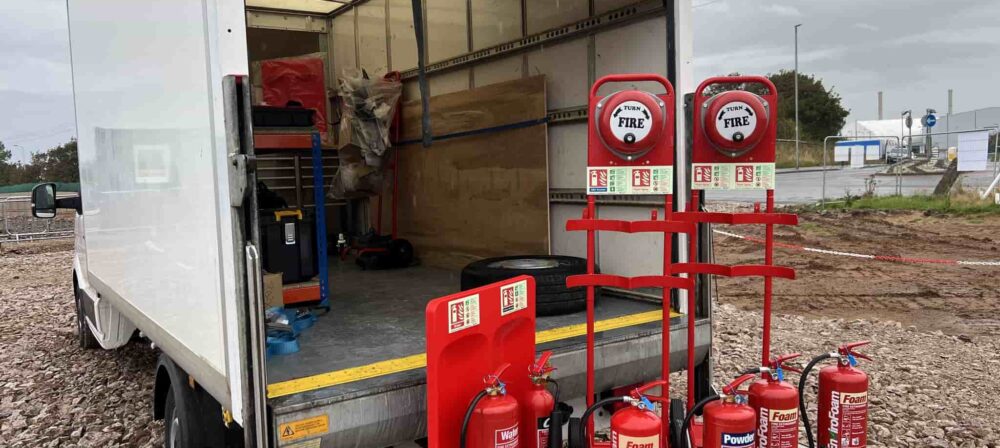
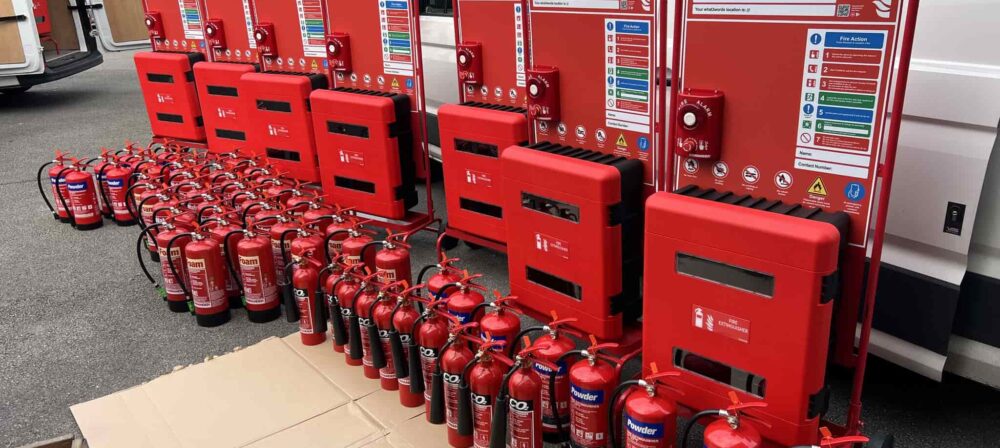
We recently helped a new construction client source portable fire extinguisher stands and accessories. Since then, we’ve also developed dedicated scaffold fire point stands for sites where standard floor-standing units are not practical.
Problem 2: The client’s site could only accept deliveries before 9am, but the courier service could only guarantee pre-10am – not good enough.
So we found a workaround. Two, actually.
Solving Fire Safety Problems Without the Hassle
✅ Signage? We organised faster third-party printing and threw in their company logo – free of charge – to shave days off the lead time.
✅ Delivery? We had the entire order delivered to us first, then personally dropped it off at site before 9am. No missed delivery window. No third-party haulage delays. Just sorted.
✅ Assembly Support? Although the client opted for a supply-only service, they had multiple sites and local assembly teams.
Included a tube of Soudal Fix All for secure signage fitting
Because that’s how we’d want it done ourselves.
Why It Matters
Construction sites don’t have time to chase suppliers, rebook deliveries, or fix bodged installations. If your extinguisher setup isn’t stable, signed, and site-ready, it’s a compliance issue waiting to happen.
For scaffolded projects, temporary works and multi-level sites, a standard floor-standing fire point is not always the safest or most practical option. A scaffold-mounted fire point stand can help keep extinguishers, alarms and signage closer to the working area without creating another floor-level obstruction.
Already replacing old site extinguishers? We also handle safe, compliant fire extinguisher disposal – including collection for bulk quantities. If your kit is out of date or not fit for redeployment, we’ll ensure it’s removed legally and without the hassle.
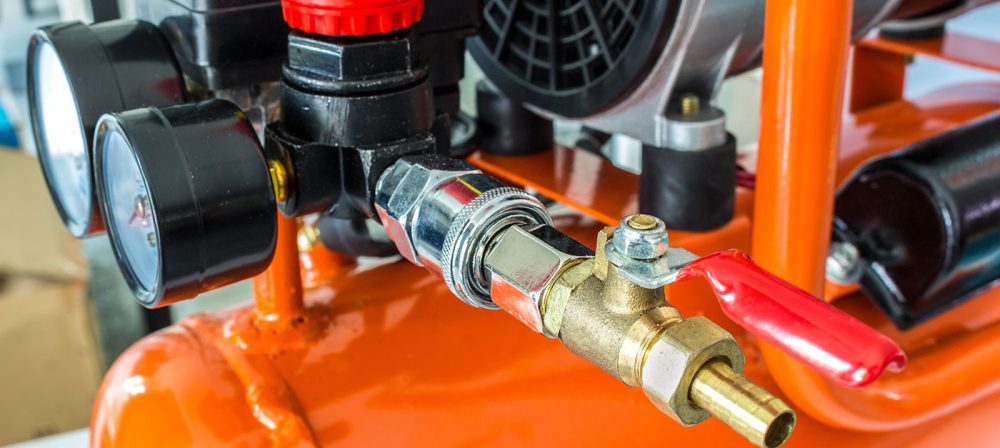
Air compressors seem like set-and-forget tools – plug them in, pressurise, and get on with the job.
But hidden inside the vessel is a rust time bomb if you’re not draining regularly.
Why Moisture Is a Problem
Every time your compressor runs, it pulls in air – and air naturally contains moisture. That moisture has nowhere to go. It condenses inside the tank, settles, and starts eating away at the steel from the inside out.
Steel + Water = Rust.
Left unchecked, that rust weakens the tank wall, reduces pressure retention, and increases the risk of catastrophic failure. In worst-case scenarios, tanks can rupture – and yes, the result can be explosive.
A “Vengaboys Situation” Waiting to Happen
Ross Ciraolo, our Director, puts it bluntly: “You end up with a Vengaboys situation 💥💥💥💥” – not the kind of bang you want on-site.
To avoid that, draining compressors daily when in use is essential. It’s basic maintenance that massively extends the life of your equipment and reduces safety risks.
It’s Not Just Common Sense – It’s a Legal Requirement
If your compressor exceeds 250 bar/litres in stored energy, you need:
A Written Scheme of Examination (WSE)
Periodic Thorough Examinations by a competent person
Clear maintenance records showing regular drainage and servicing
These requirements fall under the Pressure Systems Safety Regulations 2000 (PSSR) – and no, they don’t have to be carried out by your insurer. We can help develop your WSE, inspect your systems, and keep your site compliant.
Yes – and it’s one of the most commonly overlooked compliance gaps in workplaces using on-tool extraction.
Portable dust extractors are often treated like ordinary site vacuums. But when they are used to control hazardous dust at source, they may fall under Local Exhaust Ventilation (LEV) requirements.
According to the HSE, on-tool extraction is a form of LEV. This means portable dust extractors used for sanding, cutting, drilling, grinding, chasing, woodworking or concrete work may require a Thorough Examination and Test (TExT) under the Control of Substances Hazardous to Health Regulations 2002 (COSHH), specifically Regulation 9.
For most LEV systems, the maximum interval between thorough examination and testing is 14 months, although higher-risk or heavily used systems may need more frequent checks.
Quick Answer: Do portable dust extractors need LEV testing?
Yes, they can. If a portable dust extractor is used as on-tool extraction to control hazardous dust at source, it may be classed as LEV and require a Thorough Examination and Test under COSHH Regulation 9. This is especially relevant for M-Class and H-Class extractors used with silica dust, wood dust, MDF dust, concrete dust, brick dust and other hazardous airborne substances.
🔑 Key Takeaways: Portable Dust Extractor LEV Testing
On-tool extraction can count as LEV: portable dust extractors used to control hazardous dust at source may require a Thorough Examination and Test.
COSHH Regulation 9 applies: LEV systems must be maintained, examined and tested at suitable intervals.
Filters, airflow and alarms matter: incorrect filters, damaged hoses, blocked units and poor airflow can allow hazardous dust back into the workplace.
Portable dust extractors are often assumed to be plug-and-play. But when used on construction sites, in workshops or in manufacturing environments, they are actively controlling airborne contaminants.
If the extractor is damaged, blocked, fitted with the wrong filter or performing poorly, workers may still be exposed to hazardous dust.
Without proper inspection and maintenance, portable extractors may:
Recirculate dust back into the workspace
Fail to trigger alarms when blocked
Deliver inadequate airflow at the tool
Give users false confidence that exposure is being controlled
Fail to provide suitable protection against silica, wood, MDF, concrete or brick dust
You are not just protecting tools and work areas. You are protecting lungs.
Portable LEV refers to mobile extraction equipment designed to capture hazardous dust, fumes or airborne contaminants close to where they are created.
Common examples include dust extractors connected directly to tools during:
Cutting
Grinding
Sanding
Drilling
Chasing
Woodworking
Concrete or masonry work
Unlike a general cleaning vacuum, portable LEV is used as an exposure control measure. Its purpose is to help stop hazardous substances entering the breathing zone in the first place.
Do L-Class, M-Class and H-Class Extractors Need Testing?
The class of extractor matters, but the key question is how the equipment is being used.
If an L-Class, M-Class or H-Class extractor is being used as part of an on-tool extraction system to control hazardous dust at source, a Thorough Examination and Test may be required.
As a general guide:
L-Class extractors are typically used for lower-risk dusts.
M-Class extractors are commonly used for medium-risk dusts, including many construction and woodworking applications.
H-Class extractors are used for higher-risk dusts where stricter containment is required.
The issue is not just the label on the machine. The extractor needs to be suitable for the dust hazard, fitted with the correct filter, performing properly and maintained in line with COSHH.
How Often Should Portable LEV Be Tested?
Under COSHH Regulation 9, LEV systems must be thoroughly examined and tested at suitable intervals. In most cases, this means at least once every 14 months.
However, the inspection frequency may need to be shorter where the system is:
Used heavily
Used in high-dust environments
Used with high-risk dusts
Frequently moved between sites
Damaged or poorly maintained
Relied on as a key control measure for worker exposure
If your extractor is being used for silica dust, MDF dust, hardwood dust, softwood dust, concrete dust, brick dust or other hazardous airborne substances, the testing interval should be based on the level of risk and how the equipment is used on site.
A proper Thorough Examination and Test should look beyond whether the machine switches on.
Velocity Safety can carry out TExTs on portable dust extractors, including H-Class, M-Class and L-Class units where relevant.
The Extraction Unit TExT
For on-tool extraction, HSE states that the formal Thorough Examination and Test applies to the extraction unit itself.
The TExT can include:
Checking the extraction-unit body, latches, seals and inlet connections for damage or leakage
Confirming the correct filter is fitted and assessing its condition
Checking gauges, airflow indicators and alarms
Testing the filter-cleaning mechanism where fitted
Measuring airflow or technical performance against the applicable operating criteria
Checking that low-flow alarms or indicators activate correctly
Recording defects, performance results and required actions
Maintenance Checks for the Complete On-Tool System
The interchangeable parts used with the extraction unit are covered by the employer’s regular maintenance arrangements.
These checks should consider:
Measuring airflow rate to confirm extraction effectiveness
Checking alarms and indicators
Inspecting filter condition, compatibility and classification
Checking hoses, seals and connections
Looking for damage, blockages or signs of poor maintenance
Reviewing whether the extractor is suitable for the dust hazard
Issuing a report with findings, compliance status and remedial actions
A good examination should help you understand whether the extractor is actually controlling exposure, not just whether it looks acceptable on the outside.
Why Filters Are One of the Biggest Failure Points
One of the most common issues with portable dust extractors is incorrect or poor-quality replacement filters.
A filter bought cheaply online may physically fit the machine, but that does not mean it is suitable for the dust being controlled.
Incorrect filters can undermine the whole system. In some cases, the extractor may pick up dust from the floor or tool and then discharge fine particles back into the workplace through the exhaust.
This is a serious issue where workers are exposed to silica, hardwood, MDF, concrete, brick or other harmful dusts.
Filter checks should consider:
Whether the filter is the correct class for the unit
Whether it is suitable for the dust hazard
Whether it is damaged, blocked or poorly seated
Whether the unit has been maintained in line with manufacturer guidance
Will My Insurance Inspector Test Portable Dust Extractors?
Not always.
Some businesses assume their insurance inspection covers everything related to statutory examination. In practice, many insurance inspections will highlight an issue without carrying out maintenance, filter replacement, blockage clearance or practical remedial work.
For LEV systems, that can leave a gap between being told there is a problem and actually getting the system working correctly again.
Velocity Safety can support with LEV Thorough Examination and Testing, as well as practical advice where airflow, filters, alarms, hoses or indicators need attention.
What Else Counts as LEV?
Portable dust extraction is only one example of LEV.
Other common LEV systems include:
Fixed extraction arms and hoods
On-tool extraction units
Spray booth extraction
Welding fume extraction
Bagging-off systems
Silo vent units
Dust extraction units in workshops and factories
If a system captures hazardous substances at source, it is likely to need proper maintenance, examination and testing.
COSHH Compliance Is About Control, Not Paperwork Alone
Where portable dust extraction is being used as LEV to control hazardous substances, employers must ensure it is properly maintained, thoroughly examined and tested in line with COSHH Regulation 9.
This is a practical safety issue. Poor airflow, damaged hoses, blocked filters, faulty alarms or incorrect replacement filters can all reduce protection and leave workers exposed.
For employers, the key point is simple: if your extraction equipment is controlling hazardous substances at source, it should not be treated as a basic cleaning vacuum. It needs to be suitable, maintained, checked and properly documented.
Velocity Safety provides LEV Thorough Examination and Testing for portable dust extractors, on-tool extraction systems and fixed LEV installations across the UK.
FAQs
Here are answers to some of the most common questions we hear about portable LEV systems, dust extraction testing, COSHH requirements and Thorough Examination and Test inspections.
Do portable dust extractors require LEV testing?
Yes, they can. Where a portable dust extractor is being used as on-tool extraction to control hazardous dust at source, it may fall under LEV requirements and require a Thorough Examination and Test under COSHH Regulation 9.
Does on-tool extraction count as LEV?
Yes. The HSE states that on-tool extraction is a form of Local Exhaust Ventilation. If it is being used to control hazardous airborne substances at source, it should be maintained, examined and tested properly.
How often should portable LEV be tested?
In most cases, LEV systems must be thoroughly examined and tested at least every 14 months. Higher-risk applications, heavy use or harsh working environments may require more frequent examination.
Do M-Class and H-Class extractors need a TExT?
If the equipment is being used as part of an on-tool extraction system to control hazardous substances, a Thorough Examination and Test may be required. The class of the unit should match the hazard and the way the equipment is being used.
What is checked during a portable LEV examination?
A competent examiner will typically assess airflow performance, alarms, filters, hoses, seals, damage, suitability for the task and overall effectiveness of the extraction system.
Can incorrect filters make a dust extractor unsafe?
Yes. Incorrect, damaged or poor-quality filters can reduce containment and may allow fine dust to pass back into the workplace. This is a particular concern with silica, MDF, hardwood, concrete and brick dust.
Can Velocity Safety carry out portable LEV testing nationwide?
Yes. Velocity Safety provides LEV Thorough Examination and Test services across the UK, including portable dust extractors, on-tool extraction systems and fixed LEV installations.
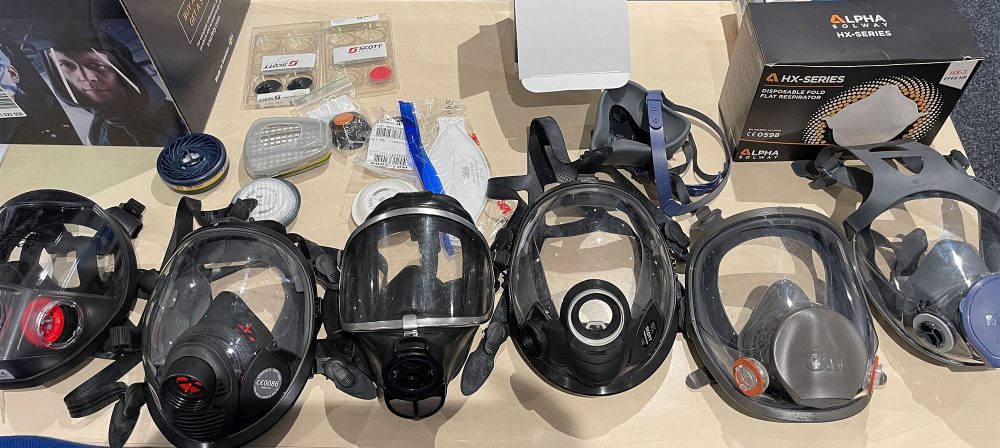
Reusable respiratory protection requires ongoing attention – not just a one-off setup.
Whether you’re using tight-fitting face masks, airline-fed systems, or half-masks for spray booths or COSHH controls, RPE must be inspected regularly and thoroughly. We see this missed all the time.
Some companies do basic pre-use checks and think that’s enough. Others send equipment off for servicing once a year. But if your team uses RPE regularly, you need a documented system for monthly examinations if used frequently, or quarterly if used infrequently. Some equipment also requires servicing intervals set by the manufacturer. These requirements sit under COSHH Regulation 9 to ensure safety and compliance.
What Does a Thorough RPE Inspection Involve?
The term “thorough examination” isn’t just a fancier way of saying “have a quick look.” Here’s the inspection flow our technicians follow:
Is the Equipment Clean?
If the RPE shows signs of contamination, it should be quarantined immediately. A competent person must clean and decontaminate it as per the manufacturer’s guidance before any further checks are carried out.
Is It Traceable?
Each item must have a unique ID or reference number. If it doesn’t, it should be clearly marked or tagged to enable tracking, audits, and recordkeeping.
Has It Reached Its Service Life?
If the item has reached its maximum working life (as stated by the manufacturer), it must be destroyed and removed from use. If you don’t know the limit, reference the manual or contact the manufacturer.
Has It Been Serviced Within the Right Interval?
Some RPE has service requirements on top of inspections. If the item hasn’t had its scheduled servicing, it needs to be quarantined until this is resolved.
Inspection Process
The final examination includes visual, tactile, and functional checks. Inspect components, check seals and connections, and (if applicable) remove and clean individual parts before reassembly.
What Happens After the Inspection?
Fit for Use: The item is labelled, logged, and returned to use with its inspection records updated.
Fault Found: If the fault can be remedied using genuine parts or manufacturer-approved servicing, the item is repaired and re-inspected. If not, it must be taken out of service permanently.
We often say no to long-term contracts for RPE checks. Why? Because in many cases, the most cost-effective option is to train your own team and implement a basic monthly examination schedule in-house. That said, getting the first thorough examination right is crucial.
When we perform initial inspections, we:
Assign and label every item with a unique ID for traceability
Confirm the equipment is suitable for the intended task
Identify any servicing requirements or arrange servicing if needed
Set up paperwork and inspection logs to maintain ongoing compliance
This foundation lets most companies manage monthly checks internally while staying safe and compliant.
A Culture of Compliance
We use this same system internally for our own gear. All our reusable masks, valves, hoses, and RPD setups go through the same monthly inspections, with traceable calibration and digital records logged. If your setup includes airline-fed systems, we also provide Breathing Air Purity Testing to keep supplied air within limits.
Book an RPE Examination or Site Visit
Set up compliant monthly (or quarterly) examinations under COSHH Reg 9 – with traceable records from day one.