Fire Extinguisher Disposal

All-in-One Emergency Stations: Fire, Spill & First Aid Points That Actually Work

One Stand. Three Emergencies. Zero Hassle

Most site safety kits are cobbled together from different suppliers, held together with cable ties and crossed fingers. We’re doing things differently.

This all-in-one emergency station was developed for a client who wanted one single unit to cover:

  • Fire safety
  • Spill response
  • First aid provision

…and they didn’t want generic signage or flimsy flatpacks.

Designed With Real Sites in Mind

We built these stations from scratch based on real site needs and industry guidance from organisations like the British Heart Foundation, NetRegs, and the Environment Agency.

Spill Kit Station

  • Oil, chemical and AdBlue kits
  • Dammit putty for rapid sealing
  • Drain mat cover to stop spread
  • Emergency PPE kit

First Aid Station

  • 50-person first aid kit
  • 2 × 500 ml eyewash bottles
  • Burns kit
  • Defibrillator (optional)

Fire Station

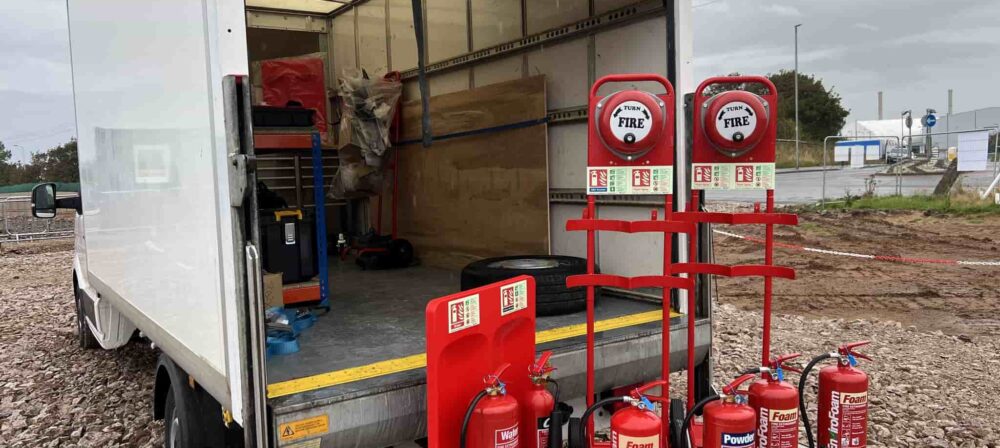
For scaffolded construction projects, we can also supply scaffold fire point stands designed to keep extinguishers, alarms and signage accessible at height.

No off-the-shelf product offers this level of integration and customisation – especially when it comes to weatherproofing, signage quality, and compliance with sector-specific risks.

👉 Explore our fire extinguisher servicing options.

Built to Your Site Requirements

  • Assembled by our team, not shipped flat-packed
  • Custom labelled to suit your site layout, workforce size, and hazards
  • Sourced from multiple trusted suppliers for best-in-class components

We don’t believe in a one-size-fits-all approach to emergency prep – and our clients don’t either.

Book a Custom Emergency Station

Fire, spill and first aid points, including scaffold-mounted fire point stands – assembled, labelled, and built for real-world sites.

📞 Call: 01254 933 486
📩 Email: info@velocitysafety.co.uk
🌐 Or get a quote online | explore all services

Pressure Systems Safety Regulations (PSSR 2000) Examinations

PSSR Written Scheme of Examination Requirements

The Pressure Systems Oversight That Could Get You Fined – or Worse

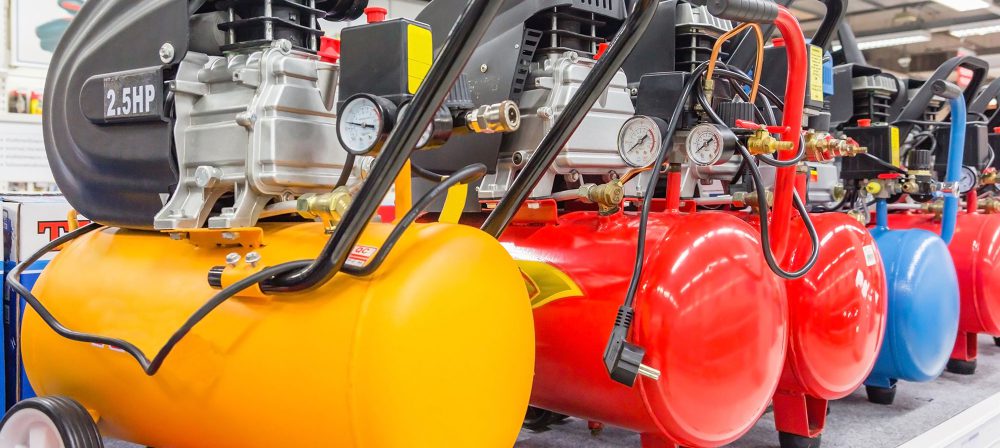
A surprising number of sites run air compressors that technically fall under the Pressure Systems Safety Regulations 2000 (PSSR) – but have no Written Scheme of Examination (WSE) in place. That includes:

  • Garages
  • Fitters’ workshops
  • Engineering firms
  • Small-scale manufacturing units

If that’s you – here’s what to know.

When Does PSSR Apply?

PSSR kicks in when a pressure system exceeds 250 bar litres (bar × internal volume in litres).

Let’s break that down:

  • A 100-litre tank at 8 bar = 800 bar litres – well over the threshold.
  • Many standard compressors hit this figure, especially those used for spray booths, air tools, or multi-bay servicing.

What Is a Written Scheme of Examination (WSE)?

A WSE is a legally required document that outlines:

  • Which parts of the pressure system must be examined
  • How often they need checking
  • What safety devices are fitted (and how they’re tested)

It must be produced by a competent person and held before the system is used.

Why It Matters

Your safety valve is often the only thing preventing an over-pressurisation event. If it’s:

  • Blocked with debris
  • Corroded
  • Incorrectly set
  • Never been tested…

…it may not vent at the right pressure. That’s not just a compliance issue – that’s an explosion risk.

We Can Help

Velocity Safety provides PSSR-compliant inspections and Written Schemes of Examination, working with clients across:

  • Engineering
  • Civils & construction
  • Commercial workshops
  • Utilities and manufacturing

Whether you’ve just bought a new compressor, or you’ve got a 5-year-old unit that’s never been checked – now’s the time to act.

👉 Learn more about our PSSR inspections and WSE support

Book a PSSR Examination / WSE

Stay compliant above 250 bar litres – and make sure your safety devices actually protect your people.

📞 Call: 01254 933 486
📩 Email: info@velocitysafety.co.uk
🌐 Or get a quote online | explore all services

Custom Fire Points Supplier Near Me

Why Standard Emergency Stations Don’t Cut It – And What We Built Instead

Off-the-Shelf Isn’t Always Enough

When it comes to emergency preparedness, most stands and signage kits fall short. The templates are basic, the materials aren’t built for site use, and the guidance often lacks practical relevance.

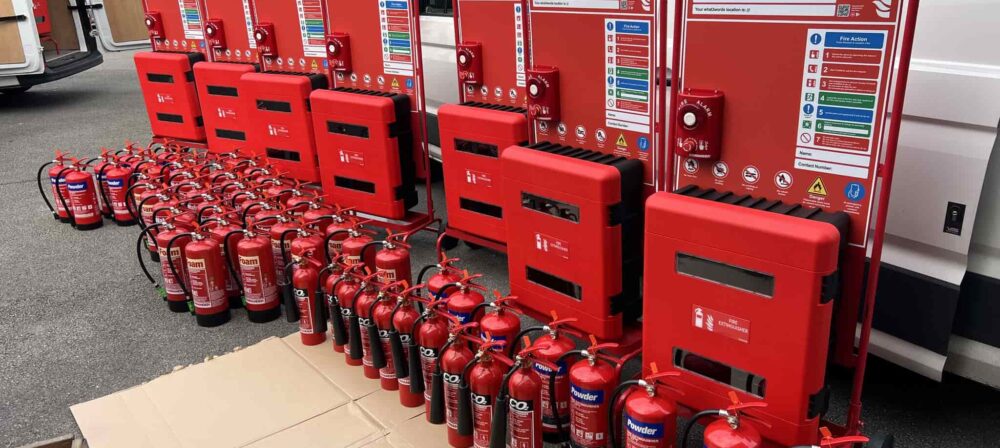
That’s why one of our recent clients approached us to design a bespoke set of emergency stations – covering spill response, first aid, and fire – with signage based on real-world safety standards.

What We Delivered

We created a tailored demo setup with:

Each poster was designed to actually help in an emergency – not just tick a visual box.

Spill Response: More Than Just a Kit

Most spill signage skips the details that matter. This client wanted to help site teams plan ahead for:

  • Oil, chemical, AdBlue, and maintenance spills
  • IBC and container leaks (what happens when there’s no putty?)
  • Drain protection and environmental containment
  • Clear escalation procedures for when a small spill turns into a bigger issue

We built the signage around site-specific needs, not generic boilerplate.

Some clients also use RPE as part of their spill response kit – especially when handling ammonia-based or chemical products. We can provide RPE Examination & Servicing and Respiratory Protective Equipment Inspections to ensure your team are using the correct masks with verified fit.

Want One for Your Site?

We build emergency stations that actually work – for civils, construction, manufacturing, utilities, and events.

Whether you need a custom layout, better signage, or a full fire/spill/first aid station rollout, we’ll help you make it happen. If your project requires dedicated fire points, we also supply scaffold fire point stands alongside Fire Extinguisher Servicing & Maintenance and Fire Extinguisher Disposal with full certification.

Book a Custom Emergency Station

Spill kits, fire points, and first aid stands – built for real sites, not flatpack checklists.

📞 Call: 01254 933 486
📩 Email: info@velocitysafety.co.uk
🌐 Or get a quote online | visit our homepage to see our full compliance services

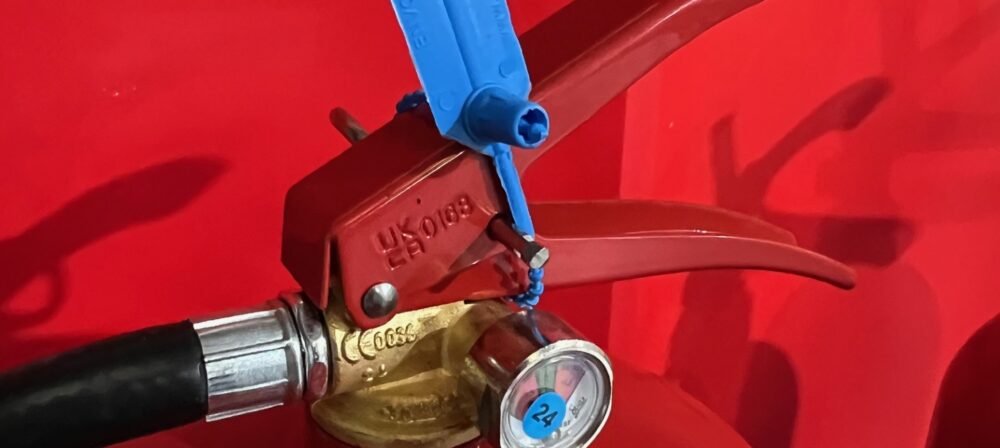
Fire Extinguisher blue tamper tag handle

Wrong Fire Extinguisher Placement: Compliance Risks

The wrong extinguisher in the wrong place can cost you money, compliance, and real protection when it counts.

We recently came across a purple-labelled Class D extinguisher sat next to a warehouse packing station. For those not fluent in extinguisher types – that’s meant for specialist metal fires. Not cardboard, not packaging, and definitely not day-to-day risks.

Cost to the client? Likely £250+. Coverage provided? Close to zero.

Why It Happens

Too often, fire safety is handled by contractors who don’t listen to the environment they’re installing into – or simply reuse stock they’re trying to shift. It’s a dangerous practice that can lead to:

  • Equipment being completely ineffective in an emergency
  • Compliance breaches under BS 5306-8
  • Wasted spend on over-specified or unsuitable kit
  • False confidence among staff and safety leads

What Should’ve Been Installed?

For general fire risks (e.g. cardboard, paper, packaging), the typical extinguisher choices are:

  • Water or Foam for Class A fires
  • CO2 for electrical risks
  • ABC Dry Powder only in open/outdoor areas (due to visibility and inhalation risks)

Each extinguisher type has a specific use case – and BS 5306 outlines clear placement guidance.

How We Handle It

At Velocity Safety, we install fire extinguishers that match the risks – and label, commission, and site them in line with BS 5306. No mystery metals. No leftover stock. Just the right kit for the job.

We keep your extinguishers compliant through routine servicing, audits, and maintenance as your site changes. Whether you’re based in:

Our engineers provide local support backed by full compliance and certification.

Got the wrong extinguisher type sitting on site? Or expired units gathering dust? We can remove and dispose of them safely, with full paperwork included.

👉 Learn more about our Fire Extinguisher Servicing process
👉 See how our Fire Extinguisher Disposal service works

Book a Fire Extinguisher Review

Make sure the right extinguishers are in the right places – and compliant with BS 5306-8.

📞 Call: 01254 933 486
📩 Email: info@velocitysafety.co.uk
🌐 Or get a quote online

Air Purity Testing

Air Purity Testing – What It Is and Why It’s Required Every 3 Months

We’ve carried out breathing air testing for several years – but we’ve now upgraded to a digital unit to give our clients even more traceability, speed, and accuracy.

New Equipment

We’ve recently added the Factair F6000 to our kit. This unit allows us to test air purity from:

  • 230 & 300 Bar cylinders
  • Direct from compressors
  • Airline-fed breathing apparatus systems

It also eliminates the need for Draeger tubes – removing the risks of glass breakage or contamination and improving digital recordkeeping for audits and compliance.

Why Breathing Air Testing Matters

If workers use supplied-air Respiratory Protective Equipment (RPE), the compressed breathing air must meet the relevant quality requirements, including BS EN 12021. Under COSHH, employers must ensure control measures and respiratory protective equipment remain suitable and properly maintained.

Breathing-air quality should be tested at least every three months, and more frequently where the risk assessment indicates contamination could occur within that period.

Poor air quality can be caused by:

  • Compressor contamination
  • Oil or moisture ingress
  • Incorrect flow rates
  • Damaged filtration systems

If your setup includes airline-fed Respiratory Protective Equipment (RPE), the employer must ensure the supplied air is suitable and the equipment is properly selected, maintained, examined and tested where appropriate.

Alongside regular air testing, it’s worth scheduling a thorough inspection of your RPE to check for wear, damage, and performance issues.

How We Help

Velocity Safety provides traceable breathing air purity testing across the UK. With our upgraded equipment, we can test pressure-fed systems, cylinders, and airline setups on-site – quickly, cleanly, and with digital records for your file.

Book Breathing Air Purity Testing

Support compliance with BS EN 12021 and protect your team with clear digital test records.

📞 Call: 01254 933 486
📩 Email: info@velocitysafety.co.uk
🌐 Or get a quote online

Serviced Calibrated Equipment-min

Why We Calibrate Our Own Equipment – And Why That Matters for Your Compliance

Every year, we service and calibrate our own kit because doing things right starts with the tools we use.

What We Calibrate

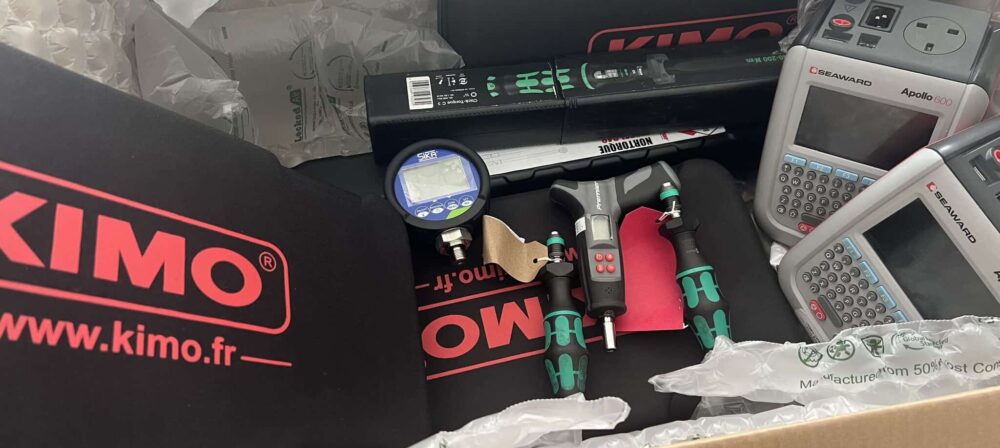
We recently received back a batch of essential kit from its annual service and calibration, including:

  • Torque wrenches
  • Torque screwdrivers
  • Pressure gauges
  • Rotating vane anemometers
  • Manometers
  • Hot wire anemometers
  • Portable Appliance Testers (PAT)

Each item is returned with supporting calibration certification and records, helping us maintain clear evidence of when the equipment was checked and when it is next due.

Why It Matters for You

When we test or inspect your systems, the accuracy and condition of our equipment matter. That’s why our measurement equipment is regularly serviced and calibrated, with records maintained to support the readings included in our reports.

Using properly calibrated tools supports:

  • Accurate and consistent measurements
  • Reliable reports and certificates
  • Clear evidence of equipment maintenance and calibration
  • Better-supported records for audits, insurers and internal compliance reviews

A Culture of Compliance

The same standards we apply on client sites also guide how we run our own operations, from record-keeping to equipment servicing.

Annual equipment calibration is one part of how Velocity Safety maintains professionalism, consistency and technical confidence across its inspection and testing services.

Need Compliance Testing or Inspection?

We use properly maintained equipment supported by up-to-date calibration records, helping provide reliable measurements and clearly documented results.

📞 Call: 01254 933 486
📩 Email: info@velocitysafety.co.uk
🌐 Or get a quote online

Custom Fire Points Supplier Near Me

Scaffold Fire Point Stands: A Safer Option for Construction Sites

We’ve all seen fire point stands at outdoor sites telling people to “leave the building” – even when there isn’t one. At Velocity Safety, we think compliance should be smarter than that.

Key Takeaways – Scaffold Fire Point Stands

  • Standard fire point stands are not always suitable for scaffolding because they can create trip hazards, falling object risks or stability issues.
  • Extinguishers and call points need to be practically accessible, not left only on the ground floor or inside the building.
  • Velocity Safety’s scaffold fire point stand is designed to fit standard scaffold tube or 48.3mm key clamp handrails and guardrails.
  • Stands can be supplied fully assembled with custom signage, extinguishers, commissioning and alarm options.

Built for Real Sites – Not Just the Checklist

Our fire point stands are custom-built for real-world conditions. Instead of flatpacks and guesswork, we handle the whole process from start to finish:

These stands are already being used on projects across Manchester, Gloucester, Bristol, and Essex – fully assembled, labelled, and delivered ready to go.

Why We Designed a Scaffold Fire Point Stand

We kept seeing the same problem on large scaffolding structures: fire extinguishers were often left on the ground floor, positioned inside the building, or placed too far away from where operatives were actually working.

On many sites, call points and extinguishers are not within a practical 30 metre travel distance. In a high-risk industry, that is not something we think should be accepted as normal.

The problem was simple: the usual options were not designed for scaffolding. Standard trolleys, plastic stands and tubular stands can create falling object hazards, trip hazards, stability issues, or leave extinguishers exposed to damage.

Damaged extinguishers often end up being condemned, which turns poor fire point setup into a repeated cost problem as well as a safety issue.

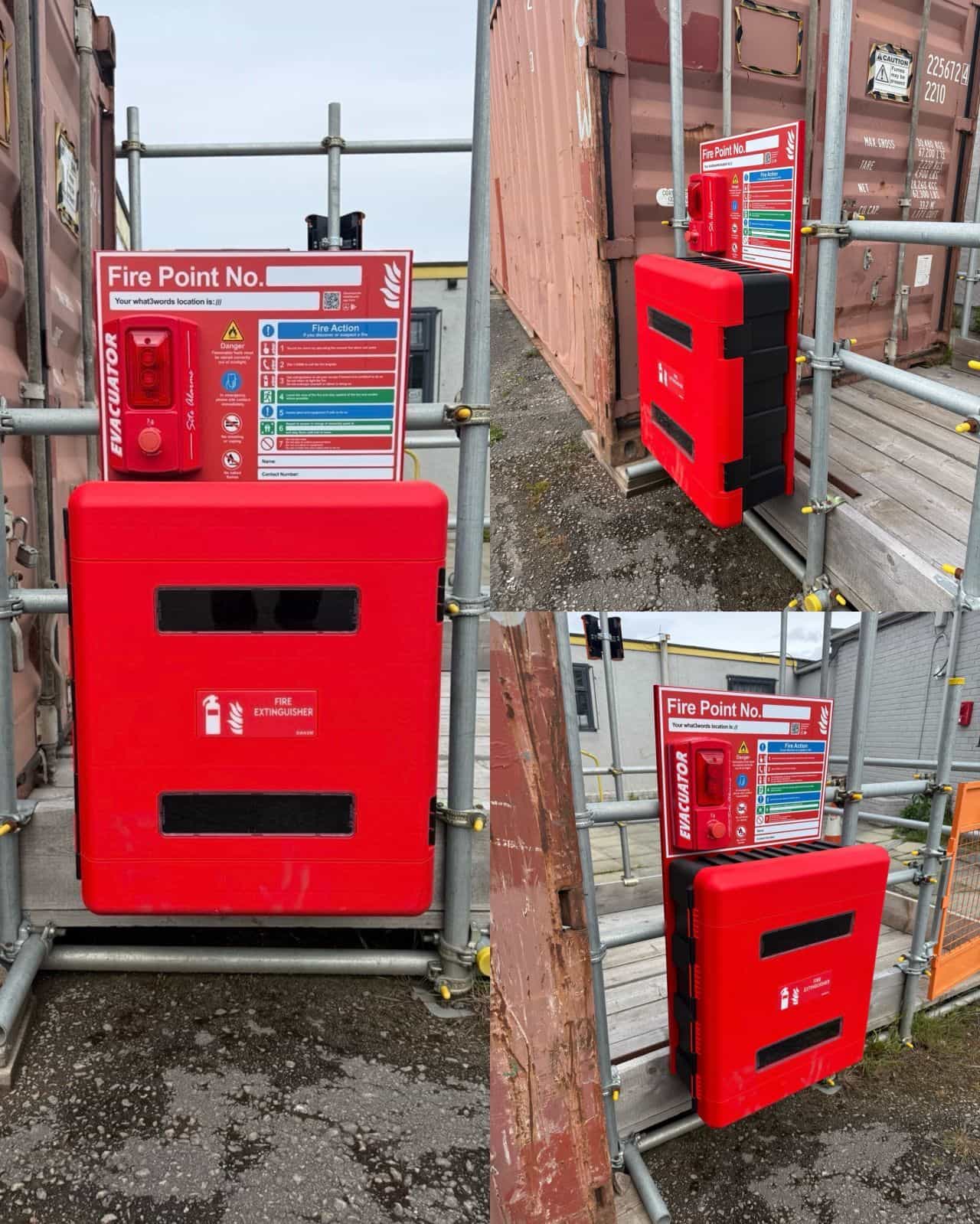
That is why Velocity Safety developed a purpose-built scaffold fire point stand designed to fit directly to standard scaffolding tube or 48.3mm key clamp handrail and guardrails using the supplied fittings.

For real solutions to real problems, do not just buy online and hope for the best.

Custom fire point scaffold stand fitted to construction site scaffolding with extinguisher cabinet, evacuation alarm and fire action signage
Custom fire point scaffold stand fitted directly to scaffold tube, with extinguisher cabinet, alarm and site-specific fire action signage.

Fire Point Scaffold Stand Features

  • Designed for scaffolding: Fits directly to standard scaffold tube or 48.3mm key clamp handrails and guardrails.
  • Supplied fully assembled: No flatpack setup or site guesswork required.
  • Made in Blackburn, UK: Built from a 2mm tube frame and powder coated for durability.
  • Custom signage available: Including branded fire action signage and site-specific instructions.
  • Choice of extinguishers: Including P50 options where suitable.
  • Commissioning available: Extinguishers can be properly commissioned before being placed into service.
  • Alarm options: Choose from standalone alarms or interlinked wireless alarms depending on site requirements.

Designed for Construction, Civils, and Groundworks Sites

Whether you’re mobilising a new construction site, managing utilities projects, or overseeing civil engineering work, we’ll help you stay compliant without the hassle of flatpack stands and ad-hoc equipment.

Cold Weather Considerations

Did you know most fire extinguishers stop working properly below 5°C? That could be a problem as winter rolls in – especially for outdoor sites, events, and groundworks projects.

Ready for Your Next Project?

If you’re preparing for your next project or site mobilisation, our scaffold fire point stands help keep extinguishers, alarms and emergency equipment accessible throughout the build. We’ll also make sure your fire safety equipment is properly set up, branded and ready to go, and dispose of any old or unused extinguishers in line with environmental regulations.

Book Custom Fire Point Stands

Protect your sites. Streamline compliance. 

📞 Call: 01254 933 486
📩 Email: info@velocitysafety.co.uk
🌐 Or get a quote online

Velocity Safety Van

On-Site Equipment Servicing: How the Process Works

Every site is different – but the goal is always the same: deliver full compliance with minimal disruption. Here’s a recent Friday job from the Velocity Safety team.

Supporting On-Site Safety Without Disruption

We headed to a client site at the other end of the country, deliberately scheduled on a Friday – their quietest day of the week. It’s a small adjustment that helps minimise business disruption while we carry out a full compliance check.

What We Serviced

Why Our System Works

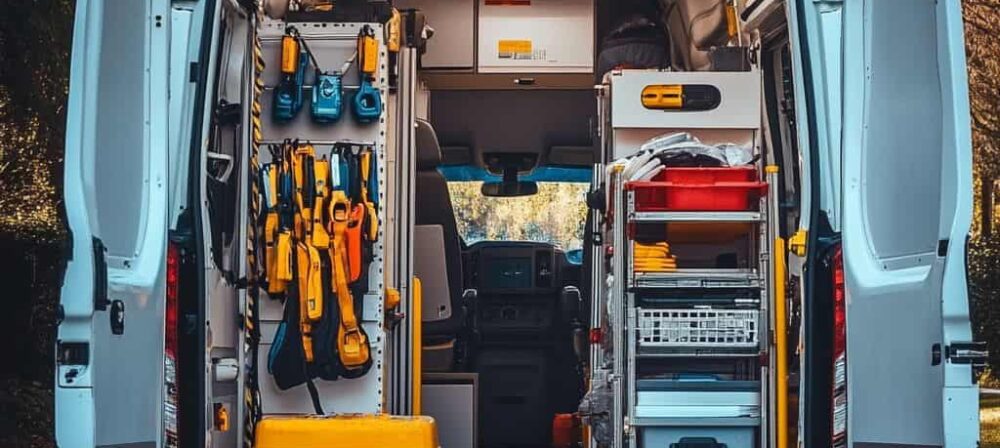
We’ve worked with this client for over 12 months – and part of that relationship has involved getting their van kit properly organised. Every item is labelled by vehicle reg plate, so the client knows exactly where each piece of equipment belongs. It’s a small touch that helps keep inspections running smoothly.

Need End-to-End Support?

Whether it’s confined space kit, fall arrest equipment, or just making sure your gear is labelled and trackable – we’ll help you stay compliant and organised without the hassle.

Book Your Equipment Servicing

Stay safe. Stay compliant. No disruption, no downtime.

📞 Call: 01254 933 486
📩 Email: info@velocitysafety.co.uk
🌐 Or book your servicing online

DOP Filter Integrity Test

What Is DOP Testing?

HEPA filters aren’t “fit and forget.” Whether you’re running a cleanroom, a spray booth, or a negative pressure unit, you have a legal duty to prove your filters are working – not just fitted. That’s where DOP testing comes in.

In this guide, we’ll explain exactly what DOP testing is, how it works, and why it’s critical to workplace safety, compliance, and reputation.

Quick Answer: What is DOP testing?

DOP testing is an in-situ HEPA or ULPA filter integrity test. A test aerosol is introduced upstream of the filter, then a calibrated photometer scans downstream to check whether particles are leaking through the filter media, frame, seal or housing. In the UK, the test is often still called DOP testing, although PAO or other safer test aerosols are now commonly used instead of the original DOP compound.

Jump to:

What Is DOP Testing?

DOP testing – short for Dispersed Oil Particulate testing – is a method used to check that HEPA and ULPA filters are functioning correctly once installed. It confirms the integrity of the entire filter system: the media, frame, seals, and housing.

Today, most tests in the UK use Shell Ondina oil. PAO (Poly Alpha Olefin) is more commonly used in the USA. The older DOP compound stopped being used due to safety concerns. But the name ‘DOP testing’ remains widely used across the industry.

This is not a manufacturer efficiency test. It’s a live, in situ assessment to ensure filters aren’t leaking harmful substances back into the workplace.

“This isn’t about checking the filter’s rating – it’s about proving it’s actually protecting your people”

What Does DOP Test Stand For?

DOP test originally stood for Dioctyl Phthalate test, because dioctyl phthalate was historically used as the challenge aerosol during HEPA filter leak testing.

In modern UK workplace testing, the term is often used more generally to describe Dispersed Oil Particulate testing or HEPA filter integrity testing. The original DOP substance is rarely used now due to safety concerns, but the name has remained common across cleanrooms, LEV systems, extraction units, laboratories, spray booths and pharmaceutical environments.

Is DOP Testing the Same as PAO Testing?

In practical terms, yes. When most people ask for a DOP test today, they usually mean a HEPA filter integrity test using a modern aerosol such as PAO or Shell Ondina oil. The purpose is the same: to challenge the filter and confirm whether the installed system is leaking.

The key point is that the test should be carried out using suitable equipment, calibrated instruments, the correct upstream concentration and an engineer who understands the filter system being tested.

Why Is DOP Testing Important?

Under COSHH Regulation 9(2), employers must ensure that any engineering controls used to reduce hazardous substance exposure are thoroughly examined and tested at suitable intervals.

DOP testing provides this proof – verifying that your HEPA filters are:

  • ✔ Properly installed and sealed
  • ✔ Operating within expected performance limits
  • ✔ Not bypassing air due to damage or poor fitting

Without it, you risk:

  • Legal breaches under COSHH and HSE requirements.
  • Contamination incidents in clean environments
  • Auditor red flags during inspections
  • False sense of security for staff and management

In high-risk industries like pharmaceuticals, coatings, and healthcare, even a 1% filter leak can have serious downstream consequences.

How Does DOP Testing Work?

Here’s how the DOP / PAO filter integrity test is typically carried out:

1. Aerosol Challenge Introduced Upstream

An aerosol generator disperses a known concentration of PAO upstream of the HEPA filter. This acts as the “challenge” to the system.

2. Photometer Scanning Downstream

A calibrated aerosol photometer is used to scan the downstream side of the filter and casing. It detects any particles that have passed through.

3. Leak Detection and Certification

If any point exceeds 0.01% penetration of the upstream concentration (per ISO 14644-3:2019), the filter fails. A report is issued detailing results and any remediation steps.

This process tests:

  • The filter media itself
  • The seal between filter and housing
  • The full frame and any joints
Stage What Happens Why It Matters
Upstream challenge A test aerosol is introduced before the HEPA or ULPA filter. This creates a controlled particle challenge for the filter.
Downstream scan A photometer scans the filter face, seals, frame and housing. This identifies leaks that may not be visible during inspection.
Result comparison Readings are compared against the upstream concentration. This confirms whether the filter passes or fails the required integrity limit.
Report issued Results, equipment details and remedial actions are recorded. This provides evidence for audits, COSHH compliance and maintenance records.

HEPA Filter Integrity Test Acceptance Criteria

For many in-situ HEPA filter integrity tests, a common pass/fail threshold is 0.01% penetration of the upstream aerosol concentration, although the exact acceptance criteria should be confirmed against the relevant standard, application and site requirements.

If the downstream scan detects penetration above the accepted limit, the system may fail due to damaged filter media, poor seals, incorrect installation, housing leaks or bypass around the filter frame.

“Even new filters can fail if they’ve been installed incorrectly or if the frame has warped over time.”

When Should You Book a DOP Test?

You should carry out filter integrity testing:

  • Before first use of any newly installed HEPA filter
  • After damage, visual faults or suspected failure
  • After a filter change, to verify performance
  • At regular intervals based on risk and application

Suggested Intervals:

  • Portable extractors / vacuums: every 6 months
  • Fixed installations / cleanrooms: every 6-24 months (as determined by risk assessment and application type)

Common Issues DOP Testing Identifies

Most filters don’t fail because they’re old – they fail because they were installed badly, sealed poorly, or never tested properly in the first place. You’d be surprised how often we find the wrong class of filter shoved into a system that needs critical containment.

DOP testing reveals the issues you can’t spot just by looking – and the ones that put people at risk.

What Equipment Needs DOP Testing?

You should consider DOP/PAO integrity testing for:

  • Portable dust extractors (L, M, H Class)
  • Fixed LEV systems
  • Cleanrooms
  • Spray booths
  • Fume cupboards / safety cabinets
  • Air scrubbers and negative pressure units
  • Any system using in situ HEPA or ULPA filters

If your HEPA filters form part of a wider extraction or dust control system, you may also need LEV testing or dust extraction thorough examination and testing.

What Is Included in a DOP Test Report?

A DOP or PAO test report should give the client clear evidence that the filter system has been tested, not just visually checked.

  • Site and equipment details
  • Filter reference or asset ID
  • Test aerosol used
  • Photometer and aerosol generator details
  • Calibration details where applicable
  • Upstream challenge concentration
  • Downstream scan results
  • Pass/fail outcome
  • Identified leaks or defects
  • Recommended remedial action

Our DOP Testing Service Includes

Need to arrange testing? Learn more about our DOP Testing services, including what’s covered, how results are reported, and where we operate.

✔️ Manufacturer-trained engineers (BS EN 1822)
✔️ Calibrated PAO photometers with traceable certification
✔️ Testing aligned to BS EN 1822-1, BS EN ISO 14644-3, BS EN ISO 29463
✔️ On-site reports and certificates to satisfy auditors
✔️ Straightforward advice from engineers who understand filter integrity testing

We cover cleanrooms, labs, engineering sites, and specialist facilities across Lancashire, Greater Manchester, and the wider North West.

Book Your DOP Test Today

Protect your staff. Stay compliant. Prove performance.

📞 Call: 01254 933 486
📩 Email: info@velocitysafety.co.uk
🌐 Or schedule a test online

FAQs

Here are some common questions businesses ask when booking DOP, PAO or HEPA filter integrity testing.

What does DOP stand for?

DOP originally stood for Dioctyl Phthalate, the substance historically used during filter challenge testing. Today, the term is often used more broadly to describe Dispersed Oil Particulate testing or HEPA filter integrity testing.

Is DOP testing the same as PAO testing?

Yes – PAO is the safer modern alternative, but the process is the same. The term ‘DOP testing’ is still commonly used.

Is DOP testing mandatory in the UK?

Yes, if you use HEPA filters as an engineering control for hazardous substances, testing is required under COSHH Regulation 9(2).

How long does the test take?

Most single-unit tests take 30-90 minutes depending on access and configuration.

Do I get a certificate?

Yes. We issue full reports and compliance documentation in line with UK and EU standards.

Resources & Further Guidance

Pendulum slip testing

What Is Pendulum Slip Testing?

Discover how Pendulum Slip Testing measures real-world floor safety – and what your PTV score actually means.

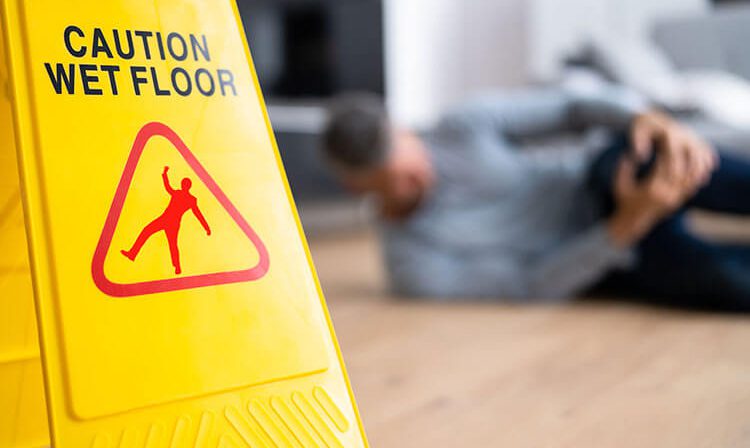
The Pendulum Slip Test (also known as the British Pendulum Test) is the UK’s HSE-preferred method for measuring slip resistance under wet or dry conditions. It provides a precise Pendulum Test Value (PTV) that tells you whether a floor surface meets accepted safety standards.

Used in workplaces, public buildings, and legal investigations, it’s the only test recognised by HSE guidance, UK Slip Resistance Group (UKSRG), and BS 7976-2 / BS EN 16165.

Quick Answer: What is pendulum slip testing?Pendulum slip testing is an on-site floor safety test used to measure slip resistance. A calibrated pendulum tester swings a rubber slider across the floor surface to produce a Pendulum Test Value, or PTV. In the UK, a wet PTV of 36 or above is generally treated as low slip risk.

🔑 Key Takeaways

  • Pendulum Slip Testing measures floor slip resistance using a calibrated swinging arm and rubber slider.
  • The result is a PTV (Pendulum Test Value) – 36 or higher = low risk, 25–35 = moderate, below 24 = high risk.
  • Recognised by the HSE, UKSRG and BS 7976-2 / BS EN 16165 as the definitive test for UK slip safety.
  • Used for compliance audits, insurance claims and duty-of-care evidence under the Health & Safety at Work Act 1974.

Jump to:


What is Pendulum Slip Testing?

Pendulum slip testing is also commonly called the British Pendulum Test, pendulum test, PTV test or floor slip test. These terms usually refer to the same method of measuring slip resistance using a pendulum tester.

Pendulum testing uses a swinging arm fitted with a rubber slider (Slider 96 for footwear, Slider 55 for barefoot) to simulate a heel striking the floor.

As the slider contacts the surface, it loses momentum – the distance travelled after impact determines the Pendulum Test Value (PTV).

This method is:

  • Accepted by the HSE and UK Slip Resistance Group (UKSRG)
  • Reliable in both wet and dry conditions
  • Admissible in court to demonstrate duty of care and risk mitigation

Pendulum testing is used in:

  • Workplaces, retail, and commercial environments
  • Public buildings and leisure centres
  • Insurance claims and post-incident investigations

How Does the Test Work?

Pendulum testing is carried out using a Pendulum Skid Resistance Tester, a precise mechanical device approved by the HSE. The process simulates a heel strike under realistic walking conditions.

Here’s a quick overview of how the test is performed:

  1. A Pendulum Tester is set up on-site with a calibrated slider
  2. The slider swings down and strikes the surface
  3. The arm continues moving and stops – a needle records the PTV
  4. Tests are carried out:
    • Wet and dry
    • With and across foot traffic direction
    • In multiple zones where relevant

To ensure results are accurate and representative, testing is conducted:

  • In multiple directions (with/across/diagonal to foot traffic)
  • On both dry and wet surfaces
  • Using a certified and calibrated device operated by trained technicians

When performed correctly, pendulum testing offers a highly repeatable, legally defensible measure of slip resistance – suitable for use in court, insurance claims, or compliance audits.

What is a Good PTV Score?

After a pendulum test, you’ll receive a Pendulum Test Value (PTV) — this number indicates how slippery a surface is. The HSE and UKSRG classify these scores into three risk bands:

PTV Score Slip Risk Typical Interpretation
0–24 🔴 High risk Likely to fail safety requirements
25–35 🟠 Moderate risk Caution required; may need mitigation
36+ 🟢 Low risk Meets HSE guidance for safe flooring

A PTV of 36 or higher is considered the UK benchmark for low slip risk, even in wet conditions. Surfaces scoring below 24 are regarded as high risk, especially when exposed to contaminants like water, oil, or food – and are often referenced in legal claims as evidence of foreseeable hazard.

These thresholds are not arbitrary; they are standard across HSE guidance, UKSRG testing protocols, and civil litigation.

What Does PTV Mean?

PTV stands for Pendulum Test Value. It is the score recorded by the pendulum tester after the rubber slider passes across the floor surface.

The higher the PTV, the greater the slip resistance. A score of 36 or above is generally considered low slip risk in UK guidance. Scores between 25 and 35 indicate moderate risk, while scores below 24 indicate high slip risk.

The test itself is not named in law, but your legal duty to assess and control slip risks absolutely is.

Applicable legislation:

Under these laws, you must:

  • Identify slip risks as part of your general risk assessment
  • Take reasonably practicable steps to prevent them
  • Maintain safe access and flooring

🧾 Pendulum testing is the most widely accepted way to demonstrate you’ve taken reasonable precautions – and is routinely used in court, insurance disputes, and HSE investigations.

How Often Should Pendulum Testing Be Carried Out?

The HSE doesn’t specify an exact interval, but floor surfaces should be re-tested whenever their condition changes or if a slip incident occurs. In most workplaces, annual testing is advised – more frequently for high-traffic or wet areas such as entrances, kitchens and pools.

  • Every 12 months – routine verification for most floors
  • Every 6 months – wet areas or where contaminants are common
  • Immediately – after floor treatment, cleaning change or incident

Regular testing provides ongoing proof of due diligence and reduces liability in the event of a slip claim or audit.

HSE Standards & British Guidance

Pendulum testing is backed by:

🔎 HSE Quote: “The pendulum test is the HSE’s preferred method of assessing floor slipperiness.”
Source: HSE Slips & Trips Guidance

Compared to lab tests like the R-rating ramp test, pendulum testing:

  • ✅ Is performed on-site, in real-world conditions
  • ✅ Accounts for contaminants like water, oil, and food
  • ✅ Is legally admissible in court

Wet vs Dry Testing Conditions

Floors must be safe under the conditions they are actually used in. The wet test is often the most critical, since most slips occur on contaminated or damp surfaces. Pendulum testing provides separate PTV scores for each condition.

Condition Typical PTV Range Risk Rating Example Environments
Dry 50–70+ 🟢 Low risk Indoor corridors, offices, classrooms
Wet 36–50 🟢 Acceptable (HSE benchmark ≥36) Entrances, kitchens, poolside walkways
Contaminated / Oily Below 24 🔴 High risk Industrial workshops, food prep areas

Where floors regularly become wet or greasy, the wet PTV result is the benchmark for compliance. Regular re-testing helps ensure cleaning, maintenance and coatings continue to meet safety thresholds.

R Ratings vs PTV: What’s the Difference?

When assessing slip resistance, you may come across both PTV scores and R ratings. However, they are not interchangeable, and only one is recognised for legal compliance in the UK.

PTV (Pendulum Test Values) are measured using the pendulum device on real floors, under real-world conditions. In contrast, R ratings (e.g. R10, R11) are based on a German ramp test, conducted in a controlled lab.


Here’s how the two compare:

Feature PTV (Pendulum Test) R Rating (Ramp Test)
🇬🇧 Recognised in the UK? ✅ Yes ❌ No
Used by HSE? ✅ Yes ❌ No
Test location ✅ On-site ❌ Lab only
Legal admissibility ✅ Yes ⚠️ No

In summary, while R ratings are commonly used in product brochures or by tile retailers, they do not meet UK legal requirements for assessing actual floor safety.

Only PTV values derived from pendulum testing are accepted by the HSE and UK courts.

Pendulum Testing vs Other Slip Resistance Methods

While the pendulum method is the UK’s gold standard, several other tests are sometimes used for product marketing or international comparison. Here’s how they differ:

Test Method Also Known As Location Key Difference Legal Status in UK
Pendulum Test (BS 7976 / BS EN 16165) British Pendulum, PTV Test ✅ On-site Simulates heel strike in wet/dry conditions HSE Preferred
Ramp Test (DIN 51130) R Rating Test (e.g. R9–R13) ❌ Lab only Uses motor oil on an inclined ramp Not recognised by HSE
SlipAlert / Tribometer Dynamic CoF Test ✅ Portable Measures coefficient of friction via slider speed Accepted for internal QA, not legal proof
Surface Roughness (Ra) Profilometer Test ✅ On-site Measures texture only – no slip simulation Used as supporting evidence

Only the Pendulum Test provides a result (PTV) recognised by the HSE, UKSRG, and UK courts as a true indicator of slip risk.

Where Pendulum Slip Testing Is Required

The HSE recommends Pendulum Testing wherever the floor surface could become wet, worn, polished, contaminated or difficult to manage safely. This can include public buildings, sports stadiums, railway stations, airports, schools, hospitals, commercial kitchens, leisure centres and industrial workplaces.

  • Public buildings – schools, hospitals, libraries, and council facilities
  • Commercial areas – shops, restaurants, offices, and supermarkets
  • Leisure and sports venues – swimming pools, gyms, and stadiums
  • Industrial workplaces – factories, warehouses, and vehicle workshops
  • Outdoor walkways and ramps – especially where surface water collects

Routine slip resistance testing in these areas helps prove due diligence under the Health and Safety at Work Act 1974 and the Workplace (Health, Safety and Welfare) Regulations 1992.

How to Book a Slip Test

Need to arrange testing? Learn more about our Pendulum Slip Testing services, including what’s covered, how results are reported, and where we operate.

  • ✔️ Certified, calibrated equipment
  • ✔️ Wet and dry testing
  • ✔️ PTV reporting with clear risk ratings
  • ✔️ Optional surface roughness measurements
  • ✔️ Legally defensible PDF reports

📞 Call: 01254 933 486

📩 Email: info@velocitysafety.co.uk

🌐 Or visit our website to book or request a quote.

FAQs

Here are the most common questions about pendulum slip testing, PTV values, wet testing, legal use and floor safety reports.

What is a Pendulum Slip Test?

A Pendulum Slip Test measures how slippery a floor is using a mechanical tester. It’s the UK’s legally preferred method for assessing real-world slip resistance, particularly in wet conditions.

Is Pendulum Testing a legal requirement?

Not by name – but UK law requires that slip risks be assessed and controlled. Pendulum testing is the most widely accepted method by the HSE, insurers, and courts.

What does PTV mean?

PTV stands for Pendulum Test Value – the number generated by the slip test. A PTV of 36 or higher is considered low slip risk according to HSE standards.

What is a wet pendulum test?

A wet pendulum test measures slip resistance after the surface has been wetted or contaminated to reflect realistic slip conditions. Wet PTV results are often more important than dry results for entrances, kitchens, pool surrounds, changing rooms and outdoor walkways.

What is the British Pendulum Test?

The British Pendulum Test is another name for pendulum slip testing. It uses a calibrated pendulum tester to measure floor slip resistance and produce a PTV score.

How long does a Pendulum Test take?

Testing one surface area takes about 30–60 minutes. Larger sites or multi-zone floors may take longer depending on layout.

Do I need to test wet and dry conditions?

Yes – especially if your floor may become wet. Wet PTV results are often more important for compliance and legal defensibility.

How often should floors be re-tested?

It depends on usage, surface changes, and exposure to contamination. Re-testing is usually advised every 12 months, or after any significant cleaning, wear, or slip incident.

Can I use R Ratings instead of a PTV?

No – R Ratings come from lab-based ramp tests and aren’t accepted in UK legal or compliance frameworks. Only PTV scores from Pendulum Testing meet HSE standards.

Resources & Further Guidance